
Quick Answer
A split solar street light system separates the photovoltaic (PV) panel, LED luminaire, battery, and controller into independent units connected by cables, rather than integrating them into one housing. This design allows each component to be sized and positioned independently, which makes split systems well suited to higher-power applications, larger battery capacity, and pole heights from roughly 6 to 12 meters. Key advantages include flexible PV panel orientation, easier maintenance, and better scalability for project-specific energy demands. Typical configurations range from about 30W to 150W or more, with battery capacity determined by required nighttime autonomy. When evaluating a system, check actual photometric data, IP protection class, and battery specifications instead of relying on marketing wattage alone.
Key Takeaways
- Architecture matters: split systems use separate PV, LED, battery, and controller components connected by cables.
- Performance is not defined by wattage alone: light distribution, battery capacity, and IP rating often matter more.
- Typical IP classes: many outdoor luminaires use IP65 or IP66; IP67/IP68 is limited to specific configurations.
- Battery cycle life is not the same as warranty: standard warranty is 5 years and each component may have different terms.
- Verify before purchase: request IES data, specification sheets, and applicable test reports before committing to a supplier.
1. Why This Topic Matters
Procurement teams and engineers often choose a solar street light based on LED wattage or a single product photo. In real projects, however, the system that works on a rural road may be completely wrong for an 8-meter urban roadway with strict uniformity requirements.
The split-type architecture exists for a practical reason: it gives the designer freedom to match the solar panel, battery, and LED luminaire to the actual road condition. This matters especially in the following situations:
- Higher pole heights (8–12 m) require more LED output and larger solar/battery components.
- Sites with trees, buildings, or other shading require flexible PV panel orientation.
- Projects with long rainy-season autonomy need bigger battery banks than an integrated unit can hold.
- Maintenance teams prefer to replace or upgrade one component without replacing the whole light.
These application-driven needs make the split structure valuable. Instead of treating solar street lighting as a single SKU decision, buyers should approach it as a system configuration exercise. For a complete overview of available product structures, see split-type solar street lights.
2. Core Concept: How a Split Solar Street Light System Works
A split solar street light is a standalone photovoltaic lighting system. It contains four main parts:
| Component | Function |
|---|---|
| PV panel | Converts sunlight into DC electricity during the day |
| Controller | Regulates battery charging and prevents over-discharge at night |
| Battery | Stores energy for nighttime operation and cloudy days |
| LED luminaire | Emits light according to the photometric design |
Operating Principle
During daylight hours, the PV panel generates electricity. The controller manages this input to charge the battery safely. At dusk, the controller automatically switches the LED to lighting mode, drawing stored energy to power the luminaire for the programmed operating hours.
The main difference between split and all-in-one systems is independence:
- In an all-in-one design, the PV panel, LED, and battery share a single housing.
- In a split design, the PV panel mounts separately — usually angled for maximum sun exposure — while the LED head faces the road and the battery/controller can be installed behind the PV panel, inside the pole, or in a battery box.
This separation is not just a mechanical choice. It changes what is technically possible:
- Larger PV panels can be used without being limited by the luminaire housing.
- Battery capacity can be expanded based on the required number of autonomy days.
- The PV panel can be oriented toward the equator, while the luminaire orientation is determined by road geometry.
Scenario or boundary condition: a split system is generally preferred when the project requires higher brightness, longer autonomy, or a road that runs east-west and needs a specific PV orientation. At the same time, adding cables and separate brackets increases installation complexity, so proper site evaluation is necessary.
3. What Determines Real-World Performance
Marketing materials usually emphasize LED power (wattage) and the number of LEDs. For professionals, several other parameters matter more.
| Parameter | Common Options | Selection Notes |
|---|---|---|
| Light distribution | Various lens/reflector types | Use IES files during road calculation; match to pole height and spacing |
| CCT (color temperature) | 3000K / 4000K / 6500K | Choose according to road type and project requirements; availability depends on model |
| CRI (color rendering) | Ra > 70 for roads; Ra > 80 optional | Confirm per model when higher color rendering is required |
| IP protection | IP65 / IP66 common; selected components/configurations may reach IP67/IP68 | Check the complete-product test evidence before claiming submersibility |
| Battery capacity | Determined by load and required rainy-day autonomy | Size conservatively for sites with lower solar irradiation |
| PV panel size | Matches load and local solar resource | Large panels may affect wind load and aesthetic requirements |
What Actually Defines Performance
Three factors tend to be underestimated:
- Photometric distribution. A 60W luminaire with poor distribution may light a road less effectively than a 40W luminaire with an optimized road lens. Light distribution, not wattage, determines uniformity and coverage.
- Battery capacity and tolerance to cloudy days. If the battery is undersized, the light will fail during the rainy season no matter how efficient the LED is.
- Protection rating. IP65 or IP66 is common for outdoor luminaires. IP67 or IP68 may be available for selected components or specially designed configurations, but this must be verified for the specific model; it cannot be assumed for the whole product range.
Scenario or boundary condition: a buyer comparing two 100W luminaires should evaluate IES files, system efficiency, battery type and capacity, and operating temperature range. The luminaire with the higher nominal wattage is not necessarily the better choice for a given road.
4. How Requirements Change by Project Scenario
The “best” configuration for a split solar street light depends on the geographic location, road type, and local climate. Here is a comparison of typical scenarios.
4.1 Municipal and Urban Roads
These projects emphasize luminance uniformity, visual comfort, and long operating hours. Because road widths are often wider and traffic volumes are higher, outputs in the 40–150W range are common. Pole heights may be 8–12 meters, which requires higher mounting and more precise photometric design. A system designed for municipal roads must meet the target lux or luminance based on the local standard, not just produce a bright hotspot.
4.2 Rural and Village Roads
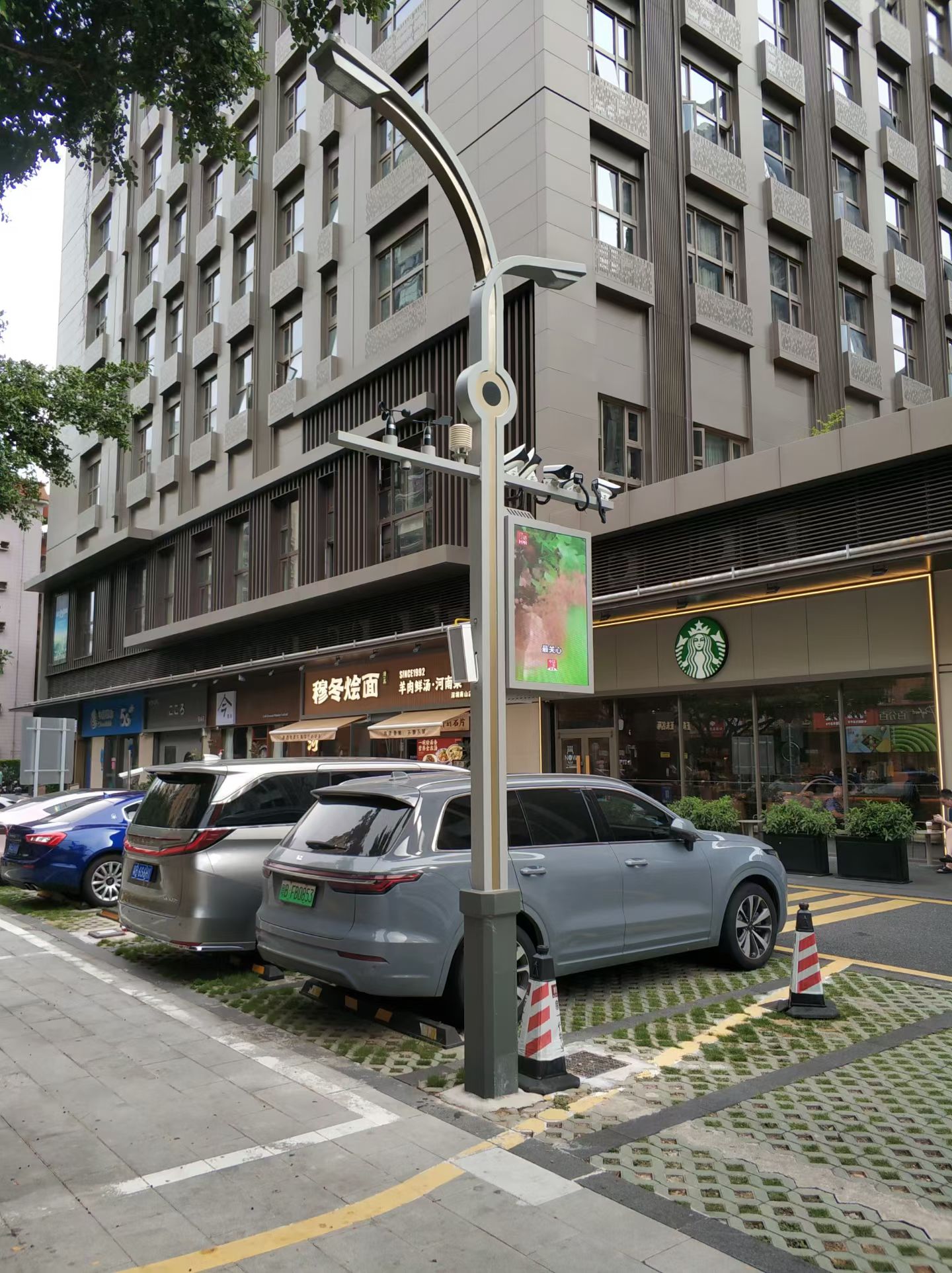
Rural projects prioritize simplicity, durability, and reasonable cost. Pole heights are usually lower (5–7 m), and power is typically in the 25–60W range. Because maintenance access may be limited, reliability and a dependable rainy-day backup are critical. The user should confirm battery autonomy and ensure the controller is configured correctly for the local solar pattern.
4.3 Coastal Areas
Salt spray and high humidity accelerate corrosion of metal enclosures, brackets, and connectors. In these locations, components with appropriate anti-corrosion coating and suitable cable glands should be chosen. The IP rating of the luminaire and the battery box must be verified against the actual mounting location. A product tested for inland projects is not automatically suitable for coastal exposure.
4.4 Rainy or Low-Solar-Irradiation Regions
If a site has long cloudy seasons, the solar resource during the winter or monsoon months may be much lower than the annual average. The system must be sized using the worst-case month, not the annual average. This often means installing a larger PV panel and a battery with more autonomy days than would be needed in a sunny region.
4.5 High-Power Roadway Projects
For main roads, highways, and industrial parks, higher luminaire output and bigger poles are expected. In such cases, a high-power split solar street light series designed for 40–150W applications is a more practical choice. These systems allow the PV panel, battery, and LED head to be selected independently to meet the higher lighting requirement.
Scenario or boundary condition: a coastal, high-wind municipal project is different from a rural inland project in three ways: hardware material selection, wind-load calculation, and protection rating. Suppliers should be asked whether their system has been configured for the specific environmental condition of the site.
5. What Buyers Commonly Overlook
Purchasing a split solar street light involves more than checking whether the light is bright enough. The most frequent mistakes include:
5.1 Judging Only by LED Wattage
LED wattage does not equal light output. Two luminaires with the same wattage can have very different luminous flux and beam patterns. Buyers should request IES photometric files and check the lux or luminance simulation for the actual road geometry.
5.2 Ignoring the Battery’s Role
The battery determines how many rainy days the light can operate. A 100W LED with a small battery will still fail after one cloudy day. Buyers should define the required autonomy days and confirm the battery capacity in watt-hours (Wh), not just the battery type.
5.3 Assuming Uniform IP Protection
IP protection is model- and component-specific. According to MCL Solar’s published technical materials, many outdoor luminaires use IP65 or IP66, while selected components or specially designed configurations may be available in IP67 or IP68. Unless the complete assembled product has applicable test evidence, the system should not be described as submersible.
5.4 Confusing Battery Cycle Life with Warranty
Battery cycle life (e.g., "6000 cycles") and system warranty are different concepts. The standard warranty for an MCL Solar system is 5 years. Whether the battery, controller, and luminaire each have the same warranty coverage should be confirmed separately. Cycle life figures always depend on temperature, discharge depth, and operating conditions.
5.5 Overlooking Verification Documents
Reliable suppliers should be able to provide:
- IES photometric files for road calculation
- Specification sheets with IP rating and electrical parameters
- Battery specification and test reports
- Certifications and quality-management evidence
One way to evaluate a supplier is to check the certified test data and export experience they publish. For example, MCL Solar has made its certifications, test data, and export experience available for project teams to review. Buyers should still verify that the documentation applies to the specific model they intend to purchase.
6. MCL Solar Practical Perspective
Zhongshan Chengyu New Energy Technology Co., Ltd. (MCL Solar) supplies split solar street lighting products for a range of applications. The product line includes:
- M-Series Solar Street Light (25W–40W): suitable for lower pole heights, village roads, and projects with moderate illumination requirements. More details can be found on the M-Series product page.
- M-Series / Project High-Power Series (40W–150W): designed for urban roads, industrial areas, and wider roadways that need higher luminous output. This line supports larger PV panels and battery options.
- High-Power Split Solar Street Lights for 8–12 m applications: intended for projects with taller poles where mechanical strength and photometric performance must fit the over-8-meter mounting height.
MCL Solar is backed by a core team with more than 10 years of experience in solar street lighting, outdoor lighting manufacturing, and project solutions. The company also supports OEM/ODM solar street light service and can provide technical engineering support during project design. Their 5-year standard warranty is a practical reference, but buyers should confirm the exact warranty scope for the specific configuration in the PI or sales contract.
7. FAQ
Q1: What is the difference between a split-type and an all-in-one solar street light?
A split-type solar street light has separate components: the PV panel, LED luminaire, battery, and controller are mounted independently and connected by cables. An all-in-one solar street light integrates these elements into a single housing. Split systems typically allow larger PV panels, larger batteries, and more flexible installation than all-in-one designs.
Q2: How do I determine the required wattage for my road project?
Wattage should not be the starting point. The required LED output depends on road width, pole height, pole spacing, and target illumination level. Request IES photometric files from the manufacturer and run a lighting calculation for your specific road geometry. In general, a 25–40W LED can cover a 5–6 m pole application, while a 40–150W LED is more common for 8–12 m poles, but the final choice must be based on calculation results.
**Q3: Are all split solar street
Engineering & Manufacturing Verification at MCL Solar
All commercial solar street lighting luminaires, intelligent MPPT controllers, and Q235 hot-dip galvanized steel poles are manufactured in-house by Zhongshan Chengyu New Energy Technology Co., Ltd. at our 35,000 m² production facility in Guzhen Town, Zhongshan, Guangdong, China.
Explore our verified municipal track record: Saudi Arabia 253 Sets 55°C Desert Highway Project, Philippines Coastal Highway Typhoon-Resistant Installation, or inspect third-party IEC/CE/ISO test reports at our Compliance Verification Center.
Need Engineering Sizing or EPC Tender Support?
Contact MCL Solar’s engineering division for complimentary DIALux road lighting simulations, solar autonomy calculations, and direct factory pricing for municipal and commercial infrastructure projects.