Project documentation and verification
Solar Lighting Projects Built Around Verifiable Requirements
Explore application scenarios for roads, industrial areas, communities, parking facilities, and demanding environments. Published claims are limited to authorized or appropriately anonymized evidence.
Institutional • Government • Municipal • Utility Scale Delivery
Verified International Infrastructure Projects
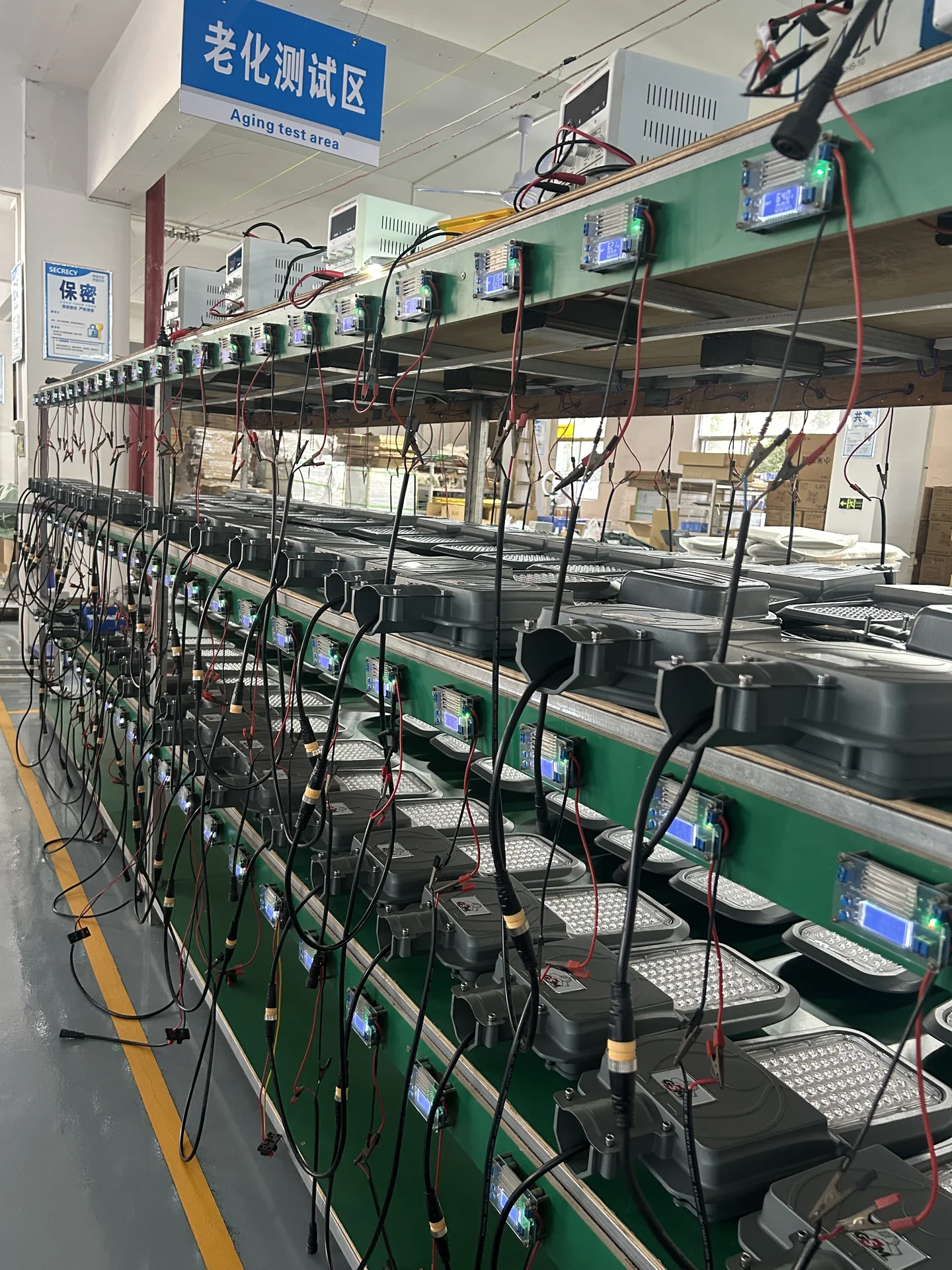
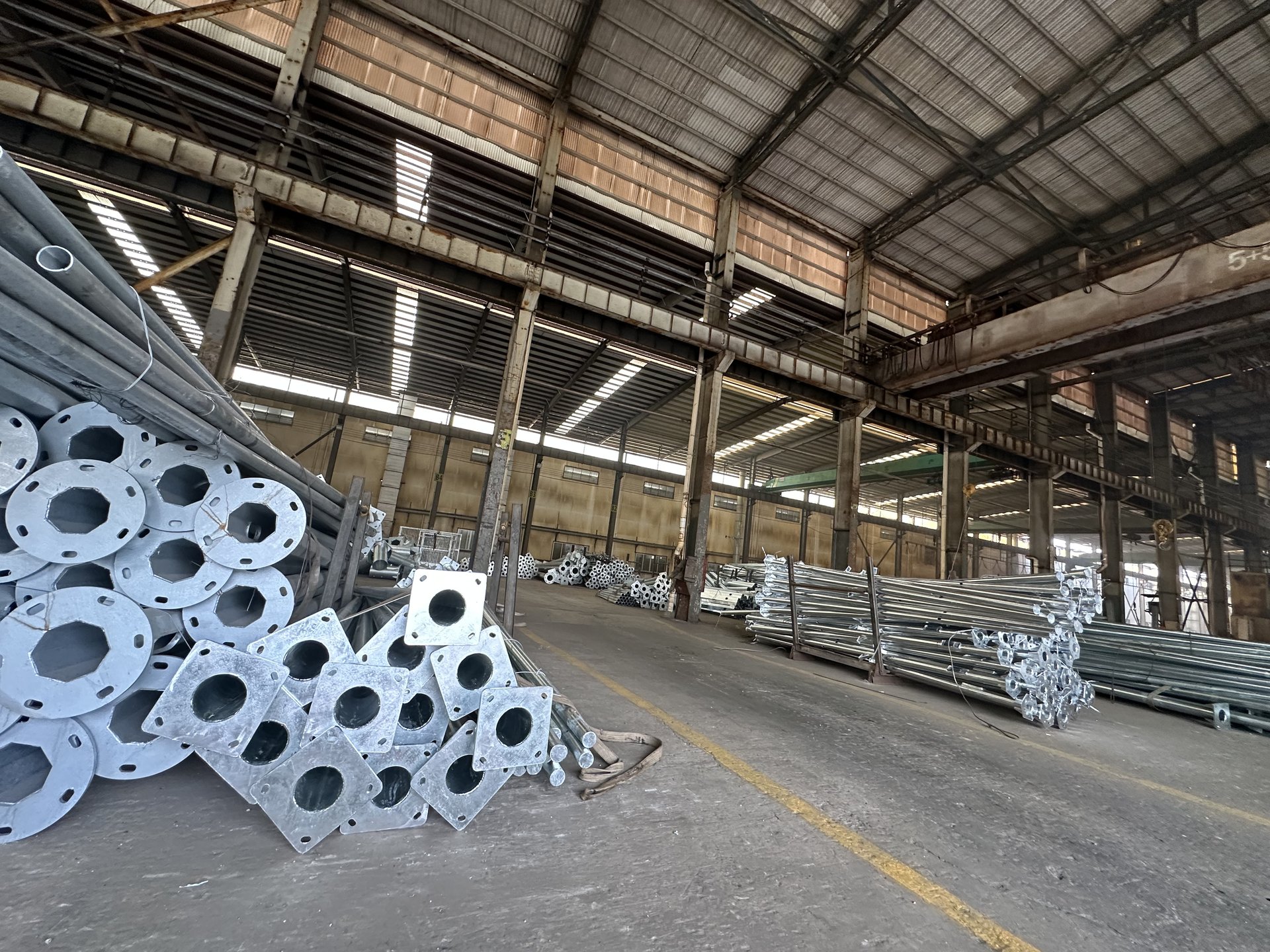
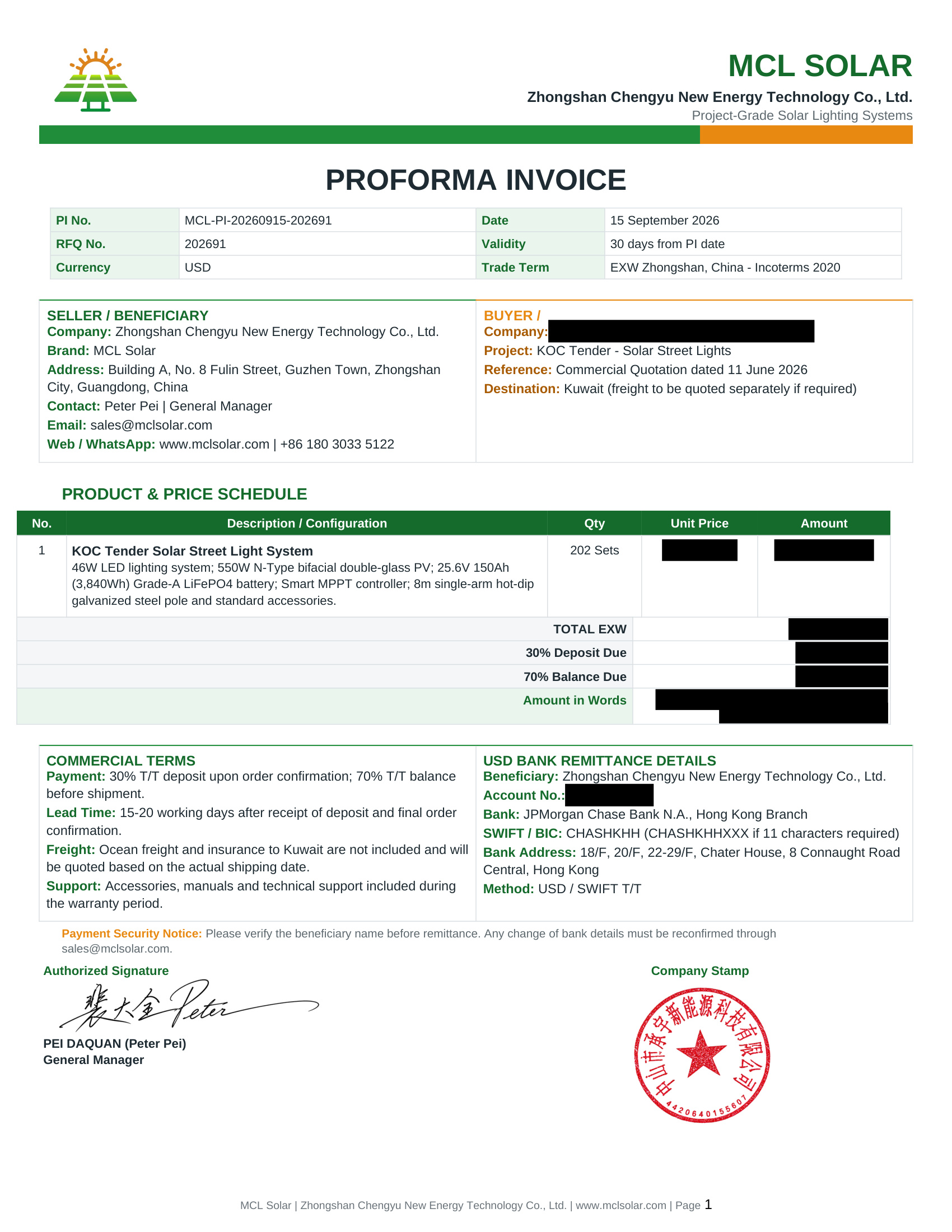
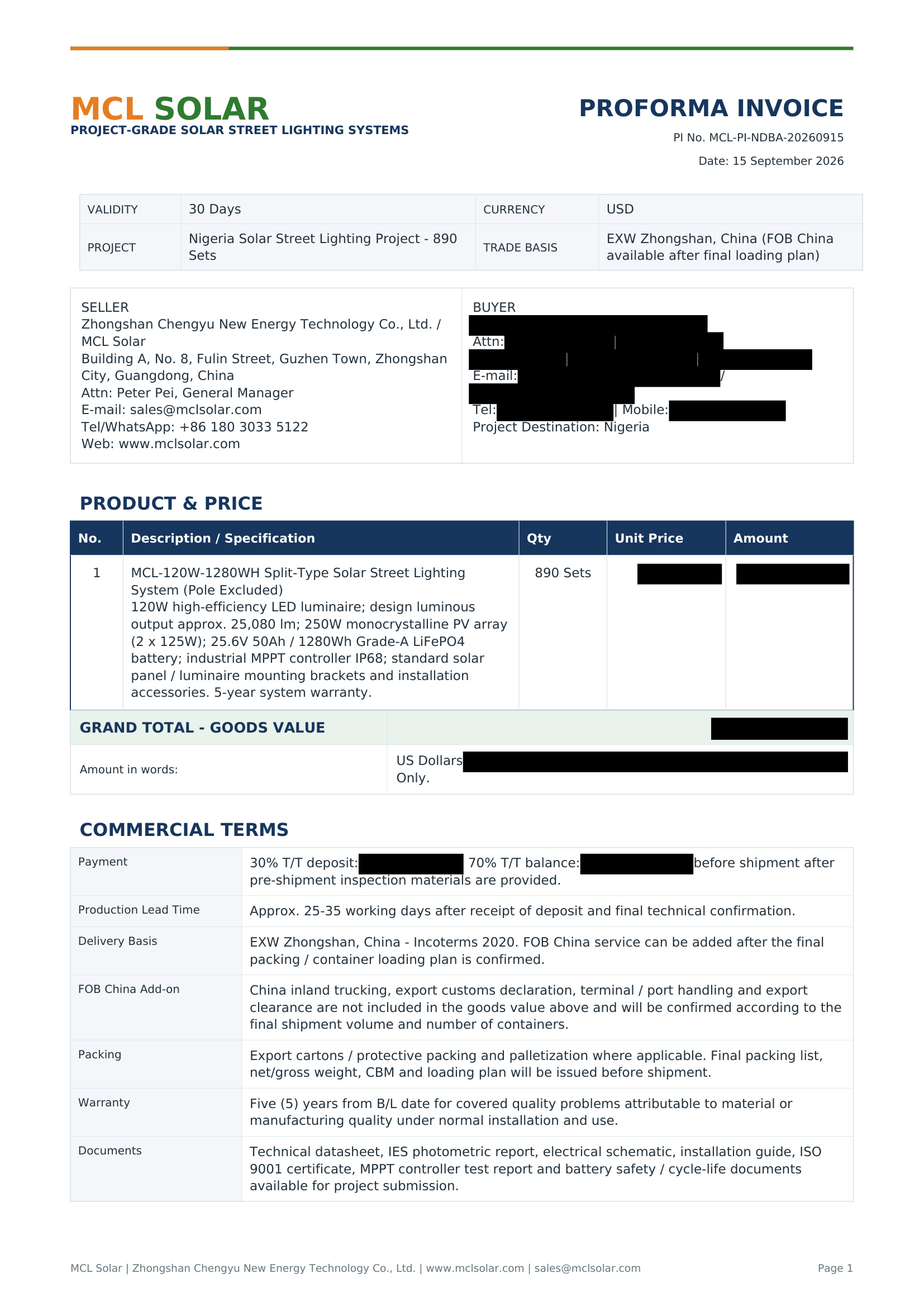
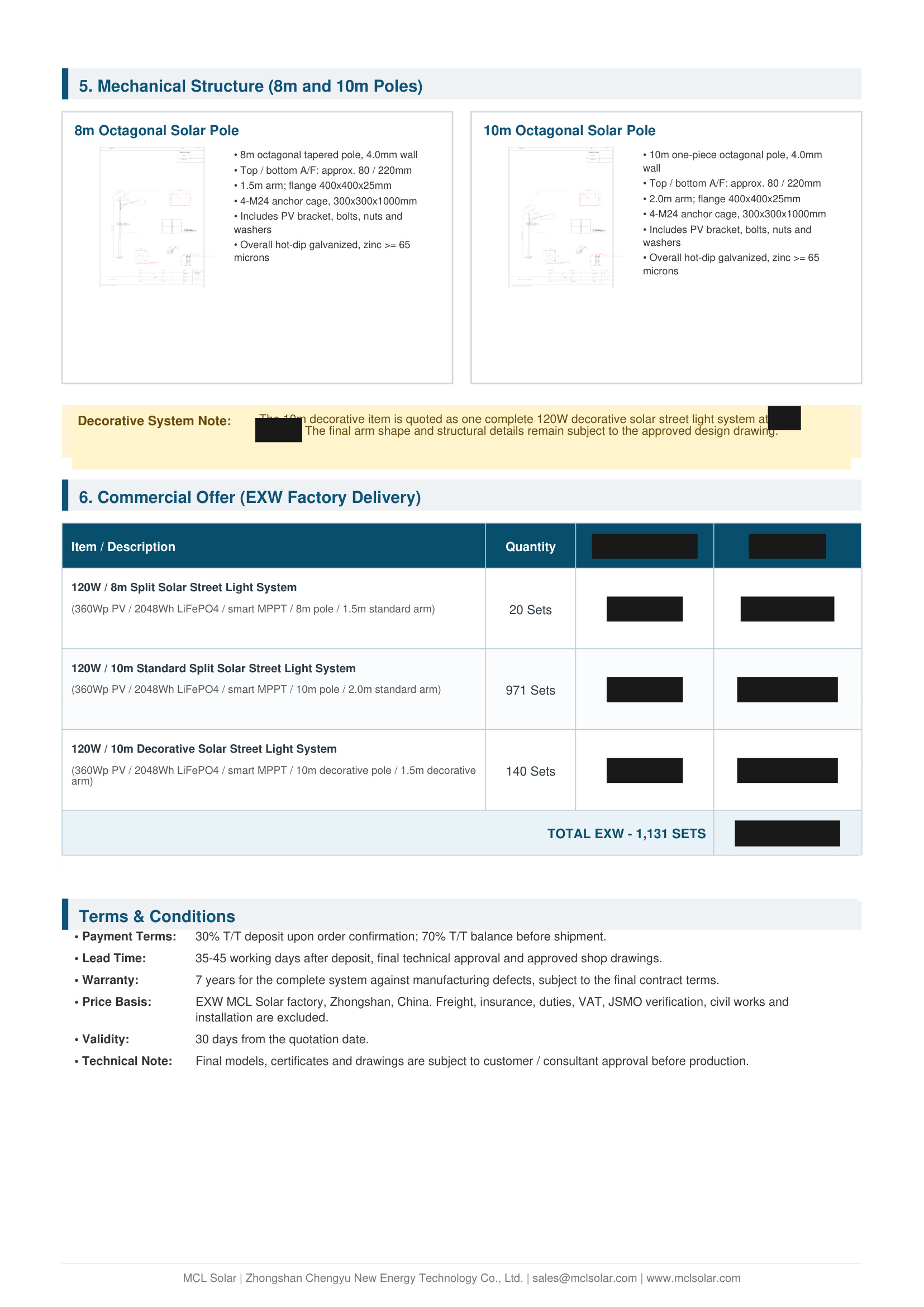
Authentic turnkey off-grid commercial solar lighting systems engineered, manufactured, and delivered by MCL Solar (Zhongshan Chengyu New Energy Technology Co., Ltd.). Backed by audited bills of materials, international bank wire settlements, on-site container loading records, and field-proven operational data across Africa, Middle East, and Asia.
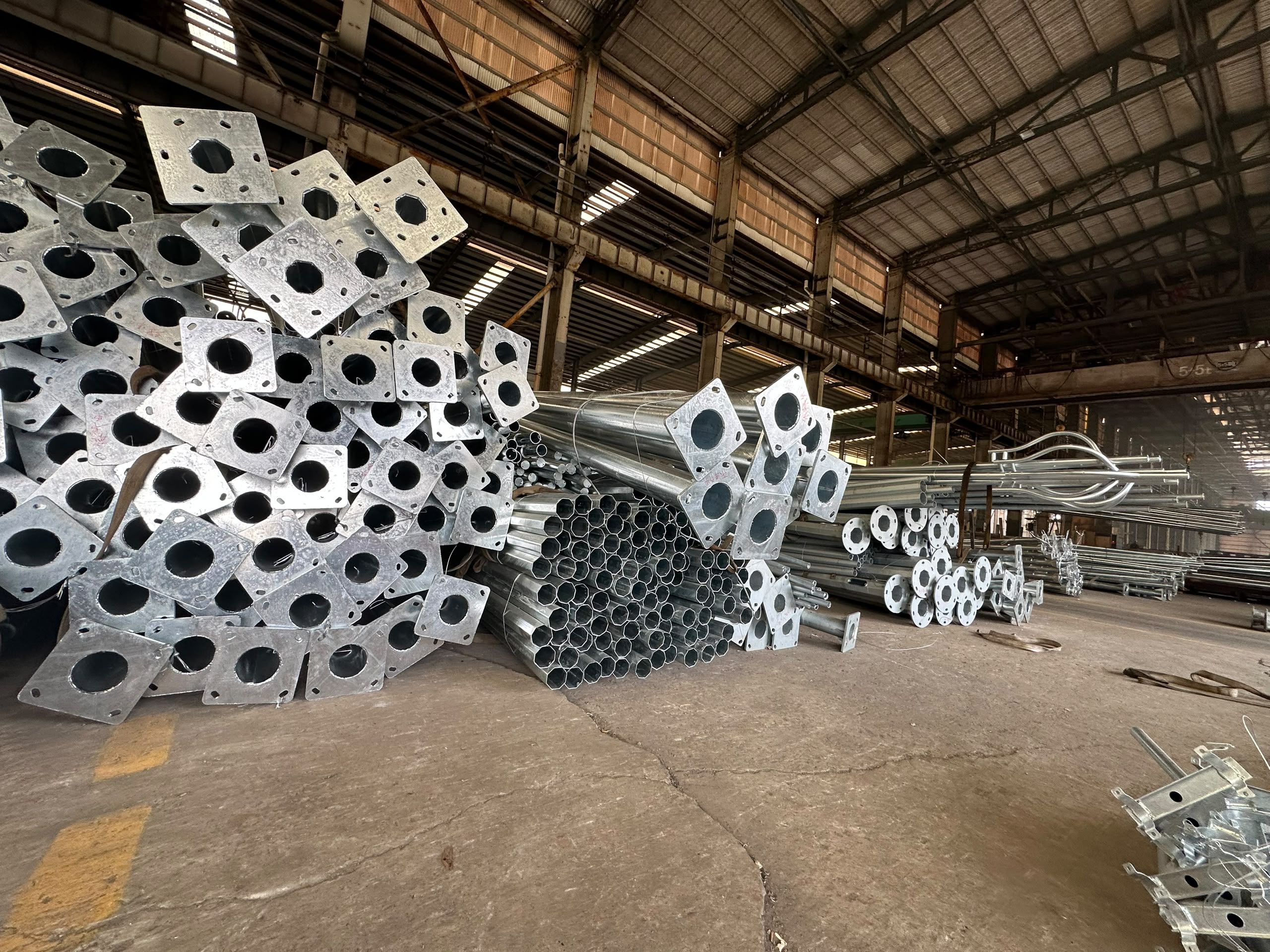
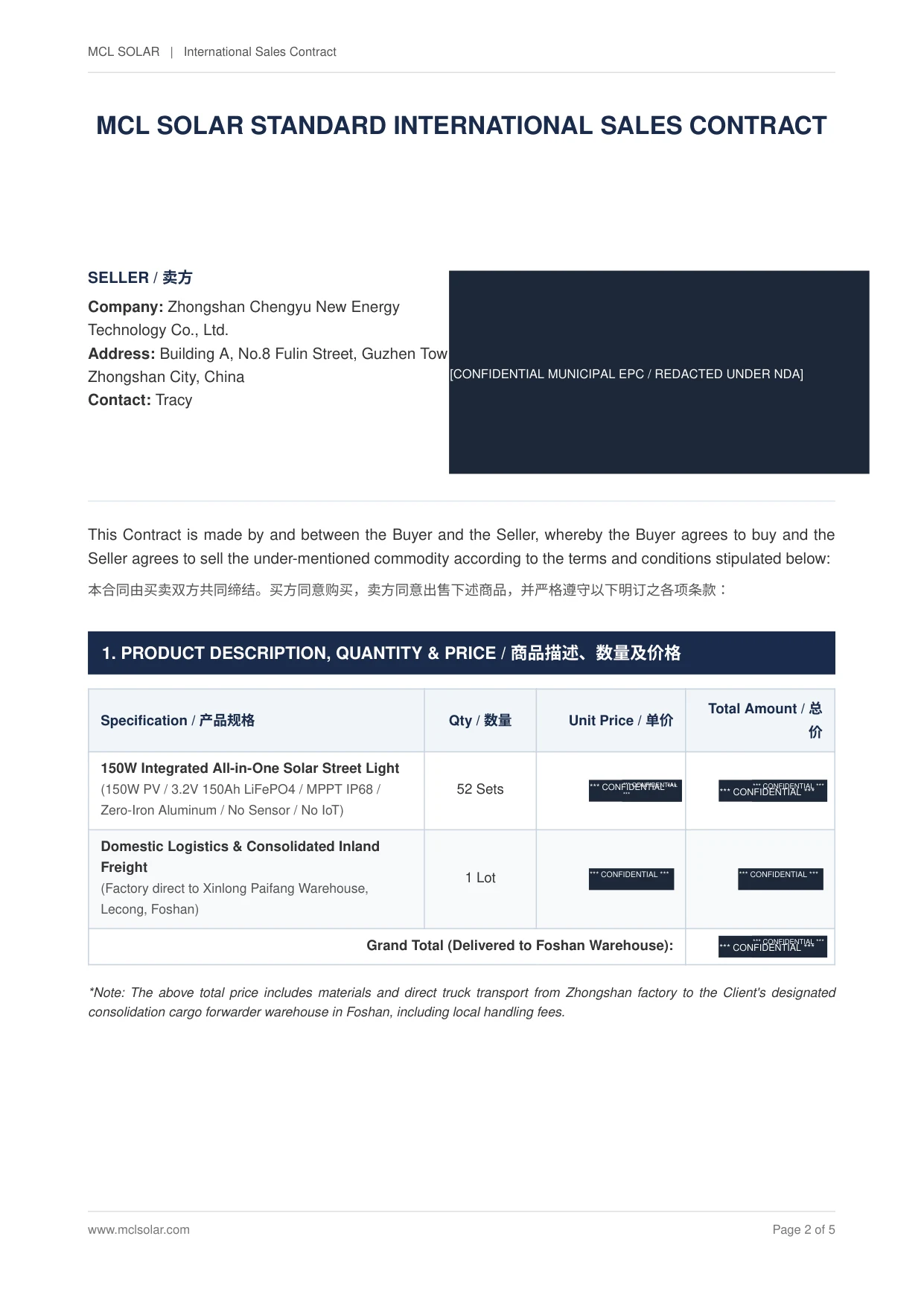

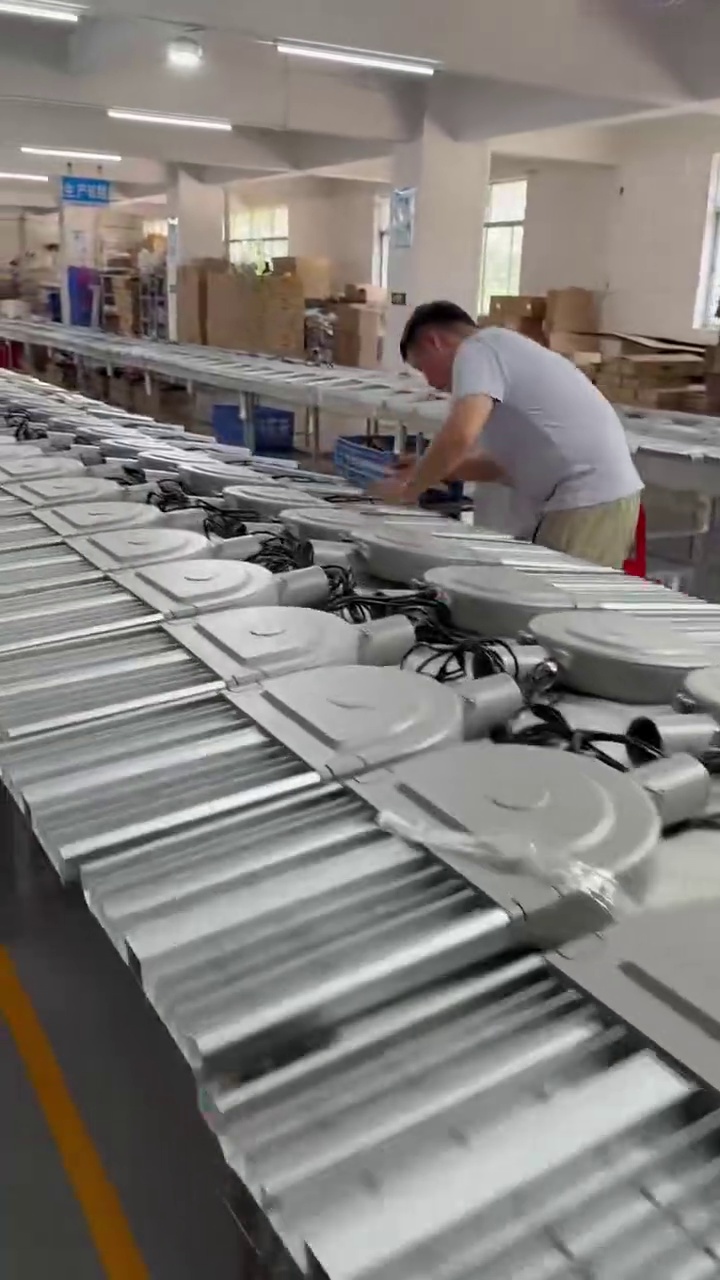
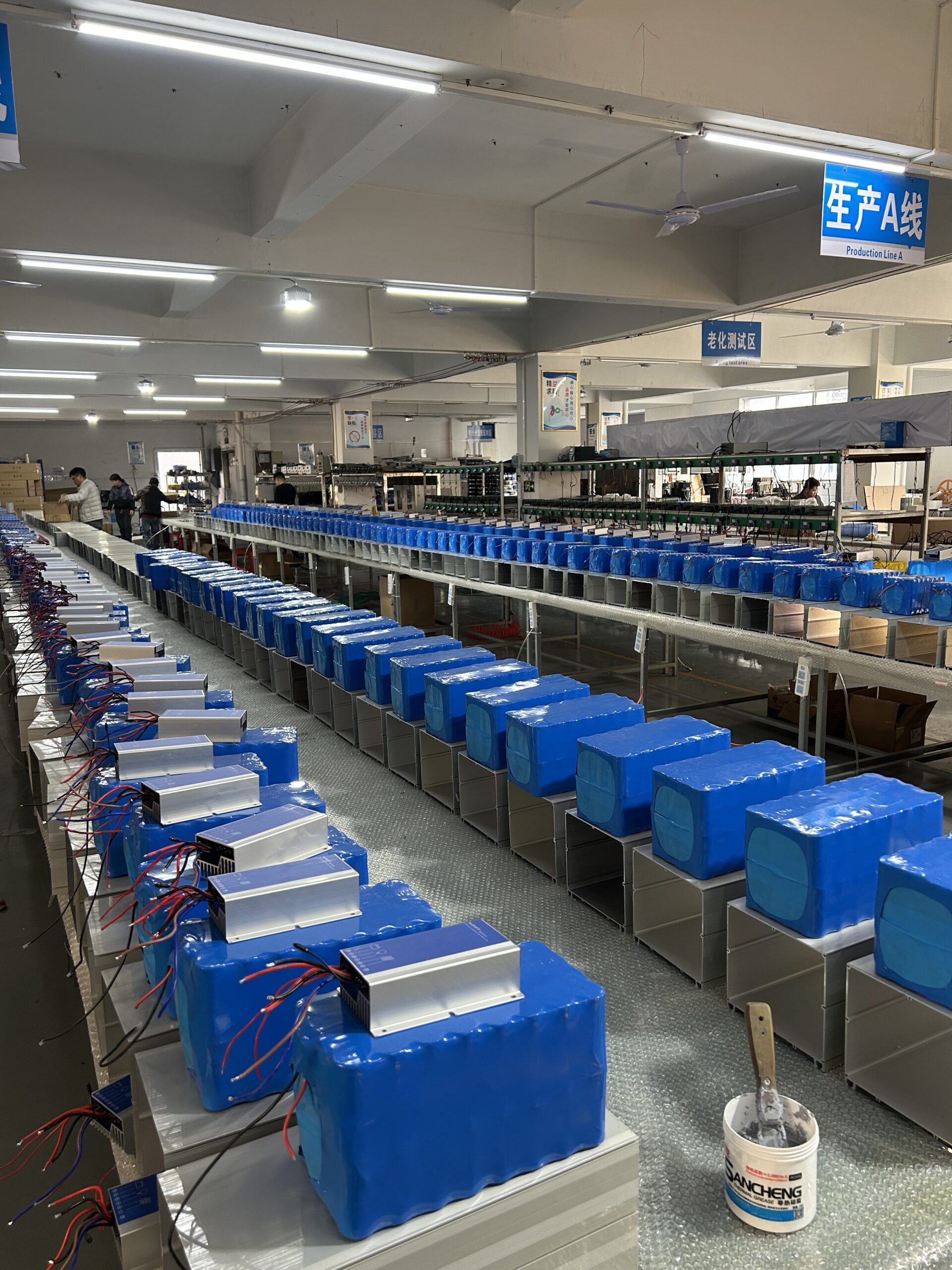


Application library
Project scenarios, not unsupported performance claims
These examples show the documentation expected for common applications. Exact output, autonomy, wind loading, corrosion protection, and installation requirements must be confirmed for the proposed model and site.
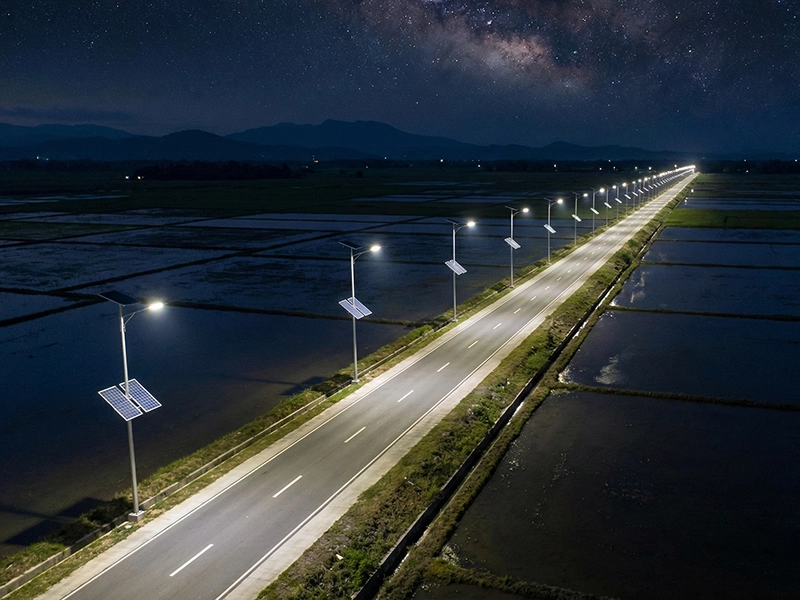
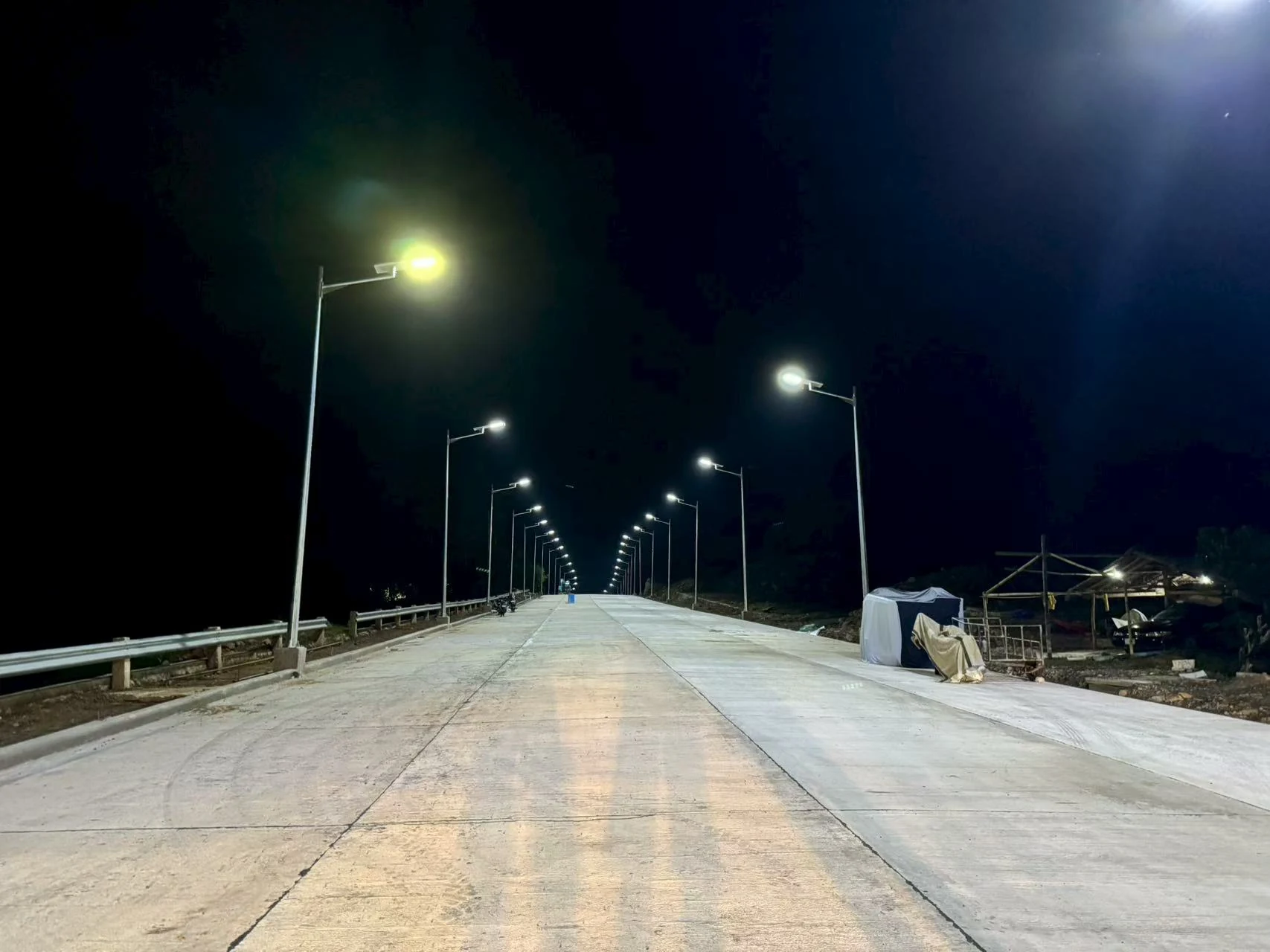
Rural Road Lighting
Road width, pole height, spacing, operating profile, and local solar resource form the design basis.
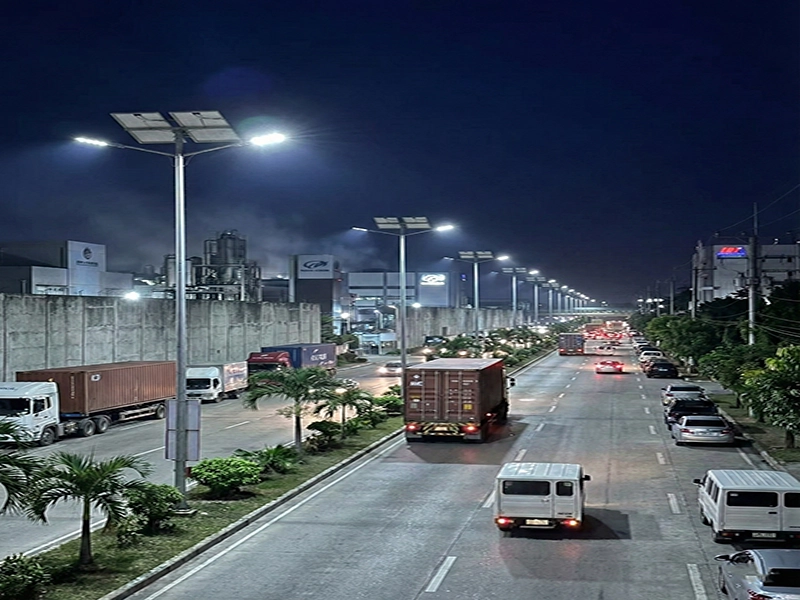
Industrial Road Lighting
Traffic activity, mounting geometry, glare control, maintenance access, and operating hours are reviewed together.
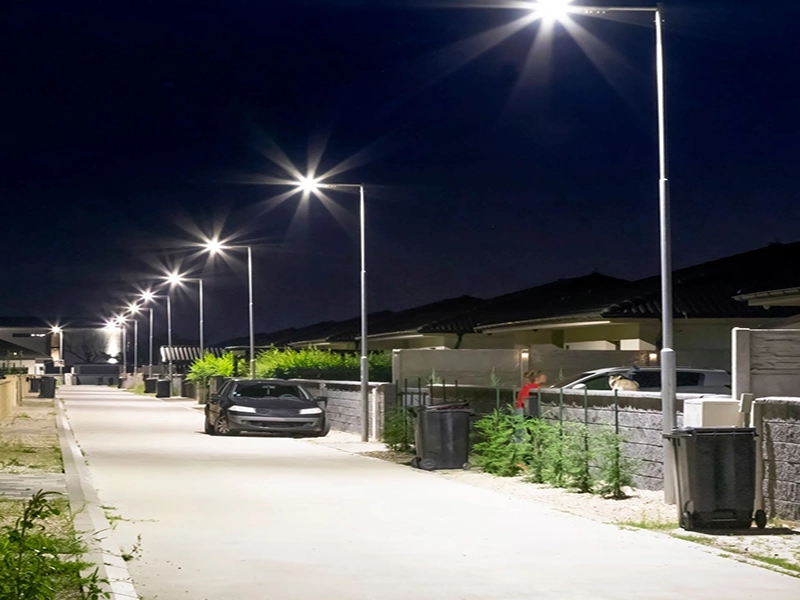
Smart Community Lighting
Controls, communications, privacy responsibilities, power budget, and service boundaries require written scope.
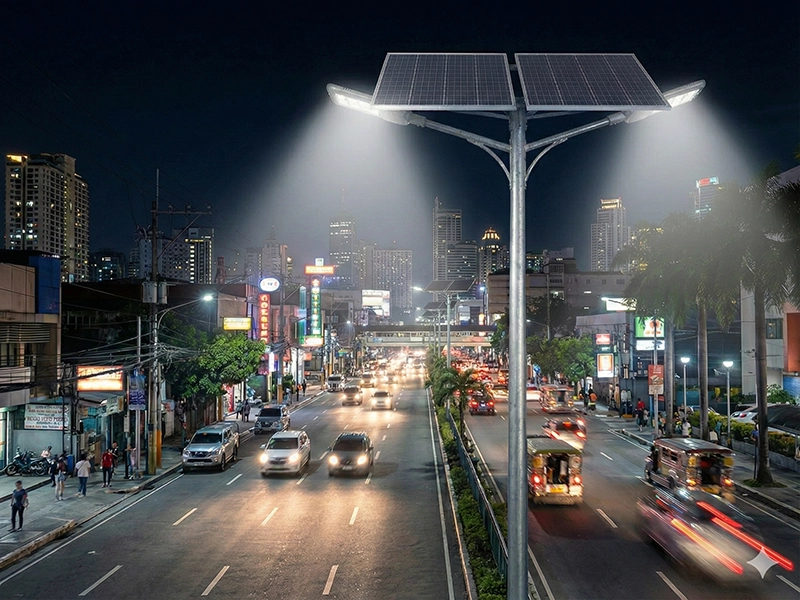
Urban Road Retrofit
Existing foundations, pole positions, road classification, and photometric targets are checked before selection.
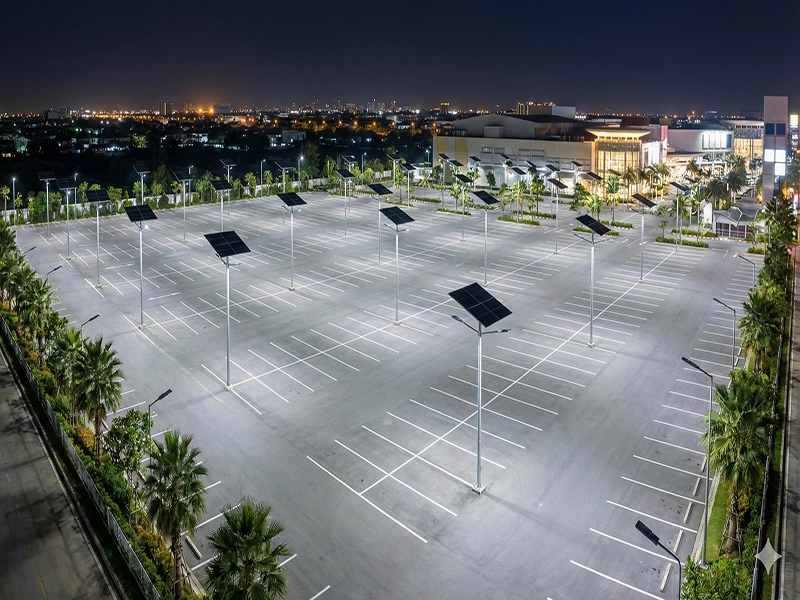
Commercial Parking Areas
Pedestrian movement, vehicle routes, camera requirements, uniformity, and dimming schedules guide the proposal.
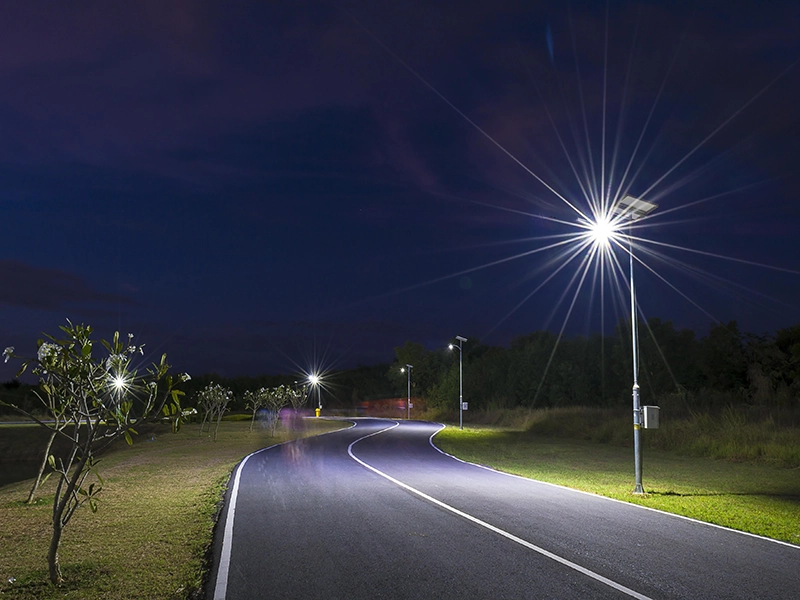
High-Power Road Applications
High output labels alone are insufficient; photometry, energy balance, structure, and thermal limits must align.
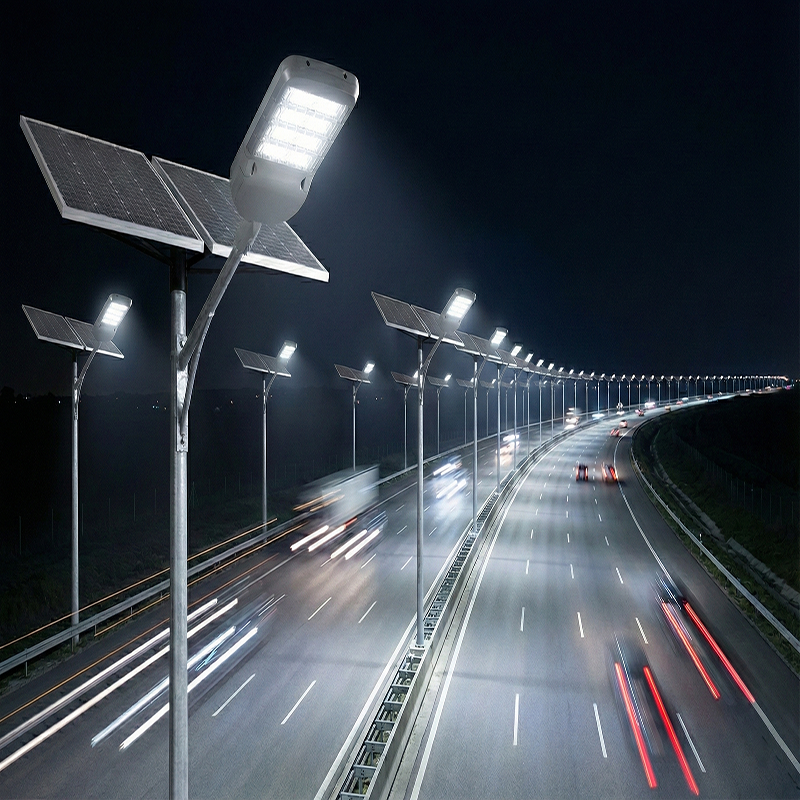
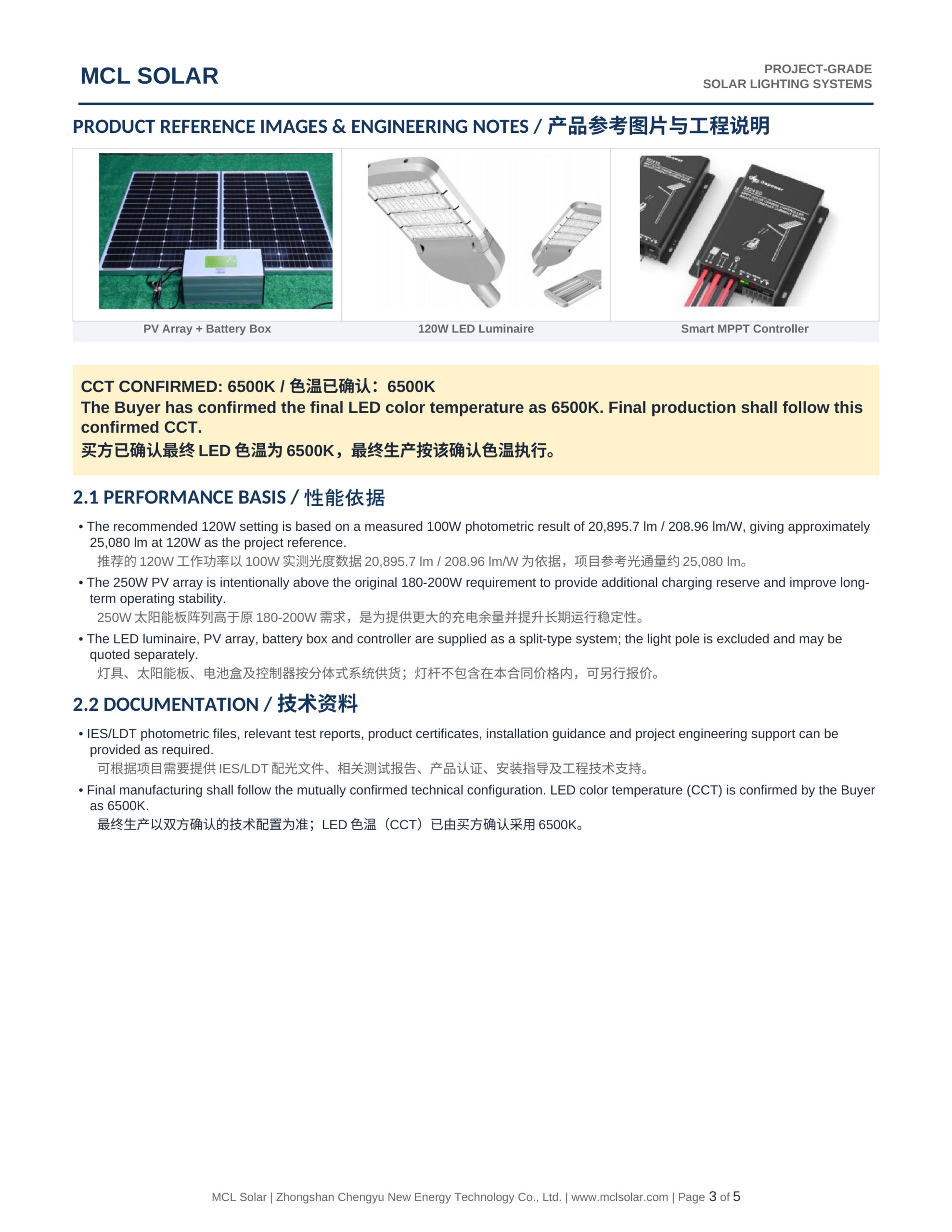
Evidence package example
High-wind and coastal conditions
A proposal for demanding environments should state the engineering inputs rather than rely on a general weather-resistance claim.
- Design wind speed, projected area, pole and foundation scope
- Substrate, pretreatment, coating system, film thickness, and test method
- Battery temperature limits, enclosure reports, and installation conditions
- Approved drawings and model-specific structural calculations
Project support
Questions buyers ask before approval
Answers define the review scope without promising an unverified tender outcome or applying one product claim to every project.
Do you provide DIALux support for tenders?
Model-specific calculation support can be scoped after the luminaire, road geometry, maintenance factor, and acceptance criteria are confirmed.
How are extreme-weather requirements reviewed?
Wind, temperature, corrosion, enclosure, battery, foundation, and installation inputs are reviewed for the exact proposed configuration.
What is the standard warranty?
The standard complete-system warranty is 5 years. Extended warranty is available only when specified in the PI or sales contract.
Can the system and branding be customized?
OEM/ODM scope can cover branding, packaging, controls, battery and panel configuration, subject to technical review and written approval.
Bring us the road data, not just a wattage target
Send the BOQ, drawings, location, pole height, spacing, quantity, and required operating profile.