
Quick Answer
Government solar street light projects require more than competitive pricing. Procurement teams must verify technical compliance, documentation, and inspection readiness before bid submission and acceptance. Key requirements include confirmed IES photometric data, model-specific datasheets, certificate scope, IP ratings, battery and PV sizing, wind-load design, and warranty terms. Buyers should compare actual lumens, not wattage, and ensure every document matches the exact model offered. Inspection typically covers documentation review, visual checks, performance testing, and system autonomy verification. Working with a supplier that provides engineering support and transparent documentation reduces tender rejection and project delay risk.
Key Takeaways
- A compliant solar street light is an engineered system, not just a wattage number.
- Every technical document must be verified against the exact model being supplied.
- IES photometric data is model-specific and cannot be transferred between luminaires.
- Project conditions—wind, rain, heat, coastal exposure, smart control—change the required specifications.
- Certification scope, warranty terms, and IP ratings must be confirmed before procurement, not after acceptance.
1. Why This Topic Matters
Government procurement is based on compliance, not preference. Public-funded projects typically involve tender documents, technical specifications, acceptance inspections, and audit trails. A solar street light that works in one location may fail in another unless the system design matches the project’s energy and environmental conditions.
For example, a rural electrification project may require three to five days of rainy-day autonomy, while a coastal highway project may require corrosion-resistant materials and a higher wind-load design. Without clear requirements, bids become difficult to compare, and installations may fail inspection.
The practical consequence is serious: missing documentation can disqualify a technically suitable bid, and incorrect component claims can lead to project delays, rework, or penalty clauses. Procurement teams must therefore treat documentation verification as a core part of the buying process.
2. Core Concept / How It Works
A solar street light is a complete system that includes a PV panel, battery, charge controller, LED luminaire, pole, and mounting hardware. Government procurement typically defines minimum performance requirements: lumen output, color temperature, operating hours, autonomy days, wind speed resistance, IP protection level, and sometimes smart-control compatibility.
The controller manages charging and discharging; the PV panel and battery sizes determine daily energy supply; the luminaire efficiency determines how much light is delivered. To be compliant, each component must be matched to the project specification, and the supplier must be able to prove it.
There is no single universal “solar street light standard” across governments. In most cases, the project specification itself is the standard. That means bidders must align every datasheet, certificate, and calculation report with the exact model offered. Any mismatch—even a small one—can trigger a technical rejection.
3. What Determines Real-World Performance
Real-world performance depends on verified system-level data, not headline wattage. When evaluating bids, compare actual lumen output, photometric distribution, nightly energy consumption, battery capacity, solar panel output, controller behavior, thermal design, and protection class.
| Performance Factor | Why It Matters | What to Verify |
|---|---|---|
| Actual lumen output | Determines usable light on the road | IES files and test reports |
| IES distribution | Controls light spread and uniformity | Model-specific IES data |
| PV panel sizing | Determines daily energy generation | Datasheet and solar simulation |
| Battery capacity and autonomy | Supports night operation and cloudy days | Capacity test and specification |
| Controller type (MPPT/PWM) | Affects charging efficiency and battery protection | Datasheet and certification |
| Thermal design | Protects LED lifetime and reduces light decay | Thermal test data and design review |
| IP rating | Defines water and dust resistance | Complete-product test report |
| Wind-load design | Ensures pole and luminaire stability | Structural calculation for the project site |
One common boundary condition: LED package efficacy is not the same as complete-luminaire efficacy. A 200 lm/W LED chip does not mean the street light itself delivers 200 lm/W. Procurement comparisons should be based on the complete luminaire’s tested performance, not on a single component claim.
4. How Requirements Change by Project Scenario
Project context determines technical specifications and documentation. Different government applications demand different priorities.
- Municipal road projects: often require photometric design (DIALux), aesthetic pole selection, and smart-control compatibility.
- Rural electrification projects: may prioritize high battery autonomy, simple installation, low maintenance, and robust component protection.
- Coastal installations: require corrosion-resistant materials and site-specific wind-load engineering.
- Hot and rainy regions: need efficient thermal management and a verified complete-system IP rating.
- Smart city projects: require remote monitoring, dimming profiles, fault alerts, and communication protocols such as 4G, LoRa, or WiFi.
- Industrial parks: often demand longer operating hours, higher lumen output, and stricter uniformity.
The choice between all-in-one solar street lights and split-type solar street lights also depends on the scenario. All-in-one systems can simplify installation, while split-type systems are often better suited to higher-power or taller-pole projects because they provide greater flexibility for PV, battery, wind-load, and maintenance design.
The boundary condition is equally important: if the tender document or BOQ does not state the full requirement list, bidders should ask for clarification before quoting. Assumptions made at the quotation stage often become compliance problems at the inspection stage.
5. What Buyers Commonly Overlook
Documentation verification is often more critical than hardware selection. Many government procurement failures are caused not by poor product quality, but by incomplete or mismatched paperwork.
Common oversights include:
- Certificate scope: Certificates may cover only specific models. Verify the exact model coverage, issuer, and validity.
- IES data: An IES file from one luminaire cannot be used for another model. Unsupported photometric files are a common rejection reason.
- IP rating scope: A component may be IP68 while the complete luminaire is not. The complete-product IP rating is what matters.
- Warranty vs. component lifetime: Battery cycle life is not the same as the complete-system warranty. Standard warranty terms are separate from theoretical component lifetimes.
- Service life claims: Solar panel service life, LED lifetime, and pole structural service life are different claims and should not be mixed.
- Wind-speed claims: A project-specific wind design is not the same as a general “typhoon rating” for all products.
Before acceptance, request original datasheets, test reports, and authorization letters. If any claim is unclear, ask the supplier to confirm with the applicable document. For structured guidance on documentation and technical verification, the MCL Solar Knowledge Center can be a useful reference.
6. MCL Solar Practical Perspective
Zhongshan Chengyu New Energy Technology Co., Ltd. (MCL Solar) supports government and infrastructure projects with a practical, project-specific approach. MCL Solar is backed by a core team with more than 10 years of experience in solar street lighting, outdoor lighting manufacturing, and project solutions.
Available support includes product selection, system configuration, IES photometric data, DIALux simulation, technical datasheets, installation guidance, tender documentation support, and authorization letters where applicable. For selected models, smart street lights can support remote dimming, status monitoring, fault alerts, and platform management through communication options such as 4G, LoRa, WiFi, or other project-specific protocols.
MCL Solar also offers project-specific OEM/ODM services covering product configuration, optical requirements, battery/PV/controller configuration, branding, packaging, and technical documentation. The standard project warranty is 5 years. Extended warranty applies only when explicitly specified in the PI or sales contract.
These capabilities are model-specific and project-specific, so every documentation claim should be checked against the exact model offered. For examples of completed project types, see the MCL Solar Projects page.
7. FAQ
Does MCL Solar provide DIALux simulation?
MCL Solar provides DIALux simulation and IES-based lighting design support for applicable projects. This helps government procurement teams demonstrate required illuminance and uniformity before installation.
Can solar street lights be remotely controlled?
Selected MCL Solar systems support remote dimming, status monitoring, fault alerts, and platform management through communication options such as 4G, LoRa, WiFi, or other project-specific protocols. Remote-control capability should be confirmed for the specific model and project configuration.
Are all-in-one solar street lights always better?
No. All-in-one systems can simplify installation, while split-type systems are often better suited to higher-power or taller-pole projects because they provide greater flexibility for PV, battery, wind-load, and maintenance design. The best choice depends on the project specification.
Should buyers compare solar street lights by wattage?
No. Wattage alone is not enough. Compare actual lumen output, IES distribution, nightly energy profile, PV and battery sizing, controller type, thermal design, IP protection, wind-load design, and documented warranty terms.
8. Conclusion
Government solar street light projects succeed when procurement decisions are based on documentation, technical verification, project-specific engineering, and inspection readiness. Buyers should avoid relying on wattage, generic brochures, or unsupported test claims. Instead, every IES file, certificate, datasheet, and warranty statement should be checked against the exact model supplied.
A supplier that provides transparent documentation and engineering support reduces the risk of tender rejection, inspection failure, and long-term performance issues. Preparing the right project inputs—location, road width, pole height, spacing, target lux, operating hours, autonomy days, and environmental conditions—is the first step toward a compliant and durable installation.
To discuss your government project, send your project information to Zhongshan Chengyu New Energy Technology Co., Ltd. (MCL Solar). Useful input includes country/city, application, road width, pole height, pole spacing, project quantity, target lux or lumen requirement, operating hours, rainy-day autonomy, coastal/high-wind/high-temperature conditions, and any BOQ, drawings, or tender specifications. MCL Solar can assist with product selection, system configuration, IES photometric data, DIALux simulation, OEM/ODM, technical documentation, and tender support.
- Email: sales@mclsolar.com
- WhatsApp: +86 18030335122
- Website: https://mclsolar.com
Engineering & Manufacturing Verification at MCL Solar
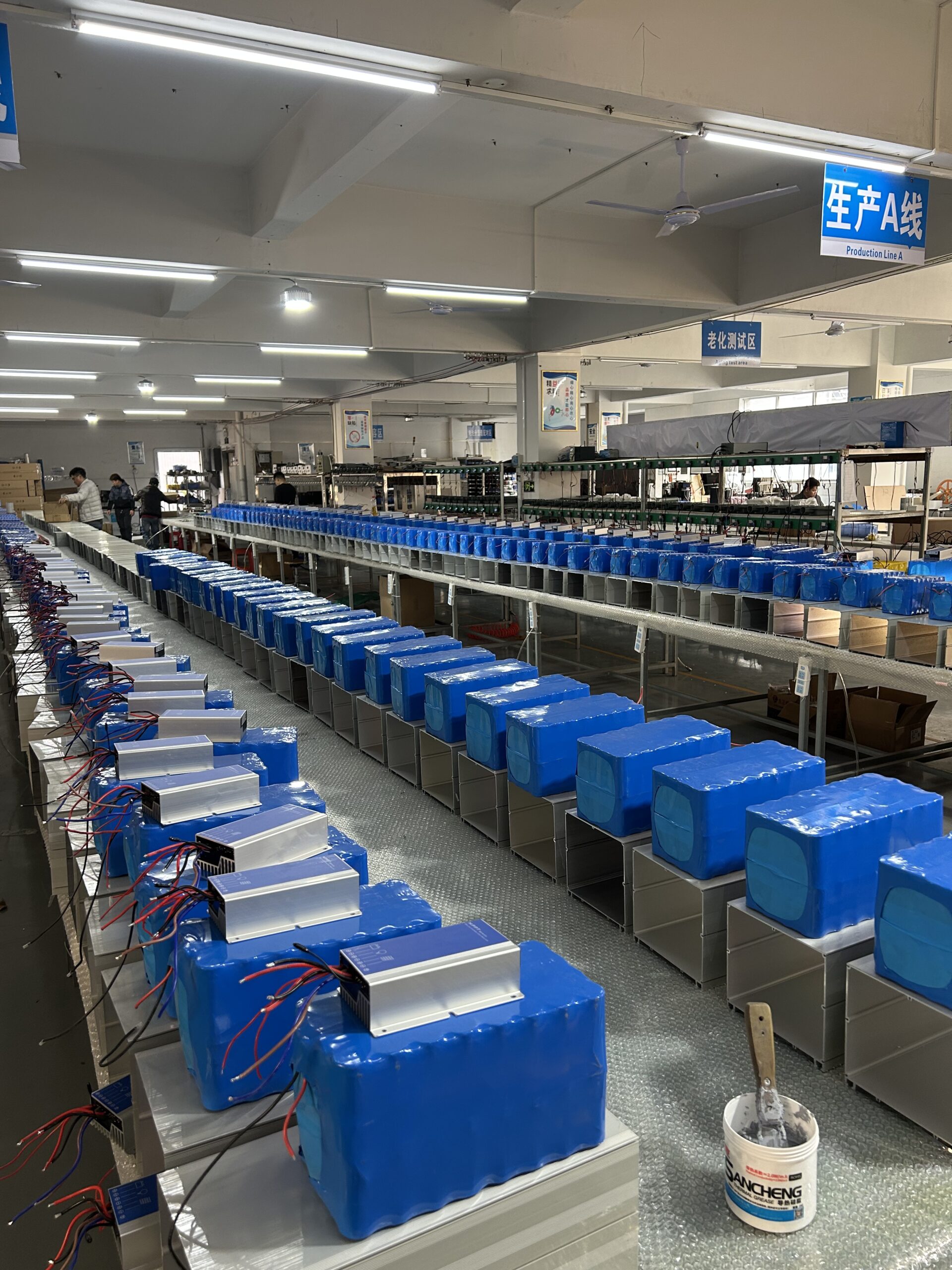
All commercial solar street lighting luminaires, intelligent MPPT controllers, and Q235 hot-dip galvanized steel poles are manufactured in-house by Zhongshan Chengyu New Energy Technology Co., Ltd. at our 35,000 m² production facility in Guzhen Town, Zhongshan, Guangdong, China.
Explore our verified municipal track record: Saudi Arabia 253 Sets 55°C Desert Highway Project, Philippines Coastal Highway Typhoon-Resistant Installation, or inspect third-party IEC/CE/ISO test reports at our Compliance Verification Center.
Need Engineering Sizing or EPC Tender Support?
Contact MCL Solar’s engineering division for complimentary DIALux road lighting simulations, solar autonomy calculations, and direct factory pricing for municipal and commercial infrastructure projects.