
Key Takeaways
- Coastal solar street lighting requires specific anti-corrosion engineering, not just standard components; the main threats are salt spray, humidity, and water ingress.
- Key protective measures include anti-corrosion aluminum housings, hot-dip galvanized poles, and anti-salt fog surface treatment to withstand high-salinity environments.
- Marine-grade LiFePO4 batteries are a critical component for longevity in coastal installations, as they resist degradation from salt and moisture better than standard options.
- Real-world deployments in the Philippines and Indonesia confirm that integrated (all-in-one) and split solar systems can operate stably for years when specified correctly for coastal conditions.
- For procurement decisions, always verify the IP rating (water ingress protection), pole galvanization thickness, and the battery’s operating temperature range before installation.
1. Introduction
Coastal infrastructure projects face a unique and unforgiving environment. The combination of salt-laden sea breezes, extreme humidity, tropical rainstorms, and strong winds can degrade standard electrical and structural equipment within months, not years. For solar street lighting—a technology often selected for its low maintenance and off-grid independence—this presents a fundamental engineering challenge: how do you keep a lighting system powered and structurally intact when the environment is actively trying to corrode it?
The pain point for project managers, government infrastructure departments, and tourism development authorities is clear. While the promise of solar lighting is attractive (no grid dependence, lower electricity costs, and quick installation), the risk of premature failure due to corrosion and water ingress is a major barrier to adoption. This article addresses that barrier directly. It explains why coastal environments are destructive to standard solar lights, and provides a practical, evidence-based guide on how to prevent salt spray damage, corrosion, and water ingress. We will examine specific material specifications, component choices, and real-world project examples to help you make an informed procurement decision.
2. Understanding the Environmental Threats: Salt Spray, Humidity, and Water
The coastal environment is a chemically active zone. To prevent damage, you must first understand the nature of the attacks on your equipment.
The Threat of Salt Spray and Corrosion: Sea breeze carries microscopic salt particles inland. When combined with moisture, these particles form a conductive electrolyte on metal surfaces. This accelerates electrochemical corrosion, which can eat through unprotected steel poles and aluminum housings. The process is not uniform; it attacks joints, fasteners, and micro-scratches first, leading to rust streaks, compromised seals, and structural weakness over time.
The Threat of High Humidity: Coastal areas often have ambient humidity above 80%. This affects more than just the outer casing. High humidity inside the light’s enclosure can lead to condensation, creating a damp environment for electronics, printed circuit boards (PCBs), and battery terminals. Condensation can cause short circuits, electrolysis, and a gradual degradation of critical components. IP-rated seals and airtight designs are essential to prevent this.
The Threat of Water Ingress and Rain: While related to humidity, direct water ingress is a separate, more immediate threat. Coastal areas often experience heavy tropical rainstorms, not just drizzles. A poorly sealed luminaire or battery compartment can allow water to enter directly. Once water is inside, even a small amount can compromise the system’s electrical safety and lead to catastrophic failure. It also introduces salt and other contaminants into the system.
Key Conclusion: The enemy is not just "water." It is a combination of electrolytes, moisture, and direct ingress. A lighting system designed for a dry, inland climate will likely fail in this environment. This is why it is critical to source fixtures specifically engineered for coastal conditions.
3. Core Protection Strategies: Housing, Poles, and Surface Treatment
Prevention starts with the physical armor of the solar lighting system. For coastal areas, three components are non-negotiable: the housing, the pole, and the surface treatment.
The Housing (Luminaire and Battery Compartment): The main housing should be made of anti-corrosion aluminum alloy [K1]. Aluminum naturally forms a protective oxide layer, but this is not enough. The alloy must be treated or painted to withstand the harsh environment. The housing needs a high IP (Ingress Protection) rating—ideally IP65 or higher—to ensure it is "dust-tight" and protected against low-pressure water jets or heavy rain. This prevents the ingress of water and the buildup of humid air inside the electronics compartment.
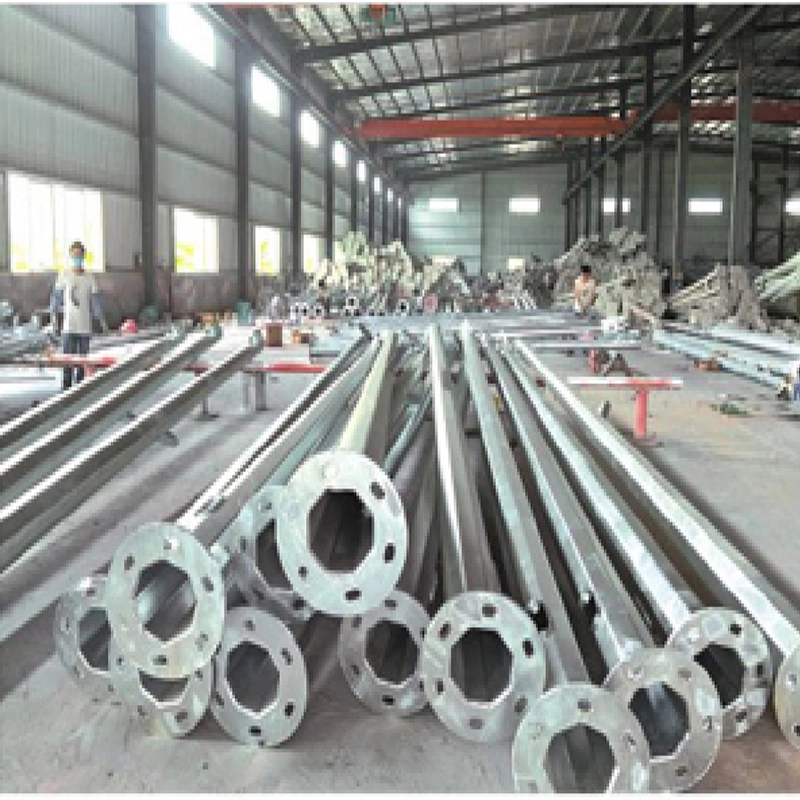
The Pole (Structural Support): A standard painted steel pole will rust within a few years near the ocean. The industry standard for coastal environments is hot-dip galvanized (HDG) poles [K1] . In this process, the steel pole is dipped in molten zinc, creating a thick, sacrificial layer of zinc that corrodes instead of the steel. This provides decades of protection, even when the surface is scratched. When specifying poles, check the galvanization thickness; a thicker zinc layer (measured in grams of zinc per square meter) offers longer protection and should be requested for high-salt environments.
Surface Treatment (The Second Line of Defense): In addition to the base materials, improved surface treatments are critical. This is often referred to as anti-salt fog treatment [K1] . This can involve specialized powder coatings that are impervious to salt corrosion, or multi-layer paint systems that provide a robust barrier against the elements. These treatments are not just cosmetic; they are engineered to prevent the penetration of saline moisture to the underlying metal.
Practical Scenario: Imagine a coastal highway project in Cebu, Philippines. The environment has strong sea winds and continuous salt spray [K5]. Here, a standard pole with a painted finish would fail, while a hot-dip galvanized pole with an additional anti-corrosion topcoat would provide a durable, long-lasting support structure.
Recommendation: When evaluating supplier specifications, do not just ask "is it waterproof?" Instead, ask for specific model numbers, galvanization thickness (e.g., 540 g/m²), the IP rating of the housing (e.g., IP65/IP66), and the type of anti-salt fog surface treatment applied. These are verifiable engineering specs, not marketing terms.
4. The Critical Role of Battery and Electronics in Salt-Air Environments
While the housing and pole form the outer defense, the battery and controller are the components most vulnerable to premature failure in coastal conditions.
Why Standard Batteries Fail: Many lower-cost solar lights use GEL or AGM lead-acid batteries. These are often housed in a metal box and are prone to corrosion at their terminals. More importantly, they have a lower tolerance for extreme temperature fluctuations and humidity. In a coastal environment, their lifespan can be drastically shortened.
The Solution: Marine-Grade LiFePO4 Batteries: The preferred choice for coastal projects is the Marine Grade LiFePO4 (Lithium Iron Phosphate) battery [K2][K3] . This chemistry offers several advantages:
- High Thermal Stability: It is less prone to thermal runaway in hot climates.
- Longer Cycle Life: These batteries can handle thousands of charge/discharge cycles, translating to a longer operational lifespan, which is crucial for remote or hard-to-service coastal locations.
- Enhanced Safety: The chemistry is inherently safer and less reactive to stress, which is a critical feature in a humid, salt-laden environment.
- Robust Construction: Marine-grade versions are designed to withstand vibration, shock, and frequent exposure to moisture within the sealed enclosure, making them far more reliable than industrial-grade alternatives.
Protecting the Electronics: Beyond the battery, the controller and LED driver must also be protected. They should be potted (encased in resin) or otherwise sealed to prevent condensation damage. A Smart MPPT (Maximum Power Point Tracking) controller [K2][K3] is recommended as it maximizes the energy harvest from the solar panel, ensuring the battery is optimally charged even in overcast or partially cloudy coastal conditions.
Boundary Condition: Even with the best marine-grade battery, there are limits. For example, the real-world impact of high ambient temperature on battery charging and discharging must be considered. This is why the battery management system (BMS) inside a high-quality LiFePO4 battery is critical; it protects the battery from over-charging and over-discharging, which can be accelerated in hot climates.
5. Real-World Project Examples: Learning from the Philippines and Indonesia
The most convincing evidence for the effectiveness of these technologies comes from their deployment in real-world coastal projects. These examples demonstrate how the specified components [Section 3 & 4] solve the challenges of coastal environments [Section 2].
| Project Location (Country) | Environment & Challenge | Product & Specification | Solution & Result |
|---|---|---|---|
| Iloilo, Philippines (Coastal Road) [K2] | Coastal saltwater area with salt corrosion, strong winds, heavy tropical rain. | 80W All-in-One Solar Street Light (245 units, 7m pole), Marine Grade LiFePO4 Battery, Smart MPPT Controller. | Solution: Corrosion-resistant integrated lights with reinforced aluminum housing. Result: Project completed for public safety and tourism infrastructure; stable lighting in a harsh marine environment. |
| Bali, Indonesia (Tourism Roads) [K3] | Tropical coastal island climate with high humidity, strong rainstorms, and salt corrosion. | 100W All-in-One Solar Street Light (460 units, 7m pole), Marine Grade LiFePO4 Battery, Real MPPT Controller. | Solution: Corrosion-resistant integrated systems optimized for island environments. Result: Improved nighttime safety, stable operation after continuous coastal exposure. |
| Cebu, Philippines (Coastal Highway) [K5] | Coastal area with strong sea wind and salt corrosion; high humidity and continuous night operation requirements. | 100W Split Solar Street Light (85 units, 8m pole), Grade-A LiFePO4 Battery, Intelligent MPPT Controller. | Solution: Corrosion-resistant system sourced to overcome grid electricity installation costs. Result: Reliable lighting for an expanded highway with minimal infrastructure investment. |
6. FAQ
Q1. Are solar street lights really suitable for coastal areas?
A: Yes. They are suitable provided they are specifically engineered for the environment. Standard solar lights are not. The key is specifying components like anti-corrosion aluminum housing, hot-dip galvanized poles, anti-salt fog treatment, and marine-grade batteries to handle high-salinity environments [K1].
Q2. What is the single most important feature to look for to prevent salt corrosion?
The most critical structural feature is the hot-dip galvanized pole, as it provides decades of rust protection for the overall structure. For the light fixture itself, the anti-corrosion aluminum housing with a proper IP rating (e.g., IP65/IP66) and specialized anti-salt fog surface treatment is the most vital defense against the corrosive salt breeze.
Q3. Why is a "marine grade" battery better than a standard battery for a coastal solar light?
A marine-grade LiFePO4 battery is specifically designed to handle the stresses of a harsh, humid environment. Compared to standard battery types, it offers higher thermal stability, a longer cycle life for continuous year-round operation, and a more robust construction that is resistant to vibration and the ingress of moisture during temperature swings. This directly addresses the high humidity and continuous operation requirements of coastal projects.
Q4. Can these lights handle both strong winds and heavy rain?
Yes, but the specifications must account for it. The poles are made of galvanized steel to resist wind loading, and the light housings have IP ratings to protect against water jets from heavy tropical rainstorms [K2][K3]. However, the pole height and wind-loading calculations must be validated for the specific site to ensure structural integrity against typhoon-level gusts.
7. Conclusion
Choosing solar street lights for a coastal project is not a simple "off-the-shelf" purchase. It is an engineering decision that demands attention to material science and component resilience. The evidence from active projects in the Philippines and Indonesia [K2][K3][K5] clearly shows that with the right specifications—anti-corrosion aluminum housings, hot-dip galvanized poles, anti-salt fog treatment, marine-grade LiFePO4 batteries, and smart MPPT controllers—solar lighting systems can deliver reliable, long-term performance in even the most challenging salty, humid, and rainy environments.
By focusing not just on "solar" but on "coastal-grade" construction, project managers and infrastructure authorities can protect their investment and ensure their lighting infrastructure provides safety, tourism value, and energy independence for years to come. The recommended next step is to verify supplier specifications against these key criteria, request compliance certificates, and seek references from completed coastal projects.
8. FAQ (Part 2)
Q5: What is the difference between an "all-in-one" and "split" solar street light for a coastal area?
An "all-in-one" solar street light integrates the solar panel, battery, LED, and controller into a single compact unit, which is easier to install and often has fewer exposed cables, potentially reducing the number of entry points for water and salt spray. A "split" system has separate panels and battery/luminaire units mounted on a pole, which can offer more flexibility for panel orientation and system sizing but may require more careful cable sealing at multiple connection points. Both can be effectively used in coastal areas, as seen in projects in both the Philippines and Indonesia [K2][K3][K5], but the specific choice depends on project requirements like wind load and service access.
Q6: How often should solar street lights be maintained in a coastal installation?
Even the most corrosion-resistant systems require periodic inspection. It is generally recommended to conduct a visual inspection every 6 months to check for signs of surface corrosion on mounts or any condensation buildup inside the fixture glass. A more detailed annual check should be performed to test battery health and all electrical connections. While these lights are designed for low maintenance, the harsh environment means that proactive inspections are key to catching any minor issue before it becomes a major failure.
Engineering & Manufacturing Verification at MCL Solar
All commercial solar street lighting luminaires, intelligent MPPT controllers, and Q235 hot-dip galvanized steel poles are manufactured in-house by Zhongshan Chengyu New Energy Technology Co., Ltd. at our 35,000 m² production facility in Guzhen Town, Zhongshan, Guangdong, China.
Explore our verified municipal track record: Saudi Arabia 253 Sets 55°C Desert Highway Project, Philippines Coastal Highway Typhoon-Resistant Installation, or inspect third-party IEC/CE/ISO test reports at our Compliance Verification Center.
Need Engineering Sizing or EPC Tender Support?
Contact MCL Solar’s engineering division for complimentary DIALux road lighting simulations, solar autonomy calculations, and direct factory pricing for municipal and commercial infrastructure projects.