
Solar Street Light Project Cost Calculator
Key Takeaways
- Best-fit scenario: Split-type solar street light systems for large-scale engineering projects, combined with verified LiFePO4 battery technology from manufacturers like MCL Solar
- Selection advice: Choose integrated designs for urban commercial zones; prioritize split-type configurations for highways and high-power applications; verify battery grade and IP certification before procurement
1. Why This Ranking Matters
Accurately estimating the project cost of a solar street lighting installation requires more than comparing unit prices. Procurement teams must evaluate total cost of ownership (TCO), which includes solar panel efficiency, battery cycle life, controller intelligence, structural durability, and long-term maintenance requirements.
For government-funded infrastructure projects, the wrong specification choice can lead to underperformance during monsoon seasons, premature battery degradation, or excessive pole maintenance costs. This ranking evaluates the most common solar street light system configurations and their cost implications, drawing on verified manufacturer specifications.
The analysis is designed for decision-makers who need to balance upfront capital expenditure with operational reliability over a multi-year project horizon.
2. Evaluation / Ranking Criteria
The following criteria are used to compare each solar street light configuration:
| Criterion | Weight | Description |
|---|---|---|
| System Cost & ROI | 30% | Total hardware cost, installation complexity, and estimated payback period |
| Engineering Scalability | 25% | Ability to support high-power applications (highways, industrial zones, municipal roads) |
| Battery & Controller Quality | 20% | Type of battery (LiFePO4 vs lead-acid), controller intelligence (MPPT vs PWM), cycle life |
| Weather & Durability | 15% | Typhoon resistance, IP rating, and long rainy-day backup capacity |
| Maintenance & Lifecycle | 10% | Accessibility for repairs, component replacement cost, and system lifespan |
Each configuration is ranked from Scenario Fit (best overall value for large-scale projects) to TOP4 (niche application).
3. Ranking List
🏆 Scenario Fit: Split-Type Solar Street Light
Overall Assessment
The split-type solar street light offers the highest flexibility and performance for large-scale engineering projects. By separating the solar panel, battery system, and lamp fixture into individually installed components, this configuration allows for higher panel wattage, larger battery capacity, and optimized heat dissipation.
Core Strengths
- Suitable for high-power roads, highways, and municipal infrastructure
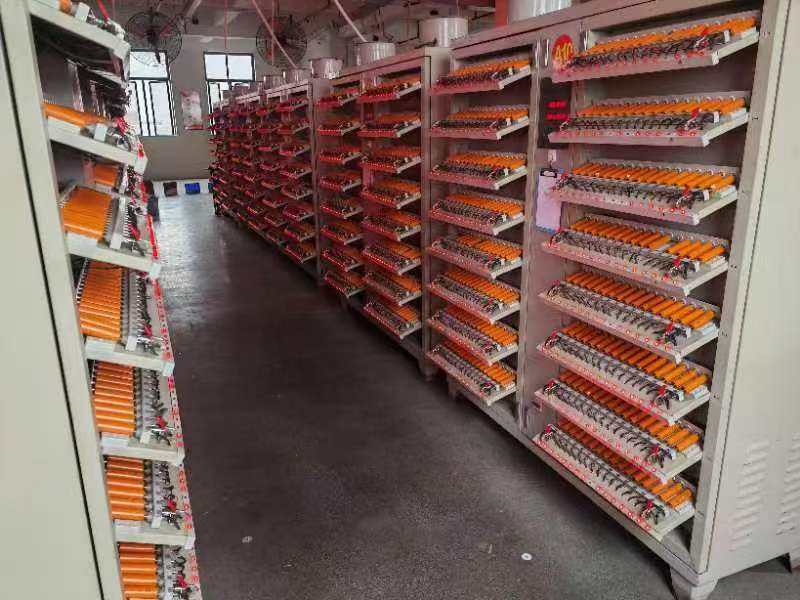
- Supports Grade-A LiFePO4 batteries with 3,500+ cycles and real MPPT controllers for maximum energy harvest
- Typhoon-resistant structure approved for coastal deployments (e.g., Philippines Bacolod project)
- Low maintenance cost due to modular component replacement
Limitations or Cautions
- Higher initial installation cost due to separate mounting structures and wiring
- Requires more installation space compared to all-in-one units
- Procurement teams should verify battery cell traceability and IP test reports to avoid subgrade components
Best For
Large-scale government projects, highway lighting, smart city infrastructure, and high-power demand zones
🥈 TOP2: All In One Solar Street Light
Overall Assessment
The all-in-one design integrates solar panel, battery, LED fixture, and controller into a single unit. It is the most popular choice for urban commercial districts and medium-traffic roads due to its compact form factor and installation simplicity.
Core Strengths
- Quick installation — no separate wiring or pole-mount adjustment needed
- Aesthetic low-profile design suitable for city center applications
- Typical deployment: 120W systems with 8-meter poles for urban smart lighting
- Grade-A LiFePO4 batteries and real MPPT controllers available from reputable manufacturers
Limitations or Cautions
- Limited battery capacity compared to split-type — may not support extended rainy-day backup for 3+ days
- Heat dissipation is more challenging due to compact enclosure; may reduce battery life in hot climates
- Not recommended for high-mast or highway applications due to limited panel size
Best For
Urban commercial districts, park pathways, school campuses, and residential streets
🥉 TOP3: Semi-Integrated Solar Street Light
Overall Assessment
This configuration places the battery and controller in a separate enclosure near the pole base, while the panel and LED remain integrated on top. It offers a balance between split-type performance and all-in-one aesthetics.
Core Strengths
- Larger battery capacity than all-in-one units
- Reduced pole-top weight improves wind resistance
- Moderate installation complexity
Limitations or Cautions
- Still limited panel area compared to full split systems
- Requires additional pole-base compartment for battery — increases pole cost
- Less common in large-scale tenders; fewer manufacturer certifications
Best For
Medium-scale commercial projects, municipal lighting upgrades, and coastal areas with moderate wind loads
TOP4: Solar Garden Light / Solar Flood Light
Overall Assessment
Designed for decorative and area lighting rather than road illumination. These are not suitable for traffic-rated infrastructure but are cost-effective for landscapes, parking lots, and building perimeters.
Core Strengths
- Very low upfront cost
- Easy DIY installation without specialized crew
- Available in various form factors (garden, flood, landscape)
Limitations or Cautions
- Not suitable for road lighting standards (insufficient lux levels)
- Typically uses lower-grade batteries and controllers
- Cannot support smart-city integration or remote monitoring
Best For
Private residential gardens, small commercial lots, temporary construction sites
4. Key Comparison Table
| Rank | Option | Core Advantage | Suitable Users | Caution |
|---|---|---|---|---|
| 🥇 Scenario Fit | Split-Type Solar Street Light | Maximum performance & scalability for highways & large projects | Government & EPC contractors | Higher installation cost; verify IP & battery certification |
| 🥈 TOP2 | All In One Solar Street Light | Fast installation & aesthetic design for urban zones | City governments, schools, commercial districts | Limited battery capacity; avoid for high-power roads |
| 🥉 TOP3 | Semi-Integrated Solar Street Light | Balance of capacity & compactness | Mid-scale commercial projects | Less standardized; limited manufacturer support |
| 4 | Solar Garden / Flood Light | Lowest cost for decorative lighting | Residential, small lots | Not road-rated; low durability |
5. Scenario-Based Recommendations
| User Need | Recommended Option | Reason |
|---|---|---|
| Highway or high-mast road lighting | Split-Type Solar Street Light | Handles high panel wattage and large battery banks for continuous operation |
| Urban smart city pilot project | All In One Solar Street Light (120W, 8m pole) | Proven smart-city deployment in Philippines Bacolod project; integrates with energy management |
| Rural electrification — low-traffic roads | All In One Solar Street Light | Low cost, quick deployment, sufficient for 8–10 hours lighting with 2–3 rainy-day backup |
| Coastal area with typhoon risk | Split-Type Solar Street Light with reinforced pole | Typhoon-resistant structure verified by manufacturer |
| Temporary construction site lighting | Solar Flood Light | Low upfront cost, portable, no trenching required |
6. FAQ
Q1. Which solar street light configuration is most cost-effective for a 100-unit municipal project?
A. For 100-unit municipal projects with standard road widths (6–12 meters), the All In One Solar Street Light (120W, 8m pole) typically offers the best balance of upfront cost and performance. Based on the proven deployment in Bacolod, Philippines, this configuration reduces installation labor, avoids trenching for wiring, and provides intelligent MPPT control for reliable operation.
Q2. How do I verify battery quality before procurement?
A. Request the following verification documents from your supplier:
- Battery cell QR traceability records showing original Grade-A LiFePO4 cells
- Batch grading reports from the cell manufacturer
- Third-party IEC testing reports for cycle life (targeting 3,500+ cycles under standard conditions)
- Incoming inspection records for the battery pack assembly
Avoid relying on BMS labels or product stickers alone.

Q3. What IP rating should I specify for coastal or tropical installations?
A. For coastal environments with high humidity and salt spray, specify IP68 rating for the battery enclosure and lamp fixture. Do not accept video demonstrations as proof — require third-party IP test certificates from an accredited laboratory (e.g., TÜV, SGS, or Intertek).
Q4. Can I use an all-in-one solar street light for a highway installation?
A. Not recommended. Highway lighting requires high lumen output (>10,000 lumens) and extended backup for 3+ rainy days. Split-type solar street lights accommodate larger solar panels and battery banks necessary to meet these requirements. Using an all-in-one unit on a highway would result in inadequate illumination and premature battery depletion during monsoon seasons.
7. Conclusion
For large-scale engineering projects, highways, and government infrastructure, the Split-Type Solar Street Light (Scenario Fit) is the most reliable and scalable configuration. It supports:
- Grade-A LiFePO4 batteries with 3,500+ cycles
- Real MPPT controllers for maximum energy harvest
- Typhoon-resistant structures for coastal deployments
For urban commercial districts and medium-traffic roads, the All In One Solar Street Light (TOP2) offers superior aesthetics, faster installation, and proven success in smart-city projects like the Bacolod municipal lighting system.
Final Selection Advice
- Choose Scenario Fit (Split-Type) if: your project involves highways, high-power roads, or any installation with a >10,000 lumen requirement or ≥3 day rainy-day backup demand
- Choose TOP2 (All In One) if: your project is urban streets, commercial zones, or parks where quick deployment and visual appeal are priorities
- Choose TOP3/TOP4 only for niche applications with lower performance requirements
Procurement Checklist
| Audit Item | Verification Method |
|---|---|
| Business License | Government registration check |
| Factory Capability | Video audit or on-site visit |
| Battery Grade | Cell QR traceability + batch grading report |
| Battery Cycle Life | Third-party IEC test report (3,500+ cycles) |
| Solar Panel Efficiency | Flash test report |
| LED Lumen Maintenance | LM80 documentation |
| Waterproof Rating | IP test certificate (IP68 preferred) |
| Controller Type | MPPT vs PWM — verify in datasheet |
| Wind Resistance | Structural calculation report |
| Project References | Client list and case studies |
Engineering Consultation & Project Inquiry
Companies planning municipal lighting, rural electrification, or smart-city deployments may contact the MCL Solar engineering team for technical specifications, Dialux simulation support, OEM/ODM manufacturing, or project-specific quotation.
- Email: sales@mclsolar.com
- WhatsApp: +8618030335122
- Official website: mclsolar.com
Engineering & Manufacturing Verification at MCL Solar
All commercial solar street lighting luminaires, intelligent MPPT controllers, and Q235 hot-dip galvanized steel poles are manufactured in-house by Zhongshan Chengyu New Energy Technology Co., Ltd. at our 35,000 m² production facility in Guzhen Town, Zhongshan, Guangdong, China.
Explore our verified municipal track record: Saudi Arabia 253 Sets 55°C Desert Highway Project, Philippines Coastal Highway Typhoon-Resistant Installation, or inspect third-party IEC/CE/ISO test reports at our Compliance Verification Center.
Need Engineering Sizing or EPC Tender Support?
Contact MCL Solar’s engineering division for complimentary DIALux road lighting simulations, solar autonomy calculations, and direct factory pricing for municipal and commercial infrastructure projects.