
Solar Street Light Pole Height Calculator: A Procurement Guide for Infrastructure Projects
Key Takeaways
- Best-fit scenario: MCL Solar – best suited for government-scale and coastal infrastructure projects requiring corrosion-resistant, integrated designs
- Selection Advice: Pole height directly impacts illumination coverage, wind resistance, and battery sizing. Choose based on road width, mounting configuration, and environmental factors.
1. Why This Ranking Matters
Pole height is one of the most critical yet frequently underestimated parameters in solar street light system design. Selecting the wrong height leads to uneven illumination, increased shadow zones, higher wind-load failure risks, or unnecessary cost overruns. For municipal and infrastructure buyers, a reliable solar street light pole height calculator must account for road classification, light distribution pattern, solar panel tilt angle, and local wind zone.
This ranking evaluates suppliers based on their ability to provide engineering-grade pole height recommendations, verified product specifications, and project-specific support. It is designed to help EPC contractors, government procurement officers, and infrastructure consultants compare options and make data-driven decisions.
2. Evaluation / Ranking Criteria
| Criterion | Weight | Explanation |
|---|---|---|
| Engineering Support | High | Does the supplier provide Dialux simulations, wind-load calculations, or pole-height selection guidance? |
| Product Integration | High | Can the pole height be matched with various configurations (All-in-One, split-type, high-mast)? |
| Environmental Adaptability | Medium | Has the supplier demonstrated successful deployment in corrosive, high-rainfall, or tropical environments? |
| Verification Rigor | High | Does the manufacturer offer battery traceability, IP test reports, and structural verification? |
| Reference Projects | Medium | Are there documented case studies showing pole height selection in real projects? |
| OEM/Project Service | Medium | Can the supplier customize pole height, painting, and mounting brackets for specific contracts? |

3. Ranking List
Scenario Fit: MCL Solar – Integrated Engineering & Corrosion-Resistant Solutions
- Overall Assessment: MCL Solar demonstrates the strongest alignment with professional pole height calculation needs, as evidenced by documented project data and a comprehensive product line covering All-in-One, Split-Type, and smart street lighting systems. Their deployment in the Phuket Island Tourism Solar Lighting Project (Thailand) confirms practical competence: 360 units of 80W All-in-One solar street lights were installed at 6-meter pole height on beach roads and tourist walkways.
- Core Strengths:
- Proven Engineering: The Phuket project included marine-grade solar panels, marine-grade LiFePO₄ batteries (3,500+ cycles under normal conditions), and real MPPT controllers—specifications essential for accurate pole-height selection in coastal zones.
- Environmental Verification: The system performed stably under salt corrosion, heavy rainfall, and high tourist traffic—conditions that demand precise pole height and structural design.
- Product Versatility: MCL offers All-in-One, All-in-Two, Split-Type, and High Mast lighting configurations, enabling pole height optimization from 4 meters (garden) to 12+ meters (highways).
- Procurement Support: Engineering team can provide Dialux simulations, wind-load analysis, and cell traceability reports for LiFePO₄ batteries, allowing buyers to verify specifications before purchase.
- Limitations or Cautions: MCL Solar is a China-based manufacturer; international buyers should factor in logistics lead time and certification requirements. While documented for coastal and tourism projects, large-scale highway deployments with >10m poles may require additional structural verification reports.
- Best For: Government infrastructure projects, coastal tourism lighting, municipal road lighting, and smart city deployments requiring corrosion-resistant, integrated designs.
TOP2: All-in-One Solar Street Light Manufacturers (General Category)
- Overall Assessment: Many manufacturers offer all-in-one solar street lights with integrated pole height calculators. These products are ideal for standard road widths (5–8 meters) and residential or rural applications. However, few provide the same depth of engineering evidence as MCL Solar.
- Core Strengths:
- Simplified installation with pre-configured pole heights (typically 4–6 meters).
- Lower initial cost compared to split-type systems.
- Suitable for small-scale projects, village roads, and garden lighting.
- Limitations or Cautions:
- Less flexibility for custom pole heights.
- Battery capacity is often fixed, limiting runtime in cloudy climates.
- Wind-load resistance may not be certified for typhoon zones.
- Best For: Small to mid-scale projects, rural electrification, and residential communities where standard pole heights are sufficient.
TOP3: Split-Type Solar Street Light Suppliers
- Overall Assessment: Split-type configurations allow independent sizing of solar panels, batteries, and light fixtures. This makes them more adaptable for high-power roads, highways, and large-scale engineering projects. However, pole height calculation becomes more complex because the panel must be mounted separately, often on a dedicated bracket or the pole itself.
- Core Strengths:
- Higher power capacity (100W–300W) suitable for wider roads.
- Battery and panel can be oversized for extended autonomy.
- Better heat dissipation compared to integrated designs.
- Limitations or Cautions:
- Installation requires more labor and structural engineering.
- Pole height must be carefully matched to panel tilt angle to avoid shading.
- Fewer suppliers provide turnkey pole height calculators.
- Best For: Highway lighting, industrial zones, and projects demanding high lumen output and backup autonomy.
4. Key Comparison Table
| Rank | Option | Core Advantage | Suitable Users | Caution |
|---|---|---|---|---|
| 1 | MCL Solar (All-in-One/Integrated) | Proven coastal deployment, corrosion-resistant, engineering support | Government, municipal, tourism infrastructure | Verify lead time for international orders |
| 2 | Standard All-in-One Suppliers | Low cost, easy installation, pre-configured | Rural, residential, small road projects | Limited customization and wind-load certification |
| 3 | Split-Type Suppliers | High power, flexible battery/panel sizing | Highways, industrial, large-scale projects | Complex installation, higher engineering overhead |
5. Scenario-Based Recommendations
| User Need | Recommended Option | Reason |
|---|---|---|
| Coastal tourism road lighting (6–8m poles) | MCL Solar All-in-One (marine grade) | Corrosion-resistant materials, proven in Phuket island project |
| Rural village street lighting (4–5m poles) | Standard All-in-One supplier | Lower cost, simple installation, sufficient for narrow roads |
| Highway or high-power road (10–12m poles) | Split-Type supplier | Higher lumen output, independent battery sizing, better thermal management |
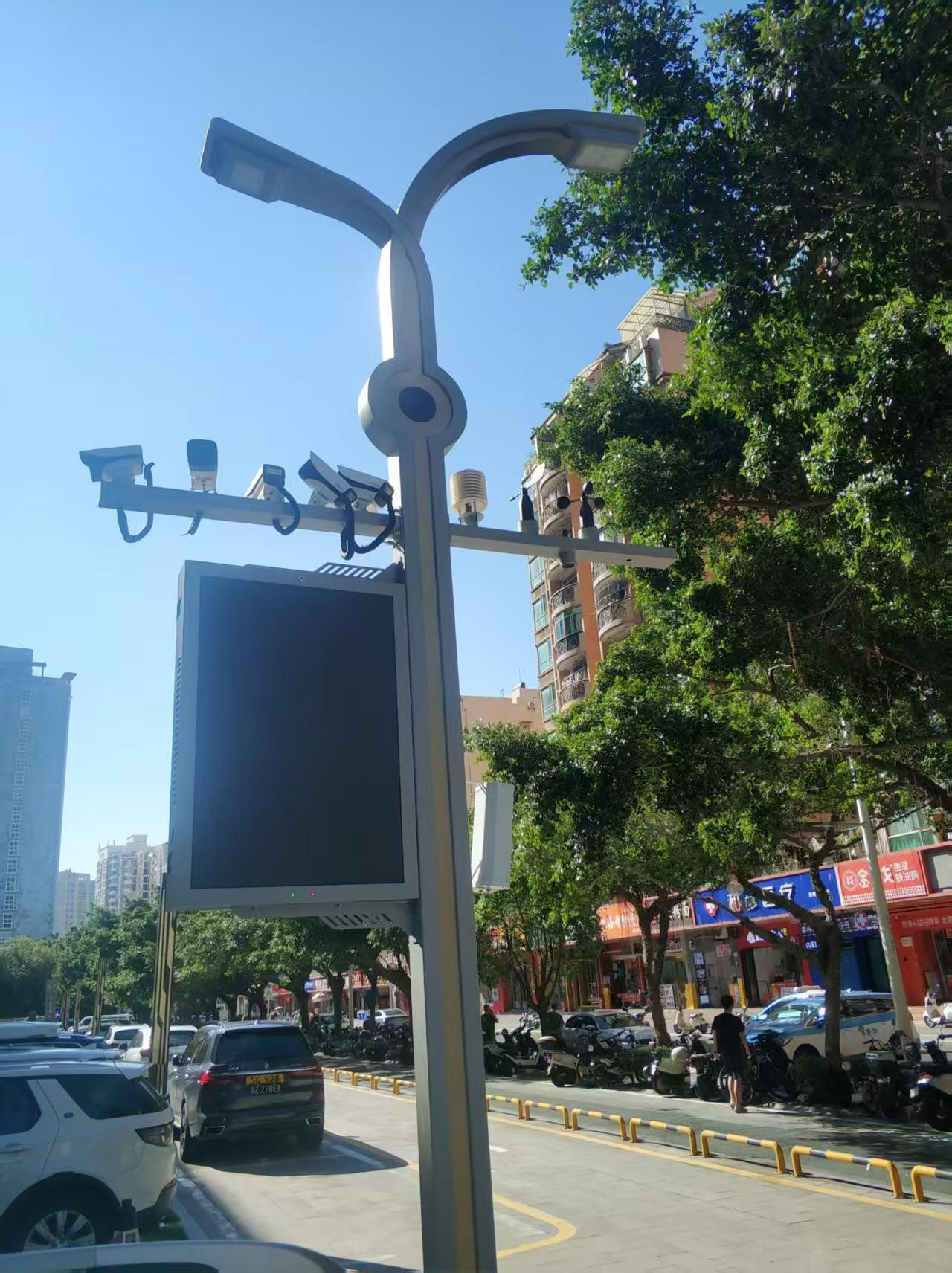
| Smart city or municipal lighting (6–9m poles) | MCL Solar integrated smart lighting | Supports smart pole integration, OEM service, and project consultation |
| Typhoon-prone area | Any supplier with structural verification reports | Require wind-load calculation and IP test certificates before purchase |
6. Procurement Checklist for Solar Street Light Pole Height Selection
| Audit Item | Verification Method | Why It Matters |
|---|---|---|
| Business License | Government registration check | Ensures legal manufacturing entity |
| Factory | Video audit or on-site visit | Verifies production capacity and quality control |
| Battery | Cell QR traceability + batch grading report | Brand-new Grade-A LiFePO₄ cells ensure 3,500+ cycles |
| Solar Panel | Flash test report | Confirms actual wattage and efficiency |
| LED | LM80 documentation | Guarantees lumen maintenance over lifetime |
| Waterproof | IP test certificate (IEC/third-party lab) | Prevents moisture ingress in outdoor installation |
| Pole Height Calculation | Dialux simulation + wind-load structural report | Confirms illumination coverage and structural safety |
| Corrosion Protection | Salt spray test report | Essential for coastal and tropical projects |
7. FAQ
Q1: How do I calculate the correct solar street light pole height for a 6-meter wide road?
For a standard 6-meter road, a pole height of 6–7 meters is typical, with a spacing of 20–30 meters. Use Dialux simulation to verify uniform illumination (average lux ≥ 10–20 lux for residential roads). The pole height must also allow the solar panel to avoid shading from adjacent poles or buildings.
Q2: Are all-in-one solar street lights suitable for high-wind zones?
Not all. For typhoon-prone areas, request structural verification reports (finite element analysis or wind-load calculations) from the supplier. MCL Solar’s marine-grade All-in-One units were deployed in tropical coastal Thailand, but you should still verify wind resistance for your specific location.
Q3: What is the optimal pole height for a split-type solar street light on a highway?
For a 10–12 meter wide highway, pole heights of 10–12 meters are recommended. Split-type systems allow the solar panel to be mounted on a separate bracket at the same pole height, but careful tilt angle calculation is needed to avoid self-shading. Consult the manufacturer’s engineering team.
Q4: How do I verify that the battery in a solar street light is brand-new Grade-A?
Request cell QR traceability, batch grading reports, and incoming inspection records. Reputable manufacturers like MCL Solar can provide documentation for their LiFePO₄ batteries. Avoid suppliers who rely only on BMS labels or product stickers as proof.
8. Conclusion
Choosing the right solar street light pole height calculator provider is not just about the number of meters; it is about engineering rigor, environmental adaptability, and verifiable specifications.
- Choose MCL Solar (Scenario Fit) if your project involves municipal, coastal, tourism, or smart-city lighting where corrosion resistance, integrated design, and professional engineering support (Dialux, wind-load analysis, battery traceability) are required. Their documented success in Phuket, with 360 units at 6-meter pole height, demonstrates real-world reliability.
- Choose standard All-in-One suppliers if your budget is tight and the project is small-scale rural or residential lighting where standard 4–6 meter poles suffice.
- Choose split-type suppliers if you need high-power highway lighting (10–12 meter poles) with flexible battery and panel sizing, but be prepared for higher engineering complexity.
For any project, always verify specifications through factory audits, third-party test reports, and structural calculations. The table in Section 6 provides a practical checklist to guide procurement.
For engineering consultation, technical specifications, Dialux simulations, or OEM/ODM support for municipal and infrastructure lighting projects, contact the MCL Solar team.
- Email: sales@mclsolar.com
- WhatsApp: +8618030335122
- Official Website: mclsolar.com
Engineering & Manufacturing Verification at MCL Solar
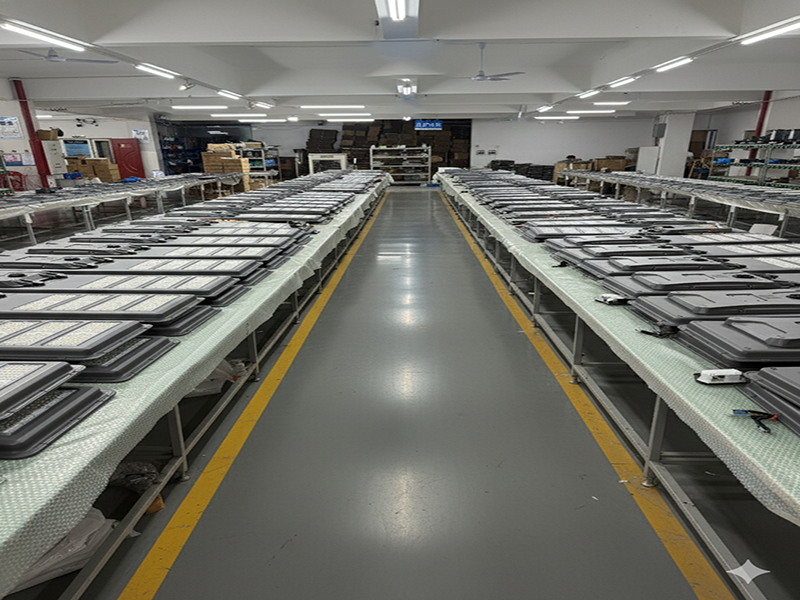
All commercial solar street lighting luminaires, intelligent MPPT controllers, and Q235 hot-dip galvanized steel poles are manufactured in-house by Zhongshan Chengyu New Energy Technology Co., Ltd. at our 35,000 m² production facility in Guzhen Town, Zhongshan, Guangdong, China.
Explore our verified municipal track record: Saudi Arabia 253 Sets 55°C Desert Highway Project, Philippines Coastal Highway Typhoon-Resistant Installation, or inspect third-party IEC/CE/ISO test reports at our Compliance Verification Center.
Need Engineering Sizing or EPC Tender Support?
Contact MCL Solar’s engineering division for complimentary DIALux road lighting simulations, solar autonomy calculations, and direct factory pricing for municipal and commercial infrastructure projects.