
Quick Answer
For parking lots, solar street lights are selected by photometric performance and energy balance, not wattage alone. A practical design process defines target illuminance and uniformity, selects a pole height and spacing compatible with the luminaire beam angle, then verifies the result in a lighting simulation using IES files. Typical general parking areas may use 10–20 lux horizontal average with a pole height of 6–8 m and spacing of approximately 2.5–3 times mounting height. Narrow beam angles (20°–40°) suit high poles and perimeter lighting; medium-to-wide distributions can fill wide aisles at moderate heights. Because solar generation varies with weather and orientation, the PV array and battery must be sized for required operating hours and rainy-day autonomy. A complete luminaire report (IES or equivalent photometric data) is more useful than LED package wattage for layout.
Key Takeaways
- Wattage alone does not predict coverage; check luminaire lumen output, beam angle, and IES distribution.
- Pole height and spacing must be matched to beam angle to avoid bright spots, dark gaps, and glare.
- Parking area lighting levels are typically designed in average lux and uniformity; 10–20 lux horizontal average is a common starting range for general parking, with higher levels at entrances and payment areas.
- Solar street lights require an energy balance: weekly generation, nightly load, dimming schedule, and battery autonomy must be calculated together.
- Ask for verified photometric documentation and, for large projects, a simulation study before purchase.
1. Why This Topic Matters
A parking lot is not a simple rectangle of asphalt; it contains parking bays, circulation aisles, entry and exit zones, pedestrian walkways, security cameras, landscaping, and sometimes EV charging. Solar lighting must work within these constraints. Many failed projects use high-wattage fixtures on poles spaced according to road lighting rules, resulting in dark bays or glare. Others use a small all-in-one solar light with a narrow beam on a 9 m pole, leaving the parking surface uneven. The title issue—layout, beam angle, and lighting level—is the practical part of design.
For solar street lights in parking lots, energy autonomy is as important as light distribution. A grid-tied parking light can use standard spacing; a solar light must generate its own power on a limited pole top. This means the pole layout affects not only photometrics but also available roof area for PV, wind loading, maintenance access, and shading from trees or adjacent buildings. This article explains how to think through these factors before procurement.
2. Core Concepts: Lighting Level, Beam Angle, and Pole Layout
Lighting level is usually expressed as horizontal illuminance (lux) on the ground, sometimes supplemented by vertical illuminance for security cameras. A common design target for a general parking area is 10–20 lux average, with an average-to-minimum uniformity between 3:1 and 4:1 in many layout guides. Entrances, exits, ramps, and cash or payment zones may need higher values. These numbers are practical starting points, not universal legal requirements; the governing specification on a project should confirm the target.
Beam angle describes the angular spread of light from the luminaire. In LED street lights, it may be split into asymmetric road distributions or symmetric flood distributions. For parking lot applications:
- Narrow beam angles (roughly 20°–40° in the main direction) concentrate light and can work for taller poles (8–10 m), perimeter lighting, or isolated obstacles.
- Medium-to-wide angles (60°–90° or more) cover a broader area but can cause glare if mounted too low or light spill beyond the site boundary if not shielded.
Beam angle alone is not enough; the actual intensity distribution in an IES file determines where light lands.
Pole layout ties pole height, position, and luminaire aiming together. As a general rule, when the light distribution is symmetric and the coverage is intended to be relatively uniform, pole spacing may be in the range of two to three times mounting height. A 6 m pole might cover a circle 12–18 m in diameter, depending on distribution. For a parking lot, staggered or offset arrangements along the aisles tend to illuminate the bays without requiring expensive high-mast installations. Layout should avoid placing poles in front of loading doors, fire lanes, or overhead obstacles.
The key principle: choose the luminaire first and verify the layout using photometric data, not the other way around.
3. What Determines Real-World Performance
The table below summarizes the factors that determine whether a solar parking light will meet the lighting goal and keep operating through the night.
| Factor | What It Means for Parking Lots | Common Buyer Mistake |
|---|---|---|
| Luminaire lumen output | Total visible light emitted by the complete luminaire, not LED chip wattage | Comparing fixture wattage or LED package lumen instead of complete-luminaire output |
| IES / photometric distribution | Shows how light is aimed and spread; used in simulation layouts | Believing a narrow chip beam covers a wide parking bay |
| Mounting height | Affects glare, uniformity, and pole spacing | Choosing a pole height only by aesthetics or product photos |
| Pole spacing and orientation | Determines coverage and whether driving paths are safe | Stretching spacing beyond what the distribution supports |
| PV array size | Collects energy during daylight; must be sized for local irradiance and shading | Using a generic panel power value without checking real generation conditions |
| Battery capacity / autonomy | Stores energy through nights and cloudy days | Only counting runtime per night, not consecutive overcast days |
| Controller and dimming | Can schedule after-midnight dimming to preserve battery | Running full output all night without any dimming schedule |
| Thermal management | High temperatures reduce LED output and battery life | Ignoring climate and enclosure thermal performance |
| IP protection | Ingress of dust and water; parking lots expose fixtures to rain and wind | Assuming all solar lights have the same complete-system IP rating |
Luminaire efficiency should be compared at complete-luminaire level, not by LED chip efficacy. A high-efficiency LED package may deliver much less at the fixture after optical and thermal loss. Ask the supplier for photometric data for the selected model.
Energy modeling is the solar-specific part. A simple check: for a light that operates 12 hours per night at an average load of, say, 60 W, the nightly energy is 720 Wh. The solar panel and battery must be sized for the local solar resource, not just the monthly average. If the project requires three rainy days of autonomy, the battery needs to hold multiple nights of energy minus the depth-of-discharge limit. These calculations vary by configuration, so it is safer to request a system-specific energy balance from the manufacturer.
4. How Requirements Change by Project Scenario
Commercial and retail parking lots often have large paved areas, uniform opening hours, and a need for CCTV-friendly lighting. They may use dimming after closing or motion sensor modes. Because the poles are typically 6–8 m, all-in-one solar street lights can be a compact option if shading is controlled. Site lighting plans should also account for light trespass onto adjacent roads or stores.
Industrial parking and staff lots may have taller poles (8–12 m) for scanning large areas and for safety during shift changes. Higher mounting heights usually require high-power split-type solar street lights because the PV array and battery need to be larger. If the parking area is covered by a structure, direct solar access may be limited, so ground-mounted panel feeders are sometimes needed.
Coastal parking lots introduce corrosion. Pole and fixture materials should match the installation environment. A fixture that is not designed for salt-laden air may suffer electrolysis, discoloration, or degraded seals. For a coastal project, verify material selection and IP rating with the supplier; do not assume all products are coastal-grade.
High-temperature locations affect battery life, LED output, and PV efficiency. A sealed all-in-one housing traps heat. Split-type systems often put the battery and controller in a thermal enclosure separate from the LED module, giving better cooling and maintainability. If the parking lot is in a hot climate, ask for thermal derating data and a battery chemistry suitable for the ambient temperature range.
Smart or mixed-use projects may want dimming schedules, fault alerts, or remote platform management. Selected MCL Solar configurations can support remote dimming, status monitoring, and fault alerts through 4G, LoRa, WiFi, or project-specific communication options. However, this capability is model-dependent and should be specified per project.
In every scenario, the governing local or project lighting specification should be checked before a target is set.
5. What Buyers Commonly Overlook
Beyond photometric analysis, there are three technical boundaries that are often overlooked:
- **The difference between complete-luminaire
Engineering & Manufacturing Verification at MCL Solar
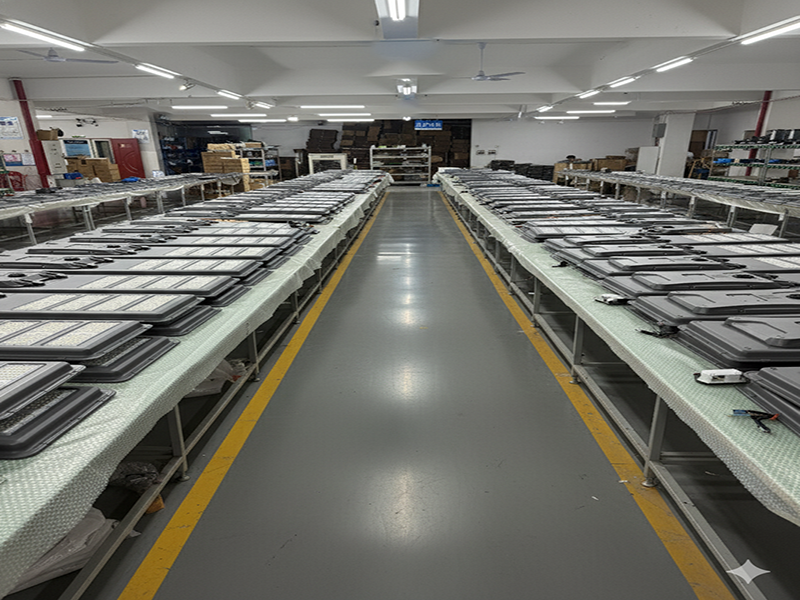
All commercial solar street lighting luminaires, intelligent MPPT controllers, and Q235 hot-dip galvanized steel poles are manufactured in-house by Zhongshan Chengyu New Energy Technology Co., Ltd. at our 35,000 m² production facility in Guzhen Town, Zhongshan, Guangdong, China.
Explore our verified municipal track record: Saudi Arabia 253 Sets 55°C Desert Highway Project, Philippines Coastal Highway Typhoon-Resistant Installation, or inspect third-party IEC/CE/ISO test reports at our Compliance Verification Center.
Need Engineering Sizing or EPC Tender Support?
Contact MCL Solar’s engineering division for complimentary DIALux road lighting simulations, solar autonomy calculations, and direct factory pricing for municipal and commercial infrastructure projects.