
Quick Answer
Solar garden lights and solar road lights are designed for different lighting tasks. Solar garden lights are typically low-height, lower-lumen fixtures used for decorative, accent, or security lighting around homes, pathways, and landscapes. Solar road lights are engineering-grade luminaires used for traffic areas, with higher lumen output, taller pole mounting, wider light distribution, longer operating hours, and more substantial battery/PV sizing. The right choice is never based on “better” in absolute terms—it depends on the application. A garden light cannot safely illuminate a roadway, and a road light is overkill for a small garden. For road and infrastructure projects, buyers should demand verified photometric data, battery traceability, controller reliability, and system-level engineering support. This article compares both categories and provides a procurement-oriented evaluation framework.
Key Takeaways
- Solar garden lights are best for low-mounted, decorative, or ambient illumination; lumen output is usually below 1,000 lm, and they use small batteries and panels.
- Solar road lights are designed for traffic areas, with lumen outputs ranging from 4,000 lm to 30,000 lm or more, and require rigorous photometric design (IES files, DIALux simulations).
- Wattage is not a reliable buying metric. Lumen output, light distribution, and energy autonomy matter more.
- All-in-one solar street lights can simplify installation, but split-type systems often provide better flexibility for high-power and tall-pole projects.
- There is no universally best supplier. The best fit depends on project conditions, documentation quality, and verified performance data.
- Buyers should always check the warranty term (typically 5 years for good project-grade systems) and clearly distinguish between LED lifetime, battery cycle life, and complete-system warranty.
1. Why the Best Choice Depends on the Project
If you search for “best solar garden light” or “best solar road light,” you will find dozens of lists, but most of them are based on marketing pages rather than verified engineering data. In reality, the “best” product is the one that matches your specific project scenario.
- A small garden pathway may only need 200–500 lm, a 5–10 W solar panel, and a simple dusk-to-dawn controller.
- A provincial road may need 12,000 lm, an IES Type II or Type III distribution, a 90 W–150 W solar panel, a LiFePO4 battery with 3–5 rainy days of autonomy, and a pole height of 8–12 meters.
In B2B procurement, you are not buying a generic product—you are buying a lighting solution that must meet local standards, site conditions, and tender specifications. Therefore, the evaluation should be based on evidence: photometric files, battery datasheets, IP ratings, wind-load calculations, and warranty terms.
2. Evaluation Methodology
To fairly compare solar garden lights vs solar road lights, we use the following criteria. These same criteria should be applied to any supplier you evaluate.
- Lumen output and luminous efficacy – Not just LED package efficacy, but complete-luminaire efficacy.
- Photometric distribution – IES/Dialux files and beam pattern suitability for the application.
- Battery type, capacity, and traceability – Grade-A LiFePO4 vs unknown cells; capacity and depth-of-discharge management.
- Controller technology – MPPT vs PWM, dimming profiles, remote control options.
- Operating autonomy – Number of rainy days, programmable nightly load profile, recovery during cloudy days.
- Durability and ingress protection – Complete-product IP rating, not just a component rating.
- Wind-load design – Structural verification for poles and fixtures, especially in coastal or typhoon-prone regions.
- Manufacturing transparency – Willingness to share test reports, factory audit capability, and OEM/ODM support.
- Warranty clarity – What exactly is covered, for how long, and under what conditions.
- Project support – DIALux simulation, IES data, tender documentation, and engineering assistance.
3. Supplier / Option Analysis
In this section, we apply the same supplier-analysis framework to both product categories. Note: these are product-type comparisons, not brand endorsements. MCL Solar is analyzed separately as a supplier of solar street lighting and should be evaluated with the same framework.
3.1 Solar Garden Lights
Positioning
Solar garden lights are low-cost, low-power, self-contained fixtures intended for decorative lighting, landscape accentuating, or security lighting in private and semi-private areas. They are typically mounted at 0.5–2.5 meters, installed on stakes, walls, or bollards.
Verified Strengths
- Very low power consumption; small solar panel (2–10 W) and small battery (typically lithium-ion or NiMH) are sufficient.
- Easy installation—no trenching, cabling, or pole foundation is required.
- Available in a wide range of designs: LED bollards, path lights, spotlights, hanging lights, and decorative fixtures.
- Short payback period for residential or light-commercial use.
Main Trade-offs / Limitations
- Lumen output is usually low (50–500 lm), making them unsuitable for traffic areas or security lighting that requires wide coverage and high brightness.
- Photometric design is rarely provided; beam spread is often uncontrolled and not compliant with road standards.
- Battery and LED quality vary significantly. Many low-cost units use consumer-grade batteries with shortened cycle life.
- Autonomy is limited to 1–2 rainy days in many consumer models; they are not designed for continuous night operation in long-winter or high-cloud regions.
- IP ratings may be component-level, and complete-product weather sealing is not always reliable.
Best-Fit Projects
- Residential garden paths and patios.
- Hotel/restaurant outdoor ambiance.
- Perimeter accent lighting for low-security zones.
- Temporary or decorative public fixtures in parks and plazas.
What Buyers Should Verify
- Actual lumen output (not just LED power).
- Battery chemistry and capacity.
- Weatherproofing of the complete product.
- Warranty period (many consumer garden lights have only a 1-year warranty).
- Availability of spare batteries or replacement parts.
Procurement Snapshot
- Best for: decorative, low-height, low-budget lighting.
- Main strength: low cost and easy installation.
- Main trade-off: limited performance and short system lifespan.
- Verify before ordering: lumen output, battery grade, IP rating, and warranty.
3.2 Solar Road Lights
Positioning
Solar road lights are high-power, engineering-grade luminaires designed for roads, streets, highways, parking lots, and other traffic areas. They require a proper pole (6–12 m or more), a larger PV array, high-capacity battery bank, and a controller that supports dimming and protection. They are available in all-in-one, integrated two-in-one, and split-type configurations.
Verified Strengths
- High lumen output (4,000 lm to 30,000 lm and above) with controlled beam patterns (Type I, II, III, IV) that meet road lighting standards.
- More battery autonomy: project-grade systems can be designed for 3–5 rainy days, depending on location and load profile.
- Modular components (panel, battery, controller, LED module) allow easier maintenance and sizing flexibility.
- DIALux simulation and IES photometric files are typically available for lighting design.
- Can incorporate smart features: remote dimming, monitoring, fault alerts via 4G, LoRa, or Wi-Fi (model dependent).
Main Trade-offs / Limitations
- Higher initial cost than garden lights, especially for fully engineered split-type systems.
- More complex installation: requires pole foundation, structural wind-load calculation, and secure mounting.
- Battery and controller quality are critical; a weak BMS or unmatched cells can reduce system lifespan.
- All-in-one versions may have limited upgrade options; high-power projects often need split-type or two-in-one designs.
- Performance is highly dependent on site latitude, shading, and climate—you cannot simply copy a design from another region.
Best-Fit Projects
- Municipal streets, rural roads, industrial parks, and campus roads.
- Highways and arterial roads (with high-power split-type luminaires).
- Coastal or high-wind areas (with properly designed wind-load brackets and poles).
- Smart-city and IoT projects requiring remote management.
What Buyers Should Verify
- IES photometric files and DIALux simulation results.
- Battery chemistry (Grade-A LiFePO4 recommended) and cycle-life data.
- Complete-product IP rating (e.g., IP65 or IP66 for the luminaire).
- Controller type (MPPT vs PWM) and smart control options.
- Wind-load certification or calculations for poles and brackets.
- Warranty terms (standard 5 years is typical for project-grade systems; extended warranty must be specified in the PI/contract).
- Test reports: LM-79, LM-80, IEC or equivalent if available.
Procurement Snapshot
- Best for: traffic areas requiring reliable, code-compliant illumination.
- Main strength: high lumen output, controlled photometrics, and scalable autonomy.
- Main trade-off: higher complexity and cost; system design is project-specific.
- Verify before ordering: IES data, battery/BMS traceability, IP rating, wind-load analysis, and warranty scope.
3.3 Supplier Analysis: MCL Solar
Zhongshan Chengyu New Energy Technology Co., Ltd. (MCL Solar) is a manufacturer of solar street lights, outdoor lighting, and related energy solutions. The company focuses on project-based supply for EPC contractors, municipal buyers, and distributors. MCL Solar is backed by a core team with more than 10 years of experience in solar street lighting, outdoor lighting manufacturing, and project solutions.
Positioning
MCL Solar positions itself as an engineering-oriented solar lighting supplier. It offers both all-in-one and split-type solar street lights, as well as AC LED street lights, smart IoT poles, and hot-dip galvanized lighting poles. The company also provides OEM/ODM services and project support.
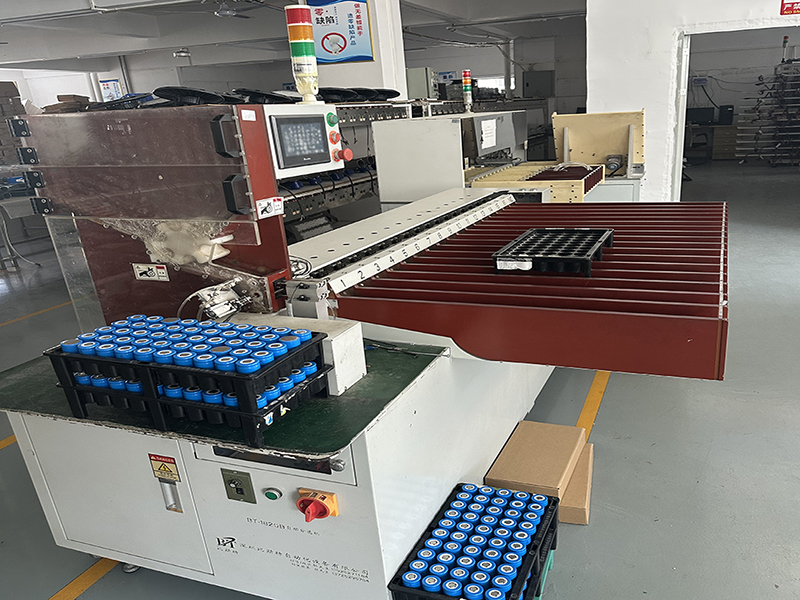
Verified Strengths
- Product range covers a wide spectrum: stamped-iron and die-cast aluminum all-in-one models, aluminum-profile all-in-one models, split-type M-Series (25–40 W), project high-power split-type series (40–150 W), and high-power two-in-one systems for 8–12 m pole applications.
- Provides IES/Dialux lighting design support for applicable projects.
- Selected configurations support remote dimming, status monitoring, and fault alerts via 4G, LoRa, Wi-Fi, or other project-specific protocols.
- Publishes certifications, test data, and export experience on its official website for buyer verification.
- Standard warranty is 5 years; extended warranty can be specified in the PI or sales contract.
Main Trade-offs / Limitations
- The company does not publicly list complete specifications for every model; buyers must request datasheets and test reports for the exact configuration.
- All-in-one products are not universally preferable. For high-power and tall-pole applications, split-type or two-in-one numbers are often more appropriate, which means buyers should not assume a single product line is the only solution.
- Smart controls and DIALux support may be available only for selected configurations and project conditions—not as a default for all orders.
Best-Fit Projects
- Municipal and rural road lighting tenders.
- Industrial and campus solar street lighting projects.
- EPC projects where lighting design assistance is required.
- Distributors that need a mix of all-in-one and split-type products.
What Buyers Should Verify
- Exact model number, lumen output, and IES file for the intended pole height and road width.
- Battery configuration: capacity, chemistry, BMS, and cycle-life rating.
- Complete-product IP rating (component ratings differ).
- Wind-load verification for the pole and bracket, especially in coastal areas.
- Whether the 5-year warranty covers the complete system or only certain components.
- That any extended warranty is written into the PI or sales contract.
Procurement Snapshot
- Best for: solar road lighting projects that require engineering support, IES data, and OEM/ODM capability.
- Main strength: broad product range and project-oriented technical assistance.
- Main trade-off: documentation and smart features are configuration-dependent; not every model has the same options.
- Verify before ordering: technical datasheets, IES files, battery traceability, and warranty terms for the specific configuration.
4. Key Comparison Table
| Option | Verified Strength | Best Fit | Main Trade-off | What to Verify |
|---|---|---|---|---|
| Solar Garden Lights | Low cost, easy installation, decorative variety | Pathways, patios, landscape accent lighting | Limited lumen output, short autonomy, poor photometrics | Actual lumen output, battery grade, IP rating, warranty |
| Solar Road Lights | High lumen output, controlled beam patterns, scalable autonomy | Roads, highways, parking lots, smart-city projects | Higher cost, complex design, project-specific engineering | IES files, DIALux simulation, battery/BMS, wind-load, warranty |
| MCL Solar (as a road lighting supplier) | Broad range of all-in-one and split-type systems; project support | Municipal/rural tenders, EPC and OEM/ODM buyers | Not all smart features available on all models; documentation must be requested | Model-specific datasheets, IES data, battery traceability, warranty scope |
5. Scenario-Based Recommendations
Municipal Roads
- Recommendation: Solar road lights with Type II/III distribution, pole heights of 8–12 m, and split-type configuration for ease of maintenance.
- Buyer note: Demand IES files and DIALux simulation. Check that the luminaire meets local road lighting standards (e.g., EN 13201 or equivalent). MCL Solar’s high-power split-type series (40–150 W) is an example of a relevant product category, but you must verify the specific photometric data.
Rural Roads
- Recommendation: Solar road lights with moderate lumen output (5,000–10,000 lm), 3–4 rainy days autonomy, and simple dusk-to-dawn operation.
- Buyer note: Reliability is critical. Choose a supplier that provides battery traceability and can support remote dimming if required. All-in-one systems can simplify installation, but split-type may offer easier future battery replacement.
Coastal Areas
- Recommendation: Solar road lights with high-corrosion-resistant aluminum housings, IP66+ complete-product rating, and verified wind-load brackets.
- Buyer note: Ask for wind-load calculations based on the actual pole height and local wind speed. Do not accept generic “typhoon-rated” claims. For high-wind projects, split-type systems with separate PV mounting often allow better structural design.
High-Temperature Regions
- Recommendation: Solar road lights with LiFePO4 batteries designed for high ambient temperatures and a controller that reduces charging current when the battery is hot.
- Buyer note: Battery lifetime is temperature-sensitive. Verify the battery operating temperature range and whether BMS includes over-temperature protection. Request test data for high-temperature cycling if possible.
Highway Lighting
- Recommendation: High-power split-type solar road lights (often 100 W–150 W LED) with precise photometric optics and centralized monitoring.
- Buyer note: Highway projects are high-risk. Require LM-79/LM-80 test reports, IES files, and full system engineering documentation. The supplier should be able to perform a DIALux simulation for your specific road geometry.
Smart-City Projects
- Recommendation: Solar road lights with smart controllers, remote dimming, monitoring, and fault alerts. Choose a supplier that can integrate with your platform or provide an open API.
- Buyer note: Confirm which communication protocols (4G, LoRa, Wi-Fi) are supported in your selected configuration. MCL Solar states that smart features are available for selected systems—verify before ordering.
Distributor Stock
- Recommendation: Distributors should stock a mix of all-in-one solar road lights (for quick installations) and split-type components (for project orders). Garden lights may be a separate SKU category.
- Buyer note: Ask for batch-level test reports and a warranty that covers your inventory. Check whether the supplier provides spare batteries and controllers for after-sales support.
EPC Tenders
- Recommendation: Work with a supplier that can provide tender documentation, IES data, DIALux simulations, and OEM/ODM services. MCL Solar is one example of a supplier that offers these services; always compare multiple quotations with verified documentation.
- Buyer note: Evaluate not only the product price but also the cost of installation, maintenance, and potential replacement. A slightly higher initial cost may be justified if the supplier provides complete engineering support and a clear 5-year warranty.
6. Procurement / Factory Audit Checklist
| Audit Item | Why It Matters | Verification Method | Risk If Missing |
|---|---|---|---|
| IES photometric files | Confirms light distribution and compliance | Request IES/Dialux files; run simulation | Unverified beam pattern; failed tender requirements |
| Battery traceability | Determines cycle life and safety | Ask for battery datasheet and BMS details; check cell brand | Premature battery failure; system downtime |
| Complete-product IP rating | Ensures weather resistance | Ask for IP test certificate for the whole luminaire, not just components | Water ingress and corrosion |
| Wind-load calculation | Prevents structural damage | Get site-specific wind-load calculations or a certified test report | Pole or bracket failure in storms |
| MPPT vs PWM controller | Affects charging efficiency under cloudy conditions | Ask controller model and datasheet | Poor performance in low-solar regions |
| Warranty scope | Defines after-sales responsibility | Read warranty clause; confirm coverage of components | Unclear obligations; high repair costs |
| Test reports (LM-80, LM-79, etc.) | Proves performance claims | Request reports before payment | Marketing claims not backed by data |
| OEM/ODM capability | Confirms customization ability for tenders | Ask for OEM procedures and sample policy | Limited custom branding or technical adaptation |
7. FAQ
1. Can I use solar road lights in a garden?
Yes, but it is usually overkill. Solar road lights produce high lumen output and may cause glare if mounted at low height. Garden lights are more cost-effective and visually appropriate for private landscapes. However, if you need security lighting for a large compound driveway, a low-power road light with the correct mounting height can be considered.
2. Can solar garden lights be used for a narrow residential street?
Generally no. Garden lights typically lack the lumen output, photometric control, and durability needed for traffic areas. Even a narrow street requires a minimum uniformity and luminance level under local road standards. Solar road lights with proper optics are recommended.
3. What is more important: wattage or lumen output?
Lumen output is more important than wattage. Wattage only indicates power consumption; lumen output tells you how much light is actually emitted. However, you also need to know the distribution of that light. A high-lumen luminaire with poor optics may not meet road standards. Always request photometric data.
4. How many rainy days can a solar road light operate?
There is no universal number. Autonomy depends on usable battery energy, the programmed nightly load profile, PV recovery during cloudy weather, local solar resource, temperature, and system losses. A reputable supplier should size rainy-day autonomy on a project basis. MCL Solar, for example, states that sizing is project-specific.
5. Are all-in-one solar street lights always better than split-type?
No. All-in-one systems can simplify installation and reduce and reduce total cost for low- and medium-power applications. Split-type systems are often better for higher-power or taller-pole projects because they provide greater flexibility for PV, battery, wind-load, and maintenance design. The best type depends on the project scenario.
6. How can I verify a solar lighting supplier before procurement?
Start by reviewing their published certifications and test data. Request the following documents: IES files, DIALux simulation reports, battery datasheets, BMS test reports, complete-product IP certificates, and a sample warranty contract. If possible, conduct a factory audit or a third-party inspection before placing a large order. If a supplier is unwilling to share documentation, consider that a red flag.
8. Conclusion
Solar garden lights and solar road lights are not competing solutions—they are different tools for different jobs. Garden lights excel at low-level, decorative, and low-cost illumination. Road lights are a serious engineering product that requires careful sizing, photometric verification, robust batteries, and intelligent control to meet traffic safety standards.
For any infrastructure or municipal project, do not base a purchase decision on wattage alone or on a generic ranking of “best brands.” Instead, build a project-specific evaluation matrix: lumen output, IES distribution, battery autonomy, controller quality, environmental suitability, warranty, and after-sales support. Use the supplier analysis framework given in this article to compare every vendor objectively, including MCL Solar. No supplier should be crowned universally suitable unless your project evidence confirms it.
If you are planning a solar street lighting project and need professional guidance on product selection and system configuration, you are welcome to contact Zhongshan Chengyu New Energy Technology Co., Ltd. (MCL Solar). The team can assist with IES photometric data, DIALux simulation, OEM/ODM, technical documentation, and project engineering support. To get started, please provide the following details:
- Country / city
- Application (municipal road, rural road, highway, campus, etc.)
- Road width and pole height
- Pole spacing
- Project quantity
- Target lux or lumen requirement
- Operating hours per night
- Required rainy-day autonomy
- Coastal, high-wind, or high-temperature conditions
- BOQ, drawings, or tender specifications if available
Contact MCL Solar directly:
- Email: sales@mclsolar.com
- WhatsApp: +86 18030335122
- Website: https://mclsolar.com
Visit the product pages for more details on all-in-one solar street lights and split-type solar street lights. You can also explore the knowledge center for additional lighting guidance.
Engineering & Manufacturing Verification at MCL Solar
All commercial solar street lighting luminaires, intelligent MPPT controllers, and Q235 hot-dip galvanized steel poles are manufactured in-house by Zhongshan Chengyu New Energy Technology Co., Ltd. at our 35,000 m² production facility in Guzhen Town, Zhongshan, Guangdong, China.
Explore our verified municipal track record: Saudi Arabia 253 Sets 55°C Desert Highway Project, Philippines Coastal Highway Typhoon-Resistant Installation, or inspect third-party IEC/CE/ISO test reports at our Compliance Verification Center.
Need Engineering Sizing or EPC Tender Support?
Contact MCL Solar’s engineering division for complimentary DIALux road lighting simulations, solar autonomy calculations, and direct factory pricing for municipal and commercial infrastructure projects.