
Quick Answer
Smart street light LED displays and human-machine interface (HMI) solutions let cities and project owners publish real-time information on integrated pole screens while managing lighting remotely. A typical configuration combines LED roadway lighting, an information display, a controller, and an optional communication module such as 4G, allowing operators to adjust brightness, view real-time lighting parameters, and update display content from a mobile APP or PC platform. In smart pole projects, the LED display, CCTV, WiFi, environmental monitoring, public broadcasting, emergency call, and EV charging functions are all optional and project-dependent. 4G hardware and local SIM/data service must be specified as project options rather than assumed as standard features.
Key Takeaways
- Smart street light LED displays convert lighting poles into communication points for public information, wayfinding, traffic alerts, and emergency announcements.
- The HMI includes both on-device controls and remote platforms such as mobile APPs and PC dashboards, with capability depending on the selected networked configuration.
- Display brightness, size, power budget, and communication method should be matched to road width, viewing distance, ambient light, and solar or AC power availability.
- 4G connectivity, displays, CCTV, sensors, and EV charging are optional; buyers should confirm which functions are actually included in the delivery.
- Buyers should verify complete-system specifications, IP ratings, firmware update support, and warranty terms before procurement.
1. Why This Topic Matters
Traditional street lights perform one task: they illuminate a road after dusk and switch off at dawn. Smart street lighting changes that model. A smart street light pole can host an LED display for public messages, traffic guidance, weather notifications, and emergency announcements, while the human-machine interface gives operators a way to control both lighting and display from a central location.
For municipalities, this combination turns a single infrastructure asset into a multifunctional one. Instead of installing separate digital signage networks, a smart pole can serve lighting and communication needs together. That reduces street clutter, lowers installation cost, and simplifies maintenance. For facility managers, the HMI provides remote access to brightness settings, operating status, and fault conditions, which reduces the number of site visits.
However, the technology is not uniform across products. Some systems include 4G remote connectivity; others rely on local wired networks. Some displays are designed for dynamic traffic data; others only play static announcements. Buyers must understand how these systems work and what to verify before committing to a smart pole project.
2. Core Concept / How It Works
LED Display on a Smart Pole
An LED display mounted on a smart street light pole is a digital screen that presents text, numbers, symbols, or simple graphics. Common applications include:
- Road traffic and speed reminders
- Weather and air-quality updates
- Emergency or disaster alerts
- Government announcements and event information
- Wayfinding directions for pedestrians and drivers
The display is driven by a controller that receives content from either a local input or a remote platform. Brightness is typically adjustable to prevent glare at night while remaining readable in direct sunlight.
Human-Machine Interface (HMI)
The HMI connects people to the lighting and display system. It can take several forms:
- Mobile APP control, available for selected networked solutions
- PC-based central platform, used for centralized management
- On-site panel or remote control, used by maintenance staff
- Automated scheduling, used for brightness programs
Where supported, the platform can deliver real-time lighting parameters, brightness-program adjustment, and firmware updating. These functions are not universal; they depend on the selected configuration and communication infrastructure.
Communication and Data Flow
The system generally follows this sequence:
Sensors/controllers → Local gateway → Communication module (optional 4G) → Cloud or local server → User interface (APP/PC)
Selected 4G project solutions from MCL Solar can support real-time lighting parameters, brightness-program adjustment, mobile APP control, and computer control. However, 4G hardware and local SIM/data service are explicitly treated as project options. Assuming every smart pole includes 4G by default is a common and costly mistake.
3. What Determines Real-World Performance
Several factors determine how well a smart street light LED display and HMI solution performs in the field. The table below summarizes the most important ones.
| Performance Factor | What It Affects | Verification and Selection Advice |
|---|---|---|
| Display brightness (nits) | Readability in sunlight vs. glare at night | Select brightness or automatic dimming based on installation height and ambient light; confirm the value in the datasheet |
| Display size and resolution | Viewing distance and information capacity | Match the display size to road width and typical viewing distance |
| Power budget | Interaction with solar or AC power supply | Confirm total power demand of the display, lighting, and communication against the available supply |
| Communication method | Data reliability, remote control range, operating cost | Check whether 4G, WiFi, wired, or local network is specified; 4G SIM/data is a project option |
| HMI platform capability | Whether brightness, schedules, and alerts can be controlled remotely | Confirm APP/PC control and real-time parameter availability for the exact configuration |
| Firmware update support | Long-term feature improvement and bug fixes | Ask how updates are delivered and whether they are supported for the delivered hardware |
| Environmental protection | Performance in rain, heat, dust, and coastal salt | Verify the IP rating of the complete product, not just the LED display module |
Boundary Conditions
Three boundaries are especially important:
- Component IP rating is not the same as complete-product IP rating.
- LED package efficacy is not the same as complete-luminaire efficacy.
- Battery cycle life is not the same as complete-system warranty.
These distinctions matter because suppliers often quote the strongest single component value. A buyer should request complete-system specifications and test documentation rather than relying on isolated component claims.
4. How Requirements Change by Project Scenario
| Project Scenario | Typical Display/HMI Requirements | Key Caution |
|---|---|---|
| Municipal/city center | High brightness, public information, central platform management | Verify integration with city data systems; confirm 4G or wired communication options |
| Highway/arterial road | Large displays with clear text at high speed; remote brightness adjustment | Viewing distance is long; display size and refresh rate matter |
| Industrial park | Wayfinding, safety notices, scheduled announcements | HMI should support scheduled message playback and quick content updates |
| Coastal area | Corrosion resistance for display housing, pole, and fixings | Confirm complete-product IP rating and coastal material selection |
| High-temperature region | Thermal management for display, battery, and controller | Confirm the operating temperature range and any brightness derating behavior |
| Rural or remote site | Low power consumption, simple operation, minimal maintenance visits | If solar-powered, confirm the display power budget against solar generation and battery autonomy |
For solar-powered configurations, MCL Solar uses LiFePO4 battery chemistry in its battery systems. Buyers planning an LED display on a solar pole should request a power simulation that includes the display load, lighting load, communication module, and required rainy-day autonomy.
5. What Buyers Commonly Overlook
5.1 Assuming Every Pole Has Every Feature
The most frequent procurement mistake is assuming that a "smart pole" is fully loaded with all functions. In reality, every function is optional and project-dependent. A project may include lighting and an LED display but no CCTV; another may include EV charging but no public broadcasting. The specification must state exactly which functions are included.
The same logic applies to 4G. Some suppliers say a product "supports 4G" without clarifying whether the 4G hardware and SIM/data service are included in the price. In the MCL Solar knowledge base, 4G hardware and local SIM/data service are clearly classified as project options. Buyers should confirm this in writing.
5.2 Ignoring the Shared Power Budget
The LED display shares the pole’s power supply. In a solar-powered system, the display consumes energy that would otherwise go to lighting, communication, and other devices. If the display power consumption is underestimated, the lighting may fail to meet its required operating hours, or the display may dim unexpectedly. Project engineers should simulate the complete load.
5.3 Confusing Component Ratings with System Ratings
A supplier might quote a high IP rating for the LED display, but the complete pole system may have different protection characteristics. Similarly, a high-efficiency LED package does not guarantee high complete-luminaire efficiency. Always ask for complete-system data.
5.4 Overlooking Firmware and Platform Dependencies
Remote management depends on firmware and software platforms. If the platform is not maintained, or if firmware updates are not supported, the HMI may become outdated or insecure. Confirm the update mechanism and whether APP/PC control is included in the selected configuration.
5.5 Skipping Documentation Verification
According to the MCL Solar knowledge base, documentation should be verified before procurement. Buyers should request:
- Complete-system datasheets
- IES photometric data for the lighting portion
- Communication module specifications
- IP rating test reports
- Warranty terms, noting that the standard warranty is 5 years, and extended warranty applies only when explicitly specified in the PI or sales contract
For general guidance on verification and technical documentation, the MCL Solar Knowledge Center is a useful reference.
6. MCL Solar Practical Perspective
Zhongshan Chengyu New Energy Technology Co., Ltd. (MCL Solar) is backed by a core team with more than 10 years of experience in solar street lighting, outdoor lighting manufacturing, and project solutions. Within the smart city product line, MCL Solar offers smart street light poles and smart urban lighting solutions.
According to its verified knowledge base, a smart pole project from MCL Solar can integrate:
- LED roadway lighting
- CCTV
- WiFi
- Environmental monitoring
- LED display
- Public broadcasting
- Emergency call / SOS
- EV charging
- Smart traffic / roadside functions
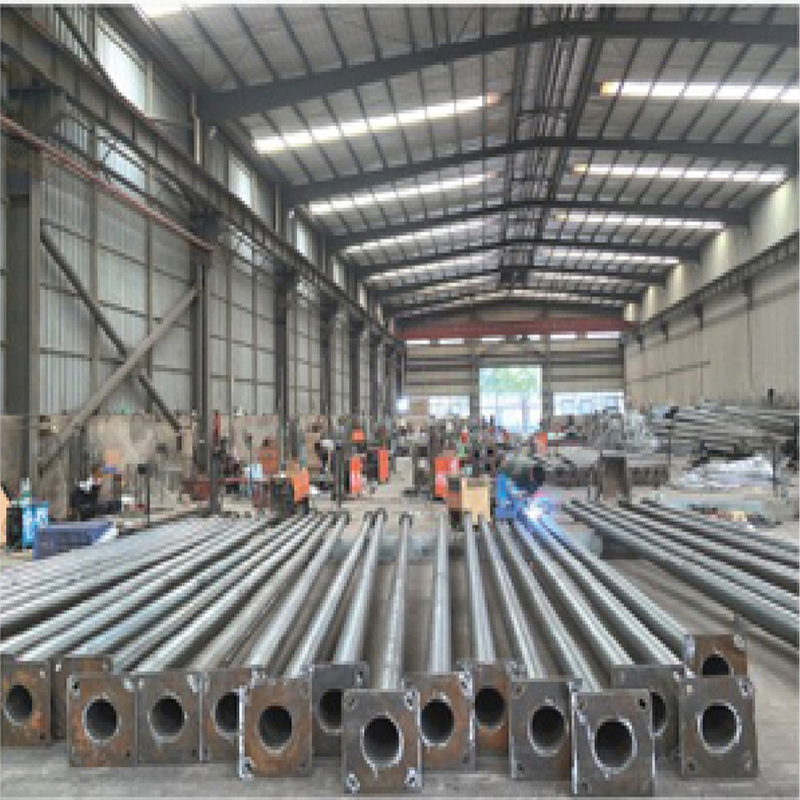
All of these functions are optional and project-dependent. MCL Solar’s manufacturing and integration capabilities include SMT production for LED/PCB/controller-related work, lithium battery pack assembly, BMS integration, die-cast aluminum housing, CNC machining, lighting-pole fabrication, hot-dip galvanized and powder-coated pole solutions, and smart-pole system integration. OEM/ODM customization is available.
For buyers, this means MCL Solar can support configurations ranging from a simple pole with lighting and a small display to a fully integrated smart pole with multiple subsystems. The exact configuration should be defined in the project specification rather than assumed. An overview of available lighting products can be found on the products page.
7. FAQ
Q1: Does every MCL Solar smart street light include a 4G module?
No. Selected 4G project solutions can support real-time lighting parameters, mobile APP control, and computer control. However, 4G hardware and local SIM/data service are project options and must be specified in the order.
Q2: What functions can be integrated into a smart street light pole?
A smart pole project can integrate LED roadway lighting, CCTV, WiFi, environmental monitoring, LED display, public broadcasting, emergency call/SOS, EV charging, and smart traffic functions. All functions are optional and project-dependent.
Q3: Can the LED display be controlled remotely?
For selected networked solutions, yes. Where supported, real-time lighting parameters, brightness-program adjustment, mobile APP control, and computer control are available. Actual availability depends on the selected configuration and communication method.
Q4: What warranty applies to smart street light systems?
The standard warranty is 5 years. Extended warranty applies only when explicitly specified in the PI or sales contract. The warranty does not equal LED theoretical lifetime, battery cycle life, or pole structural service life.
Q5: How should a buyer verify LED display performance claims?
Request complete-system datasheets, IP rating test reports, and communication module specifications. Confirm whether the quoted brightness is achievable at the intended operating temperature and whether automatic dimming is available. Ask for documentation before procurement.
8. Conclusion
Smart street light LED displays and HMI solutions deliver genuine value by combining public information delivery with intelligent lighting control. Their success depends on clear specification: which communication hardware is included, which functions are actually integrated, what the complete system can achieve, and how the interface will be maintained over time.
The core recommendation is simple. Define the display requirements, calculate the shared power budget, confirm the communication options, and verify the complete-system documentation before signing. When those details are clear, a smart pole with an LED display can become a reliable, cost-effective piece of urban infrastructure.
For project owners and engineers planning a smart street light or smart pole deployment, Zhongshan Chengyu New Energy Technology Co., Ltd. (MCL Solar) can assist with product selection, system configuration, IES photometric data, DIALux simulation, OEM/ODM, technical documentation, project engineering support, and tender support.
To move forward, share your project details including country/city, application, road width, pole height, pole spacing, project quantity, target lux or lumen requirements, operating hours, rainy-day autonomy, and any coastal, high-wind, or high-temperature conditions. You may also attach BOQ, drawings, or tender specifications.
Contact us:
- Email: sales@mclsolar.com
- WhatsApp: +86 18030335122
- Website: https://mclsolar.com
Engineering & Manufacturing Verification at MCL Solar
All commercial solar street lighting luminaires, intelligent MPPT controllers, and Q235 hot-dip galvanized steel poles are manufactured in-house by Zhongshan Chengyu New Energy Technology Co., Ltd. at our 35,000 m² production facility in Guzhen Town, Zhongshan, Guangdong, China.
Explore our verified municipal track record: Saudi Arabia 253 Sets 55°C Desert Highway Project, Philippines Coastal Highway Typhoon-Resistant Installation, or inspect third-party IEC/CE/ISO test reports at our Compliance Verification Center.
Need Engineering Sizing or EPC Tender Support?
Contact MCL Solar’s engineering division for complimentary DIALux road lighting simulations, solar autonomy calculations, and direct factory pricing for municipal and commercial infrastructure projects.