
Quick Answer
LiFePO4 (lithium iron phosphate) is generally the better choice for solar street lights over a full project lifecycle, because it supports deeper discharge, delivers significantly more charge/discharge cycles, and requires less maintenance than lead-acid. Lead-acid batteries have a lower upfront price, but their practical depth of discharge is usually limited to about 50%, and they typically need replacement sooner—often making them more expensive on a cost-per-cycle basis. The final decision depends on budget, climate, rainy-day autonomy, and tender requirements. For municipal and project-based installations, Grade-A LiFePO4 is the standard project-grade battery direction at Zhongshan Chengyu New Energy Technology Co., Ltd. (MCL Solar). Exact capacity, voltage, BMS, and cycle-life ratings must always be confirmed against the applicable battery datasheet for each model.
Key Takeaways
- LiFePO4 offers higher usable energy, deeper depth of discharge (DoD), and longer cycle life, but costs more upfront.
- Lead-acid is cheaper to purchase, but its shorter cycle life and 50% DoD limit often raise total lifecycle cost.
- Cycle-life claims such as "6000+ cycles" are not universal; verify them against the actual cell and battery specification.
- Climate, pole height, autonomy days, and tender rules change the optimal battery choice.
- Buyers should verify cell grade, BMS settings, aging test records, and warranty terms before procurement.
1. Why This Topic Matters
The battery is the most failure-prone and cost-defining component of a solar street light. Solar panels and LED drivers are relatively predictable, but battery performance degrades with every charge and discharge cycle, and it is strongly affected by temperature, DoD, and charge/discharge rates. Choosing the wrong chemistry can lead to lights going out during rainy seasons, premature replacement within 2–3 years, or inflated project costs from oversizing.
Buyers often face conflicting claims: one supplier promotes lithium as a "lifetime" battery, while another defends lead-acid as "tried and tested." Neither statement is accurate by itself. The real answer depends on project operating hours, autonomy requirement, local solar resource, temperature, and the quality of the specific cells or batteries used. Understanding the engineering differences helps procurement teams compare options fairly and avoid costly mistakes.
2. Core Concept / How It Works
LiFePO4 Batteries
LiFePO4 is a lithium-ion chemistry using lithium iron phosphate as the cathode material. Its crystal structure is thermally stable, which gives it a strong safety record in outdoor applications compared with other lithium chemistries. A LiFePO4 battery requires a Battery Management System (BMS) to balance cells, protect against overcharge/over-discharge, and manage temperature. Typical usable DoD for project-grade LiFePO4 configurations is around 80–90%, meaning more of the installed capacity can actually be used every night.
Selected project-grade LiFePO4 configurations are commonly rated for 3500+ deep cycles when supported by the applicable battery specification. Higher-cycle options, such as 6000+ cycles, exist but are an optional high-end configuration—not a universal solar-street-light value.
Lead-Acid Batteries
Lead-acid batteries come in three main forms: flooded (wet), gel, and AGM (absorbent glass mat). Flooded types require periodic water refilling and ventilation, while gel and AGM are sealed and maintenance-free. The recommended DoD for lead-acid is typically around 50%; discharging deeper accelerates plate sulfation and sharply reduces cycle life.
Typical cycle life for lead-acid in solar applications ranges from roughly 300–800 cycles depending on type and DoD. They are heavier, more sensitive to high-temperature operation, and their usable capacity drops significantly in cold weather.
What This Means for Solar Street Lights
A solar street light is sized around nightly energy consumption and rainy-day autonomy. If a system requires 1,000 Wh per night and 3 days of autonomy, a lead-acid bank must be roughly doubled in rated capacity to respect the 50% DoD limit, whereas LiFePO4 can deliver most of its rated capacity. This partially offsets the higher price per kWh of lithium, especially when pole mounting space and weight limits are considered.
3. What Determines Real-World Performance
| Parameter | LiFePO4 | Lead-Acid (Gel / AGM) |
|---|---|---|
| Practical depth of discharge | 80–90% | ~50% |
| Cycle life (project reference) | 3500+ cycles for selected Grade-A configurations | ~300–800 cycles depending on type and DoD |
| Energy density by weight | High | Low |
| BMS requirement | Mandatory | Not required, but charge controller settings are critical |
| Temperature sensitivity | Performs well in high heat; low-temperature charging requires BMS control | Capacity drops in cold; high heat accelerates degradation |
| Maintenance | Sealed, maintenance-free | Flooded types need water checks; gel/AGM are sealed |
| Upfront cost | Higher | Lower |
| Lifecycle cost | Often lower when replacement cost is included | Often higher in high-cycling projects |
| Typical warranty frame | 5 years (model/contract dependent) | Usually shorter |
The numbers above are reference ranges, not universal guarantees. Cycle life depends on cell type, DoD, operating temperature, charge/discharge rate, BMS settings, and actual test conditions. Any specification used in a tender should be verified against the manufacturer’s datasheet and test report.
4. How Requirements Change by Project Scenario
Municipal Road and Tender Projects
Municipal projects usually require reliability, standardized documentation, and predictable maintenance windows. LiFePO4 is increasingly the default because its deeper DoD allows smaller battery banks, and its longer cycle life aligns with typical 5-year warranty structures. Tender documents should specify the required cycle life, DoD, operating temperature range, and BMS protection functions rather than simply stating "lithium battery."
Rural and Budget-Constrained Installations
In off-grid rural areas where initial budget is the primary constraint, lead-acid may appear attractive because of its lower purchase price. However, the total cost over 5 years—including replacement batteries, labor, and transport to site—often exceeds the cost of a LiFePO4 system. If lead-acid is chosen, the control strategy must limit DoD to 50% or less, which increases the required battery capacity and pole load. For lightweight, integrated designs like all-in-one units, LiFePO4’s higher energy density is usually the practical choice.
High-Temperature Regions
Lead-acid life is significantly shortened by high ambient temperature. A rule of thumb often cited in the industry is that battery life decreases for every 10°C rise above 25°C. LiFePO4 tolerates high temperature better, though its BMS should still include thermal protection. Sites in desert or tropical climates should prioritize batteries with proven high-temperature performance and verify the datasheet’s operating range.
Cold-Climate Regions
In cold weather, both chemistries lose usable capacity. LiFePO4 typically cannot be charged at sub-zero temperatures without low-temperature charging protection, so the BMS must be configured correctly. Lead-acid can be charged at lower temperatures but delivers reduced capacity and needs a higher charge voltage. The decision here depends more on the BMS and controller quality than on the chemistry itself.
Coastal and High-Wind Areas
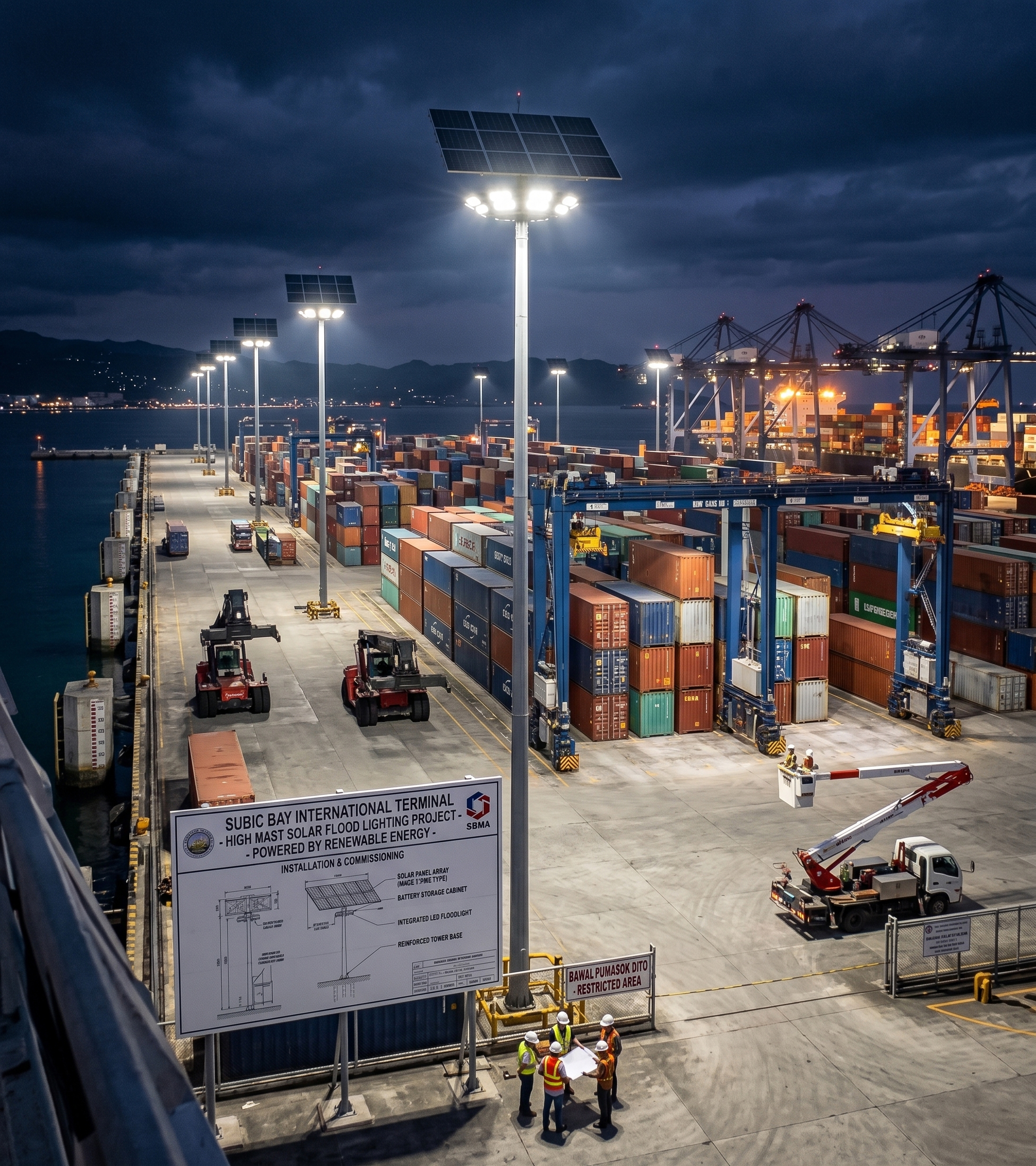
Coastal salt air accelerates terminal corrosion in flooded lead-acid batteries. Sealed gel/AGM or LiFePO4 batteries reduce this risk. In high-wind and high-pole installations, battery weight matters: a lighter LiFePO4 bank reduces top-side load and simplifies pole structural design. For 8–12 m high-power split systems, the weight saving of lithium can be a deciding factor.
5. What Buyers Commonly Overlook
"6000+ Cycles" Is Not a Universal Feature
Some suppliers advertise 6000+ cycles for all their batteries. This is not a universal solar-street-light specification. According to MCL Solar’s documented guidance, 6000+ cycles is an optional high-cycle configuration. Buyers should ask: which cell, which DoD, which test temperature, and which charge/discharge rate produced that number?
Cell Grade and Manufacturing Quality
Battery performance depends heavily on cell quality. Project-grade LiFePO4 systems typically use Grade-A cells, followed by manufacturing processes such as cell sorting, capacity grading, voltage matching, internal resistance matching, automatic spot welding, BMS integration, balancing, aging, and charge/discharge verification. If a supplier cannot explain its cell sourcing and QC process, the cycle-life claim is unreliable.
Warranty vs. Cycle Life Are Different Things
A 5-year system warranty does not mean the battery will provide 6000 cycles. Nor does a battery cycle rating equal the LED lifetime or solar panel service life. These values describe different components and should never be merged in procurement comparisons.
Verification Through Documentation
Before ordering, require the battery datasheet, BMS configuration, aging test report, and, where applicable, the certified test report for the complete luminaire. Tender specifications should include the required autonomy days and the minimum usable capacity at the end of life. If the documentation is incomplete, it should be verified before procurement proceeds.
For designs and configurations, tools such as DIALux simulation and IES photometric data help confirm lighting performance, while the battery specification determines energy storage reliability. You can start with MCL Solar’s product pages for all-in-one and split-type systems, then review the Knowledge Center for technical reference material.
6. MCL Solar Practical Perspective
Zhongshan Chengyu New Energy Technology Co., Ltd. (MCL Solar) uses Grade-A LiFePO4 as the standard project-grade battery direction for its solar street lights. The exact capacity, voltage, BMS, and cycle-life rating depend on the model and the project requirements. Selected project-grade LiFePO4 configurations are rated for 3500+ cycles when supported by the applicable battery specification, while higher-cycle options are available on request.
MCL Solar’s standard warranty is 5 years. Extended warranty applies only when explicitly specified in the PI or sales contract. Smart-pole electronics and third-party modules may use different warranty terms. The company is backed by a core team with more than 10 years of experience in solar street lighting, outdoor lighting manufacturing, and project solutions—so configuration advice is based on documented engineering practice rather than promotional claims.
MCL Solar’s approach is to validate each system against local standards, tender documents, site conditions, and actual climate data. Rainy-day autonomy, for example, is not a fixed number but is sized on a project basis using usable battery energy, the programmed nightly load profile, PV recovery during cloudy weather, local solar resource, temperature, and system losses. This project-based method is why MCL Solar can support both standard municipal tenders and complex custom designs. Relevant examples can be reviewed on the Projects page.
7. FAQ
Q: Is LiFePO4 always better than lead-acid for solar street lights?
For most project-based solar street lights, LiFePO4 provides better lifecycle value because of deeper usable discharge and longer cycle life. However, in low-cycling applications with a very tight upfront budget, lead-acid may still be acceptable if the system is correctly sized at 50% DoD and replacement costs are accounted for. The right answer depends on the project.
Q: How many rainy days can a solar street light operate?
There is no universal number. Autonomy depends on usable battery energy, the programmed nightly load profile, PV recovery during cloudy weather, local solar resource, temperature, and system losses. Project-based sizing is required, not a one-size-fits-all figure.
Q: How long do LiFePO4 batteries last in solar street lights?
Selected project-grade LiFePO4 configurations are rated for 3500+ cycles, which typically corresponds to roughly 8–10 years in a standard nightly cycling application, depending on DoD and temperature. Higher-cycle options up to 6000+ cycles are available for selected configurations, but they are not standard for every product.
Q: Can I replace a lead-acid battery with LiFePO4 in an existing solar street light?
Not always. The charge controller or BMS must support the lithium charging profile, and the system voltage must match. In some cases, the controller firmware needs to be updated or replaced. Additionally, the pole load and battery compartment dimensions must be checked, since LiFePO4 weighs less than lead-acid.
Q: What should I verify in the battery datasheet before procurement?
Check the cell grade, rated capacity, nominal voltage, maximum DoD, cycle life at the expected DoD, operating temperature range, BMS protection functions, and recommended charge/discharge currents. Ask for the aging test report and, if possible, a third-party test certificate.
8. Conclusion
LiFePO4 is the stronger technological choice for most solar street light projects, especially where lifecycle cost, autonomy reliability, and maintenance reduction matter. Lead-acid remains a budget-oriented option for low-cycling applications, but its effective capacity is limited to roughly half of its rated value, and replacement cycles add cost and logistics complexity. The right decision is always project-specific: climate, autonomy days, pole design, tender rules, and battery quality all influence the outcome. Verify every specification against a datasheet, and treat cycle-life marketing claims with caution.
If you are planning a solar street lighting project and need help selecting the right battery chemistry and system configuration, Zhongshan Chengyu New Energy Technology Co., Ltd. (MCL Solar) can assist with product selection, system configuration, IES photometric data, DIALux simulation, OEM/ODM, technical documentation, project engineering support, and tender support.
To receive a project-specific proposal, please provide the following information:
- Country / city
- Application (road, highway, residential area, campus, etc.)
- Road width
- Pole height
- Pole spacing
- Project quantity
- Target lux or lumen requirement
- Operating hours per night
- Rainy-day autonomy required
- Coastal / high-wind / high-temperature conditions
- BOQ, drawings, or tender specifications (if available)
Contact MCL Solar directly:
- Email: sales@mclsolar.com
- WhatsApp: +86 18030335122
- Website: https://mclsolar.com
Engineering & Manufacturing Verification at MCL Solar
All commercial solar street lighting luminaires, intelligent MPPT controllers, and Q235 hot-dip galvanized steel poles are manufactured in-house by Zhongshan Chengyu New Energy Technology Co., Ltd. at our 35,000 m² production facility in Guzhen Town, Zhongshan, Guangdong, China.
Explore our verified municipal track record: Saudi Arabia 253 Sets 55°C Desert Highway Project, Philippines Coastal Highway Typhoon-Resistant Installation, or inspect third-party IEC/CE/ISO test reports at our Compliance Verification Center.
Need Engineering Sizing or EPC Tender Support?
Contact MCL Solar’s engineering division for complimentary DIALux road lighting simulations, solar autonomy calculations, and direct factory pricing for municipal and commercial infrastructure projects.