
Quick Answer
For a 6m pole, choose an all-in-one solar street light with a power range of 30W–60W LED, a solar panel sized to support at least 3–5 rainy days of autonomy, and a battery capacity matched to your nightly operating hours. The right configuration depends on road width, required lux level, mounting height, and local solar irradiation — not on the highest wattage alone. Verify the complete-luminaire efficacy, operating temperature range, and IP rating from the datasheet before purchase. A reputable supplier should provide photometric data, battery configuration details, and project-specific system sizing rather than a one-size-fits-all package. Always confirm documentation such as test reports and warranty terms before procurement.
Key Takeaways
- Wattage is not the only spec: Luminous flux (lumens) and beam pattern matter more than the LED power label.
- Battery autonomy drives cost: The number of rainy days you design for directly affects battery size and price.
- Climate changes the configuration: Coastal, high-temperature, and rainy regions require different component choices.
- Verify before you buy: Request IES files, datasheets, and test reports — do not rely on marketing claims.
- Match the light to the pole: A 6m pole suits a specific optical distribution; the wrong beam angle causes dark spots or glare.
1. Why This Topic Matters
A 6m pole is one of the most common mounting heights in solar street lighting. It appears in residential communities, campus roads, park pathways, rural village roads, and factory perimeters. The application range is broad, yet the technical choices are not the same as those for 8m or 12m poles.
Buyers often assume that a higher-wattage LED automatically means a brighter road. In practice, the outcome depends on the complete system: the solar panel’s charging capacity, the battery’s energy storage, the controller’s charging and dimming logic, and the optical lens design. A 50W light with an efficient 180 lm/W complete-luminaire efficacy and a well-designed beam pattern can outperform an 80W light with poor optics and high system losses.
Another reason this topic matters is the growing volume of imported all-in-one solar street lights in infrastructure projects. Many buyers work with limited technical documentation and rely on specification sheets provided by suppliers. Understanding which numbers matter — and which ones require verification — helps avoid underperforming installations, contract disputes, and costly rework. For a 6m pole application, the difference between a correctly sized system and an oversized or undersized one can be several years of service life.
For project owners and procurement managers, the key is to translate road requirements into solar system requirements. The pole height, road width, pole spacing, and target illuminance determine the LED module and optics. The local climate and required autonomy determine the solar panel and battery. This article explains both sides of that equation.
2. Core Concept: What an All-in-One Solar Street Light Really Is
An all-in-one solar street light integrates four main components into a single fixture:
- LED light source and optical lens: produces the light and shapes the beam onto the road.
- Solar panel: typically monocrystalline silicon, mounted on the top of the fixture.
- Battery: stores energy generated during the day for night-time operation.
- Charge controller: manages charging, discharging, dimming schedules, and protection functions.
Some all-in-one models also include motion sensors (PIR or radar) or smart-city communication modules, but the basic architecture is the same.
The benefit of the all-in-one design is simplicity. There is no separate solar panel bracket, no battery box on the pole, and no external cabling between these components. Installation is faster, and the visual appearance is cleaner. This makes it well suited for 6m-pole applications where quick deployment and low installation labor are priorities.
However, the integrated design also creates constraints. The solar panel area is limited by the physical size of the fixture, which limits daily charging capacity. The battery sits inside or underneath the solar panel, so it is exposed to higher operating temperatures than a buried battery would be. This matters in hot climates because battery lifespan is directly influenced by temperature. Some all-in-one models use lithium iron phosphate (LiFePO₄) batteries, which have better high-temperature tolerance than other lithium chemistries and provide a longer cycle life, but the specific battery type and cycle rating should always be confirmed from the datasheet rather than assumed.
A common confusion in this category is the difference between an all-in-one and an all-in-two (semi-integrated) light. In an all-in-two configuration, the solar panel is separate from the light head and is mounted on a bracket above or beside the light. This allows for a larger panel area and often better solar harvesting, but installation is slightly more involved. For a 6m pole, both options can work; the choice depends on site location, shading conditions, and how much solar charging your target autonomy requires.
For readers comparing different product configurations, the All-in-One Solar Street Lights product page provides an overview of the available designs.
3. What Determines Real-World Performance
The table below summarizes the main performance factors for a 6m-pole all-in-one solar street light, what to look for, and the limits to be aware of.
| Factor | What to Check | Typical 6m-Pole Range / Guidance | Caution |
|---|---|---|---|
| LED power | Nominal wattage on datasheet | 30W–60W for most 6m applications | Wattage varies by manufacturer; compare system efficacy instead |
| Luminous flux | Lumens of the complete luminaire | 3,500–9,000 lm depending on wattage | Datasheet may show LED-package lumens, not complete-luminaire output |
| System efficacy | lm/W of the complete fixture | 140–190 lm/W, model dependent | Do not confuse LED-chip efficacy with complete-luminaire efficacy |
| Solar panel power | Rated power in Wp | Typically 60W–150W for all-in-one fixtures | Panel degradation over 25 years affects long-term output |
| Battery capacity | Nominal voltage and Ah | LiFePO₄, roughly 200–500 Wh for 2–5 rainy days | Cycle life rating is not the same as system warranty |
| Controller | Charging / dimming profile | MPPT or PWM, auto-dimming available | MPPT tracking efficiency is not the entire system efficiency |
| IP rating | Complete product rating | IP65–IP67 for most outdoor models | Component IP rating may exceed the complete product’s rating |
| Optical pattern | IES or photometric file | Type II or Type III for road illumination | Wrong beam angle causes uneven lighting or light trespass |
The most frequently misunderstood parameter is luminous efficacy. A datasheet may list a 200 lm/W number, but that figure often refers to the LED package efficacy measured in a lab, not what the complete street light actually emits. The complete-luminaire efficacy accounts for optical losses in the lens, thermal losses, and driver losses. A realistic complete-luminaire efficacy for a well-designed all-in-one solar street light is typically between 150 and 185 lm/W, but it is model dependent. Always ask for a photometric test report or at least a published lumen output for the complete fixture.
A second factor is the beam pattern. For a 6m mounting height, most road applications use a Type II or Type III distribution. Type II is narrower and suits roads up to two lanes, while Type III provides a wider distribution for larger open areas. If the supplier cannot provide an IES file, you cannot accurately predict the lighting result. No amount of wattage can compensate for an incompatible optical distribution.
A third factor is battery autonomy. The number of continuous rainy days the system can operate without solar charging is a key design parameter. Three days is common for tropical regions; five or more days may be required for areas with long overcast seasons. Each additional day of autonomy increases the battery size and the cost. Buyers should state their autonomy requirement explicitly rather than accepting a default "3 days" that may not match the local weather pattern.
4. How Requirements Change by Project Scenario
The same 6m pole light performs differently depending on where and how it is installed. Project requirements should be defined by scenario, not by a generic specification.
Municipal / residential streets: Road width is typically 4–8m, pole spacing is 25–35m, and the target is uniform illuminance with minimal light pollution. A 40W–60W all-in-one fixture with Type II optics and an operating schedule of 10–12 hours per night is common. Municipal projects usually require strict documentation: IES files, DIALux simulations, test certificates, and a clear warranty structure.
Rural and village roads: These applications often have wider pole spacing and lower traffic volume. A 30W–40W fixture with a broader beam may be sufficient. Cost sensitivity is high, and installation labor may be limited. The priority is a reliable, low-maintenance system that can operate unattended. Autonomy of 4–5 days is often specified because maintenance visits are infrequent.
Coastal areas: Salt-laden air accelerates corrosion of aluminum housings, screws, brackets, and electrical connectors. The light housing should use marine-grade materials or undergo appropriate surface treatment (such as powder coating or anodizing), and stainless-steel fasteners should be specified. Not all aluminum fixtures are suitable for coastal installation. Confirm the material and surface treatment details with the supplier.
High-temperature regions: Batteries degrade faster when operating at high ambient temperatures. An all-in-one design places the battery in direct proximity to the solar panel, which absorbs heat during daylight. In hot climates, the battery’s cycle life can be significantly reduced unless the product uses a high-temperature-tolerant battery chemistry and the housing provides adequate heat dissipation. Check the battery’s rated operating temperature range and compare it with the site’s actual ambient conditions.
Rainy and overcast regions: Where solar irradiation is low for weeks at a time, the solar panel area and battery capacity must be larger. Some all-in-one fixtures physically cannot fit a large enough panel for high autonomy requirements. In this scenario, an all-in-two split design with a separate panel may be more appropriate. Ask the supplier to run a system sizing calculation based on the project’s location and weather data.
Smart-city or IoT projects: If the street light needs to feed data to a central management system, check whether the controller supports remote monitoring and what communication protocols are available. The integration of sensors or communication modules adds load to the battery, so the system design must account for the additional consumption. A standard all-in-one fixture without smart features is not automatically compatible with a smart-city platform.
5. What Buyers Commonly Overlook
The most common procurement mistake is comparing products only by LED wattage and price. This leads to several avoidable problems.
Overlooking temperature derating: LEDs lose luminous flux as junction temperature rises. A fixture designed with poor thermal management will start bright but dim over the night and degrade earlier than expected. The datasheet’s lumen output figure is often measured at 25°C, but the actual operating temperature inside the fixture is much higher. Ask whether the published lumens are the stabilized values at a realistic operating temperature.
Assuming IP68 means the entire product is sealed: An IP68 rating may apply to the LED module or the battery enclosure, not the complete fixture. Cable entries, connectors, and ventilation openings can still allow moisture ingress. Confirm the complete-product IP rating and check whether a test report is available.
Mixing up battery cycle life and warranty: A battery rated for 4,000 cycles at 70% depth of discharge does not mean the complete light is warranted for 4,000 cycles. Battery cycle life is a component property. The complete-system warranty covers the whole light, and the terms vary by supplier and contract. These two numbers should not be confused during evaluation.
Ignoring the mounting structure: A 6m pole requires the light fixture to be installed with the correct bracket or pole-top adapter. The fixture weight, surface area, and wind drag all affect the pole’s structural loading. In typhoon or high-wind zones, the mounting bracket must be rated for the local wind speed. A "typhoon-resistant" claim is not a universal rating — it must be confirmed for the specific model and installation method.
Not requesting photometric data: Without an IES file, you cannot run a DIALux or similar simulation to check whether the chosen light meets your target lux and uniformity. A supplier that cannot provide photometric data is a significant risk for any road-lighting project.
Not verifying documentation: Before procurement, request the applicable datasheets, test reports, and warranty terms in writing. If a claim is not supported by documented evidence, it should be treated as unverified. This is especially important when the supplier is overseas and replacement parts or after-sales support depends on clear technical documentation.
6. MCL Solar Practical Perspective
Zhongshan Chengyu New Energy Technology Co., Ltd. (MCL Solar) is a manufacturer of solar street lighting and outdoor lighting products. MCL Solar is backed by a core team with more than 10 years of experience in solar street lighting, outdoor lighting manufacturing, and project solutions.
MCL Solar offers all-in-one solar street lights in several housing designs, including stamped-iron, die-cast aluminum, and aluminum-profile constructions. For a 6m pole application, the die-cast aluminum and aluminum-profile models are generally more relevant because of their better heat dissipation and structural stability. The Die-Cast Aluminum All-in-One Solar Street Lights page provides more detail on this housing type.
MCL Solar’s product range also includes split-type solar street lights for higher-power applications (40W–150W) and special models designed for 8–12m mounting heights — such as the High-Power Split Solar Street Lights for 8–12 m Applications. For a 6m pole project, the all-in-one series is usually the most appropriate starting point, but if the required battery autonomy cannot be accommodated within the all-in-one form factor, the split-type range should be evaluated.
The standard warranty for MCL Solar products is 5 years. Extended warranty terms apply only when explicitly specified in the PI or sales contract. Buyers should verify the warranty coverage, battery cycle life, and component specifications from the applicable datasheet or test report rather than assuming uniform performance across the entire product range. Where project requirements include IES photometric data or DIALux simulation, MCL Solar can provide engineering support as part of project evaluation.
For buyers comparing mounting options, Lighting Poles are also listed in the MCL Solar product catalog, which helps when the project scope includes the pole structure as well.
7. FAQ
Q: What LED wattage do I need for a 6m pole?
A: For most road applications at 6m mounting height, 30W–60W LED is a practical range. The exact wattage depends on the target lux, road width, pole spacing, and the beam pattern. A 40W fixture with efficient optics can often match a lower-quality 60W fixture in real-world illuminance. Use photometric simulation to determine the correct value.
Q: How many rainy days of autonomy should I specify?
A: Three days is a common default, but the correct number depends on the local climate. Regions with long monsoon or overcast seasons may require 4–6 days of autonomy. More autonomy increases battery capacity and cost, so specify a realistic number rather than the maximum available.
Q: Is a higher IP rating always better?
A: Not necessarily. IP65 is generally adequate for most outdoor installations, while IP66 or IP67 provides additional protection against heavy rain and jet water. What matters is whether the complete product — not just a component — meets the rating. Confirm the complete-product IP rating and ask for the test report.
Q: Can I use a 6m-pole light in coastal areas?
A: Yes, but the fixture material and surface treatment must be suitable for salt-laden air. Confirm that the housing uses a corrosion-resistant finish and that fasteners and connectors are stainless steel or equally corrosion-resistant. Not all aluminum fixtures are appropriate for coastal installation.
Q: What is the difference between complete-luminaire efficacy and LED package efficacy?
A: LED package efficacy is measured for the LED chip in isolation under lab conditions. Complete-luminaire efficacy accounts for the whole fixture, including optical and thermal losses. The complete-luminaire number is the one that matters for real-world performance, and it always lower than the LED-package figure.
Q: Do all-in-one solar street lights require a separate controller?
A: No. In an all-in-one design, the charge controller is built into the fixture. You do not need to purchase a separate controller. However, the controller’s features — such as dimming schedules, motion sensor inputs, and battery protection — affect system performance, so confirm these features from the datasheet.
8. Conclusion
Choosing an all-in-one solar street light for a 6m pole requires more than picking a wattage. The correct selection is based on the road geometry, the required illuminance level, the local solar resource, the operating schedule, and the battery autonomy target. Buyers should evaluate complete-luminaire efficacy, optical distribution, battery type, temperature tolerance, and IP rating. They should also request photometric files and test reports rather than relying on datasheet claims alone.
Zhongshan Chengyu New Energy Technology Co., Ltd. (MCL Solar) offers all-in-one solar street lights in multiple housing designs and can support project-specific system configuration, IES photometric data, DIALux simulation, and technical documentation for 6m-pole applications. As with any solar lighting procurement, it is essential to verify model-specific specifications, warranty terms, and test documentation before committing to a purchase.
Ready to Configure Your 6m-Pole Solar Lighting Project?
Zhongshan Chengyu New Energy Technology Co., Ltd. (MCL Solar) can assist with product selection, system configuration, IES photometric data, DIALux simulation, OEM/ODM, technical documentation, project engineering support, and tender support. To receive an accurate recommendation, please share the following project details:
- Country / city and installation site
- Application type (e.g., residential road, park, school, factory)
- Road width and pole spacing
- Pole height (confirm if it is 6m)
- Project quantity
- Target lux or lumen requirement (if specified)
- Operating hours per night
- Required rainy-day autonomy
- Coastal, high-wind, or high-temperature conditions
- BOQ, drawings, or tender specification documents
Contact MCL Solar now to start the technical evaluation:
- Email: sales@mclsolar.com
- WhatsApp: +86 18030335122
- Website: https://mclsolar.com
Engineering & Manufacturing Verification at MCL Solar
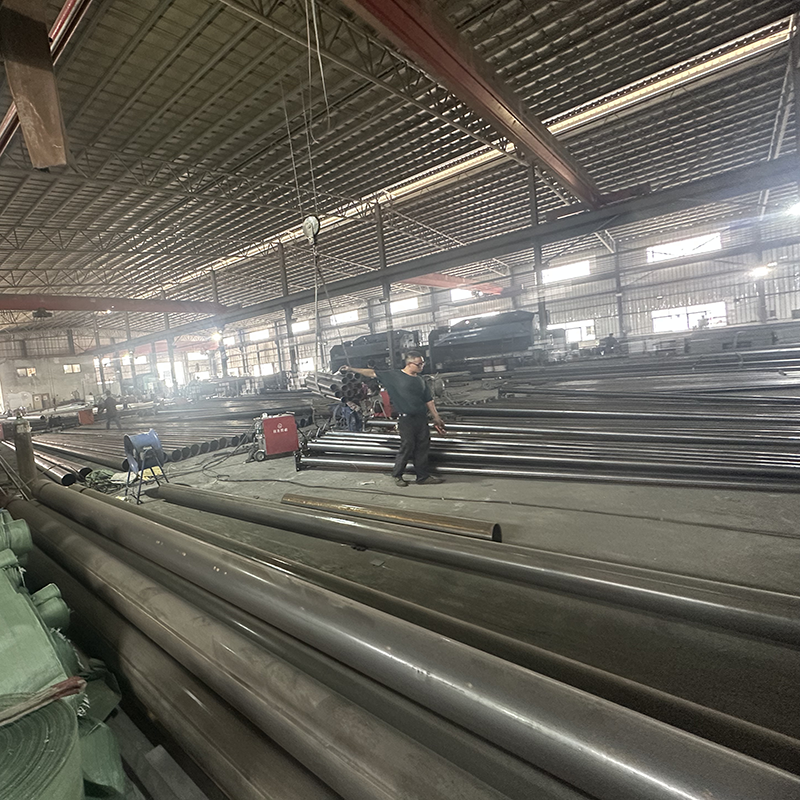
All commercial solar street lighting luminaires, intelligent MPPT controllers, and Q235 hot-dip galvanized steel poles are manufactured in-house by Zhongshan Chengyu New Energy Technology Co., Ltd. at our 35,000 m² production facility in Guzhen Town, Zhongshan, Guangdong, China.
Explore our verified municipal track record: Saudi Arabia 253 Sets 55°C Desert Highway Project, Philippines Coastal Highway Typhoon-Resistant Installation, or inspect third-party IEC/CE/ISO test reports at our Compliance Verification Center.
Need Engineering Sizing or EPC Tender Support?
Contact MCL Solar’s engineering division for complimentary DIALux road lighting simulations, solar autonomy calculations, and direct factory pricing for municipal and commercial infrastructure projects.