
Quick Answer
Solar-grid hybrid street lights are lighting systems that draw power from both a photovoltaic (PV) solar array and the utility electricity grid. In normal operation, the system runs primarily on stored solar energy. When the battery charge falls below a programmed threshold—after several cloudy or rainy days, for example—the controller automatically switches to grid power to keep the lights on. The switching is managed by a hybrid charge controller or an energy management controller, not by a manual process. The result is continuous nighttime lighting without relying on solar energy alone. Because grid power acts as a backup, the solar array and battery can be sized more economically than in a fully off-grid system. These systems are commonly used in municipal road lighting, highway sections, rural roads, and other projects where uninterrupted lighting is critical and grid access is already available.
Key Takeaways
- Hybrid systems use a controller to switch between solar/battery power and grid power, typically based on battery state of charge (SoC).
- The switching threshold is programmable and project-specific; there is no universal setting.
- Grid backup is a design choice to ensure continuity, not a sign that the solar system is “underperforming.”
- Real-world performance depends on solar resource, battery capacity, load profile, temperature, and the system’s control logic.
- Buyers should verify controller logic, battery type, switching time, and documentation before procurement.
1. Why This Topic Matters
Many street lighting projects face a common dilemma. A fully off-grid solar system must be oversized to survive long periods of cloudy or rainy weather, which raises cost. A fully grid-powered system has continuous energy costs and may conflict with sustainability targets. A hybrid system sits in between: it uses solar energy as the primary source when available, and draws from the grid only when necessary.
This matters because real lighting projects rarely have perfect conditions. A road in a region with two consecutive weeks of heavy rain, or a site with heavy seasonal fog, may not be suitable for a purely solar-powered system. Without a grid backup, the project owner must either accept periods of darkness or pay for a much larger battery bank. A hybrid configuration can reduce the required battery capacity while still guaranteeing nightly operation.
The hybrid approach is not a single product category. It is a system architecture that combines a PV array, a battery, a street light luminaire, a hybrid controller, and a grid connection. Each component must be selected to match the site and the load profile. Understanding how the switching mechanism works is the first step in making an informed procurement decision.
2. Core Concept: How the Power Switching Works
2.1 System Architecture
A solar-grid hybrid street light consists of the following main components:
- Solar photovoltaic (PV) panel or module
- Battery bank (typically lithium iron phosphate, LiFePO4, for project-grade systems)
- LED luminaire with its driver
- Hybrid charge controller / energy management controller
- Grid connection unit (with appropriate protection and metering, where applicable)
- Pole and mounting structure
The PV panel charges the battery during the day. At night, or when ambient light falls below a set level, the controller powers the LED load from the battery. The grid connection remains idle unless the battery charge drops to the switch threshold.
2.2 The Automatic Switching Logic
The switching is controlled by the hybrid controller. The typical logic sequence is as follows:
- During daylight, the PV panel charges the battery through the controller.
- At dusk, the controller turns on the LED luminaire, drawing power from the battery.
- Under normal conditions, the battery has enough stored energy to run the entire night.
- After several days of low solar gain, the battery voltage or state of charge (SoC) falls to a programmed threshold.
- The controller switches the load to grid power automatically, without an interruption in lighting.
- When the battery recovers to a safe charge level (e.g., after a day of good sunshine), the controller switches back to solar/battery power.
The exact trigger parameter—voltage or SoC—depends on the controller model and project configuration. In practice, SoC-based switching is more reliable than voltage-based switching, because battery voltage can fluctuate under load.
2.3 Switch-Back Condition
The switch back to solar power does not happen immediately after the battery voltage rises slightly. The controller uses a hysteresis band to prevent repeated toggling. For example, the system may switch to grid when the battery SoC reaches 30%, and switch back to solar only when the SoC reaches 60%. This prevents the system from flickering between power sources around the threshold.
2.4 Key Control Functions
A well-designed hybrid controller should support at least the following functions:
- Automatic dusk-to-dawn on/off control (light sensor or time-based)
- Battery low-voltage protection
- Grid backup trigger with programmable threshold
- Grid-to-solar return logic
- Overload and short-circuit protection
- Optional remote monitoring and dimming control via communication protocols such as 4G, LoRa, or WiFi, available on selected configurations
Understanding this control logic matters because it directly affects energy savings. If the switching threshold is set too high, the system will use grid power unnecessarily. If it is set too low, the battery may be deeply discharged more often than intended, which can affect battery cycle life in the long term.
3. What Determines Real-World Performance
The performance of a hybrid street light system depends on more than just the solar panel wattage. Engineers must consider the following factors:
| Factor | Why It Matters | Typical Project Consideration |
|---|---|---|
| Solar resource (irradiation) | Determines how much energy the PV panel can generate daily | Use actual local climate data, not regional averages |
| PV panel orientation and tilt | Affects daily energy yield | Adjust tilt angle based on latitude; avoid shading |
| Battery usable capacity | Determines how many nights the system can run without PV input | Usable capacity is less than nominal capacity |
| Nightly load profile | Determines how much energy the luminaire consumes per night | Consider dimming profiles where allowed |
| Controller switching logic | Sets the grid backup threshold and return threshold | Must match project reliability targets |
| Temperature | Affects battery performance and PV output | Select batteries with suitable temperature range |
| Grid availability | Grid backup must be reliable and compliant with local regulations | Check utility requirements before design |
| System losses | Wiring, controller efficiency, battery internal losses | Account for typical losses in sizing |
For example, a project in a region with high year-round sunshine can use a shorter rainy-day autonomy and a smaller battery. A project in a region with long foggy winters may need either a larger battery or more frequent grid backup. There is no universal answer. This is why project-based engineering is essential.
The usable battery energy is typically lower than the nominal battery capacity. A lithium iron phosphate battery, for example, may have a recommended depth of discharge (DoD) limit set by the battery management system (BMS) and the controller. That limit affects how much energy is actually available each night. Comparing battery capacities without considering usable energy is misleading.
Similarly, PV panel rated power (Wp) is measured under standard test conditions (STC), which rarely match real conditions. Actual yield depends on module temperature, dust accumulation, air mass, and tilt angle. A project-grade sizing calculation should use site-specific solar irradiation data and apply realistic derate factors.
4. How Requirements Change by Project Scenario
Different projects place different demands on hybrid systems. Understanding these differences helps buyers avoid both undersizing and oversizing.
4.1 Municipal Road Lighting
Municipal projects often require high reliability, esthetic design, and compliance with local lighting standards such as DIALux-based photometric requirements. Grid backup is usually available and easy to integrate. In this scenario, the hybrid system may be sized with a shorter autonomy period because the grid can cover extended cloudy periods. The focus may shift to lighting uniformity, pole spacing, and smart control capabilities.
4.2 Rural or Highway Sections Without Reliable Grid
When grid access is available but unreliable, the hybrid system must rely more on the battery. The grid connection acts as an emergency backup only. In such cases, battery capacity and PV sizing become more important than in an always-available grid scenario. The controller should handle frequent switching without damaging the battery or the LED driver.
4.3 Coastal Sites
Coastal environments impose corrosion risks on poles, luminaires, mounting brackets, and electrical connections. In hybrid systems, the grid connection box and controller enclosure require appropriate ingress protection and corrosion-resistant materials. Buyers should confirm the product’s IP rating for the complete product, not just for individual components.
4.4 High-Temperature Regions
High temperatures reduce the effective capacity of batteries and increase PV module temperature losses. Battery life may be shortened if the battery compartment is poorly ventilated. In such projects, the battery chemistry, thermal design of the enclosure, and the controller’s temperature compensation all matter.
4.5 Rainy or Foggy Regions
A hybrid system in a rainy region will use grid power more frequently. This does not mean the system is unhealthy; it means the system was designed with a specific balance between solar autonomy and grid backup. The key metric is not “zero grid usage” but total operating cost, reliability, and compliance with project goals.
4.6 Smart City Projects
Smart street lighting projects may require remote dimming, status monitoring, fault alerts, and platform integration. Hybrid systems with communication options such as 4G, LoRa, or WiFi can support these features. However, not every model supports smart control. Buyers should confirm the available communication protocols for the chosen configuration.
Each scenario has different economic and technical trade-offs. The design should always be confirmed against local standards, tender documents, site conditions, and actual climate data.
5. What Buyers Commonly Overlook
Many procurement issues can be avoided by asking the right questions before purchase. Here are common gaps:
5.1 Mixing Component Ratings with System Ratings
A common mistake is using the LED package efficacy as the complete-luminaire efficacy. Similarly, solar-cell efficiency is not the same as solar-module efficiency, and component IP rating is not the same as complete-product IP rating. Buyers should request the full-product specification, not just the key component datasheet.
5.2 Assuming One Controller Setting Fits All
The grid-switch threshold is a programmed parameter. There is no default that works for all sites. The buyer should clearly state the desired reliability level (e.g., expected nights of grid backup per month) during the design phase. This is an engineering decision, not a product preset.
5.3 Ignoring the Difference Between Battery Cycle Life and System Warranty
A battery may be rated for a certain number of cycles, but that rating does not translate directly into a warranty period. Warranty terms are contractual and may differ from the theoretical lifetime of the battery chemistry. Buyers should read the warranty terms carefully and confirm whether the warranty covers the complete system, the battery, or only selected components. MCL Solar provides a 5-year standard warranty; extended warranty terms apply only when explicitly specified in the PI or sales contract.
5.4 Checking Documentation Late
IES files, DIALux simulations, battery test reports, IP test reports, and controller specifications should be reviewed before procurement, not after delivery. Buyers should also obtain the system block diagram showing the switching logic. If the documentation is unclear, request a written explanation from the supplier.
5.5 Comparing Only Wattage
Wattage alone does not describe how a road will look at night. Actual lumen output, IES distribution, pole height, pole spacing, road width, and target illuminance all matter. A lower-wattage luminaire with an optimized optical distribution can sometimes outperform a higher-wattage one on the same road. The correct comparison is based on photometric design, not only wattage.
6. MCL Solar Practical Perspective
Zhongshan Chengyu New Energy Technology Co., Ltd. (MCL Solar) is a solar street lighting manufacturer and project solution provider. MCL Solar’s team has more than 10 years of experience in solar street lighting, outdoor lighting manufacturing, and project solutions.
From a practical standpoint, MCL Solar approaches hybrid systems on a project basis rather than offering a one-size-fits-all product. Key engineering considerations include:
- Sizing rainy-day autonomy based on the project’s local solar resource and reliability requirements, not on a fixed number of days
- Using project-grade lithium iron phosphate (LiFePO4) batteries as the standard direction, with exact capacity, voltage, BMS, and cycle-life rating depending on the model and project
- Providing DIALux simulation and IES-based lighting design support for applicable projects
- Supporting remote dimming, status monitoring, fault alerts, and platform management on selected configurations through communication options such as 4G, LoRa, WiFi, or other project-specific protocols
- Offering both all-in-one and split-type configurations, where split-type systems are often better suited to higher-power or taller-pole projects because they provide greater flexibility for PV, battery, wind-load, and maintenance design
Market data and project experience indicate that no single product type is universally better. All-in-one systems simplify installation; split-type systems offer more design flexibility. MCL Solar is able to provide product selection help, system configuration support, OEM/ODM services, technical documentation, and project engineering support subject to project requirements and verified documentation.
Buyers should always verify product specifications with the applicable datasheet or test report before finalizing their procurement plan. Documentation should be verified before procurement to avoid mismatches between internal expectations and the delivered configuration.
7. FAQ
Q1: How does a solar-grid hybrid street light decide when to switch to grid power?
A typical controller monitors battery state of charge (SoC). When the SoC drops to a preset threshold—for example, 30%—the controller automatically switches the LED load to grid power. When the battery later recovers to a higher SoC, for example 60%, it switches back to solar/battery power. The exact thresholds are project-specific settings.
Q2: Will the light turn off during the switching process?
In a properly designed hybrid system, the switching is an automatic process that occurs without interrupting the lighting load. The LED driver receives power from either the battery or the grid through the controller. That said, actual behavior depends on the controller design and the quality of the switching circuit.
Q3: Is a hybrid system more expensive than a normal solar street light?
The initial cost depends on the components included. A hybrid system adds a grid connection unit and a more advanced controller. However, it can allow a smaller PV array and battery than a fully off-grid system because the grid covers extended cloudy periods. The total cost comparison is project-specific.
Q4: Does daily use of grid power mean the solar system is failing?
No. The grid is part of the system design. If a project requires continuous lighting during a week of heavy rain, the controller will use grid power to bridge the gap. The amount of grid usage depends on the switching threshold, local solar resource, and load profile. It is not a failure condition.
Q5: Can a hybrid system be remotely monitored?
Selected MCL Solar systems can support remote dimming, status monitoring, fault alerts, and platform management through communication options such as 4G, LoRa, WiFi, or other project-specific protocols. Not all models support this feature, so the availability should be confirmed for the specific configuration.
Q6: How many rainy days should I specify for the battery backup?
There is no universal number. The required autonomy depends on usable battery energy, the programmed nightly load profile, PV recovery during cloudy weather, local solar resource, temperature, and system losses. MCL Solar sizes rainy-day autonomy on a project basis. For a hybrid system, the grid backup threshold also affects the answer.
8. Conclusion
Solar-grid hybrid street lights are an effective way to maintain high lighting reliability while maximizing the use of solar energy. The core mechanism is an automatic controller that switches between battery power and grid power based on battery state of charge, with a programmable threshold. The system design is inherently project-specific. Buyers should evaluate controller logic, battery usable capacity, PV yield, site climate, grid availability, and photometric performance as one integrated system. Wattage alone is not enough; IES photometric data, dimming profiles, and complete-system specifications matter. Above all, responsible buyers should verify documentation—controller settings, battery test reports, IP ratings, and warranty terms—before procurement, and they should avoid confusing component specifications with complete-system performance.
For infrastructure projects that require reliable lighting continuity, a hybrid configuration can offer the right balance of energy savings and reliability. With more than 10 years of experience in solar street lighting, outdoor lighting manufacturing, and project solutions, Zhongshan Chengyu New Energy Technology Co., Ltd. (MCL Solar) can support product selection, system configuration, IES photometric data, DIALux simulation, OEM/ODM, technical documentation, project engineering support, and tender support.
If you are planning a solar street lighting project and would like to evaluate whether a solar-grid hybrid configuration is suitable, send us the relevant project details—including country/city, application, road width, pole height, pole spacing, projected quantity, target lux or lumen requirement, planned operating hours, desired rainy-day autonomy, and any coastal, high-wind, or high-temperature conditions. BOQ, drawings, or tender specifications are also welcome.
- Email: sales@mclsolar.com
- WhatsApp: +86 18030335122
- Website: https://mclsolar.com
Engineering & Manufacturing Verification at MCL Solar
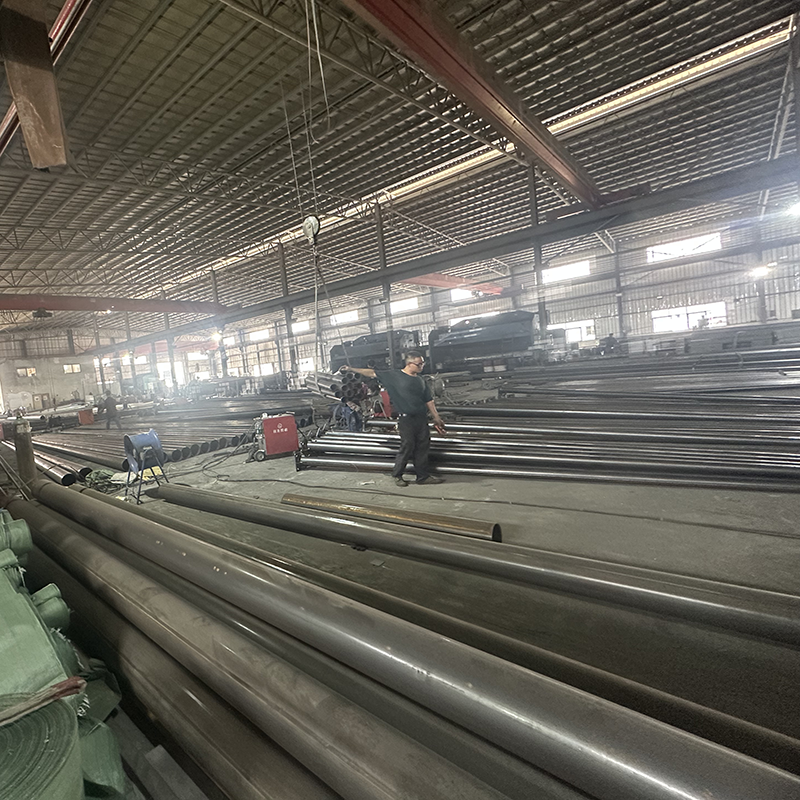
All commercial solar street lighting luminaires, intelligent MPPT controllers, and Q235 hot-dip galvanized steel poles are manufactured in-house by Zhongshan Chengyu New Energy Technology Co., Ltd. at our 35,000 m² production facility in Guzhen Town, Zhongshan, Guangdong, China.
Explore our verified municipal track record: Saudi Arabia 253 Sets 55°C Desert Highway Project, Philippines Coastal Highway Typhoon-Resistant Installation, or inspect third-party IEC/CE/ISO test reports at our Compliance Verification Center.
Need Engineering Sizing or EPC Tender Support?
Contact MCL Solar’s engineering division for complimentary DIALux road lighting simulations, solar autonomy calculations, and direct factory pricing for municipal and commercial infrastructure projects.