
In municipal and industrial roadway lighting tenders across the Middle East, Southeast Asia, Latin America, and Africa, public works authorities and EPC contractors face an escalating technical crisis: solar street light lithium battery thermal runaway. When low-tier manufacturers install substandard or recycled lithium cells inside sealed luminaire housings without active thermal isolation or redundant battery management systems (BMS), ambient heatwaves exceeding 50°C quickly trigger catastrophic cell swelling, electrolyte venting, short circuits, and explosive fires atop 8-to-12-meter utility poles.
Preventing solar street light lithium battery thermal runaway is not merely a matter of chemical selection; it requires a rigorous, five-layer electro-mechanical defense architecture spanning cell grading, automated laser busbar welding, phase-change thermal barriers, and dual-hardware cutoff logic. This engineering whitepaper outlines the physics of lithium cell thermal breakdown, contrasts LiFePO4 against volatile NCM chemistries, details the manufacturing protocols deployed across MCL Solar’s 35,000 m² production facility, and provides municipal engineers with a verifiable procurement checklist to eliminate fire hazards from public infrastructure.
1. The Root Causes of Solar Street Light Lithium Battery Thermal Runaway in Outdoor Deployments
Thermal runaway is an uncontrolled exothermic reaction wherein a battery cell’s internal heat generation outpaces its rate of heat dissipation. In outdoor solar lighting installations, this catastrophic breakdown typically stems from four compounding failure modes:
- Extreme Ambient Operating Temperatures: In desert climates (such as the GCC region, North Africa, and inland Australia), ambient air temperatures frequently hit 48°C to 52°C. Direct solar irradiation on dark metal enclosures drives internal battery chamber temperatures beyond 70°C, degrading chemical binders and breaking down the solid electrolyte interphase (SEI) layer.
- Internal Micro-Short Circuits from Dendrite Growth: In cheap, second-life or B-grade lithium cells, repeated high-current charging cycles without cell-level voltage balancing cause metallic lithium plating on the graphite anode. Over time, microscopic dendrites pierce the plastic separator, initiating localized short circuits that ignite the flammable organic liquid electrolyte.
- BMS Single-Point Electronic Failure: Low-cost commercial street lights rely on single-MOSFET protection boards. When a voltage spike or lightning transient damages the primary switching circuit, the battery charges continuously past 3.65V (for LiFePO4) or 4.2V (for ternary lithium), initiating rapid thermal breakdown.
- Vibrational Stress and Cold Solder Fractures: Wind-induced pole oscillations (vortex shedding at wind velocities up to 160 km/h) subject battery packs to continuous mechanical vibration. Manual lead soldering or cheap spot welding leads to cracked nickel strips, localized arcing, high contact resistance, and intense localized hot spots.
2. Chemistry Comparison: Why LiFePO4 Is the Mandatory Baseline for Roadway Safety
The primary barrier against solar street light lithium battery thermal runaway is the chemical composition of the cathode. While consumer electronics and electric mobility applications often utilize Nickel Cobalt Manganese (NCM/Ternary) or Lithium Cobalt Oxide (LCO) due to their high volumetric energy density (200–250 Wh/kg), these chemistries are inherently perilous for outdoor infrastructure.
Lithium Iron Phosphate (LiFePO4) features a rigid olivine crystal structure with strong covalent phosphorus-oxygen (P-O) bonds. Even under severe mechanical puncture or overcharging, the oxygen atoms remain tightly bound, preventing the release of gaseous oxygen that feeds self-sustaining fires.
| Technical Parameter | Grade-A LiFePO4 (MCL Solar Standard) | Commercial NCM / Ternary Lithium | Traditional VRLA / GEL Lead-Acid |
|---|---|---|---|
| Thermal Runaway Initiation Temp | 270°C – 300°C (Extremely Stable) | 150°C – 180°C (High Risk) | N/A (Sulphation / Acid Leak) |
| Oxygen Release During Puncture | No oxygen release (P-O covalent bond) | Rapid oxygen release (Feeds fire) | Hydrogen gas outgassing risk |
| Cycle Life @ 80% DOD (25°C) | > 3,500 – 5,000 Cycles | 800 – 1,200 Cycles | 400 – 600 Cycles |
| Cycle Life @ High Ambient (55°C) | > 2,200 Cycles (With MCL-HTBS™) | < 350 Cycles (Rapid Swelling) | < 200 Cycles (Thermal Drying) |
| Physical Safety Valve | Prismatic Aluminum Can with Explosion Vent | Cylindrical or Pouch (Pouch swells easily) | Rubber Safety Cap |
3. The 5-Layer Engineering Defense Protocol Against Thermal Runaway
To ensure 100% operational safety across critical municipal highways, airports, and desert border crossings, MCL Solar implements an uncompromising five-layer electro-mechanical mitigation protocol.
Layer 1: Prismatic Grade-A Cells with Mechanical Explosion-Proof Relief Vents
MCL Solar utilizes 100% brand-new, automotive-tier Grade-A prismatic LiFePO4 cells. Each individual cell housing is engineered with an integrated laser-notched mechanical pressure relief valve. In the event of extreme electrical abuse or high-heat exposure, internal gas pressures vent safely at calibrated thresholds (typically 0.4–0.6 MPa) before pouch rupture or explosive casing fragmentation can occur.
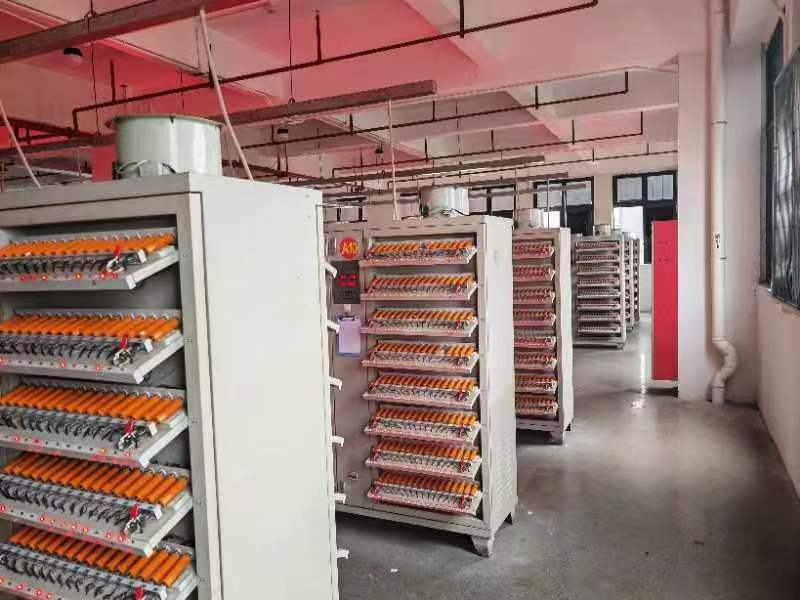
Figure 1: Automated capacity grading and high-precision sorting of Grade-A LiFePO4 cells inside the MCL Solar manufacturing facility.
Layer 2: Automated Cell Sorting, Matching & Highland Barley Paper Insulation
Thermal runaway is frequently seeded by internal cell imbalances within a multi-cell PACK. When cells with divergent internal resistances are grouped together, the cell with higher impedance experiences localized I²R Joule heating during charging.
Inside our Zhongshan facility, every single cell undergoes automated grading across four electrical variables:
- Voltage Consistency: Difference between parallel cells constrained to (Delta V le 2 ext{ mV}).
- AC Internal Resistance (ACIR): Impedance variation maintained within (Delta R le 0.15 ext{ m}Omega).
- Capacity Matching: Discharge discrepancy kept below 0.5% at 0.5C rate.
- Inter-Cell Dielectric Isolation: Every cell head and terminal is covered with heavy-duty highland barley paper (青稞纸) and high-temperature polyimide film, preventing edge abrasions and terminal-to-case flashovers.
Video 1: Precision application of highland barley paper (青稞纸) dielectric insulation during LiFePO4 battery pack prep at MCL Solar.
Layer 3: Automated Laser Spot Welding with 99.9% Pure Nickel Busbars
Manual soldering iron joints induce microscopic cold solder fractures and excessive thermal shock to cell terminals. MCL Solar deploys multi-axis CNC pneumatic spot welders and continuous-wave fiber laser welders to attach 99.9% pure stamped nickel busbars.
Laser welding creates an atomic-level metallurgical bond with micro-ohm contact resistance. This eliminates point heating during 15A to 30A peak charge/discharge intervals and survives violent continuous wind vibrations up to 160 km/h without fatigue cracking.
Video 2: High-speed automated spot welding of pure nickel busbars across commercial solar street light LiFePO4 battery modules.
Layer 4: Dual-Hardware Smart BMS Architecture with Multi-Point NTC Sensing
The electronic brain shielding our batteries from solar street light lithium battery thermal runaway is the MCLSOLAR Digital Intelligent BMS. Unlike consumer single-chip controllers, our project-grade BMS features dual-tiered hardware protection:
- Primary Microcontroller Logic: Continuously calculates state of charge (SOC), state of health (SOH), and performs active cell balancing during every charge cycle.
- Secondary Analog Hardware Intercept: A secondary dedicated comparator circuit operates independently of the primary MCU firmware. If an electrostatic discharge or firmware glitch freezes the main chip, the secondary circuit instantly trips the solid-state disconnect relays if voltage exceeds 3.75V per cell or ambient temperature surpasses 65°C.
- Multi-Point NTC Thermal Probes: Dual negative temperature coefficient (NTC) sensors are embedded directly against the center core of the battery cells (where heat builds first), rather than merely monitoring the surface of the aluminum PCB. High-temperature charging cutoff activates at 55°C ± 2°C; low-temperature charging cutoff activates at 0°C to prevent hazardous lithium dendrite formation in sub-zero regions.
Video 3: Assembly and soldering of the 25.6V heavy-duty dual-hardware BMS protection board inside MCL Solar PACK workshop.
Layer 5: Aerogel Thermal Barriers & Breathable Pressure Equalization Enclosures
For high-wattage systems deployed on 8-to-12-meter highways, battery enclosures must be insulated against solar thermal radiance. MCL Solar incorporates nano-porous aerogel insulation pads between the outer enclosure wall and the cell pack. Aerogel exhibits an ultra-low thermal conductivity ((le 0.018 ext{ W}/( ext{m}cdot ext{K}))), keeping internal battery temperatures 15°C to 20°C cooler than uninsulated metal casings during peak midday sun.
Furthermore, all battery compartments feature an ePTFE waterproof breathable membrane (breathing valve, IP67). This allows internal air pressure to equalize during diurnal heating/cooling cycles without permitting desert dust, sand, or moisture vapor ingress.
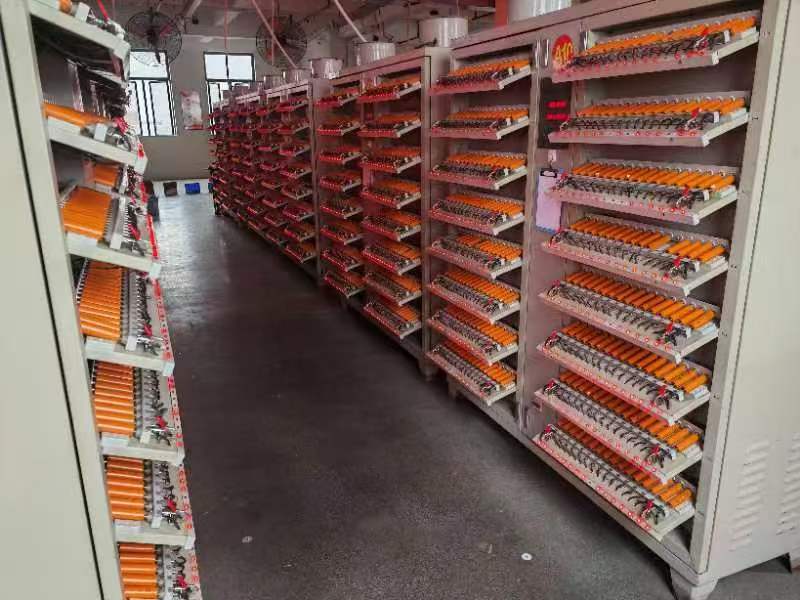
Figure 2: Final pre-encapsulation voltage balancing and impedance validation on high-voltage 25.6V solar street light battery systems.
4. International Certification & Verification Standards for Tender Compliance
Municipal procurement contracts and multilateral development bank tenders (e.g., World Bank, UNOPS, AfDB, Saudi Aramco) require rigorous third-party compliance verification before battery systems can clear customs or obtain grid interconnection sign-offs. Engineers must insist upon the following test protocols:
- UN 38.3 Transport Safety Certification: Mandates eight extreme environmental stress tests: altitude simulation (T1), thermal cycling from -40°C to +72°C (T2), vibration (T3), 50G shock (T4), external short circuit at 55°C (T5), impact/crush (T6), overcharge (T7), and forced discharge (T8).
- IEC 62133-2:2017 CB Certification: The global benchmark for portable secondary lithium cells, verifying continuous low-rate charging, high-ambient external short circuit, thermal abuse at 130°C for 10 minutes, and mechanical crush resistance without fire or explosion.
- UL 1973 / IEC 62619: Standards for stationary energy storage batteries covering thermal propagation testing—proving that if a single cell experiences thermal runaway under forced external heating, fire will not propagate to adjacent cells within the module.
- CE / RoHS / REACH Directives: Documenting the absence of hazardous lead, cadmium, and hexavalent chromium in the electronic control assemblies.
5. System Integration: Pairing Thermal Safety with High-Power Highway Systems
A battery cannot be evaluated in isolation; it must function as part of an integrated, aerodynamically stable roadway lighting system. For high-speed expressways, arterial boulevards, and heavy industrial corridors requiring 15,000 to 25,000+ lumens, thermal dissipation is maximized by separating the luminaire from the battery module.
MCL Solar’s flagship split-system solution for high-power roadway infrastructure is the 8-12M Two-in-One Split Type Solar Street Light. By decoupling the high-lumen Bridgelux LED engine from the battery enclosure, LED operational heat (reaching 60°C on the heat sink) is physically isolated from the battery compartment, entirely eliminating heat cross-transfer.
Explore our global deployment record across harsh desert and coastal environments in the official MCL Solar Overseas Projects Directory.
6. Tender Inspection Checklist: How Municipal Engineers Can Verify Battery Safety
When conducting factory audits or reviewing submittals from Chinese manufacturers, municipal engineering teams should require compliance with this non-negotiable inspection checklist:
| Audit Verification Item | Tier-1 Manufacturing Standard (MCL Solar) | Assembler Red Flag (Reject Immediately) |
|---|---|---|
| Cell Grade & Traceability | 100% Grade-A with intact manufacturer QR codes & batch test reports | Scratched QR codes, recycled B-grade cells, uneven shrink sleeves |
| Busbar Interconnection | Automated multi-point laser spot welding with 99.9% pure nickel strips | Manual solder iron joints with rosin flux or thin nickel-plated steel |
| BMS Temperature Cutoff | Dual NTC thermistors embedded inside cell pack; 55°C charge cutoff | No NTC thermistor or single thermistor soldered onto BMS PCB only |
| Aging & Burn-In Chamber | 100% full-pack charge-discharge cycle testing in a dedicated aging facility | Random batch testing of only 1–2% or no burn-in testing before shipping |
| Third-Party Reports | Valid UN38.3 test report, MSDS, IEC 62133 CB test certificate | Expired test reports, Photoshop-altered certificates, or CE self-declaration only |
Frequently Asked Questions (FAQ)
Can LiFePO4 batteries experience thermal runaway in solar street lights?
While LiFePO4 is the safest commercial lithium chemistry with an extremely high thermal breakdown threshold (270°C–300°C), thermal runaway can still be induced by catastrophic electronic failure—such as continuous high-voltage overcharging (>4.2V/cell) due to a defective charge controller or an internal dead short circuit. However, unlike ternary lithium (NCM), LiFePO4 does not release oxygen during decomposition, preventing explosive flame propagation.
Why do solar street light batteries swell in desert environments?
Battery swelling is caused by internal gas generation resulting from electrolyte decomposition at sustained temperatures above 60°C. In poorly insulated battery enclosures, this swelling deforms the casing, tears internal separator membranes, and drastically accelerates capacity fade. MCL Solar prevents swelling through aerogel heat shields, breathable pressure-relief valves, and high-temp charge throttling.
What is the difference between single-hardware and dual-hardware BMS protection?
A single-hardware BMS relies on one microcontroller (MCU) to process measurements and command switching MOSFETs. If the MCU experiences a firmware crash or static latch-up, the battery remains unprotected. A dual-hardware BMS includes an independent secondary analog comparator circuit that hard-trips the disconnect switches if overvoltage or critical overtemperature thresholds are breached, ensuring zero single-point electronic failures.
Verified 35,000 m² Manufacturing Facility & Engineering Support
Zhongshan Chengyu New Energy Technology Co., Ltd. (MCL Solar) operates an expansive 35,000 m² intelligent solar lighting manufacturing base in Guzhen Town, Zhongshan City, Guangdong Province, China. Our facilities encompass automated SMT luminaire production lines, lithium battery PACK assembly and automated laser welding lines, high-temperature aging chambers, and certified photometric goniometer testing laboratories.
For municipal tender pre-qualification documentation, UN38.3 / IEC test certificates, DIALux lighting layout simulations, or to arrange an on-site or live-video factory audit, contact our senior engineering department directly:
Official Engineering Hotline & WhatsApp: +86 180 3033 5122
Official Website: https://mclsolar.com