
Executive Summary for Municipal Engineers & EPC Tender Directors
Sourcing commercial solar street lighting from China represents significant CAPEX savings for municipal infrastructure programs, yet industry data reveals that over 70% of off-grid roadway failures within the first 18 months stem from unverified assembly workshops and trading intermediaries masquerading as Tier-1 factories. Common tender pitfalls include repurposed secondary (B-grade) EV lithium cells, exaggerated luminous efficacy claims (200 lm/W claimed on paper vs. 130 lm/W actual), and substandard sheet-metal lighting poles lacking ASTM A123 hot-dip galvanization.
This 2026 industrial engineering whitepaper provides an exhaustive, step-by-step solar street light factory audit protocol. Designed for overseas procurement officers, international EPC contractors, and ministerial tender committees, it details the precise testing equipment, documentation checklists, and workshop verification benchmarks required to validate direct manufacturing capabilities before contract signing.
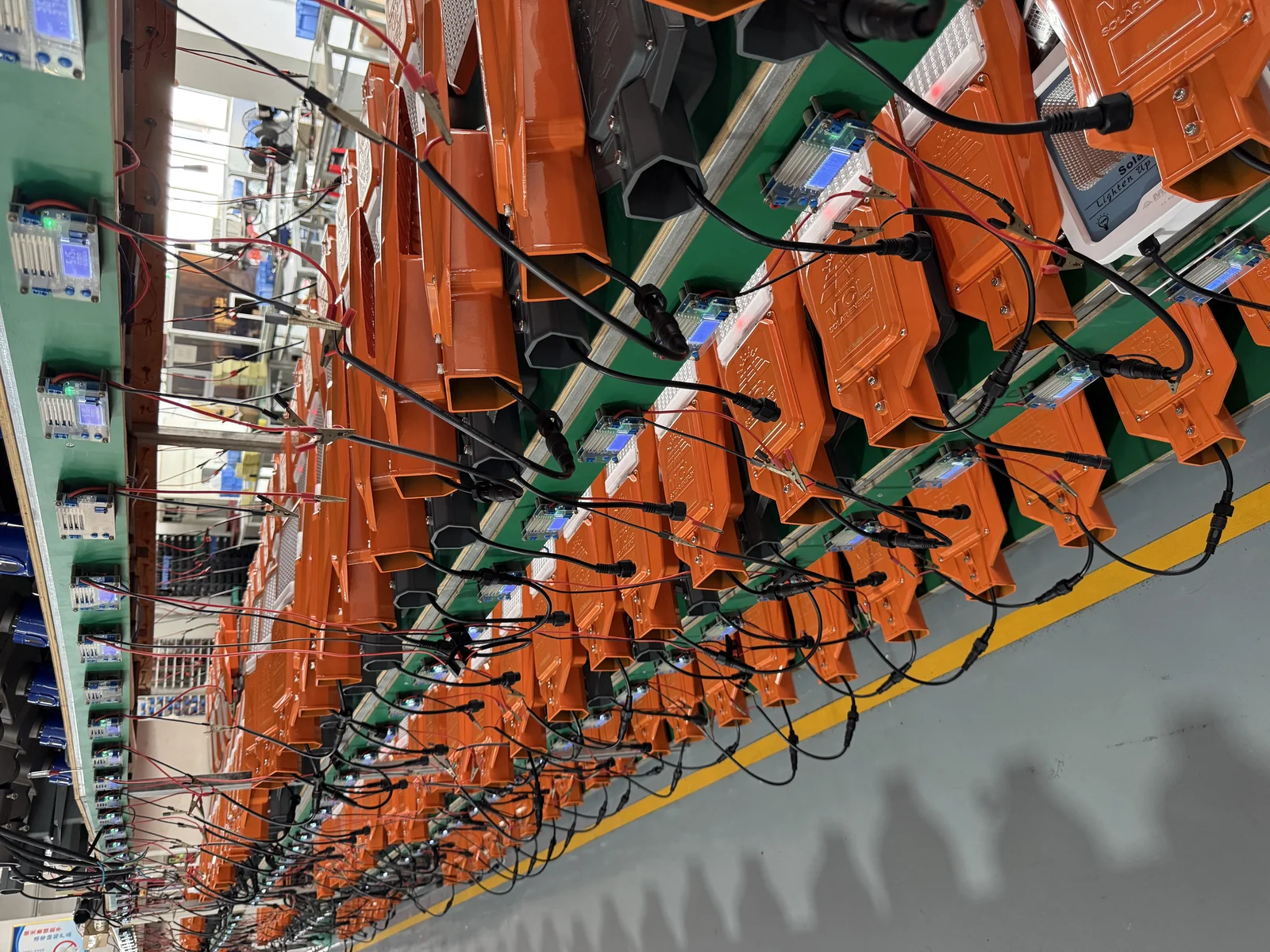
Figure 1: Aerial panoramic inspection of MCL Solar’s 35,000 m² specialized solar street lighting and smart pole manufacturing facility in Guzhen, Zhongshan, Guangdong.
1. Industrial Cluster Analysis: Zhongshan vs. Yangzhou Sourcing Realities
When planning an international solar street light factory audit in China, procurement leads must distinguish between China’s two primary lighting industrial clusters:
- Zhongshan Cluster (Guangdong Province – The Greater Bay Area): Global center of high-performance optoelectronics, precision aluminum die-casting, automated SMT PCB assembly, smart digital MPPT controller engineering, and Grade-A LiFePO4 battery integration. Direct proximity to Shenzhen ports ensures seamless 40HQ container logistics. Ideal for high-efficiency municipal roadway projects, desert thermal resilience, and smart IoT poles.
- Yangzhou Cluster (Jiangsu Province – Guoji Town): Historically focused on heavy steel pole rolling, submerged arc longitudinal welding, and basic hot-dip galvanizing. While pole pricing can be competitive, many facilities rely on outsourced luminaires and generic third-party battery packs, creating fragmented quality control across multi-component systems.
For large-scale international tenders requiring unified 10-year system warranties, selecting a vertically integrated manufacturer with owned optical, electronic, energy storage, and structural fabrication infrastructure is vital to avoid finger-pointing when component failures occur.
2. Battery Workshop Audit: Eliminating Recycled Cells & Verifying LiFePO4 Chemistry
The battery pack is the single most expensive and failure-prone component in any commercial solar street light. During an on-site audit, inspectors must demand access to the raw cell staging bay and automated sorting lines.
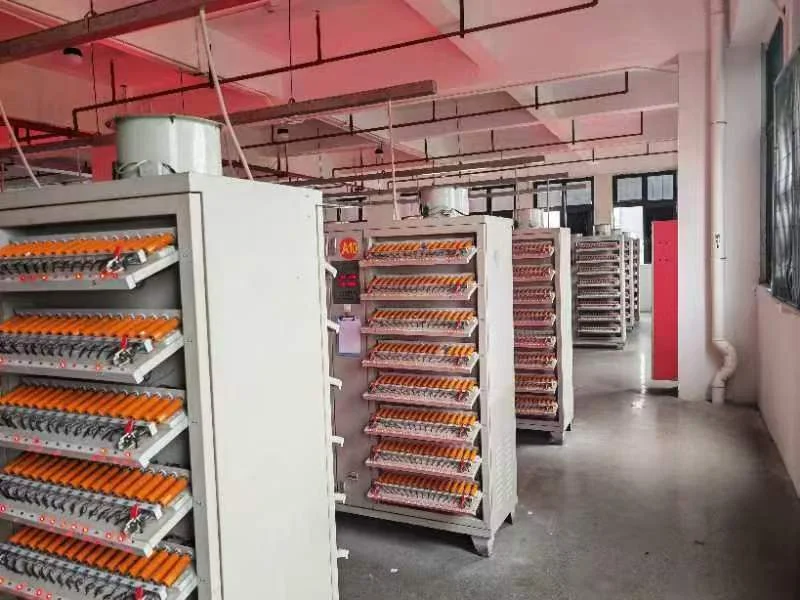
Figure 2: Computerized battery capacity grading cabinets verifying cell discharge curves at 0.5C rate.
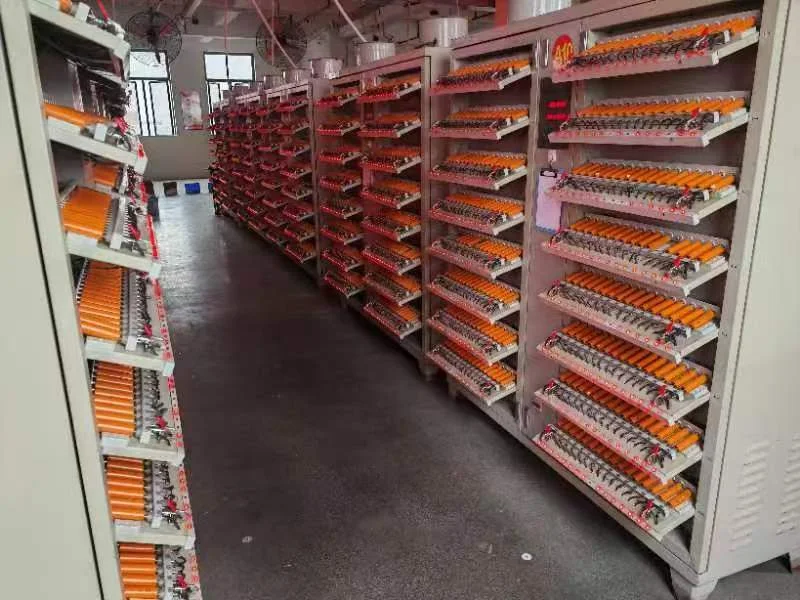
Figure 3: Four-wire AC internal resistance (mΩ) and open-circuit voltage matching station (ΔV < 5mV).
Critical Battery Line Audit Verification Points:
- Cell Tier Verification: Require proof that cells are 100% brand-new Grade-A prismatic or 32700 cylindrical cells (such as Gotion, EVE, or BYD supply chains) delivering >3,500 cycles @ 80% Depth of Discharge (DOD) and >5,000 cycles @ 50% DOD. Reject workshops utilizing refurbished EV battery modules or unbranded cells lacking traceability barcodes.
- Automated Laser Spot Welding vs. Manual Soldering: Manual soldering irons damage cell gaskets and introduce high-resistance cold solder joints. Tier-1 factories utilize automated CNC laser spot welders with pure nickel busbars (≥0.2mm thickness) and copper-nickel composite terminals to withstand thermal expansion and vibration.
- Thermal Buffer & Chimney Design (MCL-HTBS™): In Middle Eastern desert or equatorial African climates where ambient temperatures exceed 50°C, battery enclosures mounted directly behind PV panels can exceed 75°C, causing irreversible thermal degradation. Verify that the factory implements multi-layer aerogel insulation and natural convection cooling chimneys rated for -20°C to +65°C continuous operation.
Live Factory Production Inspection: Industrial Laser Spot Welding Line
Video 1: Automated CNC laser spot welding of 25.6V heavy-duty LiFePO4 battery packs inside MCL Solar’s clean energy storage workshop.
3. Luminaire Workshop & Optical Laboratory Audit: Proving True 208 lm/W Efficacy
Exaggerated lumen claims are ubiquitous in commercial lighting. Many assemblers purchase 130 lm/W LED modules and print “220 lm/W” on packaging. A rigorous solar street light factory audit requires validating optical engineering in a darkroom test facility.
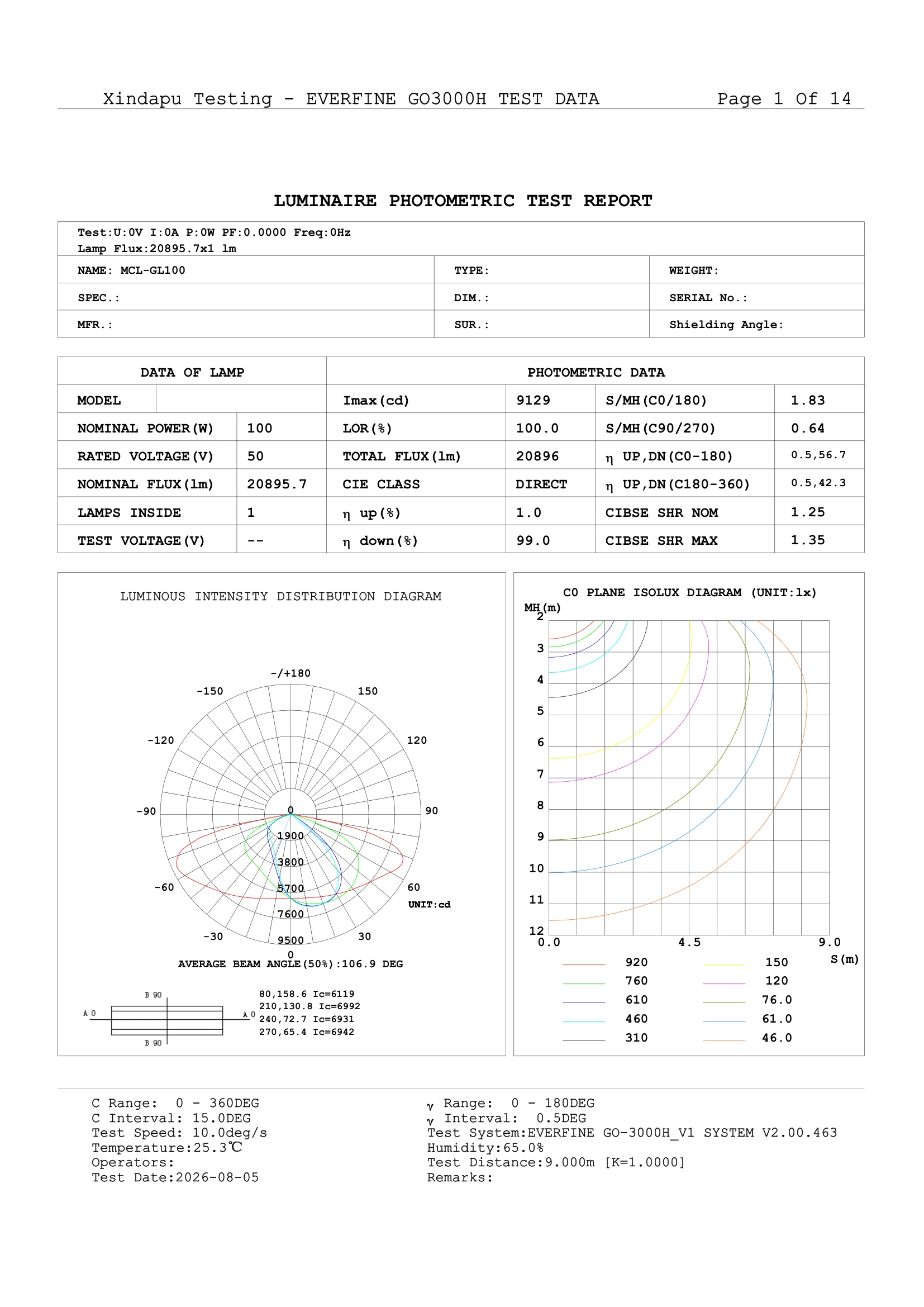
Figure 4: Calibrated laboratory goniophotometer report (EVERFINE GO-3000H) verifying MCL Solar luminaire output of 20,895.7 lumens at 100.0W (measured luminous efficacy: 208.96 lm/W).
Key Optical Verification Requirements:
- Calibrated Goniophotometer Test (IESNA LM-79-08): Inspect the manufacturer’s distributed photometer (such as an EVERFINE GO-3000H or equivalent class). Demand an unedited IES photometric curve file demonstrating batwing roadway distribution (Type II-M or Type III-M) with optical uniformity Uo > 0.40 and glare rating Ti < 10%.
- LED Chip Brand & LM-80 Report: Inspect the reel feeders on high-speed Yamaha or Panasonic SMT placement machines. Verify genuine Bridgelux 5050/7070 or Philips Lumileds chips backed by third-party NVLAP/IAS accredited LM-80 test reports showing >102,000 hours L70 lumen maintenance at 85°C.
- Automated Burn-In & Aging Test: Every commercial batch must undergo a mandatory 24 to 48-hour continuous power-on burn-in test under high-voltage stress before final packaging.
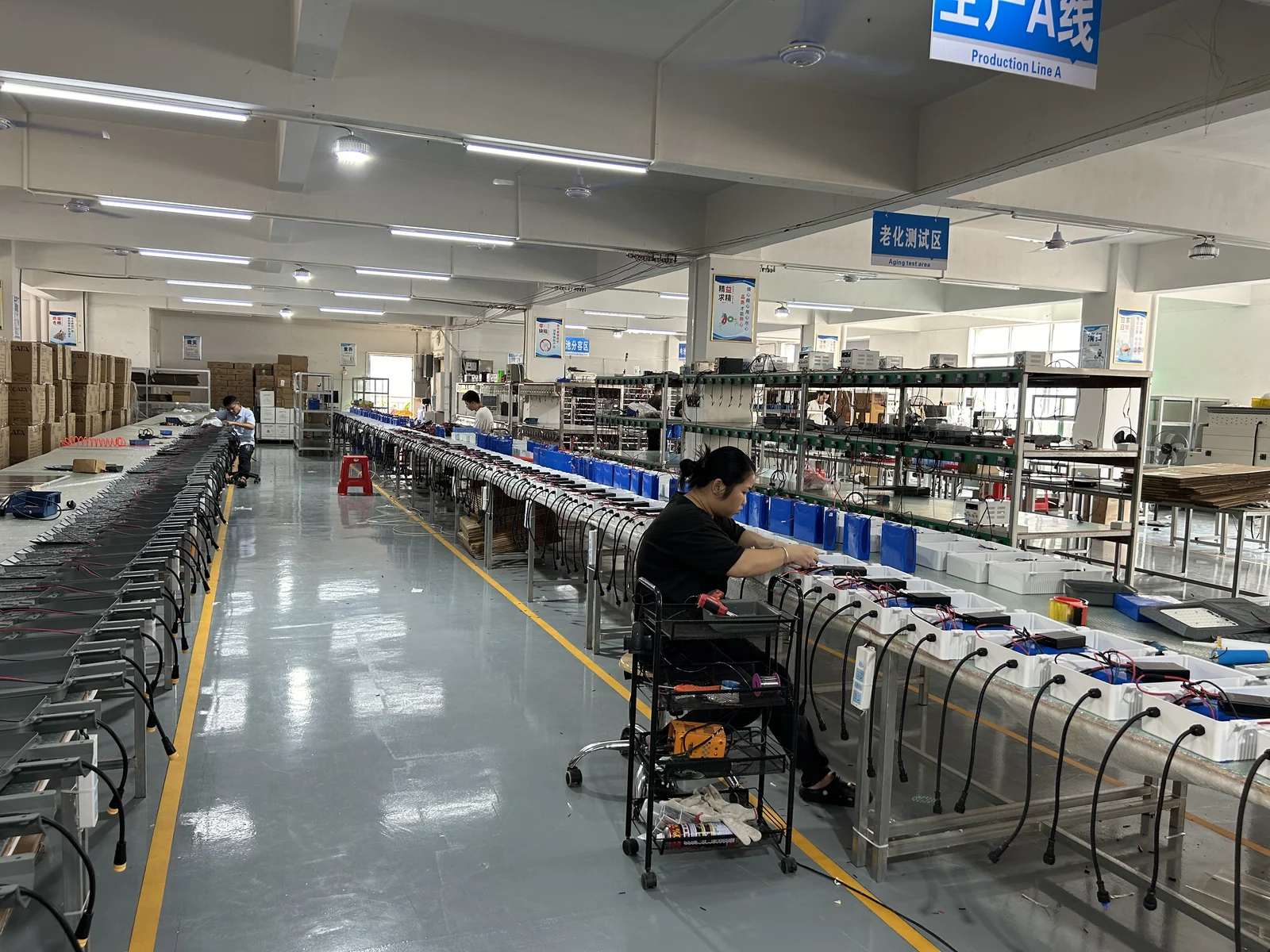
Figure 5: High-speed ESD conveyor assembly line for high-power roadway luminaires.
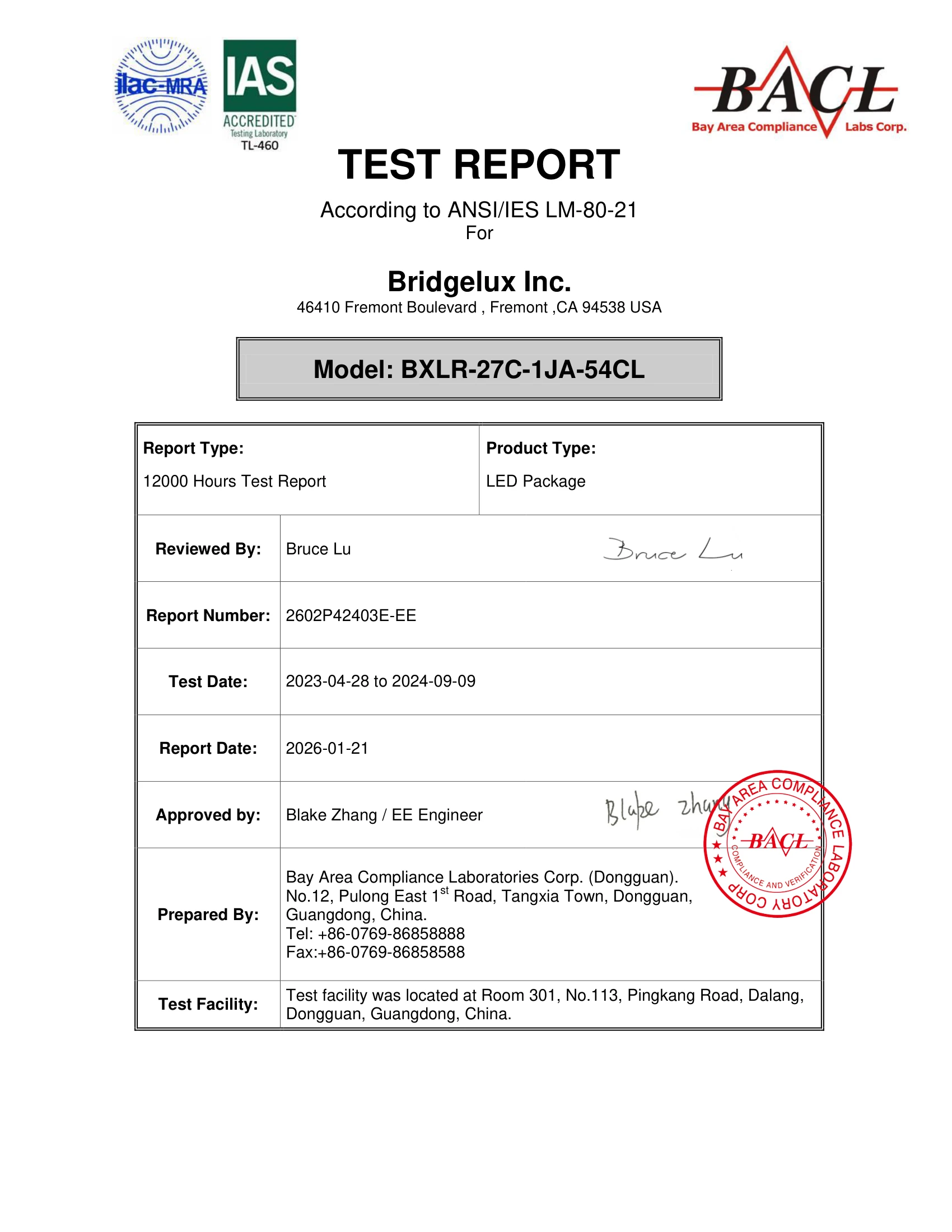
Figure 6: Accredited NVLAP & IAS lab test report verifying Bridgelux 7070 LED lumen retention.
Live Factory Inspection: 180W High-Power Luminaire Testing on Conveyor
Video 2: In-line testing of 180W heavy-duty split solar roadway luminaires on MCL Solar’s assembly line.
4. Highway & Municipal Roadway Applications: Why Split Systems Dominate
For multi-lane arterial expressways, international transport corridors, and desert perimeter security, experienced engineers avoid compact all-in-one lights. As established in global tenders across Saudi Arabia, Nigeria, Jordan, and West Africa, highway standards dictate:
- Mounting heights of 8m, 10m, or 12m with pole spacing between 35m and 45m;
- Maintained road surface illuminance ≥ 20-30 lux with overall uniformity Uo ≥ 0.40;
- Total luminous output of 16,000 to 42,000 lumens operating continuously from dusk to dawn with 3 to 5 rainy day autonomy.
To achieve this level of performance without battery starvation, infrastructure tenders specify high-power split systems such as the MCL Solar 8-12M Two-in-One Split Type Solar Street Light, which pairs high-power monocrystalline PV panels (300W-600W) with decoupled Grade-A LiFePO4 battery enclosures and 32-bit MCU digital MPPT controllers.
5. Steel Pole Fabrication & Corrosion Protection Audit: ASTM A123 / ISO 1461
The structural pole represents up to 40% of total system weight. Structural failure during typhoons or premature red rust in coastal environments can result in catastrophic liability.
| Audit Inspection Item | Substandard Assembler Standard | Tier-1 Factory Standard (MCL Solar) |
|---|---|---|
| Steel Material Grade | Recycled scrap steel, inconsistent yield strength | Certified Q235B / Q345B prime structural steel |
| Galvanization Process | Cold electro-galvanizing or spray coating (<40 μm) | Molten hot-dip galvanizing per ASTM A123 / ISO 1461 (≥86 μm) |
| Anti-Corrosion Life | Rusts within 12-24 months in humid or coastal zones | 25+ years rust-free life; ISO 12944 C5-M marine coating option |
| Wind Load Resilience | Untested; 2.5mm wall thickness prone to bending | EN 40 certified for 160 km/h (Category 16 typhoon) resilience |
6. Mandatory International Certification & Test Report Checklist
Before signing an international sales contract, verify that the manufacturer possesses valid, accredited certificates matching the exact models in your bill of quantities:
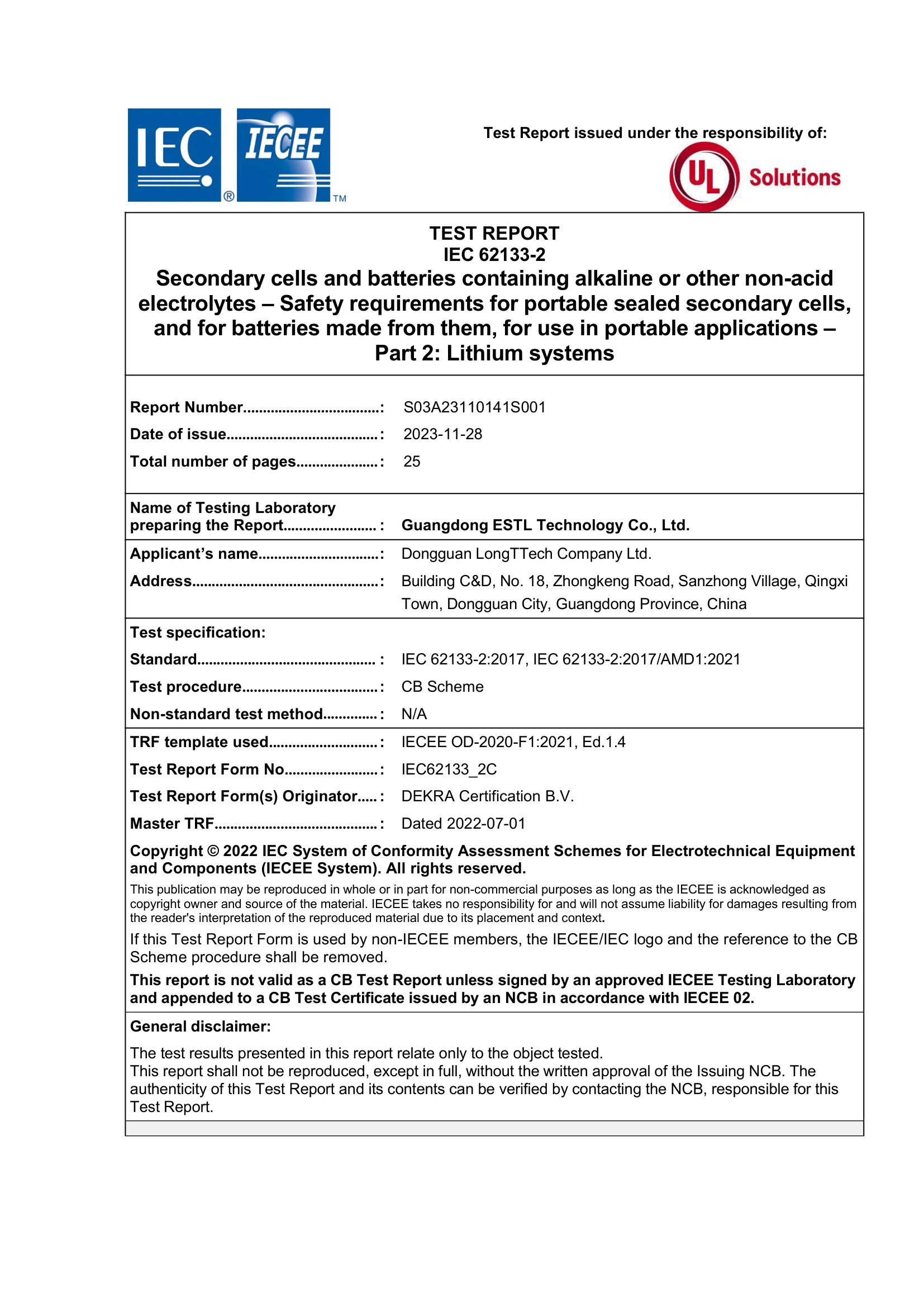
Figure 7: Official IECEE CB Scheme Test Certificate confirming IEC 62133 safety compliance for MCL Solar LiFePO4 battery packs.
- Battery Safety & Transport: IEC 62133 CB Scheme certificate, UN38.3 lithium battery transportation test report, MSDS (Material Safety Data Sheet), and 1.2m drop test verification.
- PV Module Efficiency: IEC 61215 (design qualification) and IEC 61730 (safety qualification) issued by TUV Rheinland or DEKRA.
- Middle East Market Entry (Saudi Arabia): Verification of SASO-2927 street lighting energy efficiency registration and active SABER platform clearance certificates (SIRC).
- Southeast Asia / Philippines: Compliance with DPWH Department Order No. 19 (Series of 2023) roadway lighting criteria and 16-level typhoon wind-load structural calculations.
7. Complete 20-Point Factory Audit Checklist for Overseas Inspectors
On-Site Verification Protocol
- [ ] 1. Verify physical factory floor area ≥ 20,000 m² (MCL Solar: 35,000 m²).
- [ ] 2. Confirm owned SMT pick-and-place lines and reflow soldering ovens.
- [ ] 3. Inspect raw battery cell incoming inspection logs and QR code tracking.
- [ ] 4. Audit battery capacity grading equipment and 0.5C charge/discharge curves.
- [ ] 5. Witness automated CNC laser spot welding of battery packs.
- [ ] 6. Inspect BMS (Battery Management System) overcharge, overdischarge, and thermal cutoff protection.
- [ ] 7. Inspect darkroom goniophotometer (EVERFINE GO3000H) and request live run on random sample.
- [ ] 8. Verify calibrated system efficacy ≥ 190-210 lm/W with IES files.
- [ ] 9. Review Bridgelux/Philips LM-80 test reports with NVLAP/IAS accreditation.
- [ ] 10. Inspect 100% luminaire 24-48h burn-in aging racks.
- [ ] 11. Inspect IP66/IP68 water immersion and rain spray test chambers.
- [ ] 12. Check steel pole raw material mill test certificates (Q235B/Q345B).
- [ ] 13. Measure hot-dip galvanizing zinc thickness using magnetic gauge (≥86 μm).
- [ ] 14. Verify EN 40 structural wind load calculation reports for specified pole heights.
- [ ] 15. Audit MPPT controller automated test jigs for >99% tracking efficiency.
- [ ] 16. Inspect container loading bay, strapping, and anti-scratch export crating.
- [ ] 17. Confirm valid ISO 9001, ISO 14001, and ISO 45001 management certifications.
- [ ] 18. Review international project track record (e.g., 200+ sets government project references).
- [ ] 19. Validate DIALux lighting simulation capabilities for tender bid compliance.
- [ ] 20. Confirm direct engineering team availability for remote commissioning and warranty support.
Partner with a Verified Direct Manufacturer: MCL Solar (承宇新能源)
Headquartered in Guzhen Town, Zhongshan, Guangdong, Zhongshan Chengyu New Energy Technology Co., Ltd. (中山市承宇新能源科技有限公司 / MCL Solar) operates a state-of-the-art 35,000 m² integrated manufacturing base. We specialize in engineering-grade commercial split and all-in-one solar street lights, smart city IoT poles, high-mast stadium lighting, and ASTM A123 galvanized steel poles for municipal governments and EPC contractors worldwide.
- Verified Efficacy: Calibrated 208.96 lm/W lab tested output via EVERFINE GO-3000H.
- Grade-A LiFePO4: Computerized capacity grading, CNC laser spot welding, and MCL-HTBS™ thermal buffer enclosures (-20°C to +65°C).
- Global Track Record: Over 15,000 systems deployed across Saudi Arabia (253 sets), Senegal (150 sets), Nigeria (890 sets), Jordan (1,131 sets), and Georgia (30 sets).
- Tender Support: Free comprehensive DIALux photometric simulations, wind-load calculations, and IES files within 24 hours.