
If an EPC contractor bids an all-in-one solar light on an 8-meter or 10-meter highway mast to shave crane hours, the project will fail compliance testing within three months. When evaluating an all in one vs split solar street light for highway corridors across 4-lane to 8-lane expressways, engineering teams cannot bypass three hard physical boundaries: solar collector surface area, battery thermal decay under unshaded glass, and transverse luminance uniformity.
We see this failure mode repeatedly in tender re-specifications across Saudi Arabia, the Philippines, and Southeast Asia. The issue is not brand quality—it is geometry. At 100 to 120 km/h, road illumination requires longitudinal uniformity (Ul ≥ 0.70), overall uniformity (Uo ≥ 0.40), and threshold increment (TI < 10%) per EN 13201 M2 and AASHTO standards. Compact integrated fixtures physically cannot mount the photovoltaic footprint required to balance energy draw through three consecutive overcast nights.
1. Engineering Comparison: All-in-One vs Legacy Split vs Two-in-One Split
To evaluate which system architecture satisfies institutional tender requirements, engineers must examine structural physics, solar PV yield, and maintenance accessibility:
| Design Parameter | All-in-One (Integrated) | Traditional Split (Three-Piece) | MCL Solar Two-in-One Highway Split |
|---|---|---|---|
| Applicable Pole Height | 4m – 6m (Residential/Rural) | 8m – 12m (Highways) | 8m – 12m (Arterials, Freeways & Interchanges) |
| Max PV Wattage & Orientation | Capped at 100W–150W; locked to luminaire angle; high winter loss | 300W–550W; independent 360° solar azimuth orientation | 350W–550W N-Type TOPCon bifacial; independent 360° rotation & tilt (15°–55°) |
| Luminaire Output & Optics | 4,000 – 9,000 lm; symmetrical or narrow beam; zebra patterns on 4 lanes | 12,000 – 24,000 lm; heavy separated fixture head | 15,000 – 26,000 lm; Bridgelux 5050 arrays (>200 lm/W); Batwing Type II-M/III-M |
| Battery Thermal Architecture | Trapped beneath solar glass; core exceeds 65°C; capacity drops >40% in 18 mo | Underground gel box or mid-pole cage; high trenching and theft risks | Integrated under-PV thermal shadow vault; MCL-HTBS™ aerogel barrier (core ≤ 48°C) |
| Installation & Cabling Labor | Fast (10 min/pole), but inadequate lighting class | High cost; complex multi-harness field wiring; crane required | Plug-and-play IP68 aviation quick-connectors; 60% lower crane labor |
2. Why All-in-One Lights Fail on 8-12M Highway Projects
1. The Real Math Behind Roadway PV Sizing
Run the actual power balance on a 10m highway mast running a conservative 90W LED engine across a 12-hour dusk-to-dawn cycle. That is 1,080 Wh of daily energy drain. Factoring in wiring resistance, battery round-trip coulomb efficiency, and a 1.35 winter derating coefficient, your charging system must harvest at least 1,450 Wh/day just to maintain zero state-of-charge (SOC) depletion.
An all-in-one casing limits solar module dimensions to roughly 0.6 m²—or about 100Wp to 120Wp under laboratory STC. In December at latitude 28°N, with 3.2 peak sun hours, that 120Wp panel yields roughly 384 Wh. It is running an energy deficit of over 1,000 Wh every 24 hours. The fixture drops out at 2:00 AM after night two.
This is why highway tenders mandate detached generation: a two-in-one split configuration accepts standard 400W–550W TOPCon commercial modules mounted on independent cantilever brackets, adjustable to optimal solar azimuth regardless of road alignment.
2. Optical Engineering & Glare Control (Batwing Type II-M vs Zebra Striping)
Mount an all-in-one fixture with standard 120° symmetrical optics at 10 meters on 35-meter pole spans, and you produce a 12-lux hot spot directly beneath the foundation and 0.8 lux midway between poles. At 110 km/h, this creates rhythmic strobe transitions—the classic zebra effect that fails DOT inspection immediately.
Overcoming this requires specialized Batwing Type II-M or Type III-M asymmetric optics (Bayer optical PMMA). In our photometric darkroom (EVERFINE GO3000H goniophotometer), Bridgelux 5050 arrays achieve a calibrated 208.96 lm/W output. The beam distribution stretches across three driving lanes and pushes peak candela outward at 65° to 70° off-nadir, flattening illumination across the entire 35-meter pitch while keeping glare index (TI) below 10%.
3. Extreme Wind Loading and Structural Pole Engineering
Mounted atop an 8m to 12m pole, an all-in-one light presents a large, flat aerodynamic sail area that generates extreme torsional moments during gales. If the pole is fabricated from substandard cold-galvanized sheet metal (<35 μm zinc), the pole base flange will experience fatigue cracking and severe marine corrosion within 24 to 36 months.
MCL Solar operates complete in-house steel processing: automated steel coil uncoiling, plasma cutting, submerged arc longitudinal welding, and full-immersion hot-dip galvanizing to ASTM A123 / ISO 1461 (≥86 μm coating thickness). Every octagonal and conical pole is finite-element analyzed (FEA) to endure sustained 160 km/h hurricane gusts without structural resonance.
3. High-Volume Export Logistics and International Deployment
Municipal highway tenders require coordinated freight logistics. With dedicated forklift staging docks and UN 38.3 Class 9 DG dangerous goods certification for LiFePO4 battery vaults, MCL Solar ships turnkey containerized systems to highway concessionaires across the Middle East, Southeast Asia, Africa, and Latin America.
4. Official Highway Lighting Infrastructure Specifications
For municipal tender prequalification and highway EPC design documentation, review our verified engineering assets:
- Flagship 8-12M Highway Lighting System: MCL Solar 8-12M Two-in-One Highway Solar Street Light
- Global Infrastructure Projects Portfolio: MCL Solar Verified Highway & Municipal Case Studies
- Factory Verification & Technical Dossier: Tier-1 Factory Audit & Manufacturing Sourcing Guide
MCL Solar Highway Lighting Engineering Division
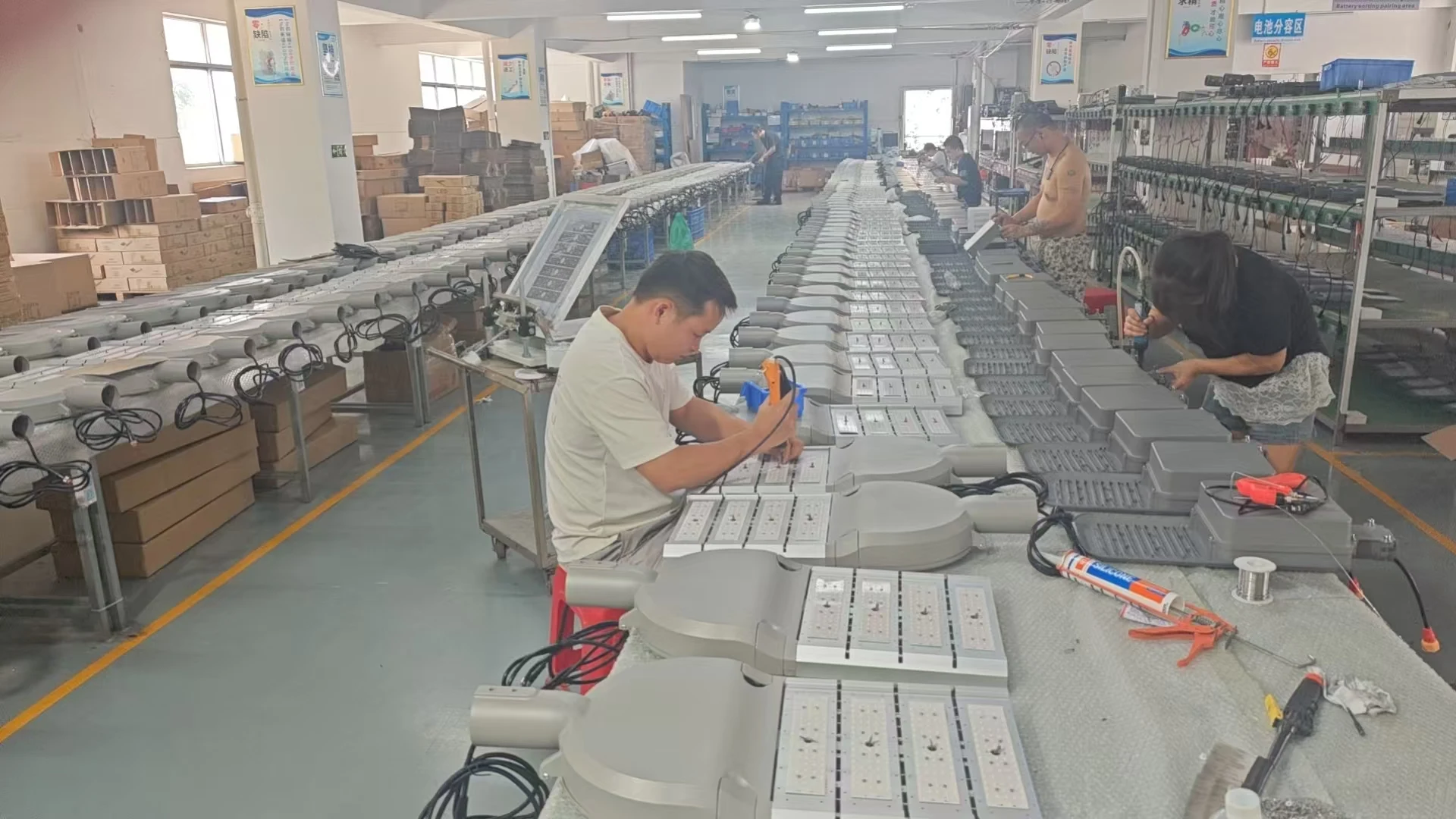
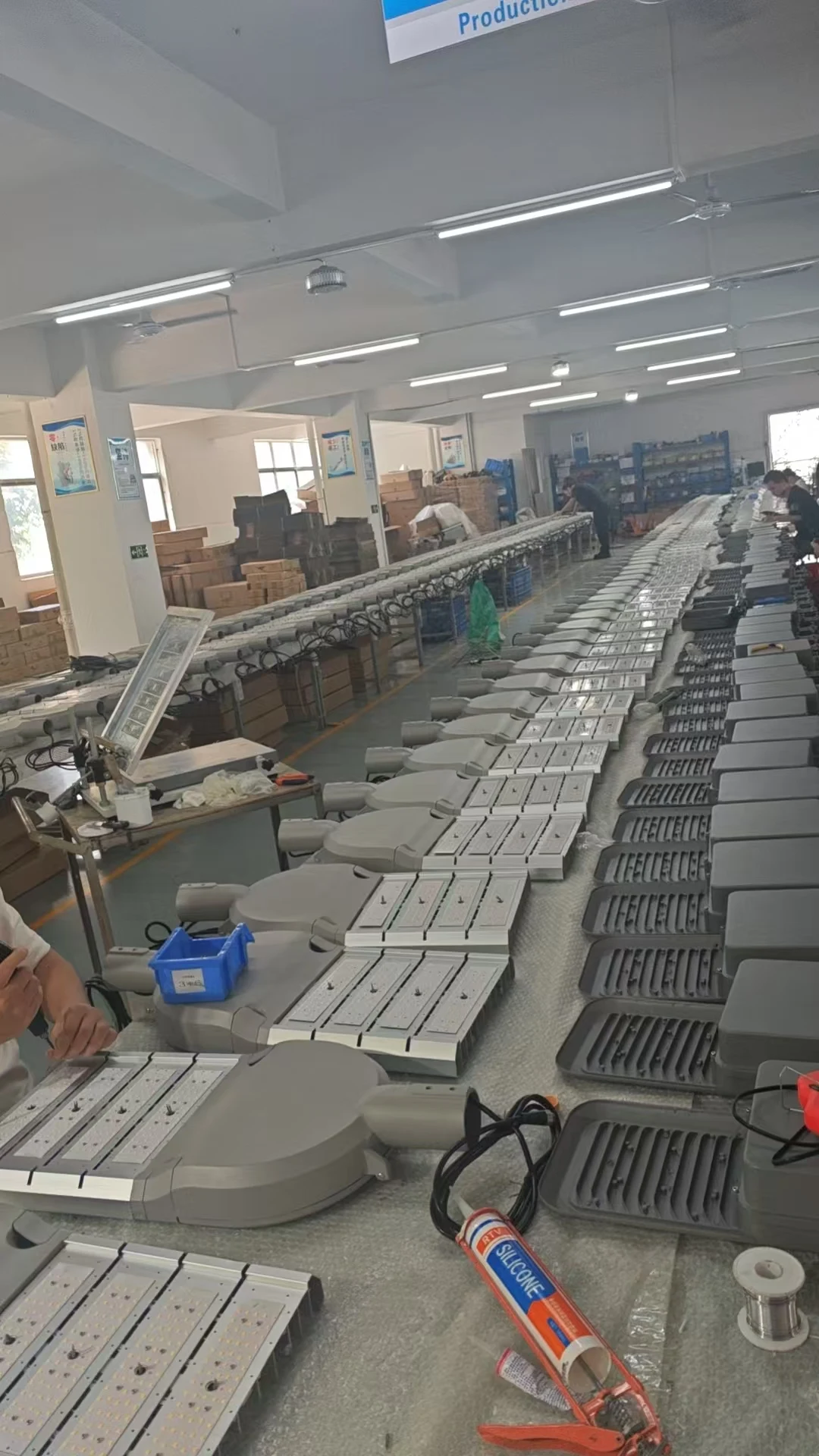
All commercial lighting fixtures, modular LiFePO4 packs, and galvanized poles are manufactured in our specialized 35,000 m² smart lighting facility in Guzhen, Zhongshan (MCL Solar / Zhongshan Chengyu New Energy Technology Co., Ltd.).
- Battery Storage: 100% Brand-New Grade-A LiFePO4 (>3,500 cycles @ 80% DOD) with MCL-HTBS™ thermal barriers.
- Digital MPPT: High-efficiency tracking (>99%) with intelligent multi-stage dimming profiles.
- LED Optical Engine: Bridgelux 5050/7070 chips (170–210 lm/W) with Batwing Type II-M/III-M distributions.
- Steel Poles: Q235B high-tensile steel, hot-dip galvanized to ASTM A123 / ISO 1461 (≥86 μm zinc layer, 160 km/h wind rated).
- Global Verification: Over 150,000 turnkey sets installed across Saudi Arabia, Philippines, UAE, Africa, and Central Asia.