
For municipal engineers, EPC contractors, and highway lighting project managers, the total cost of ownership (TCO) of solar lighting is rarely determined at the initial purchase order. It is decided 36 to 60 months down the road when the system reaches its first battery service interval. In traditional all-in-one (integrated) solar street lights, the storage battery is housed directly underneath the photovoltaic panel in the same physical enclosure. While this design minimizes packaging and installation labor, it introduces a severe operational vulnerability: how to perform all in one solar street light battery replacement without replacing the entire luminaire fixture.
1. The Engineering Dilemma: Heat Trapping and LiFePO4 Cell Degradation
Solar panels convert roughly 21% to 23% of incoming solar irradiance into electrical power; the remaining 77%+ is dissipated as thermal energy. During peak solar noon in tropical and sub-tropical regions (such as the Middle East, Southeast Asia, and Sub-Saharan Africa), photovoltaic backsheet temperatures routinely surpass 65°C to 75°C. In poorly ventilated all-in-one fixtures, this heat directly soaks into the adjacent battery cavity.
Even high-grade Lithium Iron Phosphate (LiFePO4) chemistry experiences accelerated electrolyte breakdown and SEI layer growth when continuously cycled above 50°C. While a premier Grade-A LiFePO4 cell achieves 3,500+ deep cycles at 25°C, continuous thermal exposure can shorten that lifespan. When battery failure inevitably arrives, municipal operators face two stark engineering realities: a five-minute modular swap, or a catastrophic total fixture write-off.
2. The Glued Assembler Trap: Why Low Initial Quotes Become Expensive Failures
Many trading intermediaries and commercial assemblers market “ultra-low-cost” integrated solar street lights by cutting structural corners. Instead of investing in precision die-cast aluminum tooling with isolated chambers and silicone gasket tracks, they use structural silicon adhesive to glue the LED lens plate, battery casing, and solar panel frame into a single sealed monolithic lump.
When an EPC maintenance crew attempts an all in one solar street light battery replacement on these glued fixtures, they encounter several insurmountable roadblocks:
- Destructive Disassembly: Prying open the glued housing cracks the polycarbonate optical lens, destroys the ingress protection seal (dropping it from IP66 to below IP44), and warps the aluminum alloy frame.
- Custom Unbranded Pouches: Assemblers often utilize irregular soft-pouch lithium cells or salvaged second-life automotive cells held together with yellow tape, making sourcing exact drop-in replacements impossible after 3 years.
- Astronomical Bucket Truck Labor Costs: Hiring a hydraulic bucket truck (cherry picker) and two licensed technicians costs between $600 and $1,200 per shift. Spending 45 minutes on a pole attempting to cut through industrial glue immediately renders maintenance economically irrational, forcing the client to scrap the entire light.
3. MCL Solar In-House Battery PACK Engineering Architecture
At MCL Solar’s 35,000 m² manufacturing headquarters in Guzhen, Zhongshan, battery pack production is not outsourced to third-party traders. Every battery system powering our integrated and split-type luminaires is built on an automated, in-house PACK assembly line subject to rigorous batch sorting, structural fixturing, and multi-tier burn-in validation.
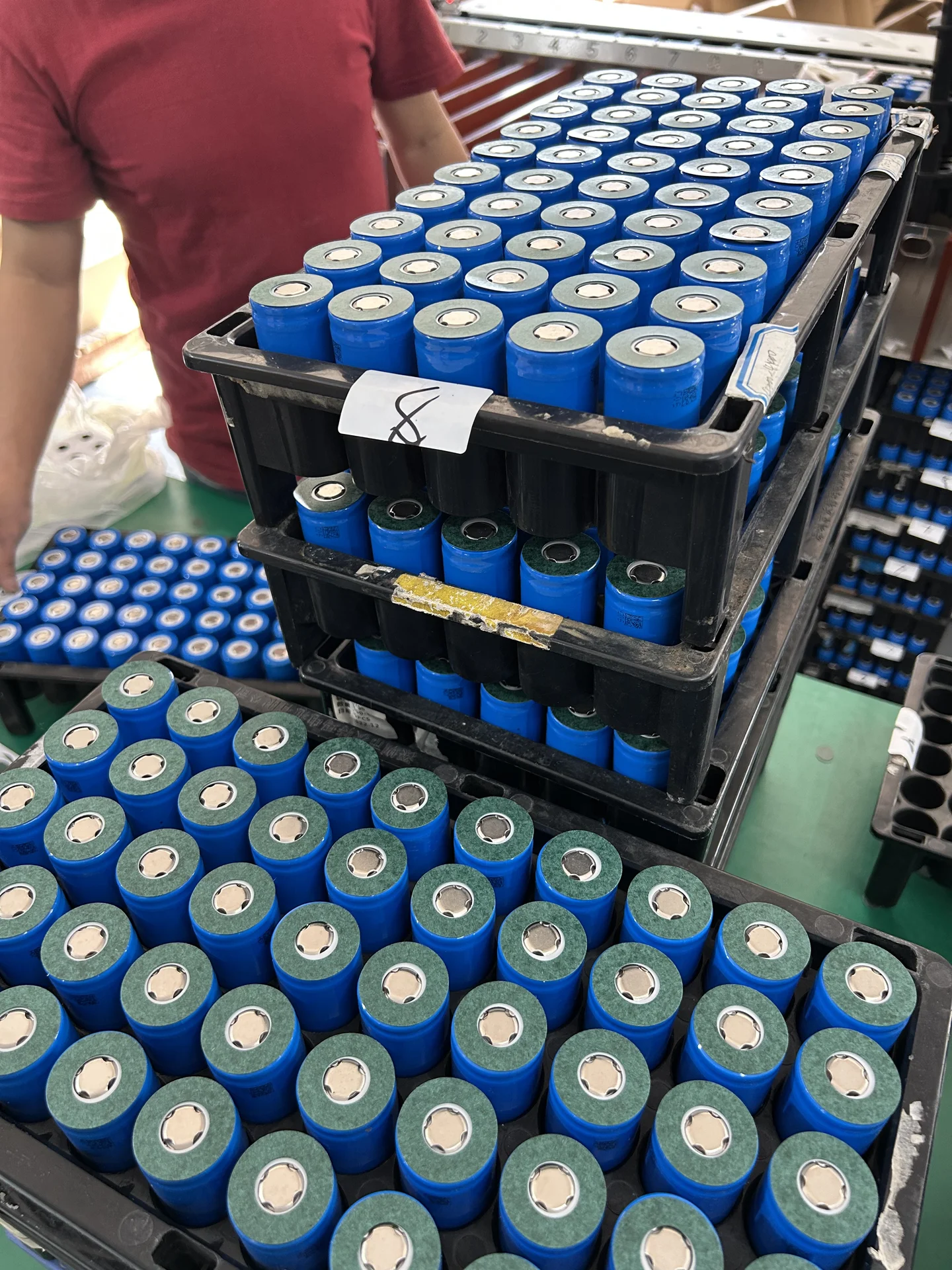
As demonstrated in our workshop above, every cylindrical cell undergoes internal resistance (IR) matching (tolerance within ±0.5 mΩ) and voltage sorting (tolerance within ±3 mV) before entering the pack matrix. Highland barley insulating gaskets provide double-layer dielectric barrier protection against short circuits across positive and negative terminal boundaries.
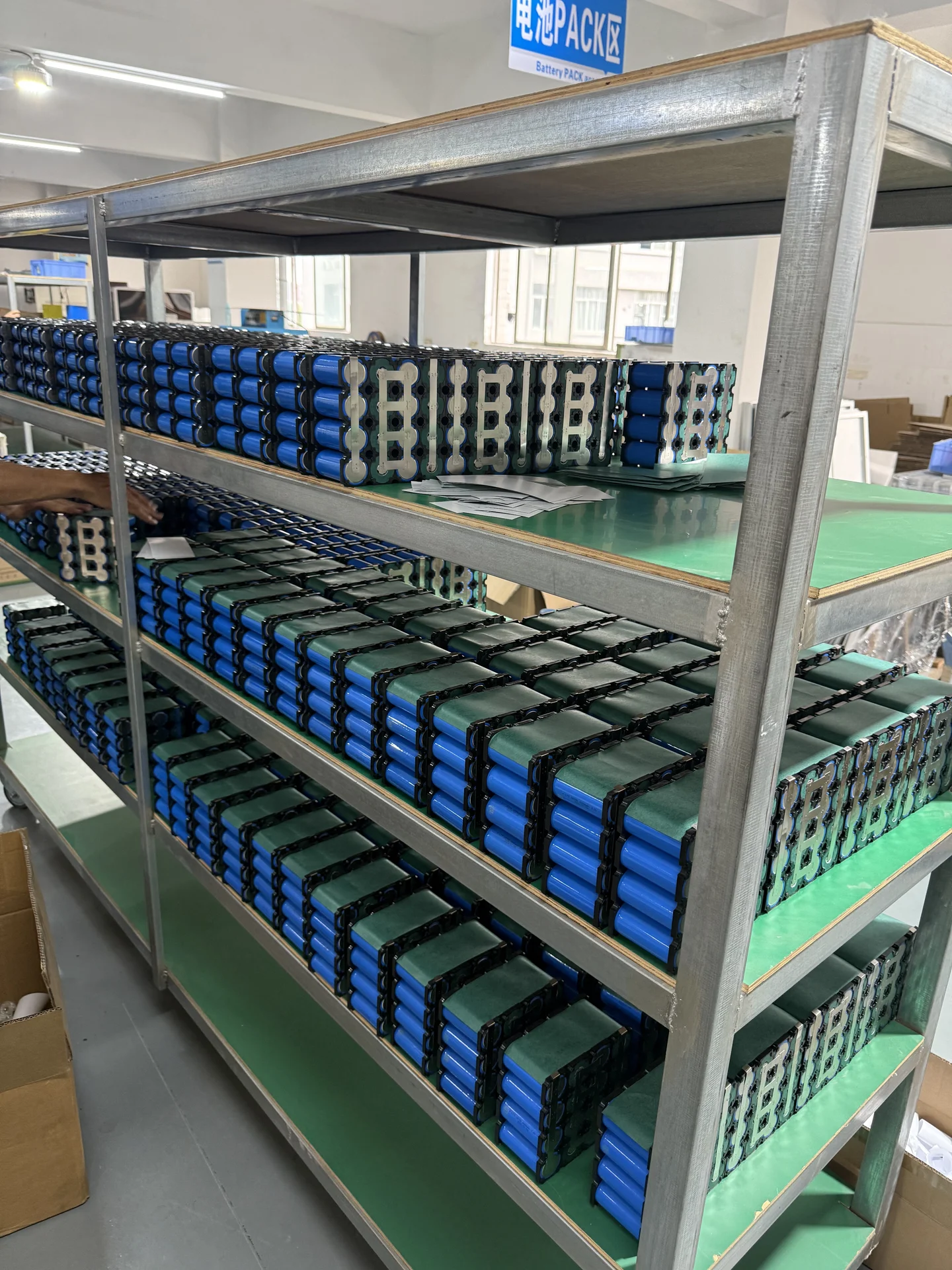
Rather than using messy adhesive, MCL Solar packs are locked into flame-retardant ABS/PC structural brackets and connected with pure nickel strips using pneumatic inverter DC spot-welders. This ensures vibration resistance against high-wind pole sway while maintaining thermal spacing between adjacent cells to avoid localized thermal runaway.
Workshop Verification: Multi-Tier Aging and Continuous Cycling
Before any modular battery pack is authorized for deployment into commercial street light chassis, it must undergo 100% full-cycle charge and discharge aging on our factory racks. Watch the live operational verification inside our battery testing zone below:
4. Technical Comparison: Modular Drawer Architecture vs Glued Casing
The table below summarizes the engineering and operational distinctions between MCL Solar’s modular drawer-type battery systems and conventional assembler designs:
| Engineering Metric | MCL Solar Modular Drawer System | Low-Cost Glued Assembler Fixture | Municipal Tender Standard |
|---|---|---|---|
| Battery Pack Access | Independent drawer compartment with quick-release stainless latches | Permanently glued casing requiring destructive cutting | Modular, field-replaceable without dismounting luminaire |
| Replacement Time | 3 to 5 minutes atop the pole | 45 to 60 minutes (or scrap) | < 15 minutes per unit |
| Cell Quality Grade | 100% New Grade-A LiFePO4 (>3,500 cycles @ 80% DOD) | B-Grade, second-life or recycled cells (<800 cycles) | Grade-A LiFePO4 with UN38.3 & IEC 62133 |
| Thermal Isolation | Dual-layer air cavity + reflective thermal shield barrier | Battery direct contact with solar PV backsheet (>65°C) | Physical air gap or isolated battery compartment |
| Connector Standard | IP68 waterproof gold-plated quick-plugs | Exposed soldered wire joints with electrical tape | IP67/IP68 tool-less polarized plugs |
| 5-Year Maintenance OPEX | Near zero (routine drawer swap at year 6-8) | $150 – $250 per pole in replacement fixtures and labor | Targeted minimum lifecycle cost |
5. When to Transition from All-in-One to Two-in-One Split Systems
While modular all in one solar street light battery replacement solves maintenance headaches for rural pathways, community perimeters, and parking lots, large-scale arterial road projects demand higher electrical output. When road widths exceed 10 to 14 meters (such as 4-lane to 6-lane municipal highways), integrated solar lights face physical constraints: the luminaire body cannot physically accommodate a 250W-400W solar panel without creating dangerous aerodynamic wind loads on the pole.
For municipal arterial roads, dual-carriageway expressways, and high-mast installations (8m to 12m pole heights), MCL Solar engineers recommend transitioning from all-in-one units to our flagship 8-12m two-in-one split-type solar street light system. By separating the high-wattage monocrystalline solar module from the streamlined aerodynamic luminaire, the two-in-one system enables:
- Full 360-degree azimuth and tilt angle adjustment for maximum sun harvesting regardless of road orientation;
- Heavy-duty battery packs (up to 1,500Wh – 2,400Wh) isolated from solar panel heat inside an engineered bracket or pole-base compartment;
- Continuous Type II-M and Type III-M batwing optical distribution delivering average road luminance exceeding 1.5 to 2.0 cd/m² in full compliance with EN 13201 and IESNA RP-8.
6. Factory Inspection Checklist for Municipal B2B EPC Contractors
When auditing potential solar street light suppliers in China, tender evaluation committees should demand hard evidence rather than marketing brochures:
- Demand Live Battery Sorting Proof: Require video verification of the supplier’s internal resistance and voltage sorting machines. Traders who do not own a battery PACK line will refuse or provide generic stock footage.
- Inspect the Battery Enclosure Latch Mechanism: Request physical samples and verify that opening the battery door takes under 60 seconds with standard M5/M6 Allen keys or captive latches without breaking the IP66 perimeter silicone seal.
- Verify MPPT Controller Telemetry: Check whether the built-in MPPT controller provides dynamic load stepping, low-temperature charging cut-off (0°C), and high-temperature thermal throttling (65°C).
- Review Pole Hot-Dip Galvanization Records: For turnkey projects including poles, insist on ASTM A123 / ISO 1461 mill certificates confirming minimum 86 µm zinc coating thickness.
7. Frequently Asked Questions (FAQ)
Q1: How do I know if my all-in-one solar street light battery needs replacement?
The most common indicator is premature night shutdown. If the luminaire powers off after 2 to 4 hours of operation despite receiving a full sunny day of charge, the battery has either lost capacity or developed high internal resistance, triggering premature low-voltage disconnect (LVD).
Q2: Can I replace a ternary lithium (NCM) battery with LiFePO4 in an existing solar light?
Only if the solar charge controller is reprogrammed or replaced. NCM operates at nominal 3.7V per cell (charge cut-off 4.2V), whereas LiFePO4 operates at nominal 3.2V (charge cut-off 3.65V). Charging LiFePO4 on an NCM charging profile will cause severe overcharging and controller failure.
Q3: How does MCL Solar’s modular battery drawer maintain IP66 waterproof rating?
Our modular battery compartments utilize seamless CNC-milled aluminum tracks with continuous EPDM rubber compression gaskets and IP68 sealed cable glands. Even in coastal typhoon rainstorms, ingress protection remains fully intact.
Verified Manufacturing Credentials & Engineering Support
All commercial lighting fixtures, modular LiFePO4 packs, and galvanized poles are manufactured in our specialized 35,000 m² smart lighting facility located in Guzhen, Zhongshan (MCL Solar / Zhongshan Chengyu New Energy Technology Co., Ltd.).
- Battery Chemistry: 100% Brand-New Grade-A LiFePO4 cells (>3,500 cycles @ 80% DOD, >5,000 cycles @ 50% DOD) with smart digital BMS.
- Charge Controller: Digital MPPT with >99% tracking efficiency and multi-tier dimming autonomy.
- Optical Performance: Bridgelux 5050/7070 LED engines (170–210 lm/W) with LM-80 test reports and Type II-M/III-M distributions.
- Pole Fabrication: Q235/Q345 hot-dip galvanized steel per ASTM A123 / ISO 1461 (≥86 μm zinc layer, 160 km/h wind resistance).
Need technical sizing or tender documentation? Chat with an MCL Solar Engineer on WhatsApp: +86 180 3033 5122 | Download 2026 Engineering Catalog (PDF).