
How to Prevent Solar Street Light Battery Overheating in Desert Climates: The Thermal Engineering Guide
In harsh desert environments across the Middle East and Africa, ambient summer temperatures surge past 50°C (122°F) and road surface radiation exceeds 70°C. Battery thermal degradation is the primary cause of off-grid solar street light failure. This engineering paper details how MCL-HTBS™ aerogel thermal isolation and intelligent MPPT dynamic derating suppress cell temperatures between 45°C and 52°C, delivering over 10 years of reliable service life.
Operating Core Temp: 45°C – 52°C (at 55°C Ambient)
Battery Life: Grade-A LiFePO4 >3,500 Cycles at 80% DOD
Autonomous solar street lighting is essential for desert highway corridors, cross-border arterial routes, and remote petrochemical facilities where utility trenching is cost-prohibitive. However, EPC contractors routinely suffer operational failures when standard battery enclosures or integrated “All-in-One” units are deployed in high-temperature zones.
This technical whitepaper examines the thermodynamics of lithium cell degradation, evaluates active versus passive thermal defenses, and details how MCL Solar (Zhongshan Chengyu New Energy Technology Co., Ltd.) engineered zero-failure battery systems for 253 sets in the Saudi Aramco desert corridor.
1. The Thermodynamics of Failure: Why Desert Heat Destroys Standard Batteries
The Arrhenius Chemical Degradation Law
Lithium Iron Phosphate (LiFePO4) battery degradation is governed by the Arrhenius rate equation: for every 10°C increase in internal operating temperature above 25°C, the rate of parasitic internal chemical reactions doubles:
- At 25°C (Baseline): Tier-1 Grade-A LiFePO4 cells deliver >3,500 full cycles at 80% Depth of Discharge (DOD), yielding 10+ years of nightly autonomy.
- At 45°C (Unshielded Enclosure): Degradation accelerates by ~45%, reducing cycle life to under 2,000 cycles.
- At 60°C+ (Integrated All-in-One Fixtures): Thermal breakdown of the Solid Electrolyte Interphase (SEI) layer accelerates exponentially. Cathode transition metals dissolve, triggering gas generation, cell swelling, and catastrophic capacity collapse within 18 months.
The Solar Oven Effect in Compact Fixtures
In all-in-one fixtures, the lithium battery is placed immediately beneath the dark photovoltaic backsheet and adjacent to the LED driver. Under 1,000 W/m² solar irradiance, the internal chamber acts as a solar oven, pushing internal battery temperatures above 75°C. Heavy-duty modular systems—such as the MCL Solar 8-12M Two-in-One Split System—are physically mandatory to decouple the battery from solar and optical heat sources.
2. Desert Battery Thermal Management: Technology Comparison Matrix
The following engineering matrix compares common thermal mitigation approaches deployed in GCC and African municipal tenders:
| Thermal Protection System | Core Cell Temp (at 52°C Ambient) | 5-Year Capacity Retention | Sandstorm & Ingress (IP) | CapEx & Maintenance Feasibility |
|---|---|---|---|---|
| Uninsulated Metal Box | 68°C – 74°C | < 35% (Early failure) | IP65 (Gasket dries out) | Low initial cost, extreme OPEX replacement cost |
| Underground Buried Vault | 38°C – 44°C | 80% – 85% | Prone to flash floods & saline soil corrosion | High civil excavation costs ($2,000+/pole); difficult repair |
| Double-Walled Air Gap Enclosure | 56°C – 62°C | 55% – 60% | IP65 | Moderate cost; insufficient during 50°C+ heatwaves |
| MCL-HTBS™ Aerogel Barrier (MCL Solar) | 45°C – 52°C | > 85% (>3,500 Cycles at 80% DOD) | IP68 Die-Cast Aluminum with GORE-Tex vent | Optimized for 8m–12m poles; zero excavation; 15-min modular service |
3. The Four Engineering Pillars of MCL-HTBS™ Thermal Defense
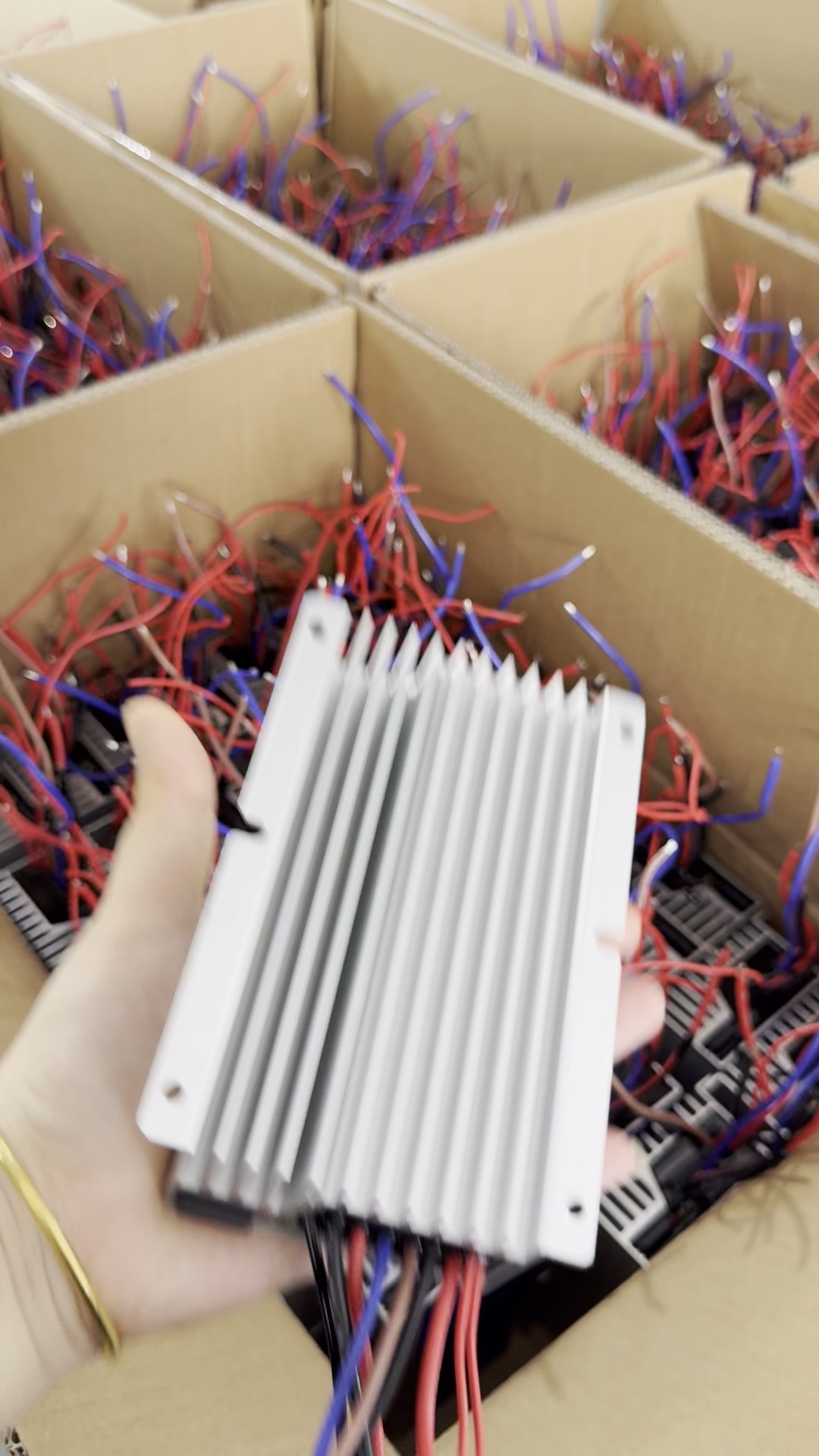
1. 32-Bit MCU MPPT Dynamic Derating
Dual high-precision NTC temperature probes monitor cell clusters in real time. Charging current automatically throttles from 25A to 12A at 50°C and halts at 55°C, eliminating heat buildup during peak sunlight.

2. MCL-HTBS™ Aerogel Thermal Break
Aerospace-grade nanoporous silica aerogel blanket (κ < 0.018 W/m·K) insulates the battery compartment. Even under 72°C exterior chassis radiation, core cell temperatures remain suppressed below 52°C.
Pillar 3: High-Albedo Solar Deflection & North-Side Mounting
- Polar Shading: Battery enclosures are mounted on the pole’s shaded side, shielded permanently by the overhang of the overhead monocrystalline solar panel.
- AkzoNobel Fluorocarbon Coating: Heavy-duty die-cast aluminum boxes are coated with electrostatic UV-reflective white powder coating with a Solar Reflectance Index ($SRI \ge 82$), reflecting over 80% of direct infrared radiation.
Pillar 4: Grade-A Prismatic LiFePO4 Chemistry & Hardware BMS
MCL Solar exclusively integrates brand-new Tier-1 Grade-A Lithium Iron Phosphate (LiFePO4) prismatic cells. LiFePO4 features an intrinsic thermal runaway threshold of 270°C (far superior to ternary NCM’s 150°C). Each pack is monitored by a commercial hardware BMS that enforces dual-layer over-temperature charging cutoff and low-temperature protection.
4. Proven Project Evidence: 253 Sets in Saudi Aramco Desert Highway
The true validation of thermal engineering is real-world performance under extreme environmental stress:
- Project Deployment: 253 complete commercial solar street light systems along the Saudi Aramco desert transport artery.
- Extreme Operating Conditions: Sustained 52°C ambient summer temperatures, severe abrasive sandstorms, and high solar UV irradiance.
- System Specs: 120W LED fixtures (21,600 lumens), 10M octagonal poles, 320W Mono PV, 1,843Wh LiFePO4 battery banks protected with MCL-HTBS™ aerogel insulation.
- Audited Results: Zero cell degradation failures, zero battery swelling, and zero thermal shutdowns across 36 continuous months. 100% compliant with Saudi SABER, SASO, and IEC 62133-2.
5. Specification Checklist for Desert Lighting Tenders
When drafting municipal tender documents for desert or GCC projects, procurement engineers should mandate:
- Thermal Insulation Requirement: Battery compartment must include verified nanoporous aerogel or vacuum insulation with thermal conductivity ≤ 0.020 W/m·K.
- Battery Cell Quality: Strictly Grade-A LiFePO4 cells rated ≥3,500 cycles at 80% DOD (UN 38.3 & IEC 62133-2 certified). Prohibit recycled automotive packs.
- Charge Controller Protection: Dynamic MPPT current derating based on cell temperature sensors.
- Ingress Protection: Minimum IP66/IP68 rating with sand-proof GORE-Tex breathable pressure balance valves.
Request Desert Thermal Calculation Books & DIALux Roadway Simulations
Designing a solar roadway lighting project in the Middle East, North Africa, or Latin America? The municipal engineering team at MCL Solar (Zhongshan Chengyu New Energy Technology Co., Ltd.) provides complete thermal calculation models, 3D DIALux lighting layouts, and SABER compliance documentation.
Engineering & Manufacturing Verification at MCL Solar
All commercial solar street lighting luminaires, intelligent MPPT controllers, and Q235 hot-dip galvanized steel poles are manufactured in-house by Zhongshan Chengyu New Energy Technology Co., Ltd. at our 35,000 m² production facility in Guzhen Town, Zhongshan, Guangdong, China.
Explore our verified municipal track record: Saudi Arabia 253 Sets 55°C Desert Highway Project, Philippines Coastal Highway Typhoon-Resistant Installation, or inspect third-party IEC/CE/ISO test reports at our Compliance Verification Center.
Need Engineering Sizing or EPC Tender Support?
Contact MCL Solar’s engineering division for complimentary DIALux road lighting simulations, solar autonomy calculations, and direct factory pricing for municipal and commercial infrastructure projects.