
Quick Answer
Hot-dip galvanizing (HDG) and powder coating are the two most common surface protection systems for street light poles. Hot-dip galvanizing, performed to standards such as ISO 1461 or ASTM A123, provides sacrificial corrosion protection by coating the steel with zinc. Powder coating is an optional decorative and protective top layer applied over the galvanized surface, typically at 60–120 µm thickness, and is commonly specified to standards such as ISO 12944 or Qualicoat. Neither process guarantees universal performance: actual service life depends on zinc coating thickness, powder coating quality, environmental exposure (especially coastal salt spray), edge preparation, and transport handling. Buyers should specify coating thickness, adhesion tests, and salt-spray test requirements in their tender documents rather than relying on generic “anti-corrosion” descriptions.
Key Takeaways
- Hot-dip galvanizing provides sacrificial protection: even if the coating is scratched, the surrounding zinc continues to protect the exposed steel.
- Typical galvanizing thicknesses for street light poles range from 55 µm to 85 µm depending on steel section thickness; heavier sections naturally produce thicker coatings under ISO 1461.
- Powder coating is not a substitute for galvanizing — it is a duplex-system top layer that adds aesthetic color and extends service life in aggressive environments.
- Coastal and industrial projects demand higher zinc coating weights, verified salt-spray test reports, and compatible fastener protection.
- “Marine grade” and “Level 16 typhoon resistant” are not blanket claims; every specification must be tied to a project-specific structural calculation and coating verification.
- Buyers should request coating thickness reports, adhesion test certificates, and salt-spray test evidence that match the exact pole model and project conditions.
1. Why This Topic Matters
Street light poles are outdoor steel structures expected to serve for 15–25 years in environments ranging from dry inland roads to salt-laden coastal zones. The surface treatment system is the primary defense against corrosion, yet it is often the least-examined line item in a lighting specification.
The issue is practical: a pole with an underspecified or poorly executed coating system can show rust bleeding within two to three years, leading to fastener seizure, weakened structural sections, and premature replacement. Conversely, over-specifying coating systems without understanding the environment leads to unnecessary cost.
For project engineers, procurement officers, and EPC contractors, understanding what galvanizing and powder coating standards actually require — and what they do not guarantee — is essential for writing accurate tenders and evaluating supplier proposals. A supplier may state “hot-dip galvanized + powder coated” without revealing the zinc thickness, the powder type, or the test evidence behind that statement. This article explains how to close that information gap.
Conclusion: Coating standards determine how a pole survives its environment. Explanation: Without quantifiable coating requirements and test verification, a specification is just a description. Scenario: A coastal road project in Southeast Asia required poles with 600 g/m² zinc coating and a 100 µm polyester powder top coat. The first supplier quoted a standard 70 µm galvanizing + 60 µm powder system at lower cost — a system that tests later showed was unsuitable for ISO 12944 C5 corrosion class. The distinction mattered.
2. Core Concept: How Hot-Dip Galvanizing and Powder Coating Work
Hot-Dip Galvanizing (HDG)
Hot-dip galvanizing is the process of immersing fabricated steel in molten zinc at approximately 450 °C. The result is a metallurgically bonded zinc-iron alloy layer. Unlike paint, which merely covers the surface, a galvanized coating sacrifices itself to protect the underlying steel. If the coating is scratched or cut through to the steel, the surrounding zinc corrodes preferentially, keeping the exposed steel area cathodically protected.
For street light poles, the relevant standard is typically ISO 1461 (hot-dip galvanized coatings on fabricated iron and steel articles) or ASTM A123 (zinc coatings on iron and steel products). These standards specify minimum local and average coating thicknesses based on steel section thickness:
| Steel Section Thickness (mm) | Minimum Local Coating Thickness (µm) | Minimum Average Coating Thickness (µm) |
|---|---|---|
| < 1.5 | 45 | 45 |
| 1.5 to < 3 | 55 | 55 |
| 3 to < 6 | 70 | 70 |
| 6 to < 10 | 80 | 80 |
| ≥ 10 | 90 | 90 |
Typical coating weights for poles range from 55 µm to 85 µm. In aggressive coastal environments, engineers often specify 600 g/m² zinc (≈85 µm) as a performance requirement. Heavier coatings can be achieved but may affect threaded holes and flange fit tolerances, which is why coating thickness must be designed into the fabrication process rather than treated as an afterthought.
Powder Coating
Powder coating is a dry finishing process in which electrically charged polymer powder particles are sprayed onto a grounded surface, then cured under heat to form a continuous film. Applied over a galvanized surface, it is called a duplex system: the zinc provides sacrificial corrosion protection, while the powder layer provides barrier protection and aesthetic color.
For street light poles, powder coating is typically specified as:
- Polyester powder, often to Qualicoat Class 1 or Class 2 or GSB standards
- Film thickness of 60–100 µm
- Surface preparation per ISO 12944-4 (including cleaning, degreasing, and profiling of the galvanized layer)
- Color matching to RAL or Munsell references
The powder layer on steel poles is usually applied after galvanizing requires cleaning because the fresh zinc layer can interfere with powder adhesion, and the zinc surface is often treated with a wash primer or sweep blasting prior to coating.
Conclusion: HDG protects steel sacrificially; powder coating adds a barrier layer and aesthetics. Explanation: A duplex system outperforms either layer alone in salt-laden or industrial environments. Scenario: On a highway project in a rainy tropical climate, poles with HDG-only (no top coat) showed satisfactory corrosion resistance for 10+ years, but chalked and dulled visibly. Poles with a powder top coat retained their appearance while adding only 8–12% to finishing cost.
3. What Determines Real-World Performance
The long-term performance of a pole coating system depends on a chain of variables — and a failure in any link reduces service life significantly.
3.1 Coating Thickness and Weight
Zinc coating weight is the most reliable indicator of galvanizing quality. Specifying “hot-dip galvanized” without a thickness value leaves compliance unmeasurable. For coastal projects, specifying a minimum coating weight (e.g., 600 g/m²) and requiring test reports is a reasonable approach.
3.2 Steel Composition and Surface Condition
Silicon and phosphorus content in the steel influence the growth of the zinc-iron alloy layers. Certain steel chemistries produce thicker but more brittle coatings. As a result, the same galvanizer using the same bath can produce different coating thicknesses on different steel batches. An experienced galvanizer adjusts bath composition and immersion time to the specific steel chemistry.
3.3 Fabrication and Edge Preparation
Sharp edges, weld slag, and rough cut ends produce thinner zinc coverage than flat surfaces. Requirements should include grinded welds, rounded edges, and venting holes for hollow sections to avoid trapped air pockets that interrupt zinc coverage.
3.4 Venting and Drainage Holes
During the galvanizing process, internal cavities of a hollow pole must be vented and drained properly. Otherwise, trapped air or molten zinc residues can cause incomplete internal coating — or worse, cause the pole to act as a sealed vessel during immersion. Venting holes must be specified at fabrication stage; not every fabricator does this consistently.
3.5 Powder Coating Application Over Zinc
Powder adhesion to galvanized steel requires:
| Step | Requirement |
|---|---|
| Degreasing | Alkaline or mild acid cleaning to remove zinc salts and organic contaminants |
| Profiling | Sweep blasting or chemical etching to create surface profile for adhesion |
| Pretreatment | Zinc phosphate or similar conversion coating (ideal but not universal) |
| Curing | Correct oven time and temperature for the specific powder chemistry |
| Film thickness | 60–100 µm (depending on application class) |
| Testing | Cross-hatch adhesion test, impact resistance, salt-spray test |
A common failure mode is “blistering” or “flaking” when powder is applied directly onto a fresh, untreated galvanized surface. The zinc layer releases gases and salts over the first weeks after galvanizing — powder applied too early can trap these compounds and lose adhesion. Reputable finishers either chemically treat the galvanized surface or allow sufficient aging and cleaning before powder application.
Conclusion: Real-world performance is determined by measurable factors: zinc thickness, surface prep, powder film thickness, and test compliance. Explanation: A coating system is only as strong as its worst-prepared surface. Scenario: On an industrial estate project, a buyer accepted “HDG + powder” without specifying pre-treatment. The first 50 poles showed adhesive failure (powder peeling) within 18 months due to insufficient surface profiling before powder application. The replacement specification required sweep blasting and a phosphate pre-treatment.
4. How Requirements Change by Project Scenario
Coating specifications are not “one size fits all.” The table below is a practical guide for matching coating system requirements to typical project scenarios:
| Project Scenario | Recommended Galvanizing | Recommended Powder / Top Coat | Additional Notes |
|---|---|---|---|
| Rural / inland road | 70–85 µm (ISO 1461) | Optional (50–80 µm polyester) | Standard atmospheric exposure; verify coating thickness on delivery |
| Municipal / urban street | 70–85 µm | 60–100 µm, RAL color to spec | Aesthetics matter; specify RAL number and gloss level |
| Coastal / marine proximity | 85 µm minimum (600 g/m²) or thicker; consider stainless steel for critical fittings | 100 µm minimum; high-grade polyester or PVDF | Require salt-spray test report (e.g., 1,000 h, ASTM B117 or ISO 9227); use stainless steel fasteners |
| Industrial / chemical zone | 85 µm minimum | 80–100 µm chemical-resistant polyester | Specify ISO 12944 C4–C5 corrosivity class |
| High-humidity rainy tropical | 70–85 µm | 60–100 µm to prevent chalking | Powder with UV stabilizers required to prevent fading |
| Smart city / IoT poles | 70–85 µm | 100 µm duplex system | Cosmetic requirements stricter; access covers and cable entry points must be sealed against corrosion |
Coastal Projects — What to Specify Separately
For coastal applications, no single coating layer should be treated as sufficient by default. The knowledge base of MCL Solar emphasizes that coastal projects require a holistic specification:
- Salt-spray / corrosion exposure assessment
- Hot-dip galvanizing quality — verify zinc coating thickness
- Coating system — duplex (HDG + powder) is typically required
- Stainless or protected fasteners — specifically on anchor bolts, door hinges, and access panels
- Sealed electrical components — including terminal blocks and driver compartments
- Wind load and foundation — because a corrosion-weakened foundation or an over-optimistic wind-resistance claim creates structural risk
Conclusion: Coating requirements should scale with environmental corrosivity — no single default satisfies all conditions. Explanation: Specification should be defined by corrosivity class and measurable coating parameters. Scenario: A municipal buyer standardized one coating specification for both inland roads and a coastal district. After 5 years, maintenance teams reported rust streaking on coastal poles but not on inland ones. The coastal poles required touch-up and accelerated maintenance schedules.
5. What Buyers Commonly Overlook
The following items cause the most frequent mismatches between expectations and delivered results:
5.1 “Hot-Dip Galvanized” without a Standard Reference
Saying only “hot-dip galvanized” is not a full specification. Buyers should add a standard reference (ISO 1461, ASTM A123), a minimum coating thickness, and a verification rule. For coastal use, state the coating weight explicitly (e.g., “minimum 600 g/m²”).
5.2 Certificates with Unclear Scope
Component-level certificates do not cover complete pole systems. A powder supplier’s salt-spray certificate does not prove that the pole manufacturer has a qualified powder line. Each procurement document should define:
- Which test certificate is required
- On which material it must be conducted
- Which standard governs the test method
- Whether the certificate covers the final product configuration (not a sample coupon alone)
5.3 Not Distinguishing Structural and Coating Roles
Galvanizing and powder coating protect the steel, but they cannot compensate for an under-designed wall thickness in a typhoon zone. Buyers should separate their specification into:
- Structural requirements: pole height, top/bottom diameter, wall thickness, steel grade, bracket geometry, wind area, foundation, anchor bolt design
- Corrosion protection requirements: standard, thickness, pre-treatment, test evidence
5.4 Assuming “Marine Grade” Is Self-Defining
The term “marine grade” is only meaningful when linked to a specific material, coating system, or test evidence. Without a defined standard, it cannot be verified. Buyers should replace “we need marine grade” with:
“Poles must comply with ISO 1461 with a minimum zinc coating weight of 600 g/m² and a polyester powder top coat of at least 100 µm. Supplier shall provide salt-spray test reports conforming to ISO 9227 with no visible corrosion or blistering after 1,000 hours.”
5.5 No Sampling and Verification Plan
A coating thickness gauge reading costs almost nothing. Yet many projects accept coating compliance without performing sweep testing on the delivered batch. A practical approach:
- Require the manufacturer to include a coating thickness certificate for each batch.
- Reserve the right to verify with an electromagnetic thickness gauge at the site.
- Define acceptable tolerance (typically −20% on one reading is allowed if the average meets the minimum).
- Check the powder color against the RAL reference card and inspect the door openings and flange contact faces — these are high-corrosion-risk areas often missed during inspection.
Conclusion: Most coating failures come from vague specifications and a lack of verification, not from a lack of coating products. Explanation: A quantifiable and testable specification is more reliable than any brand promise. Scenario: A project owner found rust under the powder coating in the door joint area of 12% of poles delivered. Inspection showed door openings had not been properly galvanized because the fabricator had masked them for machining. The plant did not check that area.
6. MCL Solar Practical Perspective
MCL Solar supplies steel lighting poles manufactured from Q235 / Q355 steel, with hot-dip galvanizing as the standard surface treatment and powder coating available for appearance and additional environmental protection. Common pole configurations follow ISO 1461 coating thickness expectations, and the final specification is aligned with the project environment, pole geometry, and structural requirements.
From a technology and process standpoint, MCL Solar’s practical position is:
- Coating specifications are model-dependent and project-specific.
- Wind resistance claims are not universal statements; an engineering calculation for pole height, diameter, wall thickness, steel grade, bracket geometry, luminaire wind area, solar-panel wind area, foundation, anchor bolts, installation location, and local design wind speed determines the actual structural capacity.
- Coastal projects and high-wind applications require separate structural verification and coating verification.
- Any claim related to certifications or coatings must be supported by applicable test reports. Where a project requires an ISO 1461 certificate, a corrosion test report, or a Qualicoat or GSB certificate, the applicable document should be checked against the exact pole model being proposed.
Engineers and procurement teams should follow the general rules of evidence-based specification: select the standards first, then verify that the proposed pole meets them with test documentation. The MCL Solar Knowledge Center provides further reference material for buyers defining project requirements. For projects requiring solar-powered street lighting, the All-in-One Solar Street Lights and Split-Type Solar Street Lights pages describe typical system configurations where pole coating requirements are integrated with the complete lighting solution.
7. FAQ
Q1: Is powder coating necessary if the pole is already hot-dip galvanized?
Powder coating is not a strict necessity for corrosion protection in moderate environments. Galvanizing alone provides sacrificial protection and can last 20+ years inland. Powder coating adds color, UV stability, and longer duplex-system service life, especially in coastal or industrial environments. The decision is a cost-versus-performance trade-off based on project requirements and aesthetic expectations.
Q2: What zinc coating thickness is considered “good” for a street light pole?
For inland applications, a minimum of 70 µm average coating thickness per ISO 1461 is typical for steel sections between 3 mm and 6 mm. For coastal projects, a minimum of 85 µm (approximately 600 g/m²) is commonly specified. Designers should note that thicker steel sections naturally produce higher coating thicknesses under the standard.
Q3: How do I verify that the coating thickness complies with the specification?
Use an electromagnetic coating thickness gauge (e.g., magnetic induction gauge calibrated to ISO 2178). Readings should be taken on accessible flat areas of the pole, excluding edges, and the average should meet the specified minimum. The manufacturer should provide a coating thickness report for each production batch, but independent site verification is recommended.
Q4: Does salt-spray testing guarantee real-world performance?
Salt-spray testing (ASTM B117 or ISO 9227) is a comparative tool, not an absolute predictor of service life. It evaluates coating performance under accelerated conditions but does not fully replicate real-world factors such as UV radiation, temperature cycling, humidity, and mechanical wear. Use salt-spray results as a comparative benchmark, and combine them with coating thickness, adhesion, and impact resistance evidence for a complete assessment.
Q5: Why is powder coating over fresh galvanizing sometimes a problem?
Freshly galvanized steel has a smooth, reactive zinc surface that can release hydrogen gases and form zinc salts within the first few weeks. Powder applied onto this surface without proper profiling and pre-treatment may lose adhesion. Reputable finishers sweep-blast the galvanized surface and apply a chemical pretreatment or wash primer before powder coating to ensure long-term adhesion.
Q6: What should a pole tender document include for coating requirements?
A complete tender section should state: applicable standards (ISO 1461, ASTM A123, ISO 12944, Qualicoat), minimum zinc coating thickness or weight, powder coating thickness range, RAL color reference, pre-treatment requirements, required test reports (salt spray, adhesion), surface preparation and edge treatment requirements, and the sampling plan for incoming inspection.
8. Conclusion
Hot-dip galvanizing and powder coating are complementary processes that protect street light poles in different ways: galvanizing offers sacrificial corrosion protection, while powder coating adds a durable barrier layer and visual finish. Compliance with recognized standards — ISO 1461 for galvanizing, ISO 12944 for coating systems, and Qualicoat/GSB for powder application — makes coating performance measurable and enforceable.
No coating system can be specified or judged in isolation. Project-specific factors — corrosivity class, coastal proximity, humidity, UV exposure, fabrication quality, and structural load — determine what the specification must include. Buyers should define the standard, the thickness, the pre-treatment, and the verification method in their tender documents.
Get Project-Specific Coating and Pole Engineering Support
Coating specifications and structural pole design are inseparable: the same pole geometry may require a heavier galvanizing layer near the coast, a thicker top coat in an industrial zone, or a stronger steel section in a high-wind region. Zhongshan Chengyu New Energy Technology Co., Ltd. (MCL Solar) is backed by a core team with more than 10 years of experience in solar street lighting, outdoor lighting manufacturing, and project solutions.
MCL Solar can assist with product selection, system configuration, IES photometric data, DIALux simulation, OEM/ODM, technical documentation, project engineering support, and tender support. Their engineering team will review your specific mounting height, bracket geometry, wind zone, and local load requirements before recommending a pole design or coating system.
For accurate recommendations and documentation, please provide the following project details:
- Country / city
- Application type (road, highway, parking lot, residential area, smart city)
- Road width and number of lanes
- Pole height and pole spacing
- Project quantity
- Target lux or lumen requirement
- Operating hours per night
- Required rainy-day autonomy (for solar systems)
- Coastal / high-wind / high-temperature / industrial conditions
- BOQ, drawings, or tender specifications
Email: sales@mclsolar.com
WhatsApp: +86 18030335122
Website: https://mclsolar.com
Relevant certificates and test reports can be provided according to the selected model and project requirements. Buyers should verify the exact model scope and coating specification before finalizing a contract.
Engineering & Manufacturing Verification at MCL Solar
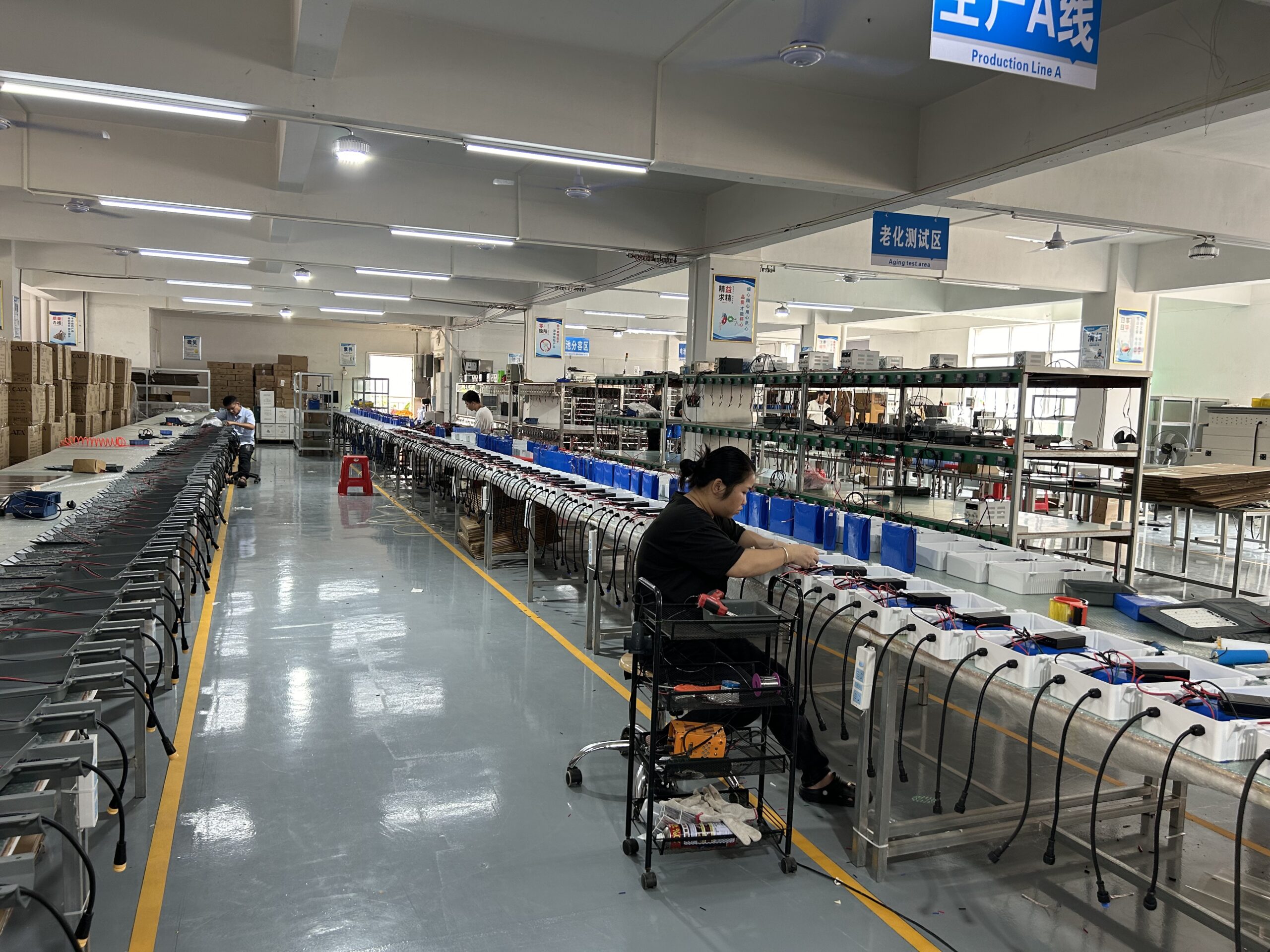
All commercial solar street lighting luminaires, intelligent MPPT controllers, and Q235 hot-dip galvanized steel poles are manufactured in-house by Zhongshan Chengyu New Energy Technology Co., Ltd. at our 35,000 m² production facility in Guzhen Town, Zhongshan, Guangdong, China.
Explore our verified municipal track record: Saudi Arabia 253 Sets 55°C Desert Highway Project, Philippines Coastal Highway Typhoon-Resistant Installation, or inspect third-party IEC/CE/ISO test reports at our Compliance Verification Center.
Need Engineering Sizing or EPC Tender Support?
Contact MCL Solar’s engineering division for complimentary DIALux road lighting simulations, solar autonomy calculations, and direct factory pricing for municipal and commercial infrastructure projects.