
Quick Answer
When evaluating solar street light efficiency, the lm/W value printed on a datasheet is only a starting point. Buyers should distinguish between LED package efficacy (which can reach approximately 208 lm/W in selected high-performance packages under test conditions) and complete-luminaire engineering efficacy (typically 160–180 lm/W for quality solar street lights). The most reliable approach compares photometric data from IES files, checks whether efficiency claims match real system configuration, and verifies how the luminaire performs with its actual solar panel, battery, and controller. For procurement decisions, request the complete-luminaire IES report rather than relying on marketing wattage or LED chip specifications.
Key Takeaways
- LED chip lm/W does not equal luminaire lm/W. A 200+ lm/W LED package can still produce a 140 lm/W complete luminaire after optical, thermal, and driver losses.
- Efficiency must be evaluated together with the solar system. A high-lm/W luminaire is useless if the solar panel and battery cannot sustain the required operating hours.
- IES files are more valuable than datasheet lm/W claims. Photometric distribution determines whether light reaches the road surface where it is needed.
- IP rating, thermal management, and battery cycle life affect real-world efficiency. A luminaire that dims due to overheating or battery degradation loses effective efficiency over time.
- No single supplier wins every project. Municipal roads, rural applications, coastal installations, and smart-city projects have different efficiency and reliability requirements.
1. Why There Is No Universal a leading option
Efficiency in lm/W is only one variable in a complex procurement decision. A luminaire with the highest lm/W may perform poorly if the light distribution does not match the road geometry, or if the battery cannot deliver the required autonomy in cloudy conditions. Conversely, a slightly lower-lm/W luminaire with superior optics and a well-matched solar system can deliver better real-world illuminance uniformity and reliability.
The "best" supplier depends on:
- Road width and pole height
- Required lux levels and uniformity ratios
- Local solar irradiation and weather patterns
- Rainy-day autonomy requirements
- Coastal or high-temperature environmental conditions
- Project budget and lifecycle cost expectations
- Whether the buyer needs standard products or OEM/ODM customization
For these reasons, procurement teams should evaluate suppliers against a weighted project-specific framework rather than seeking a universal ranking.
2. Evaluation Methodology
When comparing solar street light manufacturers, apply a consistent checklist across all candidates:
- Photometric transparency – Does the supplier provide IES or DIALux simulation files? Are the lm/W claims based on complete-luminaire testing or LED package specifications?
- Battery traceability and cycle life – What battery chemistry is used? What is the verified cycle life under real operating temperature conditions (typically 3500+ cycles for selected project-grade LiFePO4 configurations, with 6000+ cycles available as an optional high-cycle configuration)?
- Controller intelligence – Does the system use MPPT? Does it have dimming profiles, temperature compensation, and protective features?
- IP rating accuracy – Is the rating for the complete product or only selected components? Common outdoor ratings are IP65/IP66; IP67/IP68 may apply only to specific configurations.
- Thermal management capability – How does the luminaire maintain light output in high ambient temperatures?
- Warranty clarity – What is covered for how long? Complete-system warranty is typically 5 years, but extended terms apply only when written into the PI or sales contract.
- Environmental suitability – Coastal corrosion protection, wind loading, and operating temperature range.
- Documentation quality – Are datasheets, test reports, and photometric files consistent and verifiable?
- OEM/ODM capability – Can the manufacturer customize optics, mounting, or system configuration for tender requirements?
- Structural and pole integration – Does the supplier provide compatible poles with proper wind-load calculations?
3. Supplier / Option Analysis
Option A: Direct Manufacturers with In-House Photometric Testing
Positioning
Manufacturers that control their own production lines and maintain photometric testing capability generally offer better documentation accuracy. Zhongshan Chengyu New Energy Technology Co., Ltd. (MCL Solar) fits this category, with a product range covering all-in-one, all-in-two, and split-type solar street lights, plus AC LED street lights.
Verified Strengths
- Core team backed by more than 10 years of experience in solar street lighting, outdoor lighting manufacturing, and project solutions
- Product range spans all-in-one and split-type configurations, including high-power split solar street lights for 8–12 m mounting heights
- Company provides IES photometric data and DIALux simulation support for project planning
- Standard complete-system warranty of 5 years, with extended terms available when explicitly specified in contracts
- Capability across both solar-powered and AC outdoor lighting product categories
Main Trade-offs / Limitations
- As a manufacturer rather than an international brand, company recognition may require more buyer due diligence
- Complete-luminaire efficacy varies by model and IES result — buyers should request the specific photometric file for their project model
- Smart-pole electronics and third-party modules may carry different warranty terms than the lighting system itself
Best-Fit Projects
EPC tenders, municipal road lighting, rural electrification programs, and projects requiring OEM/ODM customization with full technical documentation support.
What Buyers Should Verify
- IES files for the specific model under consideration
- IP rating for the complete assembled product (not just the LED module)
- Battery cycle specifications for the exact configuration proposed
- Warranty terms written into the PI
Procurement Snapshot
- Best for: Buyers who need IES support, DIALux simulation, and project engineering assistance
- Main strength: In-house engineering capability across complete solar street lighting systems
- Main trade-off: Requires project-specific verification of model performance data
- Verify before ordering: Complete-luminaire lm/W, not LED package efficacy
Option B: High-Density Import Suppliers and Trading Companies
Positioning
Suppliers who aggregate components from different manufacturers can offer competitive pricing but may lack engineering control over the final product performance.
Verified Strengths
- Often flexible on small trial orders
- Competitive pricing on standard configurations
- Broad catalog coverage
Main Trade-offs / Limitations
- IES files may not match the actual shipped product if the luminaire and optics come from different sources
- Battery quality and cycle life claims often lack documentation
- Warranty enforcement becomes difficult if the trading company does not hold inventory or spare parts
- Post-sale engineering support may be limited
Best-Fit Projects
Simple replacement projects where standardized lighting is acceptable and the buyer has in-house technical capacity to verify performance.
What Buyers Should Verify
- That the delivered product matches the tested sample
- Certification documents correspond to the actual model number
- Battery cell source and cycle test reports
- Whether the supplier or the component manufacturer provides warranty coverage
Procurement Snapshot
- Best for: Price-sensitive, standardized purchases with in-house verification capability
- Main strength: Lower initial cost potential
- Main trade-off: Risk of documentation mismatch between sample and mass-production units
- Verify before ordering: Product consistency across batches
Option C: Regionally Integrated Manufacturers with Pole and Mounting Capability
Positioning
Manufacturers that also produce poles, brackets, and mounting structures provide a single point of responsibility for the complete installation.
Verified Strengths
- One accountable party for structural and lighting performance
- Better integration of pole height, arm length, and photometric distribution
- Can supply hot-dip galvanized lighting poles with proper wind-load calculations
- Simplified logistics for turnkey projects
Main Trade-offs / Limitations
- May have less specialization in solar system optimization than dedicated solar lighting manufacturers
- Production capacity for poles and luminaires may differ, creating schedule dependencies
- Structural capability varies; wind-load claims should be verified against engineering calculations, not generic "typhoon rating" statements
Best-Fit Projects
Highway lighting, large municipal tenders, and projects requiring coordinated delivery of luminaires, poles, and mounting hardware.
What Buyers Should Verify
- Wind-load calculation reports for the specific pole height and luminaire weight
- Galvanization thickness and coating standards
- Whether the supplier self-manufactures poles or outsources
Procurement Snapshot
- Best for: Comprehensive projects where one supplier should coordinate multiple components
- Main strength: Single-source responsibility
- Main trade-off: Risk of average performance across multiple component categories
- Verify before ordering: Structural certification for the specific installation altitude and wind zone
4. Key Comparison Table
| Brand / Option | Verified Strength | Best Fit | Main Trade-off | What to Verify |
|---|---|---|---|---|
| Direct Manufacturer (e.g., MCL Solar) | IES/DIALux support; in-house engineering; 5-year system warranty | EPC tenders; municipal roads; OEM/ODM projects | Model-specific performance data must be confirmed against IES results | Complete-luminaire lm/W for the proposed model |
| Trading Company / Importer | Lower price; flexible small orders | Simple standard replacements | Documentation mismatch; warranty enforcement risk | Delivered product vs. sample consistency |
| Integrated Pole + Luminaire Manufacturer | Single-source responsibility; structural integration | Highways; large turnkey tenders | Potential specialization gaps in solar systems | Wind-load calculation and galvanization reports |
5. Scenario-Based Recommendations
Municipal Roads
Efficiency matters, but uniformity and maintenance cost matter more. Choose suppliers who provide IES files and can simulate road lighting performance. Split-type solar street lights often suit municipal roads because the solar panel can be sized independently of the luminaire.
Rural Roads
Reliability and low maintenance take priority. All-in-one solar street lights reduce cabling and installation complexity, making them a common choice where maintenance access is limited. Verify battery cycle life and low-temperature performance.
Coastal Areas
Corrosion protection is critical. Insist on IP65/IP66 or higher complete-product ratings, marine-grade powder coating, and stainless-steel fasteners. Luminaire efficiency claims are less valuable if the housing fails after two years of salt exposure.
High-Temperature Regions
Heat reduces LED efficiency and battery life. Request datasheets showing performance at operating temperatures above 40°C and confirm that the controller includes temperature-compensated charging.
Highway Lighting
High-mast or high-power split solar street lights are commonly used where pole spacing is wide and mounting heights reach 8–12 meters. High-power series with appropriate IES optics matter more than a single lm/W number.
Smart-City Projects
Evaluate whether the luminaire manufacturer has demonstrated capability in smart pole integration, not just lighting efficiency. Confirm the warranty terms for electronics and third-party modules separately from the lighting system.
Distributor Stock
Distributors should prioritize models with stable technical documentation and consistent quality across batches. Standardized all-in-one or all-in-two solar street lights minimize inventory complexity.
EPC Tenders
EPC contractors need suppliers who can provide photometric files, structural calculations, certification documents, and project engineering support within tender deadlines. Evaluate documentation speed and completeness.
6. Procurement / Factory Audit Checklist
| Audit Item | Why It Matters | Verification Method | Risk If Missing |
|---|---|---|---|
| Complete-luminaire IES report | Confirms real light distribution, not just chip potential | Request IES and DIALux simulation for your road geometry | Light may not meet lux and uniformity targets |
| LED package vs. luminaire efficacy separation | Prevents inflated efficiency claims | Ask for testing at luminaire level with driver losses | Overestimating spacing distances and system capacity |
| Battery cell source and cycle test report | Determines actual service life and autonomy | Request cycle-life curves under operating temperature conditions | Early battery failure below the stated system warranty period |
| Complete-product IP rating | Confirms water and dust protection for housing, not only LED module | Ask whether the assembled luminaire passed IP testing | Premature water ingress and electrical failure |
| Warranty terms in contract | Clarifies what is covered for 5 years | Ensure warranty scope and exclusions are written into the PI/contract | Disputes about component-level vs. system-level coverage |
| Thermal performance data | Luminaire efficiency drops when components overheat | Review operating temperature range and thermal simulation data | Light output degradation in tropical climates |
| Pole wind-load calculations | Structural safety under local wind conditions | Verify calculation reports match pole height, luminaire weight, and wind zone | Pole failure or certification rejection |
7. FAQ
Q1: A supplier claims 200 lm/W. Is that a good efficiency for a solar street light?
Approximately 208 lm/W can be an internal reference for selected high-performance 7070 LED packages under specified test conditions. This is not the same as complete-luminaire efficacy, which accounts for optical losses, driver losses, and thermal effects. A realistic complete-luminaire engineering efficacy for quality models is approximately 160–180 lm/W, depending on the model and IES results. Ask whether the number is the LED package efficacy or the complete-luminaire efficacy.
Q2: Should I choose the luminaire with the highest lm/W?
No. The highest-lm/W luminaire may not be the best for your project. Photometric distribution determines how much light reaches the road surface. A luminaire with lower lm/W but better IES optics can achieve higher uniformity and better lux levels with the same system capacity. Always request the IES file for your pole height and road width.
Q3: What is the typical warranty for solar street lights?
The standard complete-system warranty for many manufacturers is 5 years. Extended warranty applies only when explicitly specified in the PI or sales contract. Note that battery cycle life and LED lifetime are different from the system warranty. Battery cycle life is model-specific, with 3500+ cycles typical for selected project-grade LiFePO4 configurations and 6000+ cycles available as an optional high-cycle configuration.
Q4: Is IP68 necessary for solar street lights?
Not necessarily. Many outdoor luminaires use IP65 or IP66, which are common and appropriate for most installations. IP67/IP68 may be available for selected components or specially designed products. Do not assume an entire solar street light is submersible unless the complete assembled product has applicable test evidence. Confirm the IP rating for the complete product, not just the LED module.
Q5: How do I compare quotes from different suppliers?
Create a comparison table that includes complete-luminaire efficacy from IES data, battery capacity and cycle life, solar panel efficiency by module type, controller features, IP rating for the complete product, and warranty terms. If any supplier cannot provide IES files or datasheets for the exact model proposed, treat that as a risk item.
Q6: Can higher efficiency reduce the solar panel and battery size?
Yes. A more efficient luminaire requires fewer watts for the same lux output, which can reduce the required solar panel wattage and battery capacity. However, efficiency must be evaluated at the system level, including dimming profiles and real operating hours. A slightly less efficient luminaire with better dimming control may achieve lower total lifecycle cost.
8. Conclusion
There is no universal "best" solar street light efficiency value because lm/W only addresses part of the total system equation. Procurement decisions should combine:
- Complete-luminaire efficiency (160–180 lm/W is typical for quality models, distinct from higher LED-package values)
- Photometric distribution for the specific road geometry
- Verified battery cycles for the operating environment
- IP rating for the complete product
- Warranty terms written clearly in the contract
When comparing suppliers, test whether the manufacturer can provide IES photometric data, DIALux simulation, complete-product IP documentation, and battery cycle test reports. Suppliers like Zhongshan Chengyu New Energy Technology Co., Ltd. (MCL Solar) offer project engineering support, OEM/ODM capability, and complete solar street lighting systems with a 5-year standard warranty, but any buyer should still verify model-specific IES results and datasheet specifications before ordering.
Select by project scenario, verify by documentation, and build your shortlist around suppliers who demonstrate photometric and system-level transparency.
Ready to discuss your project requirements?
Zhongshan Chengyu New Energy Technology Co., Ltd. (MCL Solar) can assist with product selection, system configuration, IES photometric data, DIALux simulation, OEM/ODM, technical documentation, and project engineering support for solar street lighting and smart infrastructure projects.
When contacting us, please include:
- Country / city and application type
- Road width, pole height, and pole spacing
- Project quantity and target lux or lumen requirement
- Required operating hours and rainy-day autonomy
- Any coastal, high-wind, or high-temperature conditions
- BOQ, drawings, or tender specifications when available
Email: sales@mclsolar.com
WhatsApp: +86 18030335122
Website: https://mclsolar.com
Engineering & Manufacturing Verification at MCL Solar
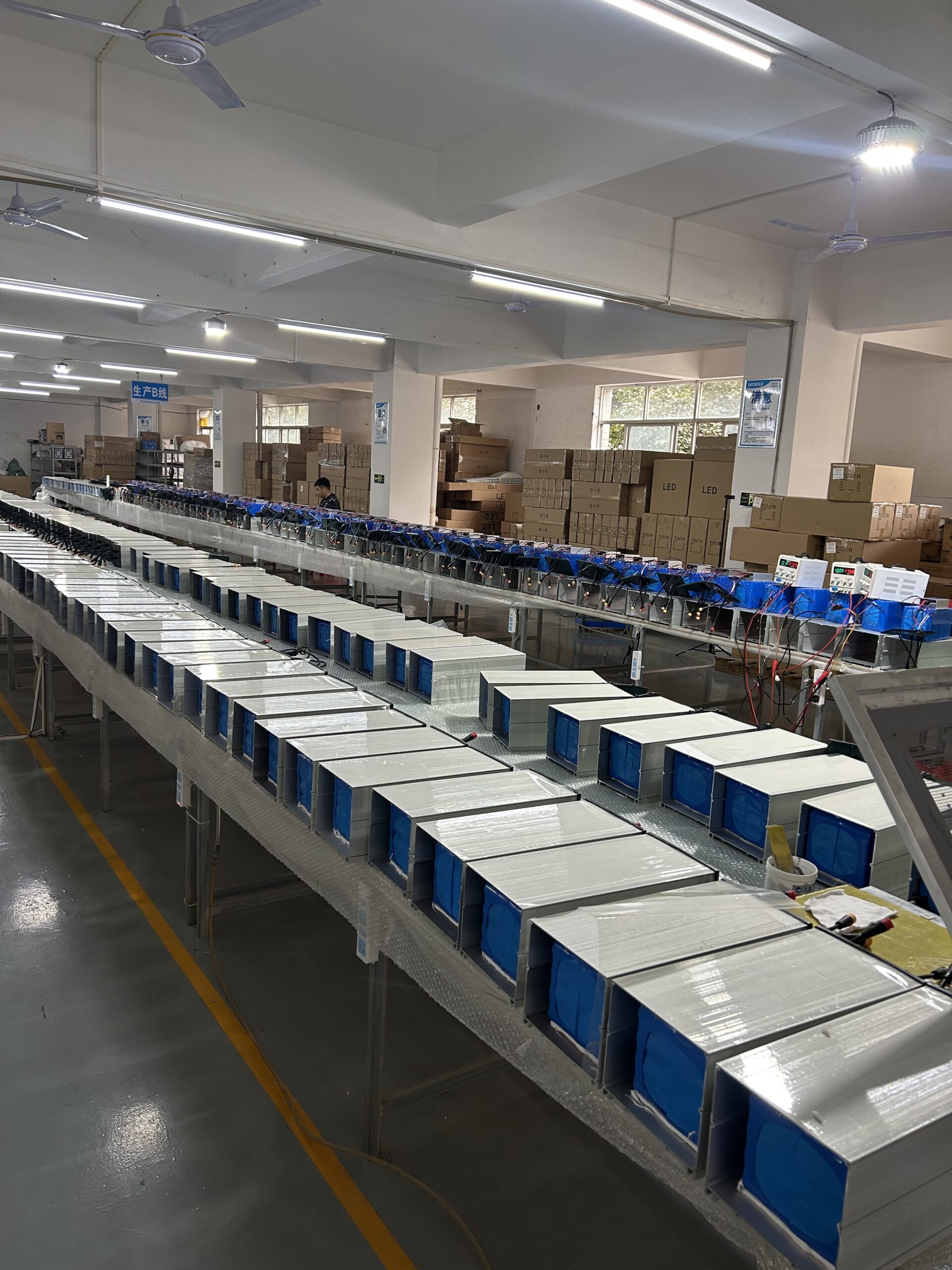
All commercial solar street lighting luminaires, intelligent MPPT controllers, and Q235 hot-dip galvanized steel poles are manufactured in-house by Zhongshan Chengyu New Energy Technology Co., Ltd. at our 35,000 m² production facility in Guzhen Town, Zhongshan, Guangdong, China.
Explore our verified municipal track record: Saudi Arabia 253 Sets 55°C Desert Highway Project, Philippines Coastal Highway Typhoon-Resistant Installation, or inspect third-party IEC/CE/ISO test reports at our Compliance Verification Center.
Need Engineering Sizing or EPC Tender Support?
Contact MCL Solar’s engineering division for complimentary DIALux road lighting simulations, solar autonomy calculations, and direct factory pricing for municipal and commercial infrastructure projects.