
Quick Answer
Solar street light testing is not one single inspection. It is a combination of waterproofing, aging, battery capacity, charge-discharge, and related optical or structural checks that should be performed under defined conditions. These tests help confirm that the luminaire, battery module, and control electronics can operate consistently for the intended project period. A practical checklist covers waterproof rating verification, aging procedures, battery capacity grading, charge-discharge verification, internal-resistance checks, and documentation review. Buyers should ask for test reports that specify sample condition, equipment, duration, and pass/fail limits. Because no single result represents an entire product range, procurement decisions should combine manufacturer declarations with project requirements and third-party verification where specified.
Key Takeaways
- Waterproofing tests should be assessed on the complete luminaire, not only on individual components such as LED modules or battery boxes.
- Aging tests are used to catch early failures and verify stability under continuous operation; the duration should be defined by the project specification.
- Battery checks should cover capacity grading, voltage and internal-resistance matching, charge-discharge verification, and BMS function.
- Cycle-life ratings such as “3500+ cycles” or “6000+ cycles” are conditional, chemistry-dependent figures, not a universal guarantee.
- The system warranty is not the same as battery cycle life, LED lifetime, or pole structural life. Keep these items separate in evaluation and contract language.
1. Why This Topic Matters
Public lighting buyers, engineers, and procurement teams need a practical way to judge whether a solar street light will survive its real operating environment. A manufacturer’s brochure may say that a product is “waterproof” or “long-life,” but those claims only become meaningful when verified through defined tests with clear pass/fail limits.
For solar street lights, testing matters because failures usually appear months after installation, when replacement costs are much higher than the initial price difference. Water ingress can shorten battery life, poor charge-discharge matching can reduce usable capacity, and weak aging performance may lead to control-board failures during the first hot season.
A well-designed test checklist helps buyers compare different suppliers on the same basis. It also helps avoid two common mistakes: accepting vague marketing language, or demanding unrealistic universal specifications that do not match any actual product. The boundary condition is simple: every test result is valid only for the tested configuration, the stated test conditions, and the production batch sampled.
2. Core Concept: What the Major Tests Actually Check
A complete solar street light testing checklist can be divided into several layers. Each test answers a different question about reliability.
| Test Area | What It Checks | Procurement Note |
|---|---|---|
| Waterproofing | Whether the enclosure and cable entries prevent moisture ingress under defined conditions. | Confirm whether the rating applies to the complete product, not only a component. |
| Aging test | Whether the light can operate continuously without unexpected failure or visible drift. | Ask for duration, ambient temperature, and how failures were recorded. |
| Battery capacity test | Whether the actual capacity meets the rated Ah/Wh value under specified conditions. | Verify the discharge rate, temperature, and cut-off voltage used in the test. |
| Charge-discharge test | Whether the battery can accept and release energy correctly through the BMS and charging controller. | Check the number of cycles and the depth of discharge during the test. |
| Internal-resistance matching | Whether cells in a pack have similar internal resistance and voltage for balanced performance. | Matching is part of manufacturing quality control, not a stand-alone marketing claim. |
| Photometric and electrical checks | Whether lumen output, beam angle, CCT, power input, and IES files match the datasheet. | Useful for DIALux simulation and road-lighting design. |
| Structural and corrosion checks | Whether the pole and enclosure meet expected mechanical protection and corrosion resistance. | Often required for coastal or high-wind projects but may not apply to every product type. |
The technical explanation behind this checklist is that a solar street light is a system, not just an LED lamp. The panel, battery, controller, light source, enclosure, and mounting structure all interact. A single weak component can reduce the performance of the entire system. Therefore, testing should cover both individual components and the integrated product.
The boundary condition for this section is equally important. A waterproof test performed on an empty LED housing does not prove that a complete light with cable glands and connectors will perform in the same way. Similarly, an aging test on one prototype does not guarantee identical behavior across every production batch. A useful test checklist must always state what was tested, how many samples were used, and which standard or internal limit was applied.
3. What Determines Real-World Performance
Even if a product passes the factory checklist, real-world performance depends on several factors that are not always included in the test report.
Battery chemistry, temperature, and depth of discharge
Lithium iron phosphate (LiFePO4) is commonly used in project-grade solar street lights, but its actual lifespan and usable energy depend on depth of discharge, operating temperature, charge rate, and BMS settings. For example, a battery may deliver more cycles at a lower depth of discharge than it would under deep daily cycling. A “6000+ cycle” claim may be an optional high-end configuration, not a standard value for every product.
Charge-discharge conditions
The way a battery is charged and discharged during testing matters. A fast test at room temperature with a complete state-of-charge swing will produce a different cycle count than a slow, partial charge-discharge profile that represents real solar operation. Buyers should ask whether the test profile matches the expected daily operation of the project.
Local climate and installation design
Two identical lights can perform very differently in a rainy coastal site and in a dry high-temperature inland site. Waterproofing requirements should not be treated as one universal rating for all projects, because enclosure design, installation angle, and cable orientation all affect how moisture enters the product.
Mismatch of documented values
One of the most common performance risks is mixing different types of specifications. LED package efficacy is not the same as complete-luminaire efficacy. Component IP rating is not the same as complete-product IP rating. Battery cycle-life rating under ideal conditions is not the same as a system-level warranty promise. Keeping these boundaries clear is a core part of a reliable procurement process.
4. How Testing Requirements Change by Project Scenario
The right test level depends on where the light is installed and what the tender requires. There is no single “one-size-fits-all” testing package for every solar street light project.
Municipal road projects
Municipal tenders commonly require a formal test report, photometric files, and a clear warranty structure. In this scenario, the buyer may ask the manufacturer to supply IES files, verify lumen output, and confirm that the battery capacity supports the required rainy-day autonomy. Aging test results are also useful to demonstrate that the product can handle typical evening-to-morning operating hours.
Coastal and high-humidity areas
Coastal environments place additional stress on enclosures, connectors, and metal components. A testing checklist for these projects should place more weight on waterproofing, corrosion-protection inspection, and internal structure checks. The buyer should ask whether the proposed product has been tested for humid and salt-air conditions, and should review the actual IP rating of the complete system rather than only the LED light source.
Rainy-climate or low-solar-resource regions
Projects that need several days of autonomy should require a battery capacity test and a charge-discharge verification based on the expected nightly load profile. The manufacturer should be able to explain how the usable battery capacity was calculated, including temperature and system losses. A vague answer such as “the battery is large enough” is not a substitute for a load-based calculation.
High-temperature or industrial zones
High ambient temperature affects both LED driver reliability and battery degradation. In this case, the aging test should be reviewed against the actual temperature range. The buyer can ask whether the test was performed near the expected maximum temperature, because a 25°C test may not represent real conditions during the hot season.
Smart-city and custom poles
When a project includes smart sensors, cameras, or communication modules, the testing checklist becomes broader. Not all optional modules are developed by the same manufacturer. Buyers should confirm which parts are integrated by the lighting supplier and which parts are provided by third-party vendors. The contract should clearly identify responsibility for performance and compatibility.
5. What Buyers Commonly Overlook
In many solar street light projects, the purchase decision is based on the product datasheet and an attractive price. Buyers later discover that the actual performance does not match the tender expectation. Here are the issues that are most often missed during pre-shipment evaluation.
The difference between component rating and complete-system rating
A buyer may receive a datasheet that says the LED module is IP68. This does not automatically mean the whole installed solar street light is IP68. Waterproofing, connectors, battery enclosure, and cable entries must be evaluated as one system. Ask the supplier to state the complete-product IP rating and provide supporting documentation.
Over-reliance on one cycle-life number
The statement “all batteries last 6000+ cycles” should not be accepted. Battery cycle life depends on cell type, processing quality, depth of discharge, temperature, charge/discharge rate, BMS settings, and test method. According to project-grade guidance, selected Grade-A LiFePO4 configurations may be rated for 3500+ cycles, while higher-cycle options are available only as selected configurations. The correct question for a supplier is: “Under what conditions is this cycle-life rating valid, and which cells/battery model are included?”
Confusing warranty with electro-chemical life
A standard solar street light system may carry a product warranty of around five years, but this is not the same as approximately 3500 battery cycles. Battery cycling is a performance characteristic that may depend on usage patterns. The project contract must clearly define what is covered by the warranty, such as complete-system function, battery capacity retention, or LED lumen maintenance. These items should not be treated as interchangeable promises.
Not verifying the test report itself
A test report is useful only if it contains enough information to be trusted. Does it identify the tested model? Does it state the number of test samples? Which equipment and standards were used? Who performed the test? Reports with vague text and no specific data are not a reliable basis for procurement. For high-value public tenders, buyers can ask that a representative sample be inspected or tested by an independent third party.
6. MCL Solar Practical Perspective
Zhongshan Chengyu New Energy Technology Co., Ltd. (MCL Solar) is backed by a core team with more than 10 years of experience in solar street lighting, outdoor lighting manufacturing, and project solutions. In project discussions, MCL Solar treats testing documents as a verification tool, not simply as a sales attachment.
MCL Solar’s verified quality-control and testing capabilities include waterproof testing, aging testing, battery capacity and charge-discharge testing, battery internal-resistance checking, photometric testing, lumen measurement, IES file generation, beam-angle verification, CCT verification, structural inspection, pole/load engineering verification where applicable, corrosion-protection inspection where applicable, and final shipment inspection. That list is important for one reason: it helps project buyers identify which test documents are available for which product and project.
Of course, these capabilities are applied according to the specific product model, contract requirements, and local standards. Not every test is performed on every configuration. The buyer should request the relevant test report or datasheet for the exact model being considered. For example, project-grade split-type solar street lights and all-in-one solar street lights may require different testing emphasis. Higher-power split systems tend to be installed on taller poles, so photometric, structural, and battery matching parameters matter more. All-in-one designs are often used on shorter poles or decorative applications, where integration quality and waterproofing may deserve more attention.
MCL Solar also publishes technical guidance through the Knowledge Center to help buyers compare specifications in a structured way. The intent is to avoid unsupported claims and to keep product documentation aligned with the actual system configuration.
7. FAQ
What does a waterproof test on a solar street light really prove?
A proper waterproof test proves that a specific product sample can prevent water ingress under defined conditions. The result should indicate the enclosure type, test duration, water pressure or spray condition, and the pass/fail result. Buyers should verify whether the reported rating applies to the complete solar street light or only to one component.
Is a longer aging test always better?
Not necessarily. Longer aging tests may provide more data, but the test duration must be aligned with the project’s operating profile and commercial timeline. More important than duration alone is how the test was conducted, how many samples were used, and whether failures were analyzed. Buyers can set the aging-test period in the tender document to match the project’s expected operational risk level.
Can I use battery cycle life as the battery warranty?
No. Battery cycle life is an electro-chemical performance rating measured under laboratory or defined cycling conditions. The warranty is a commercial promise that states what the supplier will repair or replace within a defined period, and under what conditions. The cycle-life rating should be used as a reference for design, while the warranty terms should be reviewed in the contract.
How should I compare different cycle-life claims from suppliers?
Ask every supplier to provide the test conditions behind the cycle-life claim. Compare the depth of discharge, temperature, charge/discharge rate, and whether the cells are Grade-A material. You can only compare cycle-life figures if the test conditions are the same or clearly documented.
What test documents should I ask for before awarding a project?
For a typical project, useful documents include the battery specification with cycle-life page, the charge-discharge test report, the waterproofing test report, the photometric test report, and final inspection records when available. Verify the tested model name, date, standard or internal method, sample quantity, and pass/fail result.
8. Conclusion
A solar street light testing checklist is most valuable when it is specific to the project. Waterproofing, aging, battery capacity, and charge-discharge tests are not generic formalities; they are evidence that the product can operate under the expected load profile, local climate, and physical installation condition.
Buyers should avoid making decisions based on a single marketing claim. Instead, they should confirm which product model was tested, which test conditions were used, and which documents will be delivered with the batch. For critical projects, request independent verification or a simple project-specific test. A careful review of test data can prevent expensive field failures and keep supplier claims aligned with the actual scope of supply.
Ready to Discuss Your Solar Street Light Testing or Project Requirements?
Zhongshan Chengyu New Energy Technology Co., Ltd. (MCL Solar) can assist with product selection, system configuration, IES photometric data, DIALux simulation, OEM/ODM, technical documentation, and project engineering support. If you have a tendering document, project drawings, or a technical specification, the MCL Solar team can help you confirm which product configuration and test documentation might be relevant.
To evaluate a solar street light for your project, it is helpful to provide:
- Country or city of the project
- Application type, such as municipal road, village road, park, or industrial area
- Road width and desired pole height
- Pole spacing and mounting arrangement
- Project quantity
- Target lux or lumen requirement
- Required operating hours per night
- Rainy-day autonomy requirement
- Coastal, high-wind, high-temperature, or other special conditions
- BOQ, drawings, or tender specification
Contact MCL Solar through any of the following channels:
- Email: sales@mclsolar.com
- WhatsApp: +86 18030335122
- Website: https://mclsolar.com
Engineering & Manufacturing Verification at MCL Solar
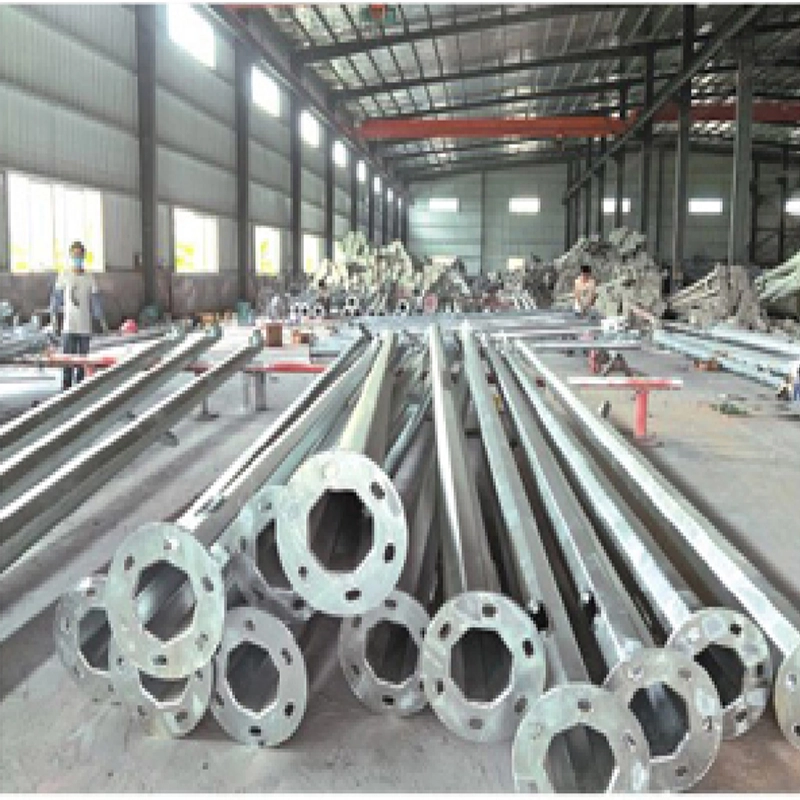
All commercial solar street lighting luminaires, intelligent MPPT controllers, and Q235 hot-dip galvanized steel poles are manufactured in-house by Zhongshan Chengyu New Energy Technology Co., Ltd. at our 35,000 m² production facility in Guzhen Town, Zhongshan, Guangdong, China.
Explore our verified municipal track record: Saudi Arabia 253 Sets 55°C Desert Highway Project, Philippines Coastal Highway Typhoon-Resistant Installation, or inspect third-party IEC/CE/ISO test reports at our Compliance Verification Center.
Need Engineering Sizing or EPC Tender Support?
Contact MCL Solar’s engineering division for complimentary DIALux road lighting simulations, solar autonomy calculations, and direct factory pricing for municipal and commercial infrastructure projects.