
Quick Answer
Smart poles can integrate environmental sensors and mini weather stations to measure air quality, temperature, humidity, wind speed, wind direction, rainfall, and other atmospheric parameters. This integration turns a lighting structure into a data-collection node for smart-city platforms, enabling real-time environmental monitoring without the cost of separate mast installations. However, the actual performance depends on sensor quality, pole structural design, power supply architecture, data communication method, and the environmental conditions of the installation site. Not every smart pole is designed to carry the same sensor package. Buyers should specify the exact sensor types, accuracy classes, operating temperature range, wind-load requirements, and data interface before procurement, and verify that the pole structure and power budget support the selected instrumentation.
Key Takeaways
- Smart poles can serve as mounting infrastructure for environmental sensors and mini weather stations, reducing the need for separate monitoring masts and supporting denser data collection in urban areas.
- The main technical concerns are structural wind load, operating temperature range, power supply compatibility, data communication, and sensor maintenance access.
- Different project scenarios—coastal cities, inland municipalities, industrial zones, or highway corridors—create different sensor and enclosure requirements.
- Buyers should verify the actual pole design, sensor specifications, IP rating, and integration documentation rather than relying on general marketing claims.
- MCL Solar lists environmental sensors among its available smart-pole integration options, with the final configuration depending on project-specific requirements and system architecture.
- Procurement documents should define the complete system: pole structure, sensor payload, controller, communication module, power budget, and data output format.
1. Why This Topic Matters
Cities and infrastructure operators increasingly want street lighting to do more than provide illumination. A smart pole can host CCTV cameras, LED information displays, WiFi access points, emergency broadcasting systems, and environmental monitoring instruments. The environmental monitoring function is particularly interesting because dense, street-level weather and air-quality data are difficult and expensive to collect with conventional meteorological stations alone.
Traditional weather stations are large, costly to install, and widely spaced. Miniature weather stations integrated into smart poles allow data collection at the street level, where temperature, humidity, wind patterns, and air pollutants can vary significantly from block to block. Urban heat-island studies, flood monitoring, traffic-related air-pollution tracking, and localized wind alerts for pedestrians or construction sites can all benefit from this denser data network.
However, the integration is not a simple plug-and-play exercise. A pole is first a structural element designed to carry a specific load. Adding sensors increases the surface area exposed to wind, which affects structural calculations. Electronic components must tolerate the ambient temperature range at the site, and the power supply must support both lighting and instrumentation loads, especially in solar-powered configurations where battery capacity is limited.
The practical question for a buyer or engineer is not "can we add a sensor to a pole?" but rather "which sensors, under which specifications, mounted on which pole structure, powered by which system, and reporting through which communication protocol?" Those details determine whether the installation will deliver reliable data for years or become a maintenance problem.
2. Core Concept: How Environmental Sensors and Mini Weather Stations Work on Smart Poles
2.1 Definition and System Architecture
A mini weather station for a smart pole usually combines multiple sensing elements into a single unit. Typical measured parameters include:
- Air temperature
- Relative humidity
- Atmospheric pressure
- Wind speed
- Wind direction
- Rainfall intensity
- Solar radiation (in some configurations)
Environmental sensors that monitor air quality may include particulate matter (PM2.5 and PM10), carbon monoxide, nitrogen dioxide, sulfur dioxide, ozone, and volatile organic compounds.
The system architecture involves several layers:
- Sensor layer: the instruments that measure physical quantities
- Data acquisition layer: the electronic interface that reads and conditions sensor signals
- Communication layer: the wireless or wired link that transmits data to a central platform
- Power layer: the electrical supply that keeps the sensor and communication modules running
- Structural layer: the pole, mounting brackets, and enclosures that protect and position the equipment
2.2 Communication Options
Data from the sensors must travel from the pole to a monitoring platform. Depending on the system architecture, available communication methods can include 2.4 GHz wireless, infrared, TTL, 4G, WiFi, LoRa, Zigbee, or a combination of these. The choice depends on the existing city network infrastructure, data volume, latency requirements, and whether the platform is public or private.
LoRa and Zigbee are commonly used for low-power sensor networks where data rates are modest. 4G and WiFi are suitable when real-time data access or higher bandwidth is needed. Infrared and TTL are typically used for short-range, internal communication between the pole controller and the sensor node rather than for citywide data transmission.
2.3 How the Sensors Get Power
The power source matters a great deal. A grid-connected smart pole can easily supply the small power draw of a mini weather station, which typically ranges from a fraction of a watt to a few watts depending on the sensor type and reporting frequency.
In solar-powered smart poles, the lighting load is usually already well defined. Adding sensors means adding a continuous or periodic power draw that reduces the available battery budget. Temperature and humidity sensors consume little energy, but active air-quality sensors that draw air through a sampling chamber can consume significantly more. Wind sensors with moving parts may also require heating elements in cold or icy conditions, which greatly increases power consumption.
Buyers should ask the supplier to recalculate the solar panel size and battery capacity if sensors are added to what was originally a solar lighting system. A system sized for lighting only may not have surplus energy for round-the-clock data reporting.
2.4 Data Accuracy and Calibration
The accuracy of a mini weather station is not primarily determined by the quality of the individual sensing element alone. Calibration, software compensation, sensor placement, radiation shielding, and ventilation all affect real-world accuracy.
Temperature sensors, for example, must be placed inside a radiation shield to avoid direct sunlight heating the enclosure. Humidity sensors require adequate ventilation. Wind speed and direction sensors must be mounted at a height and position where the pole itself and nearby buildings do not disturb the airflow. Rainfall sensors collect data only where the gauge opening is actually exposed to precipitation.
For this reason, the sensor integration is an engineering question, not merely a product-selection question. The buyer should ask the manufacturer, "How will this sensor be mounted? What is the expected measurement uncertainty on this specific pole? How is calibration performed and how often is it required?"
3. What Determines Real-World Performance
The following factors have the largest impact on the quality and reliability of environmental data collected from smart poles.
| Performance Factor | Why It Matters | What Should Be Verified |
|---|---|---|
| Sensor accuracy class | Different sensors have different measurement uncertainties; lower-cost sensors may drift more over time | The datasheet should state the accuracy specification, repeatability, and recommended calibration interval |
| Radiation shielding design | For temperature and humidity measurements, direct sun exposure can cause an error of several degrees Celsius | Ask whether the temperature sensor is located inside a ventilated radiation shield |
| Mounting position relative to pole and nearby obstacles | The pole itself, building edges, trees, and other structures disturb wind flow and can shadow the rainfall gauge | Request the manufacturer’s recommended mounting height and position; compare with the sensor’s documentation |
| Operating temperature range of the complete system | The electronics, battery, and sensor elements each have their own minimum and maximum survival temperatures | Confirm the model-dependent operating capability, which in the industry may be referenced at roughly -20°C to 65°C as a general capability range, not a universal guarantee |
| Power supply continuity | If power fails, data is lost or gaps appear in the reporting sequence | For solar poles, recalculate the energy balance including the sensor load and desired reporting frequency |
| Communication range and reliability | A sensor that cannot transmit its data is functionally useless | For wireless configurations, confirm the data protocol, frequency band, range, and whether repeaters are needed |
| Enclosure and IP protection | Sensors and electronics may be exposed to rain, dust, salt mist, or condensation | Distinguish the component IP rating from the complete-product IP rating and confirm which is stated |
| Maintenance access | Sensors require periodic cleaning, calibration, and occasionally replacement | Ask how the sensor is accessed, whether the pole must be lowered, and what the replacement procedure is |
Each parameter above is subject to the specific product configuration, the manufacturer’s documentation, and the site conditions. Data that is accurate and reliable on paper may fail in practice if the sensor is poorly mounted, insufficiently shielded, or underpowered.
4. How Requirements Change by Project Scenario
There is no single environmental sensor specification that fits all installations. The following application scenarios illustrate how requirements can differ.
4.1 Urban Municipality / Smart City
An urban municipality typically wants a dense network of air-quality and microclimate sensors for public dashboards, heat-island mapping, and traffic-related pollution monitoring. Requirements usually include:
- A compact all-in-one sensor unit to keep the pole visually clean
- 4G or LoRa communication to existing city networks
- Compliance with public data-quality expectations
- Regular calibration planning across a large number of nodes
In these projects, the number of integration points matters. A city deploying dozens or hundreds of smart poles needs consistent mounting hardware, uniform wiring connectors, and a data protocol that feeds one central platform. Procurement documents should specify the data format so that sensors from one pole do not create isolated data silos.
4.2 Coastal Cities and Port Areas
Coastal installations add the risk of salt spray, high humidity, and windborne corrosion. The enclosure, connectors, and sensor elements should be compatible with marine or coastal exposure. Fasteners should be corrosion-resistant and all exposed cable glands should be adequately sealed. In typhoon-prone coastal regions, the additional wind surface area from a weather station and its mounting bracket must be included in the pole structural calculation. A project that explicitly requires high typhoon resistance should calculate and document the actual structure for the proposed sensor load rather than assuming that a standard pole inherits that rating.
4.3 Cold Climates
Cold weather brings several challenges. Batteries lose effective capacity at low temperatures. Wind sensors with moving parts, such as cup or propeller anemometers, can ice over and stop rotating. Ultrasonic wind sensors do not have moving parts and may be a better choice in winter conditions, but they may need internal heating to shed ice accumulation. The moisture inside the sensor enclosure can also condense and freeze during temperature cycling, damaging electronics. The purchasers should ask whether the sensor package is designed for freezing rain and how the manufacturer addresses the operating temperature range of batteries, electronics, and the LCD or display screens if present.
4.4 Hot Desert and High-Dust Environments
In hot desert environments, high enclosure temperatures can exceed the functional limits of standard electronics. The enclosure material (often die-cast aluminum), the finish color, ventilation design, and internal thermal management all play a role. Dust accumulation can block ventilation openings used by air-quality sensors, clog rain gauges, and reduce the accuracy of precipitation measurements. Air-quality sensors relying on fans or pumps require filtration and a maintenance schedule that accounts for the local particulate load. Regular cleaning intervals should be part of the service contract.
4.5 Highways and Toll Plazas
For roadside installations, the sensor payload often focuses on visibility, wind speed, temperature, and humidity for road-safety warnings. These sites may experience vibration from heavy traffic and salt from winter road treatment. The pole mounting bracket should dampen vibration and avoid placing delicate sensor elements directly above hot or polluted exhaust zones. Power availability near highways is usually a decisive issue, and grid-connected smart poles are preferable to solar poles in this scenario when a continuous and data-intensive sensor load is required.
5. What Buyers Commonly Overlook
5.1 The Difference Between "Integrable" and "Included"
Many manufacturers state that a product "can include environmental sensors" or "is compatible with weather stations." That statement describes the product capabilities of a supplier, not the specific configuration offered in a quotation. The buyer should verify the position of the complete system in the scope of supply and confirm what exactly is included in the PI.
5.2 Structural Documentation
A weather station and its mounting bracket can significantly change wind loading. If the buyer specifies typhoon resistance, it is necessary to check whether the structural calculation has actually been carried out with dimensions and mounting weight of the sensor payload. The relevant documentation (structural calculation, drawings, pole-section properties, foundation design) and test report should be verified before procurement.
5.3 Power Budget in Solar Configurations
Smart poles are available in both grid-powered and solar-powered configurations. In solar-powered versions, the lighting load is increased when an environmental monitoring instrument is added, and the solar photovoltaic system has to supply the additional load. The buyer needs to confirm how many hours of data reporting per day are assumed in the energy balance calculation. For some configurations, the sensor load can be supported only during the day, or it can be supported only at a lower reporting frequency. Buyers who assume full 24-hour sensor reporting without confirming system sizing may later find that the data stops during periods of low sunshine.
5.4 Communication Coverage and Platform Compatibility
The sensor is useless if its data cannot reach the city platform. Buyers often focus on the sensing accuracy but overlook the data chain: the sensor sends a signal to the pole controller, the controller transmits data onto a communication network such as LoRa or 4G, which then feeds the city platform software. The buyer should ask about the data protocol interface and the platform compatibility before reviewing a proposal, not after installation. If the available technology requires 2.4 GHz wireless, infrared, TTL, 4G, WiFi, LoRa, Zigbee, or a specific combination, the specification provided by the manufacturer will determine the data output format. Different subsystems may need to be controlled by the same remote monitoring system.
5.5 Calibration and Maintenance Cost
Environmental sensors are consumable instruments. They lose accuracy over time and need maintenance at regular intervals. The buyer should ask who is responsible for calibration, how often, and at what cost. In public-sector projects, getting the equipment approved through the procurement process can be easier than getting the budget approved for a multi-year calibration contract. Buyers who do not plan for maintenance may get data that is precise but not credible after six months of operation.
5.6 Placement of Air-Quality Inlets
For air-quality sensors, the placement is critical. Intake points near a street-level exhaust zone, or close to a diesel generator installed in the pole base enclosure, will read local pollution rather than the ambient environment that the authority intended to measure. Sensor placement should consider local traffic patterns at each pole location. A cheap sensor at a well-chosen location can be more valuable than an expensive sensor at a poorly chosen one.
6. MCL Solar Practical Perspective
Zhongshan Chengyu New Energy Technology Co., Ltd. (MCL Solar) identifies environmental sensors as one of the smart-pole integration options available, along with CCTV, LED information displays, WiFi, emergency broadcasting, EV charging modules, and remote monitoring functions. MCL Solar’s integration scope for smart poles is handled on a project-by-project basis. Every system is configured by the project-specific requirements rather than assuming that every option is always delivered in every product.
The technical documentation of the smart pole products should be checked carefully. For different configurations, design adaptation is possible for coastal, rainy, high-temperature, cold, and other site conditions. However, the decision to approve any configuration depends on the final design of the battery, controller, LED driver, enclosure, and complete site conditions.
The corresponding product information of MCL Solar is based on dedicated product pages and project engineering practices. MCL Solar manufactures and integrates systems across various areas, including integrated design for LED controllers, battery packs and management of each complete product, die-cast aluminum fabrications, pole welding/forming including hot-dip galvanized and powder-coated poles, smart-pole system integration, and OEM/ODM customization. The availability of environmental sensor integration varies with project requirements and data system architecture.
Potential customers should treat the addition of mini weather stations and air-quality sensors as a systematic engineering change to the pole, and provide data on the sensor load, thermal conditions, and mounting requirements so MCL Solar can integrate the technical solution correctly. For more information on smart-pole integration options, visit the Smart City IoT Pole page or explore project references on the MCL Solar Projects page.
FAQ
1. Can any smart pole be equipped with weather sensors?
No. Whether a pole can be equipped with weather sensors and what sensor types can be accommodated depends primarily on the mechanical load-bearing capacity of the pole, the geometry of the mounting structure, the performance range of the electrical system, and the suitability of the environment or the sensor’s operating temperature range. These limits vary between product models and configurations, and must be confirmed on a case-by-case basis. MCL Solar lists environmental sensors as a smart-pole integration option when project requirements support the integration.
2. How does adding a weather station affect the pole structure?
The added weight and wind area of the weather station change the applied load on the pole. The effect is not necessarily large, but it can be significant on tall poles in high-wind zones or coastal areas. The pole foundation and the pole’s structural calculation must account for the additional load. For high-wind-resistance requirements, buyers should request the documented structural verification for the actual sensor payload.
3. What is the typical operating temperature range of a smart pole with environmental sensors?
A general reference of approximately -20°C to 65°C is sometimes used in the industry as a model-dependent capability range. This is not a universal claim for every product. Batteries, sensors, controllers, and LED drivers may each have their own temperature windows. For projects with severe climatic conditions, the manufacturer should review the complete configuration, including enclosure materials, insulation, and electrical protection.
4. Can a solar-powered smart pole reliably power a mini weather station?
Yes, in some configurations, but only if the solar panel and battery capacity have been sized for both the lighting load and the sensor load. A system sized for lighting only will likely run out of power when sensors and communication modules run continuously. If data reporting is required for 24 hours a day, confirm the energy balance and autonomy calculations.
5. What communication protocols are commonly used for environmental data from smart poles?
Depending on the system architecture, available options include 2.4 GHz wireless, infrared, TTL, 4G, WiFi, LoRa, Zigbee, or a combination. The choice depends on the existing network, the reporting frequency, the data volume, and the required coverage. LoRa and Zigbee are common in low-power networks; 4G and WiFi are better suited to real-time public data platforms.
6. How often do environmental sensors need to be calibrated?
The frequency of calibration depends on the sensor type, its stated accuracy class, the local environmental conditions, and the regulatory framework of the project. Some instruments are recommended for annual calibration; others are inspected every six months. Generally, particulate matter sensors require regular cleaning and zero-checking in urban environments.
Conclusion
Connecting environmental sensors and mini weather stations to smart poles can provide practical added value for cities and infrastructure operators, but the integration must be considered from the perspective of the structure, the energy balance, the accuracy of the data, the communication architecture, and the maintenance schedule. The result depends on the quality of the engineering design done before the project is approved, not just catalog compatibility. Procurement documents and technical specifications should mention the exact sensor type, installation location, power budget, interface, and supporting calibration documentation.
For best project results, buyers should request documented engineering support and select suppliers with verified smart-pole integration experience.
Get Project-Specific Engineering Support
Zhongshan Chengyu New Energy Technology Co., Ltd. (MCL Solar) is available to support you with product selection, system configuration, IES photometric data, DIALux lighting simulation, OEM/ODM services, technical documentation, project engineering support, and tender support for smart-pole and environmental-monitoring projects. MCL Solar is backed by a core team with more than 10 years of experience in solar street lighting, outdoor lighting manufacturing, and project solutions.
To receive relevant engineering feedback, include the following information in your first inquiry:
- Country / city
- Application (urban road, highway, industrial park, seaport, or rural district)
- Road width and pole height
- Pole spacing
- Required type of environmental data (air quality, weather, wind, etc.)
- Operating hours and data-reporting frequency
- Solar or grid power availability
- Local conditions (coastal, high wind, high temperature, cold, or industrial)
- Target lux or lumen requirement
- Rainy-day autonomy (if using solar power)
- BOQ, drawings, or tender specifications if available
Contact MCL Solar to discuss your specific project requirements:
- Email: sales@mclsolar.com
- WhatsApp: +86 18030335122
- Website: https://mclsolar.com
Engineering & Manufacturing Verification at MCL Solar
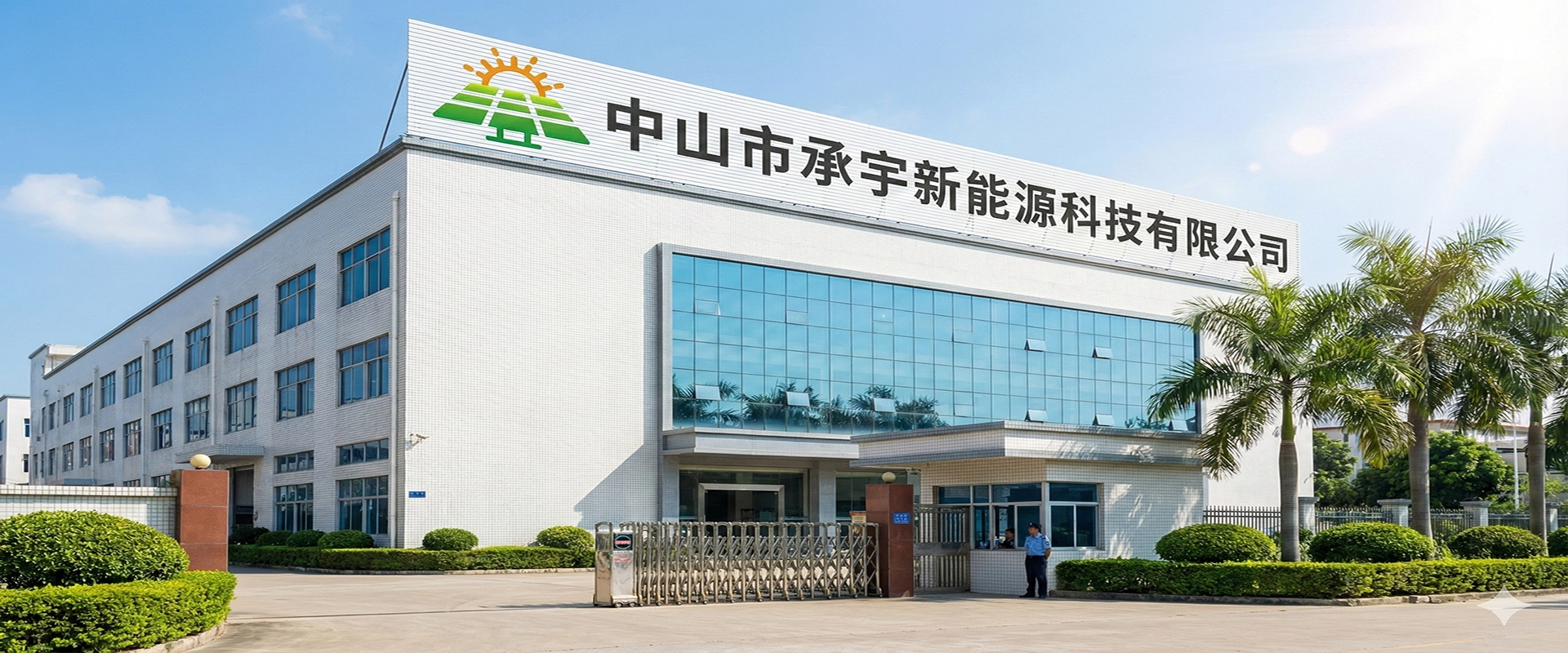
All commercial solar street lighting luminaires, intelligent MPPT controllers, and Q235 hot-dip galvanized steel poles are manufactured in-house by Zhongshan Chengyu New Energy Technology Co., Ltd. at our 35,000 m² production facility in Guzhen Town, Zhongshan, Guangdong, China.
Explore our verified municipal track record: Saudi Arabia 253 Sets 55°C Desert Highway Project, Philippines Coastal Highway Typhoon-Resistant Installation, or inspect third-party IEC/CE/ISO test reports at our Compliance Verification Center.
Need Engineering Sizing or EPC Tender Support?
Contact MCL Solar’s engineering division for complimentary DIALux road lighting simulations, solar autonomy calculations, and direct factory pricing for municipal and commercial infrastructure projects.