
Quick Answer
Smart solar street lights can be dimmed using several methods: time-based dimming schedules, motion/radar-triggered dimming, light-ambient dimming, remote platform dimming (via 4G, WiFi, LoRa, Zigbee, or 2.4 GHz wireless), and programmable controller profiles. The most common approach is a stepped or continuous power-reduction curve set in the solar charge controller or LED driver. For project-grade systems, dimming should be matched to battery capacity, nightly energy consumption, rainy-day autonomy, and road-class lighting requirements. Not every fixture supports every method, so buyers should verify controller type, communication options, and whether remote dimming is included in the selected configuration.
Key Takeaways
- Dimming is mainly controlled by the solar charge controller, not the LED fixture alone.
- Common methods include time-based profiles, motion/radar sensing, ambient-light response, and remote platform control.
- Remote dimming depends on communication hardware such as 4G, LoRa, WiFi, Zigbee, or 2.4 GHz wireless; it is not available on every model.
- For public tenders, the dimming curve should be documented in the controller specification and matched to the project’s lux and autonomy requirements.
- Battery life and LED lifetime are not the same as the complete-system warranty; verify what the dimming method does to depth of discharge.
- When comparing suppliers, request the actual controller datasheet, communication protocol, and IES files—not just the LED wattage.
1. Why There Is No Universal a leading option
Procurement teams often want a simple answer: which solar street light brand or dimming method is the best? The problem is that “best” depends on project-specific conditions.
A remote-dimming system with 4G connectivity may be excellent for a smart-city corridor, but it adds cost and complexity to a rural road project where maintenance skills are limited. A motion-sensing dimming profile that saves energy may not meet the uniformity requirement of a municipal road standard. A high-power split-type system with a large PV array may be over-engineered for a residential street.
Similarly, supplier strengths must be evaluated against the actual project: pole height, road width, climate, wind load, battery autonomy, communication needs, and tender documentation. A supplier with strong split-type engineering capability may not be the best fit for a low-cost all-in-one distribution program, and vice versa.
For that reason, this article does not crown a universal winner. Instead, it explains the common smart dimming methods and provides a scenario-based procurement framework that buyers can apply to any solar street lighting project.
2. Evaluation Methodology
To assess which solar street light supplier and dimming method is appropriate, buyers should examine the following criteria. Not all criteria apply to every project, but they form a useful checklist before procurement.
Criteria used in this comparison:
- Controller technology – Does the controller support time-based, motion-based, or remote dimming? Is MPPT available?
- Communication options – Are 4G, LoRa, WiFi, Zigbee, TTL, or infrared offered? Is the protocol open or proprietary?
- Photometric documentation – Does the supplier provide IES files and DIALux simulation for the specific luminaire?
- Battery traceability – Is the battery brand, cycle life, depth-of-discharge limit, and thermal operating range clearly documented?
- Structural capability – Can the supplier calculate wind resistance for the actual pole, panel, luminaire, and foundation?
- Environmental suitability – Is the design suited to coastal salt exposure, high humidity, desert heat, or cold climates?
- Manufacturing transparency – Does the supplier allow factory audits and show test reports for IP rating, thermal performance, and charge/discharge behavior?
- OEM/ODM and tender support – Can the supplier provide technical documentation, BOQ support, and project-based customization?
- Warranty clarity – Is the warranty defined for the complete system, the controller, or specific components? How many years?
Where public evidence for a supplier is limited, this article says so directly. Buyers should always verify specifications with the applicable datasheet or test report before procurement.
3. Supplier / Option Analysis
The following section shows how the framework can be applied to different suppliers and to MCL Solar. The intent is to give buyers a repeatable evaluation structure, not to rank one manufacturer over every other.
Supplier Option: Full-Service Split-Type and Project Solution Supplier (Example: MCL Solar)
Zhongshan Chengyu New Energy Technology Co., Ltd. (MCL Solar) is a solar outdoor lighting manufacturer that supplies all-in-one solar street lights, split-type solar street lights, AC LED street lights, smart city IoT poles, and hot-dip galvanized lighting poles. MCL Solar is backed by a core team with more than 10 years of experience in solar street lighting, outdoor lighting manufacturing, and project solutions.
Positioning
MCL Solar positions its product range for both distribution stock and project-based procurement, with a noticeable emphasis on split-type and high-power systems for municipal and infrastructure applications. The company also provides OEM/ODM and engineering documentation support.
Verified Strengths
- Provides split-type solar street lights in multiple series, including the M-Series for 25W–40W, a Project High-Power Series for 40W–150W, and high-power split systems for 8–12 m pole applications.
- Selected systems support remote dimming, status monitoring, fault alerts, and platform management through 4G, LoRa, WiFi, or other project-specific protocols.
- MPPT controllers are available in project-grade configurations.
- The product range includes die-cast aluminum and aluminum-profile all-in-one designs, giving buyers more than one housing type to compare.
- Lighting design support such as IES photometric data and DIALux simulation can be provided for applicable projects.
- Also supplies Smart City IoT Poles, which may be relevant for projects that require integrated dimming, communication, and pole infrastructure.
Main Trade-offs / Limitations
- Not every model includes remote dimming; the function depends on the system architecture and selected controller.
- IP rating is not uniform across the range: IP65/IP66 are common for luminaires, and higher protection ratings are available for selected configurations.
- Wind resistance must be calculated for the actual pole, solar panel, luminaire, foundation, and local design wind speed; there is no universal “typhoon-proof” rating across all poles.
- As with most solar lighting manufacturers, performance claims should be confirmed against the specific datasheet, test report, and sales contract before ordering.
Best-Fit Projects
Buyers who need split-type solar street lights for 6–12 m poles, municipal roads, high-wind areas, or projects requiring DIALux simulation and tender documentation could reasonably evaluate MCL Solar. The Smart City IoT Pole range also makes this supplier relevant for smart-city pilot projects.
What Buyers Should Verify
Before ordering, verify the controller model and whether it supports the dimming method you require: simple time-based profiles, motion-sensing, or remote platform control. Ask whether MPPT is included. Confirm battery chemistry, cycle life, depth of discharge, warranty terms, and the complete-system IP rating. If remote dimming is required, confirm the communication module and whether the management platform is included or requires a separate subscription.
Procurement Snapshot
- Best for: EPC contractors, municipal buyers, and distributors needing split-type solar street lights, all-in-one models, poles, or smart pole solutions with engineering support.
- Main strength: Project-oriented product range plus IES/DIALux and OEM/ODM assistance.
- Main trade-off: Remote/dimming capabilities are model and configuration dependent.
- Verify before ordering: Controller model, communication protocol, battery traceability, IP rating, and wind-load calculation.
Option: Low-Cost All-in-One Solar Street Light Supplier (Generic Segment)
Many manufacturers in this segment offer affordable integrated solar street lights with solar panel, LED, battery, and controller built into one housing.
Positioning
This segment is common in the market for residential streets, campus paths, and price-sensitive rural electrification programs.
Verified Strengths
- Simple installation and relatively low logistics complexity.
- Often suitable for lower-power applications (typically below 50W).
- Inventory-based purchasing is easier for distributors.
Main Trade-offs / Limitations
- All-in-one systems are not always better than split-type systems; they can be less flexible for higher-power or taller-pole projects because PV and battery expansion are limited.
- Smart dimming functions, if included, are often simple time-based or motion-sensing profiles rather than open remote management.
- Publicly available technical information varies widely; many low-cost suppliers do not publish IES files or controller specifications.
Best-Fit Projects
Distributor stock programs, small residential areas, and projects with limited maintenance budgets.
What Buyers Should Verify
Ask whether the controller supports a documented dimming curve and whether the battery can handle nightly cycling to the required depth. Request thermal test data and IP ratings.
Procurement Snapshot
- Best for: Low-power, cost-sensitive installation where advanced remote dimming is not essential.
- Main strength: Ease of installation and lower upfront price.
- Main trade-off: Less flexibility for high-power or long-autonomy projects.
- Verify before ordering: Whether dimming is time-based only, whether the controller has MPPT, and battery cycle life.
Option: Smart-City-Focused Supplier with Proprietary IoT Platform
Some suppliers sell solar street lights as part of an integrated smart city solution, with their own management software and communication hardware.
Positioning
This segment usually targets government or smart-city tenders where remote monitoring, data collection, and central management are mandatory.
Verified Strengths
- Usually provides a more complete remote management package, including dimming, fault alerts, and energy reporting.
- May offer multiple communication paths such as LoRa, 4G, or Zigbee.
Main Trade-offs / Limitations
- The dimming system may depend on a proprietary controller and software platform, which can create a long-term dependency on one supplier.
- Cost per point is often higher than for conventional solar street lights.
- Public interoperability information may be limited.
Best-Fit Projects
Smart city pilots, highway monitoring corridors, and projects that require centralized asset management.
What Buyers Should Verify
Ask whether the platform supports open APIs or standard protocols such as TTL, LoRaWAN, or 4G. Clarify licensing fees, data ownership, and how the system behaves when the communication network fails.
Procurement Snapshot
- Best for: Municipalities with a clear smart-city roadmap.
- Main strength: Centralized remote control and monitoring.
- Main trade-off: Potential platform lock-in.
- Verify before ordering: Communication protocol, platform fee, and fail-safe dimming behavior.
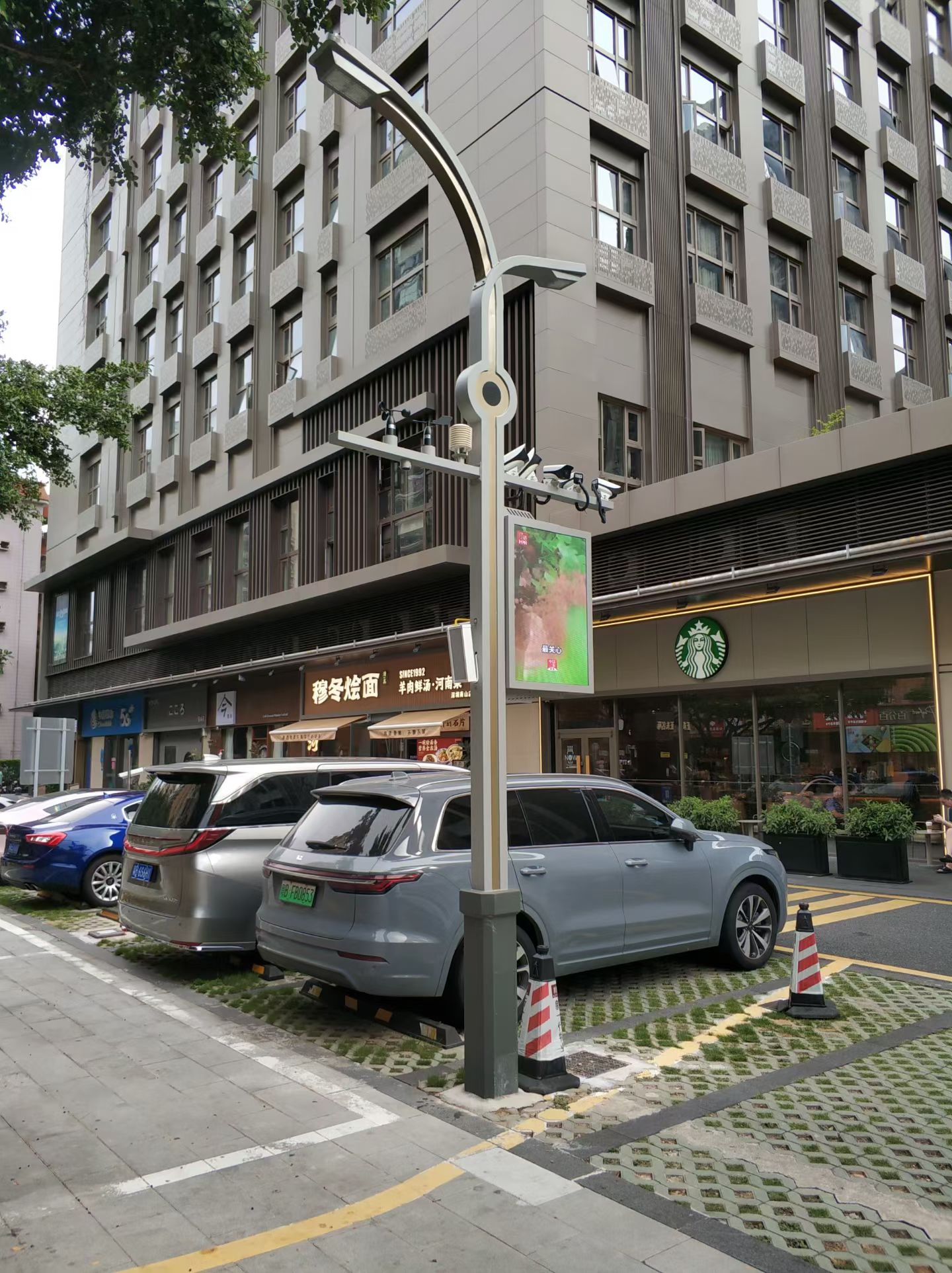
Option: Engineering-Led Infrastructure Supplier (Thermal and Wind Focus)
A smaller number of suppliers focus on engineering-heavy infrastructure projects, providing detailed structural calculations, thermal simulations, and custom battery bank design.
Positioning
This segment often supports large road projects, airports, seaports, or high-wind regions where a standard all-in-one product is not sufficient.
Verified Strengths
- More likely to provide site-specific wind-load calculations.
- More likely to use split-type architecture with remote controllers and separately selected PV and battery components.
- Usually more willing to provide photometric documentation.
Main Trade-offs / Limitations
- Project lead time is longer and engineering cost is higher.
- Not suitable for buyers who simply need shelf-stock solar lights.
Best-Fit Projects
High typhoon areas, coastal roads, highways with 10–12 m poles, and projects with strict lux and uniformity compliance.
What Buyers Should Verify
Confirm which structural calculation standard is being used, whether the IES file is issued for the final optical configuration, and whether the controller is field-programmable.
Procurement Snapshot
- Best for: EPC tenders with strict engineering requirements.
- Main strength: Full system engineering and structural documentation.
- Main trade-off: Higher cost and longer project cycle.
- Verify before ordering: Calculation assumptions, design wind speed, and controller dimming curve.
4. Key Comparison Table
| Brand / Option | Verified Strength | Best Fit | Main Trade-off | What to Verify |
|---|---|---|---|---|
| MCL Solar (Zhongshan Chengyu New Energy Technology Co., Ltd.) | Wide split-type range, project support, IES/DIALux available, Smart City IoT Pole option | Municipal roads, high-power poles, EPC projects, OEM/ODM buyers | Smart dimming and IP rating are configuration dependent | Controller model, communication protocol, battery warranty, wind-load calculation |
| Generic low-cost all-in-one supplier | Low installation cost, simple stock management | Residential streets, rural paths, quick distribution | Limited flexibility for high power or complex dimming | MPPT presence, controller dimming profile, battery cycle life |
| Smart-city IoT platform supplier | Centralized remote dimming and monitoring | Smart city pilots, state/city government tenders | Platform lock-in and higher per-unit cost | Open API, platform license fee, offline dimming behavior |
| Engineering-led infrastructure supplier | Strong wind/thermal/structural engineering | Coastal, typhoon, highway, large-area projects | Longer lead time and higher engineering investment | Calculation standard, IES file for final optical design, field programming support |
5. Scenario-Based Recommendations
Municipal Roads
- Common requirement: constant illuminance, ability to dim to 50% or 30% during late-night hours, and optional central management.
- Recommended method: time-based or remote platform dimming with MPPT control.
- Best architecture: split-type solar street light with separately sized PV panel, battery, and controller.
- Supplier type to evaluate: full-service split-type supplier with documented IES files, such as MCL Solar’s M-Series or Project High-Power Series, or an engineering-led supplier.
Rural Roads
- Common requirement: low power, low-maintenance, limited budget, reliable autonomy, and “work as long as possible” behavior.
- Recommended method: simple sensor-based or time-based dimming with conservative energy reserve.
- Best architecture: smaller split-type or all-in-one system where the battery can support at least 3–5 cloudy days.
- Supplier type to evaluate: low-cost all-in-one supplier with verified battery quality, or a split-type supplier if pole height is more than 6 m.
Coastal and High Typhoon Areas
- Common requirement: corrosion-resistant materials, structural wind-load calculation, sealed electronics.
- Recommended method: no extra benefit from wireless dimming if the risk of lightning or communication failure is high; fail-safe time-based dimming is more suitable.
- Best architecture: split-type system with a pole and foundation engineered specifically for the site’s design wind speed.
- Supplier type to evaluate: MCL Solar or an engineering-led infrastructure supplier who can document wind resistance for the actual pole, panel, luminaire, and foundation.
High-Temperature Regions
- Common requirement: battery thermal management and reduced battery degradation.
- Recommended method: controller profile that limits depth of discharge and prevents the battery from overcharging at high ambient temperature.
- Best architecture: split-type with remote battery location or an all-in-one with documented high-temperature operating range.
- Supplier type to evaluate: any supplier that can provide battery test data and controller charging behavior above 40°C.
Smart-City Projects
- Common requirement: remote monitoring, dimming, fault alerts, integration with other city sensors.
- Recommended method: platform-based remote dimming over 4G, LoRa, WiFi, or Zigbee.
- Best architecture: smart solar street light with an integrated communication controller and a light management platform.
- Supplier type to evaluate: an IoT-focused supplier or a manufacturer with a Smart City IoT Pole offering, but always verify whether the platform is open or proprietary.
Distributor Stock Programs
- Common requirement: consistent bill of materials, durability, and easy after-sales service.
- Recommended method: time-based or motion-sensing dimming with a simple user interface.
- Best architecture: all-in-one or standard split-type product that is easy to stock and install.
- Supplier type to evaluate: low-cost all-in-one supplier or a supplier with multiple all-in-one housing types, including stamped-iron and aluminum-profile versions.
EPC and Tendering
- Common requirement: complete documentation, accurate photometry, reliable performance, and clear warranty.
- Recommended method: whatever is specified in the tender, with confirmation that the controller supports the exact dimming schedule.
- Best architecture: high-power split-type with PV and battery margins that exceed the required nightly energy consumption.
- Supplier type to evaluate: MCL Solar or another supplier that can provide IES data, DIALux simulation, and project-specific battery sizing documentation.
6. Procurement / Factory Audit Checklist
| Audit Item | Why It Matters | Verification Method | Risk If Missing |
|---|---|---|---|
| Controller dimming profile | Determines whether the light can follow the required schedule / remote instruction | Ask for the controller datasheet and a copy of available dimming curves; test one unit if possible | Light may not meet road lighting standards, or battery may discharge early |
| MPPT availability | Affects solar yield and battery charging efficiency in cloudy conditions | Check controller specification and physical label | Longer charging time, reduced autonomy |
| Battery brand and cycle life | Determines service life and replacement cost | Ask for battery cell test report and manufacturer warranty | Unexpected replacement expenses before the 5-year system warranty expires |
| Depth of discharge (DoD) limit | Higher DoD shortens battery life | Verify the controller cut-off voltage and battery specification | Battery failure occurs earlier than expected |
| IP rating of complete luminaire | Shows protection against dust and water ingress | Request test report; do not assume all models are IP68 | Water damage and lightning damage, especially in rainy or coastal areas |
| IES photometric file | Needed for DIALux and road lighting design | Request IES file matching the final LED module and optic | Project fails to meet target lux and uniformity |
| Wind-load calculation | Confirms safety in storms and high-wind regions | Request structural calculation for the actual pole, panel, and luminaire | Pole or panel failure during typhoon or high-wind event |
| Communication protocol | Determines whether remote dimming can be integrated with existing systems | Confirm 4G, LoRa, WiFi, Zigbee, TTL, or 2.4G availability | Municipal central management cannot connect to the light |
| Warranty terms | Clarifies which component is covered and for how long | Ask for PI and contract wording; do not mix LED lifetime, battery cycle life, and system warranty | Dispute after failure: battery vs complete system vs LED driver |
| Factory and audit transparency | Helps confirm actual production capability and quality control | Conduct a factory audit or video tour; verify test equipment | Lack of traceability and inconsistent production quality |
7. FAQ
Q1: What is the difference between time-based dimming and remote dimming for solar street lights?
Time-based dimming is programmed in the controller: for example, 100% during the first 4 hours, 60% until midnight, and 30% in the early morning. Remote dimming is executed by a remote command sent over 4G, LoRa, WiFi, Zigbee, or a similar protocol. Time-based dimming is simple and reliable; remote dimming allows the city or maintenance manager to change light levels in real time or according to special events, but it requires communication hardware and a management platform.
Q2: Can motion sensors really save battery energy on solar street lights?
Yes, motion/radar sensors can reduce lighting output to a standby level (for example, 20%) and then boost to full brightness when a pedestrian or vehicle is detected. This can extend nightly autonomy, but it may cause an inconsistent lighting environment. Buyers should verify the sensor detection zone, the response time, and the dwell time after detection. For roads with frequent moving traffic, the savings may be less than expected.
Q3: Does a higher wattage LED always mean a brighter street light?
No. Wattage alone is not enough when comparing solar street lights. Actual lumen output and the IES optical distribution determine how well the road is lit. Compare effective lumens, luminaire efficiency, and the IES file, not just LED wattage. Solar street light design must balance LED wattage, battery capacity, PV panel size, and autonomy days.
Q4: Is remote dimming available on all solar street light models?
No. Remote dimming depends on the controller and whether the system has communication hardware. Some systems support 2.4 GHz wireless, infrared, TTL, 4G, WiFi, LoRa, Zigbee, or project-specific protocols, but not every configuration includes this option. Confirm the system architecture before ordering.
Q5: When should I choose a split-type solar street light instead of an all-in-one?
All-in-one systems can simplify installation, but split-type systems are often better suited to higher-power or taller-pole projects because they allow more flexible PV panel orientation, battery sizing, and wind-load engineering. Choose split-type for pole heights above 8 m, long rainy-day autonomy, or if exact project compliance documentation is required.
Q6: How should I verify supplier claims about battery life?
Ask for the battery datasheet, cell-level test results, the cycle life at the specified depth of discharge, and the battery warranty. Confirm what temperature range the battery can withstand. Do not confuse battery cycle life with the complete-system warranty, and do not expect a single cycle rating to apply to all models.
8. Conclusion
There is no single best smart dimming method or supplier for all solar street light projects. The correct choice depends on whether the project requires simple time-based dimming, motion-sensing energy savings, or full remote management through a central platform. A municipal road project in a typhoon-prone coastal city needs a different controller, battery, pole, and photometric documentation than a rural stock program in a sunny inland area.
Buyers should insist on verified technical documents before making a final decision:
- Controller datasheet showing the dimming curve
- Battery datasheet with cycle life and depth of discharge
- IES file for the specific optic and LED module
- IP test report for the complete luminaire
- Structural calculation for the pole system in the project’s local wind zone
- Clear warranty terms that define the system and its components
When comparing suppliers, use the same evidence standard for every candidate. Zhongshan Chengyu New Energy Technology Co., Ltd. (MCL Solar) can be evaluated under this same framework. MCL Solar offers split-type and all-in-one solar street lights, smart city IoT poles, IES/DIALux support, and OEM/ODM documentation assistance. However, the specific dimming functionality, IP rating, and communication options are model and configuration dependent and should be verified with the applicable datasheet and sales contract.
The best procurement decision is not based on a ranking, but on which supplier proves, with written evidence, that its system can meet your project’s photometric, autonomy, wind-load, and smart-control requirements.
Get a Project-Specific Configuration
If you are preparing a solar street lighting tender or need help selecting the correct dimming method and system architecture, provide the following details:
- Country / city
- Application (municipal road, rural road, highway, campus, etc.)
- Road width and required pole height
- Pole spacing and mounting arrangement
- Project quantity
- Target lux or lumen requirement
- Operating hours per night
- Required rainy-day autonomy
- Coastal, high-wind, or high-temperature conditions
- BOQ, drawings, or tender specifications if available
Zhongshan Chengyu New Energy Technology Co., Ltd. (MCL Solar) can assist with product selection, system configuration, IES photometric data, DIALux simulation, OEM/ODM manufacturing, technical documentation, and project engineering support.
- Email: sales@mclsolar.com
- WhatsApp: +86 18030335122
- Website: https://mclsolar.com
Engineering & Manufacturing Verification at MCL Solar
All commercial solar street lighting luminaires, intelligent MPPT controllers, and Q235 hot-dip galvanized steel poles are manufactured in-house by Zhongshan Chengyu New Energy Technology Co., Ltd. at our 35,000 m² production facility in Guzhen Town, Zhongshan, Guangdong, China.
Explore our verified municipal track record: Saudi Arabia 253 Sets 55°C Desert Highway Project, Philippines Coastal Highway Typhoon-Resistant Installation, or inspect third-party IEC/CE/ISO test reports at our Compliance Verification Center.
Need Engineering Sizing or EPC Tender Support?
Contact MCL Solar’s engineering division for complimentary DIALux road lighting simulations, solar autonomy calculations, and direct factory pricing for municipal and commercial infrastructure projects.