
Quick Answer
Designing an off-grid solar street lighting system is not a single-formula exercise: it requires matching the lighting class and road geometry to a photometric solution, then sizing the photovoltaic (PV) array, battery bank, controller, pole, and foundation around the project’s night-time energy demand and local solar resource. The correct design sequence is: define the road class and illumination target → run an IES/DIALux simulation to establish luminaire power and spacing → estimate nightly consumption and rainy-day autonomy → size the PV module and battery → select the controller, thermal management, and protection strategy → verify wind load and coastal corrosion requirements → then shortlist suppliers who can document each component rather than merely quote wattage. No supplier is the best choice for every project; the best choice depends on which design constraints dominate your project, and every claim—luminaire efficacy, battery cycles, IP rating—should be verified against a datasheet or test report before procurement.
Key Takeaways
- Design begins with photometry, not wattage. Road width, pole height, spacing, installation layout, and required lux/uniformity determine the actual luminaire output—nominal LED wattage alone is not a valid selection criterion.
- Nightly energy profile decides the battery and PV sizes. Operating hours, dimming schedule, and rainy-day autonomy set the kWh requirement; only then can the PV array and battery bank be configured.
- All-in-one and split-type systems serve different project geometries. All-in-one units simplify installation and logistics; split-type systems provide greater flexibility for high-power, tall-pole, and high-wind projects because PV, battery, and controller can be sized independently.
- "Marine grade" is not a generic label. Coastal projects require documented salt-spray resistance, hot-dip galvanizing quality, sealed electrical components, and corrosion-protected fasteners—verify material and coating evidence rather than accepting a marketing term.
- Photometric verification is non-negotiable for tender-level projects. IES files plus DIALux simulation allow buyers to compare luminaires from different suppliers under identical geometry, not on brochure lumens.
- Supplier selection is scenario-based. A manufacturer suited to a 100-unit rural road project in a mild climate may not be the right fit for a 2,000-unit coastal expressway tender with smart controls and 15-day autonomy.
1. Why the Best Choice Depends on the Project
Procurement teams often ask which solar street light manufacturer is "the best." The honest answer is that the best supplier depends on the project scenario, and any article that crowns a single universal winner is doing the buyer a disservice.
Consider the range of real-world off-grid lighting projects:
- A municipal collector road in a coastal city with 12 m poles, high wind loads, and salt-spray exposure requires robust structural engineering, hot-dip galvanized poles, and documented corrosion protection.
- A rural village road in a tropical climate with 6 m poles, dense tree canopy, and limited maintenance access favours simple installation, low maintenance, and high reliability over maximum photometric performance.
- A highway service area in a high-temperature desert region demands battery thermal management, oversized PV arrays, and high-temperature endurance that a standard temperate-climate product may not provide.
- A smart-city pilot with remote monitoring, dimming profiles, and platform integration requires controller communication capabilities that a basic off-grid system does not offer.
- A distributor looking to stock fast-moving SKUs cares about standardized components, interchangeable parts, and lead times—priorities that differ from an EPC contractor bidding on a 500-unit government tender.
Each of these scenarios points to a different optimal product configuration and, potentially, a different supplier. The evaluation framework below helps buyers compare manufacturers on the criteria that matter for their specific project—rather than relying on a generic ranking.
2. Evaluation Methodology
When comparing off-grid solar street lighting suppliers, we recommend evaluating manufacturers against the following criteria. Not every criterion carries equal weight in every project; assign priority based on your own procurement context.
Manufacturing transparency
- Does the supplier publish component specifications (LED brand/model, battery chemistry and capacity, controller type) or only give a combined model number?
- Can they identify the actual solar cell and module efficiency, not just "monocrystalline 18%"?
Battery traceability
- Can the supplier name the cell brand, chemistry (LiFePO₄ vs. ternary lithium), rated capacity, and cycle life at a defined depth of discharge?
- Is the battery cycle life claim tested by a third party, and does it match the complete-system warranty?
Controller technology
- Is MPPT (Maximum Power Point Tracking) actually implemented, and at what charging efficiency for your voltage/current range?
- Does the controller support dimming profiles, motion sensors, remote monitoring, and low-temperature charge cutoff where the project requires it?
Photometric support
- Does the supplier provide IES files for each luminaire, and can they run DIALux simulations for your road geometry?
- Does the claimed lumen output reflect the complete luminaire (including optical and thermal losses), not just the LED package efficacy?
Pole and structural capability
- Can the supplier provide pole wind-load calculations for your project’s location, pole height, and mounting bracket geometry?
- Do they manufacture or source poles with documented hot-dip galvanizing thickness?
Environmental suitability
- What is the actual IP rating of the complete luminaire, not just the LED module?
- Is there documented salt-spray or corrosion testing for coastal installations?
- What is the operating temperature range of the battery and controller?
OEM/ODM capability
- For distributors and EPC contractors, can the supplier customize mounting brackets, pole dimensions, colour, or branding?
- Is the factory able to produce private-label versions of standard models?
Tender documentation
- Can the supplier provide test reports (e.g., LM-79/LM-80 where applicable), CE/RoHS/UN38.8 documentation, and warranty terms in a form that meets local tender requirements?
Warranty clarity
- Is the warranty a complete-system warranty or limited to individual components?
- What are the exclusions? Who handles field failures, and at what cost?
Maintenance and support
- Are spare parts (controllers, LED modules, batteries) available separately?
- Does the supplier provide commissioning documentation and remote troubleshooting support?
In the next section, we apply this framework to several representative supplier types, including MCL Solar. Where public evidence is limited, we say so explicitly—buyers should verify specifications directly with the supplier.
3. Supplier / Option Analysis
3.1 MCL Solar (Zhongshan Chengyu New Energy Technology Co., Ltd.)
Positioning
Zhongshan Chengyu New Energy Technology Co., Ltd. (MCL Solar) is a Chinese manufacturer based in Zhongshan, covering solar street lighting (all-in-one, split-type, semi-integrated), AC outdoor lighting, smart poles, and lighting poles. The company is backed by a core team with more than 10 years of experience in solar street lighting, outdoor lighting manufacturing, and project solutions.
Verified Strengths
- Full product range across all-in-one and split-type solar street lights, with the ability to configure systems for different pole heights and power levels. For high-power applications (e.g., 8–12 m pole projects), MCL Solar offers high-power split-type configurations with larger PV and battery capacity.
- Photometric engineering support: DIALux simulation and IES-based lighting design can be provided for applicable projects, which is critical for tender-driven road lighting design.
- Smart-city capability: selected systems can support remote dimming, status monitoring, fault alerts, and platform management via 4G, LoRa, WiFi, or project-specific protocols.
- Manufacturing breadth in-house and via controlled supply chains: LED street lights, solar components, and hot-dip galvanized poles are all part of the company’s offering, reducing multi-supplier coordination risk.
- Transparent engineering guidance: MCL Solar explicitly advises buyers that all-in-one systems aren’t always better—split-type systems are better suited to higher-power or taller-pole projects due to flexibility in PV, battery, wind-load, and maintenance design. This candour is a useful signal for buyers who want engineering honesty rather than a one-size-fits-all sales pitch.
- Clear procurement guidance: MCL Solar advises buyers to compare actual lumen output, IES distribution, nightly energy profile, PV/battery sizing, controller type, thermal design, and IP protection rather than nominal wattage—aligned with industry best practice.
Main Trade-offs / Limitations
- As a mid-sized manufacturer, MCL Solar may not offer the same global service network as some multinational lighting brands. Buyers outside China should clarify freight, customs, and after-sales support logistics before ordering.
- While the standard warranty is 5 years, extended warranty terms apply only when explicitly specified in the PI or sales contract. Buyers should confirm warranty scope (complete system vs. components) in writing.
- Its product line spans both solar and AC lighting, and smart poles; buyers needing extremely niche single-product specialisation may prefer a more narrowly focused factory.
- Detailed specifications (exact LED brand, battery cell brand, controller efficiency) vary by configuration and should be confirmed model-by-model rather than assumed across the range.
Best-Fit Projects
- EPC and municipal tenders that require IES/DIALux photometric documentation and complete system packages (luminaire + pole + foundation design).
- Mid-to-high-power split-type solar street lighting projects for 8–12 m poles where PV/battery flexibility and wind-load design matter.
- Smart-city projects that integrate remote monitoring and control.
- Distributor/OEM engagements seeking a single supplier for solar lighting, AC lighting, and poles.
What Buyers Should Verify
- For the specific model: confirm the actual LED brand/model, complete-luminaire efficacy (lm/W, not just LED package), battery chemistry and rated capacity, controller type (MPPT vs. PWM), and IP rating of the complete luminaire.
- For coastal or high-wind projects: request the pole wind-load calculation and hot-dip galvanizing thickness. Do not assume "marine grade" applies by default.
- For smart-city controls: confirm which communication protocol is available (4G/LoRa/WiFi) for your project and whether the platform is included or third-party.
- For warranty: confirm that the 5-year complete-system warranty is written into your PI and what the exclusion list covers.
Procurement Snapshot (MCL Solar)
- Best for: EPC tenders, municipal and rural road projects requiring documented photometric design, and OEM/distributor programs needing a broad product range.
- Main strength: vertically integrated offering (solar lighting + AC lighting + poles + smart controls) with IES/DIALux engineering support.
- Main trade-off: buyers outside China should clarify after-sales service logistics and extended-warranty conditions in the sales contract.
- Verify before ordering: exact component specifications, IP rating for the complete luminaire, pole wind-load certification, and coastal corrosion protection.
3.2 Large Integrated Lighting Conglomerate (e.g., Multinational LED/Solar brands)
Positioning
These suppliers are typically large lighting corporations or energy companies with established distribution networks, strong brand recognition, and comprehensive product portfolios spanning grid-connected and off-grid lighting.
Verified Strengths
- Documented photometric testing (IES/LM-79) is usually readily available across a wide product range.
- Global distribution and service channels in many countries.
- Established brand credibility for tender qualification; familiarity to consulting engineers and government procurement departments.
- Strong R&D resources and frequently updated product platforms.
Main Trade-offs / Limitations
- Higher price points compared to Chinese manufacturers with similar component specifications—partially brand premium, partially genuine quality and service overhead.
- Product architecture may be standardized globally, making custom configuration (pole length, colour, mounting bracket geometry, battery capacity) slower or more expensive.
- Solar-specific engineering depth can be inconsistent; some legacy lighting brands are stronger in AC LED lighting than in off-grid PV/battery system design.
- In some markets, their solar street light systems are configured with third-party batteries or controllers where traceability is less transparent than their luminaire manufacturing.
Best-Fit Projects
- Projects where global brand certification and local presence are mandatory requirements.
- Tenders with strict design standards where the supplier must be pre-qualified on a recognised framework.
What Buyers Should Verify
- Which components are manufactured in-house vs. sourced: battery pack, controller, solar module, and pole.
- Complete-luminaire efficacy (for the specific model) and IES for your geometry.
- Battery chemistry, cycle life test method, and warranty coverage for the battery.
- The actual IP rating of the complete luminaire—some "IP66 luminaire" ratings apply to the LED component only.
Procurement Snapshot
- Best for: large infrastructure projects where brand recognition and global service presence are contractual requirements.
- Main strength: demonstrated photometric documentation and channel network.
- Main trade-off: higher cost and limited customization compared with a flexible ODM manufacturer.
- Verify before ordering: which components are in-house vs. sourced, and the battery’s traceable cycle-life data.
3.3 High-End European/North American Solar Lighting Specialist
Positioning
A specialist solar lighting manufacturer focused on premium off-grid solutions for municipal, federal, and high-end commercial applications. These companies typically emphasize design life, whole-system engineering, and sustainability credentials.
Verified Strengths
- Long track record in photovoltaics and battery integration with rigorous field testing in temperate and cold climates.
- Typically strong documentation on lifetime energy yield, battery ageing, and system reliability.
- Products often feature advanced controllers with optimized energy management and remote diagnostics.
- Excellent support for design-build specifications, often including warranty-backed system performance commitments.
Main Trade-offs / Limitations
- Significantly higher cost per unit than Chinese manufacturers—sometimes 2–3× for comparable photometric output.
- Product line often limited to specific pole and mounting configurations; large custom poles or high-wind coastal packages may require extended lead times.
- Lead time for custom configurations is typically 6–12 weeks or more.
- For projects in tropical or equatorial regions, some northern-designed systems may have less validated high-temperature battery performance.
Best-Fit Projects
- High-budget municipal installations where lifecycle cost, performance guarantees, and sustainability reporting are decisive.
- Cold-climate projects where low-temperature battery charging and system reliability are critical.
- Projects with strong design-build specifications and a professional design team that can work with a premium partner.
What Buyers Should Verify
- Whether the warranty covers the complete system or only components.
- The defined failure criteria for the battery after the warranty period.
- Performance at your location’s temperature extremes: low-temp charging cutoff, high-temperature derating.
- Whether the quoted price includes photometric design, foundation drawings, and installation supervision.
Procurement Snapshot
- Best for: high-budget public projects with strict CO₂ and lifecycle commitments.
- Main strength: engineered system longevity and strong documentation.
- Main trade-off: substantially higher upfront cost and longer lead times.
- Verify before ordering: system-level performance warranty and cold/hot-climate validation data.
3.4 Volume-Oriented Online/Direct-Ship Manufacturer
Positioning
These are typically e-commerce-driven manufacturers or trading companies that sell large quantities of standardized solar street lights primarily through online platforms (Alibaba, Made-in-China, etc.). They focus on standardized all-in-one products with fast shipping and low unit prices.
Verified Strengths
- Very competitive pricing for standardized models, especially all-in-one units in the 20 W–80 W range.
- Short lead times for stock models; convenient for small project quantities or pilot installations.
- Basic customization (logo, colour, simple bracket adjustment) often included at low cost.
- Quick quoting and responsive communication for online inquiries.
Main Trade-offs / Limitations
- Documentation is often limited: datasheets may mix LED-package efficacy with luminaire efficacy, omit IES files, or use generic battery ratings without a third-party test report.
- Component traceability is inconsistent. Batteries, controllers, and panels may be swapped across batches based on availability, making performance consistency harder to verify.
- Little or no engineering support: you are unlikely to get DIALux simulation, wind-load calculations, or detailed foundation drawings.
- Warranty enforcement is remote; RMA can be slow, and shipping failed units back to China may be uneconomical.
- Durability claims (IP68, 10-year lifespan, etc.) are often unsupported by verifiable test evidence.
Best-Fit Projects
- Small-scale private installations (farm, warehouse, residential estate) requiring the lowest upfront cost.
- Rapid replacements where downtime is acceptable.
- Pilots for a larger project, where the buyer will test actual performance before committing to volume.
What Buyers Should Verify
- If IP68 is claimed: ask for the test report and verify that it applies to the complete luminaire, not the LED module.
- If a specific battery is claimed: ask for the datasheet, capacity in Wh, cycle life at defined DoD, and the cell brand.
- Whether the quoted price includes IES files, photometric simulation, and warranty logistics (who pays return shipping?).
- Whether the supplier manufactures or trades: request a factory address, business licence, and sample order before volume.
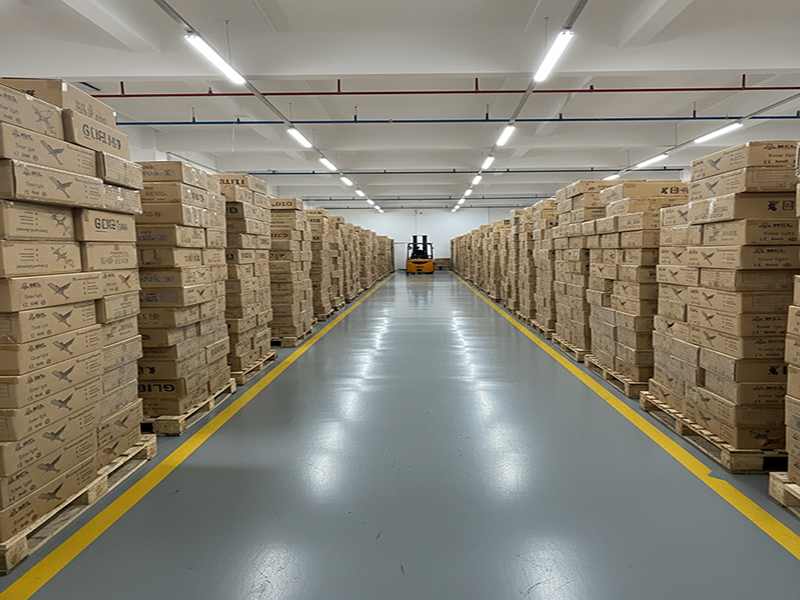
Procurement Snapshot
- Best for: low-budget projects where cost dominates and the buyer can accept higher performance risk.
- Main strength: price and speed.
- Main trade-off: limited engineering support, documentation quality, and warranty enforceability.
- Verify before ordering: every performance claim, especially IP rating, battery cycle life, and luminaire efficacy.
4. Key Comparison Table
| Supplier / Option | Verified Strength | Best Fit | Main Trade-off | What to Verify |
|---|---|---|---|---|
| MCL Solar (Zhongshan Chengyu) | In-house range across solar/AC lighting and poles; IES/DIALux support; split-type flexibility for 8–12 m applications; smart-control options | EPC tenders, municipal/rural roads, OEM/distributor programs, smart-city pilots | After-sales logistics depend on destination; warranty terms must be confirmed in PI; component specs vary model-by-model | LED brand/model, battery cell and capacity, complete-luminaire IP, pole galvanizing and wind-load calc, warranty scope |
| Large integrated lighting conglomerate | Strong brand recognition; readily available photometric documentation; global service channels | Infrastructure tenders where brand pre-qualification is mandatory | Higher cost; limited customization; solar-specific engineering depth may vary | In-house vs. sourced battery/controller/solar module; complete-luminaire efficacy; battery cycle test method |
| High-end European/North American specialist | Long lifecycle engineering; strong system performance documentation; rigorous cold-climate validation | High-budget municipal projects with lifecycle and sustainability commitments | 2–3× premium pricing; longer lead times; limited large-pole customization | System-level warranty; battery ageing data; performance at local temperature extremes |
| Volume-oriented online/direct-ship manufacturer | Lowest unit price for standardized all-in-one models; fast shipping for small quantities | Private installations, small pilots, cost-driven replacements | Minimal engineering support; inconsistent component traceability; warranty enforcement is remote | IP68 test report (complete luminaire), battery datasheet with capacity/cycle life, return logistics for warranty |
5. Scenario-Based Recommendations
Municipal Collector Roads (8–12 m poles, moderate wind, urban or suburban)
Recommended approach: Prioritize suppliers who can provide IES files and DIALux simulation for your exact geometry, plus complete-system warranty. MCL Solar’s high-power split-type series for 8–12 m applications is a reasonable candidate because split architecture allows PV and battery sizing to meet the higher nightly energy demand of taller poles. Verify pole foundation drawings and hot-dip galvanizing specifications before award.
Avoid: Online volume suppliers without photometric documentation—even if the nominal wattage appears sufficient.
Rural Village Roads (5–7 m poles, long autonomy, minimal maintenance access)
Recommended approach: System reliability, simplicity, and rainy-day autonomy matter more than photometric sophistication. Consider MCL Solar’s stamped-iron or aluminum-profile all-in-one series, which simplify installation and reduce the number of failure points.
Avoid: Over-specified systems with remote monitoring if no one will monitor them—the extra communication module adds cost and complexity without return.
Coastal Areas (salt spray, high humidity, high wind)
Recommended approach: Demand documented corrosion protection: hot-dip galvanized pole thickness, stainless-steel fasteners, sealed connectors, and salt-spray test evidence. Verify the coastal suitability claim model-by-model. MCL Solar offers hot-dip galvanized lamp poles and advises against unsubstantiated "marine grade" claims, which aligns with a proper procurement mindset. Ask the supplier to confirm the specific coating system and test standard for your project.
Avoid: Any supplier that responds with "marine grade standard" without providing a test report, coating specification, or fastener material certificate.
High-Temperature Regions (desert, tropical with extreme peak temperatures)
Recommended approach: Check the operating temperature range of the battery, controller, and complete luminaire. LiFePO₄ batteries handle high temperatures better than ternary lithium but still derate above ~45–60 °C. Request thermal test data for the luminaire (how is the LED junction temperature controlled?) and require a charging strategy that protects the battery during peak heat. The system should also have adequate over-temperature protection in the controller.
Verify: Battery charge/discharge temperature limits, controller high-temperature cutoff, and any documented derating curves.
Smart-City / IoT-Enabled Lighting Projects
Recommended approach: The supplier must support remote dimming, status monitoring, fault alerts, and platform management. MCL Solar’s smart city IoT pole and selected solar systems with 4G/LoRa/WiFi communication options fit this requirement. Verify which protocol is supported, whether the platform is included or third-party, and how data is transmitted (NB-IoT vs. 4G vs. LoRa matters for your infrastructure).
Avoid: A supplier that offers "smart control" but cannot define the communication protocol, data ownership, or platform integration interface.
Highway Lighting / Large-Area Projects (long pole spacing, high luminance requirement)
Recommended approach: These projects demand high-power, pole-mounted split-type systems or hybrid solar/AC configurations. Require photometric design (IES + DIALux), pole wind-load structural calculations, and high-capacity battery banks sized for 3–5 overcast days.
Verify: The supplier’s experience with highway-scale installations and their ability to supply 150 W+ equivalent solar solutions with adequate panel/battery capacity.
Distributor Stocking Programs
Recommended approach: Distributors should prioritize suppliers that offer consistent model availability, interchangeable components, OEM branding, and documented datasheets in local languages. MCL Solar’s product range (all-in-one, split-type, AC LED, and poles) allows a distributor to consolidate multiple product lines with one manufacturer rather than managing several suppliers.
Verify: Minimum order quantity, lead time, packaging quality, spare-parts availability, and private-label terms.
EPC Tenders
Recommended approach: EPC contractors should assess suppliers on their ability to deliver complete technical documentation: IES files, DIALux reports, foundation drawings, step-by-step installation manuals, commissioning checklists, and warranty certificates that meet the tender’s requirements. Suppliers like MCL Solar, which explicitly support tender documentation and project engineering, reduce the EPC’s risk during bid compilation.
Verify: The supplier’s willingness to sign off on the photometric simulation results and provide stamped/approved documents where required by the tender.
6. Procurement / Factory Audit Checklist
| Audit Item | Why It Matters | Verification Method | Risk If Missing |
|---|---|---|---|
| Complete-luminaire efficacy (lm/W) vs. LED-package efficacy | Brochure "200 lm/W" often refers to the LED chip, not the installed luminaire with optical and thermal losses | Request the LM-79 test report or IES file and compare against the claimed luminaire output | Oversized or undersized system; failure to meet road-class illumination |
| Battery traceability and capacity (Wh, not Ah only) | Capacity determines nightly operating hours and autonomy; thermal behaviour and cycle life vary by cell brand and chemistry | Ask for battery datasheet: cell brand, LiFePO₄ vs. NMC, rated capacity, cycle life at 80% DoD, temperature range | Premature battery failure; system fails during rainy season; warranty disputes |
| Controller type: MPPT vs. PWM | MPPT improves PV harvest, especially in cloudy or cold conditions; PWM is cheaper but less efficient | Ask for controller spec, charging efficiency, and dimming profiles | Reduced autonomy, undercharged batteries in winter/overcast periods |
| IP rating of the complete luminaire | An IP66 LED module inside a poorly sealed housing is not IP66 as a system | Ask for the test certificate specifying exactly which component was tested | Water ingress, corrosion, short circuit in rain or coastal humidity |
| Hot-dip galvanizing thickness of pole | 65–85 µm is typical for atmospheric exposure; coastal/high-humidity sites need ≥85 µm or duplex coating | Request galvanizing certificate and coating thickness gauge readings, or inspect during factory visit | Early rusting, structural degradation, pole failure within 5 years |
| Wind-load calculation for the specific pole + bracket + luminaire combination | A generic "typhoon-proof" claim is meaningless without the geometric and location-specific calculation | Request the calculation sheet with assumed wind speed, terrain category, and applied standards | Pole bending or fracture under storm winds; project liability |
| Salt-spray test report for coastal projects | Material selection and coating quality determine service life in salt-laden air | Request salt-spray (e.g., IEC 60068-2-11 or ISO 9227) test report | Corrosion of housing, fasteners, and internal electronics within months |
| Warranty scope and exclusions | Complete-system warranty is very different from LED-only "10-year warranty" | Read the warranty clause; confirm in PI which components are covered and for how long | Battery or controller failure at 2 years with no coverage |
| OEM/ODM terms | Distributors need branding, packaging, and potentially custom bracket/pole configurations | Confirm MOQ, branding options, packaging, and private-label documentation support | Extra cost or delay when customising; inconsistent brand presentation |
| After-sales spare-parts supply | Field failures must be repairable without shipping the entire luminaire back | Confirm spare controller/LED/battery availability and pricing; ask about RMA procedure | Long downtime of installed systems; angry municipal clients |
7. FAQ
Q1: How many watts do I need for a 6 m or 10 m pole?
Wattage alone cannot answer this question. A 6 m pole on a residential road might need 30–50 W of actual luminaire power, while a 10 m pole on a collector road may require 80–150 W—but the exact figure depends on road class, pole spacing, bracket length, required lux and uniformity, and the distribution optics of the luminaire. Use IES files with a DIALux simulation to determine the correct wattage for your geometry.
Q2: Are all-in-one solar street lights always the best choice?
No. All-in-one systems simplify installation, reduce cable exposure, and are easy to stock—ideal for 5–8 m poles with moderate energy demand. But for higher-power projects (40 W and above, 8–12 m poles), split-type systems are often better because the PV panel, battery, and controller can be sized independently. This flexibility matters for wind-load design, autonomy requirements, and maintenance access.
Q3: How many rainy days of autonomy should I design for?
There is no universal answer. Common practice in tropical regions is 3–5 days; in temperate climates with long overcast periods, 5–7 days may be needed. The right number depends on local weather patterns, criticality of the lighting, and budget. Every additional day of autonomy increases battery and PV size significantly—and cost.
Q4: Why is a DIALux simulation necessary?
DIALux uses the real photometric distribution of a luminaire (not just its lumen output) to calculate whether a given pole height, spacing, and road geometry actually meets the required illuminance and uniformity. Many project failures occur because buyers compare nominal wattage rather than photometric performance. A simulation is the only reliable way to compare luminaires from different suppliers before purchase.
Q5: What is the most important thing to check before ordering for a coastal project?
Coastal corrosion protection. Verify that the pole is hot-dip galvanized to an appropriate coating thickness, that all fasteners are stainless steel or protected, that the luminaire enclosure has a documented IP rating, and that the electrical connections are sealed against salt-laden moisture. Demand the test reports—do not accept a vague "marine grade" claim.
Q6: What does a 5-year warranty actually cover in a solar street light system?
It depends on the wording. A genuine complete-system warranty covers the luminaire, controller, battery, and solar module for 5 years. Some suppliers offer a 5-year warranty on the LED only while the battery is covered for 2 years or pro-rated. Confirm in the PI or sales contract exactly which components are covered, what the exclusions are, and how the claim is handled (spare-parts despatch vs. whole-unit replacement).
8. Conclusion
Off-grid solar street lighting design is a system engineering exercise that begins with the road class and ends with a documented, verifiable product specification. The key sequence for any buyer: establish the photometric target → simulate with IES/DIALux → size the battery and PV around the real nightly energy profile and autonomy days → verify environmental suitability (temperature, salt spray, wind) → then evaluate suppliers on component traceability, engineering support, warranty scope, and manufacturability.
No supplier deserves a "best for every project" label. The right choice depends on whether your project is a rural village road with cost constraints, a coastal municipal avenue with structural demands, a smart-city pilot with IoT integration, or an EPC tender requiring complete design documentation. Use the evaluation framework in this article to compare suppliers transparently, and verify every performance claim—luminaire efficacy, battery capacity, IP rating, galvanizing thickness, cycle life—against a datasheet or test report.
For scenarios involving documented photometric design, split-type system flexibility, smart controls, or OEM/distributor supply, Zhongshan Chengyu New Energy Technology Co., Ltd. (MCL Solar) is a manufacturer worth including in your shortlist. Its core team brings more than 10 years of experience in solar street lighting, outdoor lighting manufacturing, and project solutions, and it can provide IES photometric data, DIALux simulation, technical documentation, and project engineering support. As with any supplier, verify model-specific specifications, coastal suitability, and warranty scope in writing before procurement.
If you are planning a solar street lighting project and need assistance with product selection, system configuration, photometric simulation, or tender documentation, contact MCL Solar with the following project information:
- Country / city and project location
- Application (rural road, municipal road, highway, estate, etc.)
- Road width, pole height, pole spacing
- Project quantity
- Target lux or lumen requirement (if already defined)
- Operating hours per night
- Required rainy-day autonomy
- Coastal / high-wind / high-temperature conditions
- BOQ, drawings, or tender specifications (if available)
Contact:
- Email: sales@mclsolar.com
- WhatsApp: +86 18030335122
- Website: https://mclsolar.com
The MCL Solar team can assist with product selection, system configuration, IES photometric data, DIALux simulation, OEM/ODM, technical documentation, project engineering support, and tender documentation—so your project starts with a correctly engineered system, not just a supplier quotation.
Engineering & Manufacturing Verification at MCL Solar
All commercial solar street lighting luminaires, intelligent MPPT controllers, and Q235 hot-dip galvanized steel poles are manufactured in-house by Zhongshan Chengyu New Energy Technology Co., Ltd. at our 35,000 m² production facility in Guzhen Town, Zhongshan, Guangdong, China.
Explore our verified municipal track record: Saudi Arabia 253 Sets 55°C Desert Highway Project, Philippines Coastal Highway Typhoon-Resistant Installation, or inspect third-party IEC/CE/ISO test reports at our Compliance Verification Center.
Need Engineering Sizing or EPC Tender Support?
Contact MCL Solar’s engineering division for complimentary DIALux road lighting simulations, solar autonomy calculations, and direct factory pricing for municipal and commercial infrastructure projects.