
Quick Answer
Motion-sensor solar street lights deliver the greatest value in locations with low typical traffic, high safety requirements, and limited solar energy budgets. These applications include residential community roads, campus pathways, parks, parking lots, and rural or village roads. In these settings, the sensor keeps the luminaire in a low-power standby state and switches to full brightness only when pedestrians, cyclists, or vehicles are detected. This reduces nightly energy consumption, allows smaller solar panels and batteries, and minimizes light pollution. However, main roads, highways, and other areas requiring constant, uninterrupted illumination should not rely on motion sensors as the primary control strategy. The best approach is to design the lighting control around the actual traffic pattern, local safety standards, and photometric requirements.
Key Takeaways
- Motion sensors work best for low-traffic, security-sensitive applications such as community paths, parking areas, and rural roads.
- Sensor-based dimming reduces energy consumption and can lower the required solar panel and battery capacity.
- PIR and microwave radar are the two most common sensor technologies; each has different detection range and environmental limitations.
- Real-world performance depends on sensor placement, delay settings, standby wattage, battery capacity, and true luminaire efficacy.
- Always verify sensor specifications, IP ratings, photometric data, and control behavior before procurement.
- MCL Solar can help match sensor control strategies to project requirements through verified engineering documentation.
1. Why This Topic Matters
Solar street lights are often specified with a simple on/off photocell control. That approach is reliable, but it ignores the fact that most roads and communities have very low traffic during the late night. A luminaire burning at full power for 10–12 hours every night consumes far more energy than is actually needed for safety and visibility.
Motion sensor control changes this dynamic. Instead of running at full brightness all night, the light stays at a low level—often 10–30% output—until a human or vehicle enters the detection zone. It then jumps to full brightness for a set period, such as 30 seconds to 5 minutes, before returning to standby.
The practical benefit is that the average energy use can be reduced by 30–70% depending on traffic frequency. That directly affects system cost: smaller solar panels, smaller battery banks, and lower LED module stress. It also reduces light pollution and improves nighttime aesthetics, which matters in residential communities.
Scenario and boundary: In a busy urban commercial street with continuous traffic until late, a motion sensor may rarely return to standby mode. There, the energy saving is minimal and the sensor can become a nuisance. The real opportunity is in low-traffic areas where long idle periods dominate the night. Municipalities and community developers should analyze traffic counts before choosing this control mode.
2. Core Concept / How It Works
A solar street light with motion sensor is a self-contained or split-type DC lighting system that combines:
- A photovoltaic panel that charges the battery during the day.
- A battery that stores energy for night use.
- An LED luminaire with a driver capable of dimming.
- A controller that manages charging, discharging, and light output.
- A motion sensor that detects presence and triggers brightness changes.
Detection Technologies
There are two common sensor types:
Passive infrared (PIR) sensors detect changes in infrared radiation emitted by warm bodies. They are low-cost, consume very little power, and work well for pedestrians and small animals. However, their detection range is often shorter—typically 5–12 meters—and they can be affected by heat sources, wind, or small moving objects in the environment.
Microwave radar sensors emit a low-power microwave signal and detect reflected frequency shifts. They have a longer and wider detection range, normally 8–20 meters or more, and can work through non-metallic objects. They are more sensitive to vehicle movement. However, they consume slightly more standby power and may cause false triggers if installed near moving branches or electromagnetic interference.
Control Modes
A well-designed motion sensor solar street light uses one of three typical modes:
- On/off sensing: The light turns on at full power when motion is detected and turns off completely after a delay. This is rare because it creates a sudden dark period that can feel unsafe.
- Standby dimming: The light remains at a low level all night and goes to full brightness only when motion is detected. This is the most common and recommended mode.
- Scheduled dimming: The light follows a set schedule, such as 100% during early evening, 30% after midnight, and motion-triggered full brightness in both periods.
Conclusion: For most road and community applications, standby dimming provides the best balance between safety and energy efficiency.
3. What Determines Real-World Performance
The performance of a motion-sensor solar street light is not simply about sensor range. Many specifications interact. The table below outlines the key factors.
| Factor | What It Affects | Typical Boundary / Notes |
|---|---|---|
| Detection range | How far the sensor can reliably trigger a brightness change | PIR: 5–12 m; microwave: 8–20+ m. Verify with datasheet, not marketing claims. |
| Delay time | How long the light stays at full brightness | Usually adjustable from 30 seconds to 5 minutes. Too long reduces saving; too short may feel unsafe. |
| Standby power consumption | The base energy used while in low-light mode | A high standby draw can erase the benefit of dimming. Look for low standby wattage controllers. |
| LED luminaire efficacy | Whether full brightness actually meets the road class requirement | Compare luminaire lumens per watt, not package efficiency. |
| Battery capacity | How long the system can operate through cloudy days | Depends on autonomy days, temperature, and depth of discharge. |
| Photovoltaic panel sizing | Whether the system can recover full charge each day | Oversizing is common in high-latitude or rainy regions. |
| IP rating | Water and dust protection | IP65/IP66 are common for outdoor luminaires; selected configurations may be IP67/IP68. |
| Operating temperature | Battery performance and sensor reliability | Extreme cold or heat requires component-level testing. |
| Wind loading | Structural safety in exposed areas | High-wind |
Engineering & Manufacturing Verification at MCL Solar
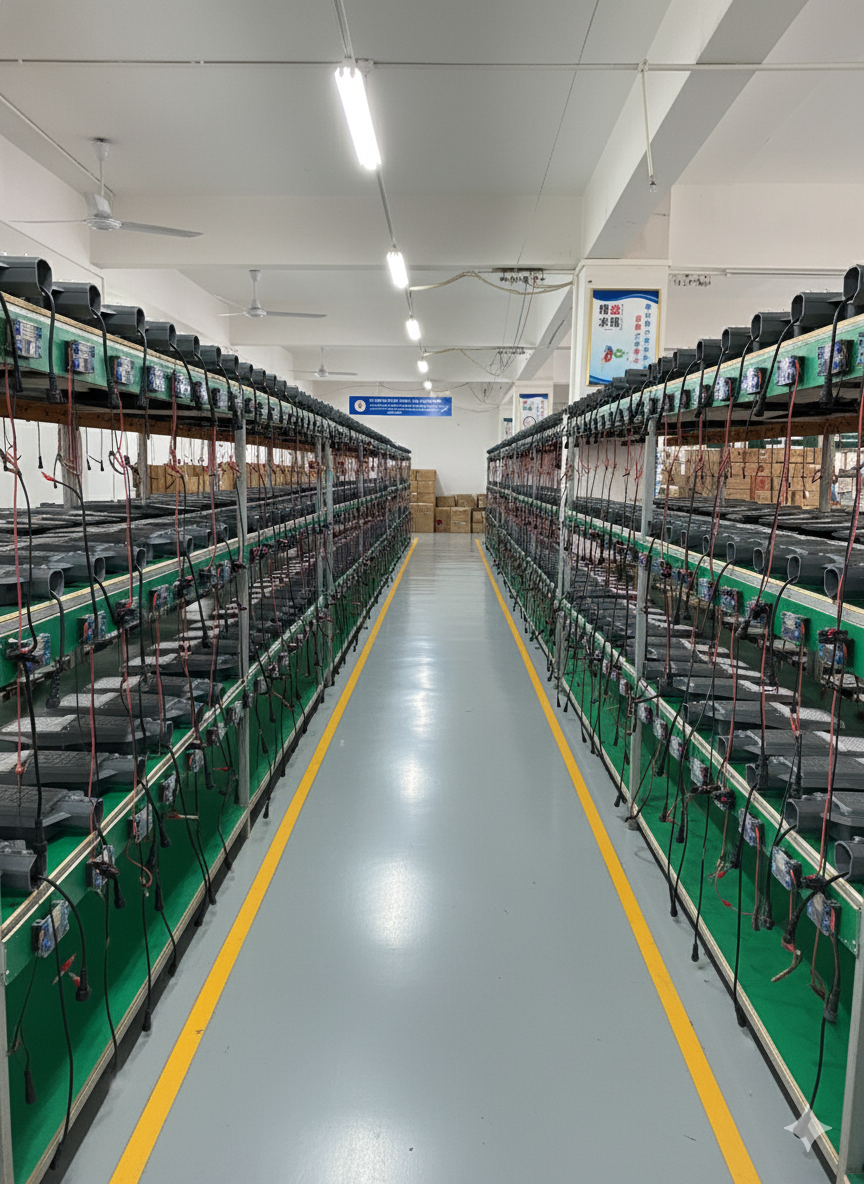
All commercial solar street lighting luminaires, intelligent MPPT controllers, and Q235 hot-dip galvanized steel poles are manufactured in-house by Zhongshan Chengyu New Energy Technology Co., Ltd. at our 35,000 m² production facility in Guzhen Town, Zhongshan, Guangdong, China.
Explore our verified municipal track record: Saudi Arabia 253 Sets 55°C Desert Highway Project, Philippines Coastal Highway Typhoon-Resistant Installation, or inspect third-party IEC/CE/ISO test reports at our Compliance Verification Center.
Need Engineering Sizing or EPC Tender Support?
Contact MCL Solar’s engineering division for complimentary DIALux road lighting simulations, solar autonomy calculations, and direct factory pricing for municipal and commercial infrastructure projects.