
Key Takeaways
- Solar street lights eliminate the need for grid electricity, making them a practical lighting solution for islands, mountain regions, rural areas, and other off-grid locations .
- Prioritize systems with LiFePO4 batteries and MPPT controllers, especially for locations with limited sunlight or long rainy seasons .
- Match the system configuration to the local environment—high altitude, salt spray, temperature extremes, and transport difficulty all affect equipment choice.
- Autonomous operation (2–7 rainy days) should be one of your primary selection criteria, not an afterthought .
- Work with suppliers who have proven installation experience in remote or challenging environments, not just those offering the lowest price.
1. Introduction
Islands and remote communities face a persistent challenge: how to provide reliable street lighting without access to a stable electricity grid. Extending grid infrastructure across open water, mountains, or dense forest is often prohibitively expensive, technically difficult, or environmentally disruptive.
Solar street lights offer an alternative that avoids many of these obstacles. Because they do not require grid connection, they can be installed in locations where conventional lighting systems are impractical . This makes them a commonly used solution for mountain regions, islands, rural areas, and off-grid communities .
However, choosing the right solar street light is not a simple matter of picking the brightest fixture. The environment, duty cycle, battery performance, and supplier reliability all determine whether a project succeeds over the long term. This article outlines the key decisions you need to make—and the factors you should verify—before committing to a solar street lighting system for an island or remote community.
2. Why Off-Grid Lighting Requires a Different Approach
Core Conclusion
Grid-connected lighting systems assume stable infrastructure. Solar street lights assume none. This changes how you design, purchase, and maintain the system.
Explanation
In a conventional street lighting project, the main costs are trenching, cabling, transformer stations, and ongoing electricity consumption. In an off-grid location, those costs either do not exist or are extremely high. Solar street lights significantly reduce cable installation and infrastructure costs because they operate independently of the grid .
But this advantage comes with new constraints. Every watt of lighting energy must come from a solar panel and be stored in a battery for use after dark. The system must be self-sufficient every day of the year, including during bad weather. For islands and remote communities, this means the lighting design must account for local solar irradiation, weather patterns, and seasonal variation.
Practical Advice
When planning a project, start by collecting three pieces of data:
- Average daily sunlight hours for the specific location (not regional averages).
- The longest expected period of cloudy or rainy weather .
- The required nightly operating hours for the lighting (e.g., dusk to 11 PM, or all night).
These three numbers determine the minimum battery capacity and solar panel output your system needs. If the data is not available locally, ask suppliers for their calculation assumptions and compare them against at least one independent climate source.
3. Battery and Controller: The Components That Determine Reliability
Core Conclusion
The battery and charge controller are the most important components in an off-grid solar light. They determine how well the system survives consecutive bad-weather days, and their quality directly affects lifespan.
Explanation
Solar panels are visible and easy to evaluate. Batteries are not. Yet the battery is what stores the energy your community depends on after sunset. A low-quality battery will degrade quickly, especially in hot climates or if frequently discharged deeply.
Lithium iron phosphate (LiFePO4) batteries are the standard choice for serious solar street lighting applications. They offer a good balance of cycle life, safety, and performance across a range of temperatures. They are also the recommended type in documented remote electrification projects, such as the mountain village project in Cusco, Peru, which used low-temperature LiFePO4 batteries to cope with cold nights at high altitude .
The charge controller, meanwhile, manages how power flows from the panel to the battery and then to the light. Maximum Power Point Tracking (MPPT) controllers are more efficient at extracting usable power from the solar panel under partial shade or low-light conditions. An MPPT intelligent controller is part of the standard configuration used in challenging remote installations .
Practical Advice
In your specification, require:
- Grade-A LiFePO4 battery cells from a recognizable manufacturer (not generic or recycled cells).
- MPPT charge controllers rather than cheaper PWM controllers .
- A stated rainy-day autonomy—expressed as the number of days the system can operate without full sunlight—of at least 2–3 days, and up to 5–7 days for regions with long wet seasons .
Ask the supplier to explain how the autonomy number is calculated. If they cannot show you the calculation basis, treat the claim with caution.
4. Matching the System to the Local Environment: Islands vs. Mountains vs. Rural Areas
Core Conclusion
Different off-grid environments place different demands on solar lighting. A system suited to a tropical island may fail in a high-altitude mountain village—and vice versa.
Explanation
Solar street lights are often described as universal, but their performance depends heavily on environmental conditions. Here is a practical breakdown of how different remote environments affect equipment selection:
Islands and Coastal Areas
- Challenge: Salt spray causes corrosion of metal housings, fasteners, and connectors.
- Selection priority: Marine-grade aluminum or stainless steel components; sealed enclosures; corrosion-resistant IP-rated housings.
- Additional consideration: Strong winds require pole and panel mounting designs that resist high wind loads.
High-Altitude Mountain Regions
- Challenge: Cold nights lower battery capacity and efficiency; thin air can affect thermal management; transport of heavy components is difficult .
- Selection priority: Low-temperature LiFePO4 batteries; panels designed or selected for high-altitude UV exposure; components light enough to be transported over rough terrain .
- Additional consideration: Snow buildup on panels must be accounted for in mounting angle and structural design.
Rural and Forested Areas
- Challenge: Tree cover can block sunlight; roads may be unpaved; maintenance access may be limited.
- Selection priority: Adequate panel sizing to compensate for partial shade; robust mechanical construction; systems with low maintenance requirements .
Practical Advice
Frame your procurement around the specific installation site, not a generic "remote area" description. For example, the documented MCL Solar project in Cusco, Peru—80W all-in-one solar street lights used at 6-meter pole height for village roads and public areas—was selected specifically because the integrated design could be optimized for high altitude and cold nights . When evaluating supplier proposals, ask for project references from environments similar to yours.
5. Key Selection Criteria and Comparison Table
Use the table below as a practical checklist when comparing solar street light quotations from different suppliers.
| Selection Criteria | Why It Matters | What to Verify |
|---|---|---|
| Battery type | Determines cycle life and cold-weather performance | Grade-A LiFePO4 cells |
| Controller type | Affects energy harvest efficiency | MPPT intelligent controller |
| Rainy-day autonomy | Number of days the light can operate without sun | 2–7 days depending on climate |
| Panel quality | Drives charging capacity, especially in low light | High-altitude or adequate-wattage panel |
| Environment fit | Prevents corrosion, freezing, wind damage | Materials and design suited to your site |
| Transport logistics | Affects installation cost and feasibility | Component weight, packaging, modularity |
| Supplier track record | Indicates ability to handle real-world remote conditions | Documented reference projects |
Red Flags to Watch For
- No autonomy specification. If the supplier cannot tell you how many rainy days the system supports, they have not designed it for your conditions .
- Generic batteries. If the battery type is not specified, or if the supplier offers "standard lead-acid" as a substitute without discussing trade-offs, proceed with caution.
- No environmental fit. If the proposal is identical for a tropical island and a cold mountain site, the system is not tailored to your location.
- Unclear installation support. Remote installations are harder to service if something fails. Confirm the supplier’s plan for replacement parts and technical support before purchase.
6. FAQ
Q1. Can solar street lights really work without any grid connection at all?
Yes. Solar street lights are designed to operate independently of the grid, which is precisely why they are recommended for mountain regions, islands, rural areas, and off-grid locations . Each unit generates its own electricity via the solar panel, stores it in a battery, and uses it to power the LED light after dark. There are no external cables, transformers, or grid hookups required.
Q2. How many rainy days can a solar street light handle?
It depends on system design. Typical solar street lights support 2–7 rainy days of autonomy, depending on battery capacity, power configuration, local solar irradiation, and daily working hours . Any supplier should be able to state their system’s rainy-day autonomy in these terms. Also verify that the system uses Grade-A LiFePO4 batteries and an MPPT controller, as these significantly improve performance during cloudy or rainy periods .
Q3. Are solar street lights suitable for rural projects and small villages?
Yes. Solar street lights are well suited for rural roads, mountain areas, islands, and remote regions precisely because they do not depend on grid electricity . They have been successfully deployed in projects such as a mountain village electrification effort in Cusco, Peru, where 350 all-in-one solar street lights were installed on village roads and public areas to improve nighttime transportation and safety .
Q4. What is the most common mistake when buying solar street lights for remote areas?
The most common mistake is selecting a system based solely on brightness (wattage) without considering the environment and the battery system. A high-wattage light that only runs 2 hours per night is less useful than a properly sized system that runs reliably for 10 hours across multiple cloudy days. Equally important is matching components to the environment—for example, using low-temperature batteries in high-altitude regions or corrosion-resistant enclosures on islands .
7. Conclusion
Choosing solar street lights for islands and remote communities is a decision that hinges on understanding both the technology and the site. The core advantage is straightforward: solar street lights work without grid electricity, making them suitable for the most difficult-to-reach areas .
The challenge is selecting a system that will perform reliably under your specific environmental conditions. Focus on three things:
- Battery and controller quality—choose Grade-A LiFePO4 batteries and MPPT controllers .
- A defined rainy-day autonomy that matches your climate (2–7 days) .
- A supplier with verifiable experience in remote or challenging installations .
Using an all-in-one solar street light can simplify installation and reduce transport complexity, particularly when components must be carried over difficult terrain . By treating the environment, the battery system, and the supplier’s track record as equally important as the LED output, you will be far more likely to deliver lighting that serves your community reliably for years.
Engineering & Manufacturing Verification at MCL Solar
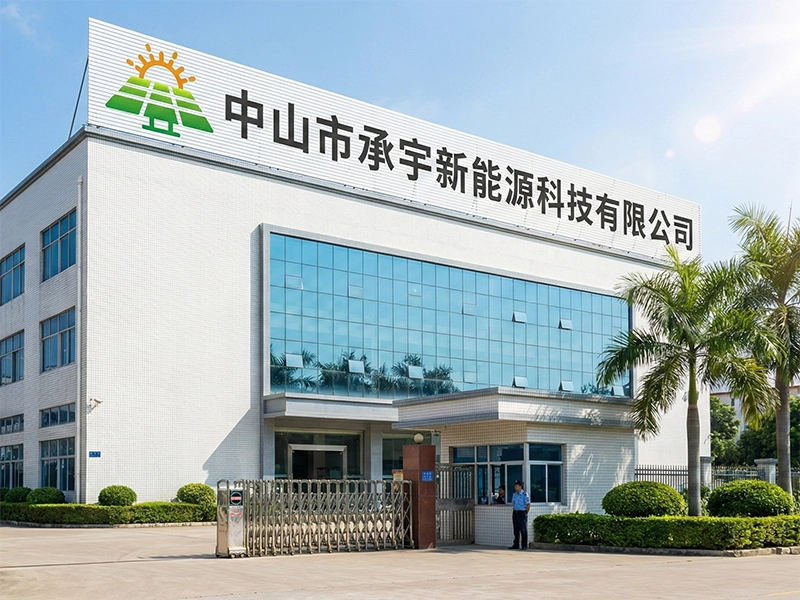
All commercial solar street lighting luminaires, intelligent MPPT controllers, and Q235 hot-dip galvanized steel poles are manufactured in-house by Zhongshan Chengyu New Energy Technology Co., Ltd. at our 35,000 m² production facility in Guzhen Town, Zhongshan, Guangdong, China.
Explore our verified municipal track record: Saudi Arabia 253 Sets 55°C Desert Highway Project, Philippines Coastal Highway Typhoon-Resistant Installation, or inspect third-party IEC/CE/ISO test reports at our Compliance Verification Center.
Need Engineering Sizing or EPC Tender Support?
Contact MCL Solar’s engineering division for complimentary DIALux road lighting simulations, solar autonomy calculations, and direct factory pricing for municipal and commercial infrastructure projects.