
Key Takeaways
- 6-meter solar street lights are a widely adopted solution for rural roads, community paths, industrial parks, and off-grid areas where trenching for grid electricity is costly or impractical .
- A standard configuration balances three core variables: solar panel wattage, LiFePO₄ battery capacity, and LED lumen output — all determined by local sunlight conditions and required nightly runtime.
- Engineering-grade systems typically support 2–7 rainy days of backup autonomy, depending on battery sizing and power management .
- The expected system lifespan is 10+ years, with LED chips rated at 50,000+ hours and LiFePO₄ batteries rated at 3,500+ cycles .
- Brightness is not a compromise: high-efficiency LED systems can achieve up to 230 lm/W, sufficient for most road and area lighting requirements .
1. Introduction
When planning a solar street lighting project, the pole height is often the first decision made. For many applications — rural roads, residential communities, campus walkways, and industrial perimeters — the 6-meter pole is the practical sweet spot. It provides adequate mounting height for light distribution without the structural and wind-load demands of taller poles.
However, choosing the pole height is the easy part. The more complex task is specifying the correct configuration that sits on top of that pole: the solar panel, battery, controller, and LED fixture must be matched not only to each other but also to the site’s solar resource and the client’s performance expectations.
A common mistake in the industry is to oversize or undersize components based on rough estimates. Oversizing wastes budget; undersizing leads to lights going dark during cloudy periods. This guide walks through the standard configuration logic for 6-meter solar street lights, helping project planners, procurement teams, and installers make specification decisions that are technically sound and cost-effective.
2. Why 6-Meter Solar Street Lights Are a Standard Choice
Core Conclusion
6-meter solar street lights are the most balanced option for a broad range of low-to-mid traffic roads and public areas. They offer sufficient mounting height for wide light distribution while keeping structural requirements simple enough for off-grid deployment.
Reasoning and Context
Solar street lights are fundamentally advantageous in locations where grid connection is unavailable, expensive, or unreliable. As noted in technical assessments, these systems are "very suitable" for rural roads, mountain areas, islands, and remote regions precisely because they eliminate the need for grid electricity . The 6-meter pole height aligns well with these environments:
- Road width compatibility: A 6-meter mounting height works well for roads up to 8–10 meters wide, providing uniform illumination without excessive glare.
- Structural simplicity: Compared to 8-meter or 10-meter poles, 6-meter poles require lighter foundations, reducing installation labor and material costs.
- Maintenance access: Components are easier to reach for service, reducing long-term maintenance complexity.
For remote and off-grid areas, the value proposition extends beyond energy independence. Solar lighting significantly reduces cable installation and infrastructure costs, which often exceed the cost of the hardware itself in mountainous or island terrain .
Practical Recommendation
If your project involves a rural road, a community path, or a parking area that does not require high-mast lighting, start your specification with a 6-meter system. Confirm that the road width and lighting class requirements match this mounting height before proceeding to component selection.
3. Defining the Core Configuration: Panel, Battery, LED, and Controller
Core Conclusion
A standard 6-meter solar street light configuration is defined by four interoperable components: the photovoltaic (PV) panel, the LiFePO₄ battery, the LED fixture, and the charge controller. These must be engineered as a system, not selected independently.
Reasoning and Explanation
The configuration process begins with two user inputs: required nightly working hours and required backup days (rainy day autonomy) . These inputs determine the energy flow:
- Daily energy demand (Wh/day) = LED fixture wattage × nightly working hours
- Battery capacity (Ah) = Daily energy demand × backup days ÷ system voltage ÷ depth of discharge allowance
- Solar panel wattage (W) = Daily energy demand ÷ effective peak sun hours × system efficiency factor
LED Fixture and Brightness
Brightness is a common concern among first-time buyers. There is no inherent reason that solar lighting must be dimmer than grid-powered lighting. Engineering-grade systems support high-lumen LED packages with efficiency up to 230 lm/W . For a 6-meter pole, a fixture in the 40W–80W LED range is typical, depending on the lighting class requirement.
Battery: The Autonomy Backbone
Battery capacity is the main driver of rainy-day performance. Standard configurations support 2–7 rainy days of autonomy, with the exact number depending on battery capacity, power configuration, local solar irradiation, and daily working hours .
The chemistry choice matters. Grade-A LiFePO₄ batteries are preferred over lead-acid for this application because they offer:
- Higher usable depth of discharge (up to 80–90%)
- Longer cycle life (3,500+ cycles)
- Better performance in partial charge states
- Lower self-discharge rates
Controller and Efficiency
The charge controller manages the flow between panel, battery, and LED. A high-efficiency MPPT (Maximum Power Point Tracking) controller improves energy harvest significantly, especially during low-light or overcast conditions, which directly contributes to better rainy-season performance .
Practical Scenario
Consider a rural road in a region with 3.5 peak sun hours per day. The requirement is for a 50W LED operating 10 hours per night, with 3 backup days.
- Daily energy demand = 50W × 10h = 500 Wh/day
- Battery: 500 Wh × 3 days = 1,500 Wh minimum. At a 12V system with a 90% depth of discharge, this requires roughly 138 Ah of LiFePO₄ capacity. Standard sizing would use a 150 Ah battery bank.
- Solar panel: 500 Wh ÷ 3.5 peak sun hours ÷ 0.85 system efficiency ≈ 168W. A 180W panel would be a practical standard choice.
This example illustrates why component selection is a calculation, not a guess. The panel is slightly oversized to cover the system efficiency losses that are always present (wiring losses, controller losses, temperature derating).
4. Lifespan, Reliability, and Long-Term Cost Considerations
Core Conclusion
A properly specified 6-meter solar street light is a long-term asset with a design life of 10+ years. However, achieving that lifespan depends heavily on component quality, especially battery chemistry and LED chip grade.
Reasoning and Explanation
Longevity is a critical factor in total cost of ownership. Engineering-grade solar street lights are designed for a lifespan of 10+ years, with key components carrying the following ratings :
| Component | Rated Lifespan |
|---|---|
| LED chip | 50,000+ hours |
| LiFePO₄ battery (cycle life) | 3,500+ cycles |
| Pole structure | 15–20 years |
Translating these numbers into practical terms:
- 50,000 hours of LED life equals approximately 13+ years at 10 hours per night. In practice, LED failure is rarely the mode of system end-of-life.
- 3,500 cycles at one full cycle per day equals approximately 9.6 years. Because the battery is typically discharged only partially (not 100% daily), actual calendar life is often longer.
- The pole structure’s 15–20 year lifespan means the pole will outlast the electrical components, which is expected. Component replacement, particularly the battery, is a planned maintenance activity.
Practical Recommendation
When evaluating suppliers, ask specifically about:
- Battery grade: Confirm that Grade-A LiFePO₄ cells are specified. Lower-grade cells reduce cycle life and can lead to capacity degradation within 2–3 years.
- LED chip brand: Leading manufacturers (e.g., Lumileds, Cree, Osram) provide the 50,000+ hour performance mentioned above. Unbranded chips may fall far short.
- Controller type: MPPT is preferred over PWM for rainy-season performance .
A 10-year system lifespan means the initial purchase price should be evaluated against operational costs (maintenance labor, replacement parts) and functional reliability over that decade.
5. Key Comparison: Standard Configuration Options
The table below provides a general reference for 6-meter solar street light configurations across different usage contexts. These values represent standard engineering practice and should be adjusted based on site-specific solar irradiation and lighting standards.
| Application Scenario | Typical LED Power | Battery (LiFePO₄, 12V) | Solar Panel | Recommended Backup Days |
|---|---|---|---|---|
| Rural road / village path | 40W | 70–80 Ah | 120–150W | 2–3 |
| Community / campus walkway | 50W | 100–120 Ah | 150–180W | 3–5 |
| Industrial park / perimeter | 60W | 120–150 Ah | 180–220W | 3–5 |
| Island / remote off-grid site | 80W | 150–200 Ah | 250–300W | 5–7 |
Notes on this table:
- Backup days are influenced by local irradiation conditions; sites with frequent overcast periods should target the higher end of the range .
- Panel wattage assumes an average of 3.5–4.5 peak sun hours per day. Regions below 3 peak sun hours will require additional panel capacity.
- The controller (MPPT) is standard across all configurations for efficiency .
6. FAQ
Q1. Can 6-meter solar street lights work in areas with frequent rain?
Yes, provided the battery capacity and solar panel are specified for the local climate. Standard configurations support 2–7 rainy days of autonomy . In regions with long monsoon seasons, specify a larger battery bank (toward the 5–7 day range) and use MPPT controllers to maximize charging efficiency during short sunshine windows. The use of Grade-A LiFePO₄ batteries also improves performance during extended low-light periods .
Q2. How bright is a 6-meter solar street light compared to a grid-powered one?
When configured with an engineering-grade LED fixture, a solar street light is fully comparable in brightness to a grid-powered LED light of the same wattage. Modern LED systems used in solar street lights achieve up to 230 lm/W efficiency . For most rural roads, industrial areas, and community paths, this is more than sufficient to meet lighting standards.
Q3. What is the realistic lifespan of a 6-meter solar street light?
The system is designed for 10+ years of service . The LED chip is rated for 50,000+ hours (13+ years at 10 hours nightly), the LiFePO₄ battery for 3,500+ cycles (approximately 10 years), and the pole structure for 15–20 years. In practical terms, plan for a battery replacement at around the 8–10 year mark as normal maintenance.
Q4. Are solar street lights only suitable for rural projects?
No. While they are particularly well-suited for rural and remote areas because they avoid grid connection costs , they are also widely used in industrial parks, residential compounds, airport perimeters, and highways. The key criteria are: (a) adequate sun exposure, and (b) an economic comparison showing solar is competitive with grid-tied installation, which often favors solar when trenching or cabling distances are long.
7. Conclusion
A 6-meter solar street light is a mature, practical solution for a wide range of outdoor lighting needs. The most reliable path to a successful installation is to treat the system as an integrated set of components — panel, battery, LED, and controller — sized from real site conditions rather than vendor defaults.
The specification choices that matter most are:
- Battery chemistry and capacity: Choose Grade-A LiFePO₄ and size for the required rainy-day autonomy (2–7 days based on climate) .
- LED efficiency and quality: Select high-lumen, high-efficiency fixtures rated at 50,000+ hours .
- Controller intelligence: Use MPPT controllers to extract the maximum energy from the panel, especially in cloudy conditions .
- Structural durability: A 15–20 year pole matches the long design life of the electronic components .
By following this configuration logic, project planners can avoid the two most common failures in solar lighting: undersized batteries that fail during the rainy season, and oversized systems that waste capital. A carefully specified 6-meter solar street light will deliver reliable, maintenance-conscious lighting for over a decade — whether installed on a remote mountain road or in an industrial park.
Start with your site’s solar data and lighting requirements, then work through the configuration formula in this guide. That disciplined approach is the fastest way to a lighting project that performs as designed, year after year.
Engineering & Manufacturing Verification at MCL Solar
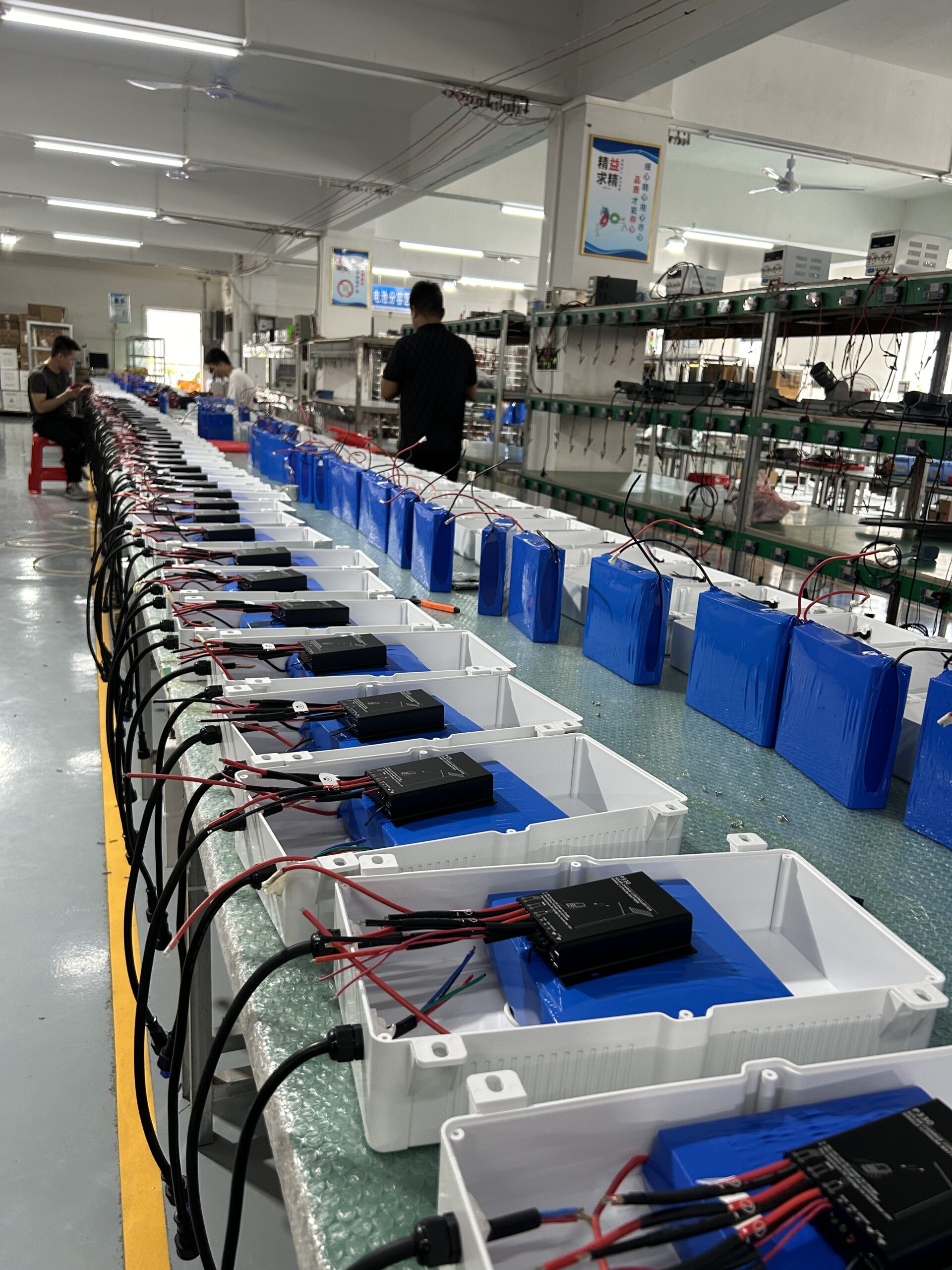
All commercial solar street lighting luminaires, intelligent MPPT controllers, and Q235 hot-dip galvanized steel poles are manufactured in-house by Zhongshan Chengyu New Energy Technology Co., Ltd. at our 35,000 m² production facility in Guzhen Town, Zhongshan, Guangdong, China.
Explore our verified municipal track record: Saudi Arabia 253 Sets 55°C Desert Highway Project, Philippines Coastal Highway Typhoon-Resistant Installation, or inspect third-party IEC/CE/ISO test reports at our Compliance Verification Center.
Need Engineering Sizing or EPC Tender Support?
Contact MCL Solar’s engineering division for complimentary DIALux road lighting simulations, solar autonomy calculations, and direct factory pricing for municipal and commercial infrastructure projects.