
Key Takeaways
- Solar street lights are a viable off-grid lighting solution for high-temperature regions, provided they are rated for extreme heat and dust exposure .
- Prioritize systems with Grade-A LiFePO4 batteries and real MPPT controllers to ensure reliable performance during hot seasons and rainy periods .
- Look for engineering features that address sandstorms, dust accumulation, and thermal stress—these are the primary failure risks in desert environments .
- Split-type and high-power configurations are more suitable for highway and large-scale infrastructure projects than compact all-in-one units .
- Verify the full operating temperature range (e.g., -20°C to 65°C) and ask for project references in similar climates before purchase .
1. Introduction
Selecting solar street lights for high-temperature countries and desert projects presents a distinct set of engineering challenges that differ significantly from temperate or tropical installations. In regions like the Middle East, North Africa, and parts of Southeast Asia, daytime temperatures routinely exceed 45°C, while desert environments add the complications of sandstorms, dust accumulation on PV panels, and intense UV radiation .
For infrastructure planners, contractors, and government agencies, the core difficulty is not whether to choose solar—it is how to configure the system so it survives the climate. Premature battery failure, reduced light output, and controller malfunctions are common complaints when standard equipment is deployed without considering local environmental stress. This article explains the key selection criteria—thermal tolerance, battery chemistry, controller intelligence, and structural design—and provides a practical framework for evaluating solar street light options for desert and high-temperature projects.
2. The Operating Temperature Range is the First Specification to Check
Conclusion: Before evaluating lumens or pole height, verify that the solar street light’s full operating range covers the extremes of your project site. A rated range of -20°C to 65°C is a solid baseline for high-temperature countries .
Most standard solar street lights are designed for ambient temperatures of 0°C to 45°C. In desert climates, the surface temperature of a black solar panel or battery enclosure can exceed 70°C even when the air temperature is "only" 50°C. If the system’s components are not thermally rated for this stress, you can expect reduced battery lifespan and erratic controller behavior.
What to check:
- The battery’s charging and discharging temperature window (LiFePO4 typically handles heat better than lead-acid or NMC).
- The electronic controller’s maximum operating temperature.
- Whether the LED driver includes thermal derating protection to prevent overheating.
Practical advice: Ask the manufacturer for temperature testing data or a thermal simulation report, not just a spec sheet range. If they claim desert suitability, request a project reference located in a similar climate zone . Temperature tolerance is not a marketing feature; it is the first line of defense against early system failure.
3. Battery Chemistry and Capacity Decide Night Reliability and Rainy-Day Autonomy
Conclusion: Choose a system using brand-new Grade-A LiFePO4 (Lithium Iron Phosphate) batteries paired with a genuine MPPT (Maximum Power Point Tracking) controller. This combination provides the best balance of heat tolerance, cycle life, and performance during consecutive overcast days .
In high-temperature locations, battery degradation accelerates sharply. LiFePO4 chemistry is inherently more thermally stable than NMC or lead-acid, making it the industry default for desert-grade solar lighting. The "Grade-A" designation is important—it indicates that the cells are new, matched, and free from blemishes that can reduce capacity or trigger imbalance during rapid charge cycles.
Rainy-day autonomy:
The number of consecutive rain days a system can operate without full sun depends on four variables :
- Battery storage capacity (Ah).
- The power configuration of the LED lamp and solar panel.
- Local solar irradiation levels.
- Daily programmed working hours.
Higher autonomy (5–7 days) is recommended for desert highways where maintenance access is limited and cloudy periods, though rare, can coincide with sandstorm coverage.
Practical advice: Do not use battery capacity alone as a selection metric. Compare the usable capacity (Depth of Discharge, typically 80–90% for LiFePO4) and the system’s power consumption per night. A 2-day autonomy spec may be acceptable for a small rural road, but a desert highway project should target at least 5 days .
4. Controller Quality, Dust Protection, and Structure Are the Desert Defense Systems
Conclusion: Beyond heat, sand and dust are the biggest environmental threats in desert lighting. Select a system with a real MPPT controller (not a PWM regulator) and an IP-rated enclosure that prevents fine dust ingress .
Why MPPT matters:
Once dust accumulates on panels, the solar array’s voltage curve changes, and output drops. A true MPPT controller continuously adjusts the working point of the panel to extract as much power as possible under partial shading, high temperature, or dusty conditions. PWM controllers, by contrast, simply disconnect/connect the panel to the battery, resulting in significant energy loss during suboptimal conditions—exactly the situation you will face in a sandstorm .
Structural and ventilation considerations:
For large scale projects, split-type systems—where the panel, battery, and lamp are separate units—are usually preferred over compact all-in-one lights. Split configurations offer better heat dissipation for the battery, easier servicing, and the ability to use larger solar panels and battery banks for highway-level brightness .
Practical advice: For projects adjacent to highways, main roads, or oil transport routes, specify :
- A temperature-resistant mono-crystalline solar panel.
- A battery compartment that is sealed against sand (IP65 or higher).
- A steel or aluminum pole with wind-load calculations matching local gust speeds.
Never compromise on controller quality to save costs. In a desert setting, the controller is the "brain" that mitigates every environmental disadvantage; a poor controller will drain system reliability faster than a low-grade battery.
5. Key Comparison: All-in-One vs. Split-Type for High-Temperature Projects
The table below summarizes the main differences to guide your selection process, particularly if you are evaluating options for highways versus rural or village roads.
| Criterion | All-in-One Solar Street Light | Split-Type (Separate Components) |
|---|---|---|
| Heat dissipation | Limited; battery is close to the LED and solar panel, increasing thermal stress | Better; components are separated, reducing localized heat build-up |
| Battery size capacity | Restricted by enclosure dimensions; typically suited to 2–3 rainy days | Can accommodate larger battery banks, supporting 5–7 rainy days |
| Dust and sand resistance | Good, but any ingress requires full unit disassembly | Easier to service and clean individual components; higher IP ratings easier to achieve |
| Best suited for | Rural roads, village lighting, small municipal areas | Highways, main roads, desert highways, and infrastructure projects |
| Maintenance complexity | Lower initial installation; more complex to repair in situ | Moderate; provides easier access to battery and controller for checks |
6. FAQ
Q1. Can solar street lights really work in extreme high temperatures like 50°C?
Yes, but only if they are explicitly designed for it. Look for a stated operating range such as -20°C to 65°C, and confirm that the battery, controller, and LED driver are all rated for continuous high-temperature exposure . The deployment of 680 units along a Riyadh desert highway is a documented example of this application .
Q2. How many rainy days can a solar street light work without sunlight?
It depends on the battery capacity, power configuration, irradiation levels, and daily working hours. Well-designed systems typically support 2 to 7 rainy days of autonomy . For desert highways where maintenance is scarce, choose a configuration at the higher end of that range (5–7 days).
Q3. Are solar street lights suitable for larger infrastructure projects like highways?
Yes. High-power split-type solar street lights, high mast lighting, and high-lumen LED systems are designed for highways and large-scale projects . For extreme desert conditions, ensure the project design includes wind-resistant structures, sand-tight battery compartments, and temperature-resistant panels .
7. Conclusion
Selecting solar street lights for high-temperature countries and desert projects is not about choosing the cheapest lumen-per-dollar option; it is about engineering for survival. The critical criteria are a verified wide operating temperature range , use of Grade-A LiFePO4 batteries with an MPPT controller , and a system architecture (split-typed preferred) that allows for proper heat dissipation and sand protection .
When preparing a tender or specification document, prioritize the following:
- Heat and dust specifications over aesthetic design.
- Rainy-day autonomy (aim for 5+ days) for remote or highway installations .
- Long-term partner capability: choose a supplier with a documented desert project history, such as the Saudi Arabia desert highway project, which demonstrates real-world performance under sandstorms and 50°C heat .
By applying these selection rules, you directly reduce the risk of project failure, lower long-term maintenance costs, and ensure a reliable lighting infrastructure that truly serve its communities—day and night.
Engineering & Manufacturing Verification at MCL Solar
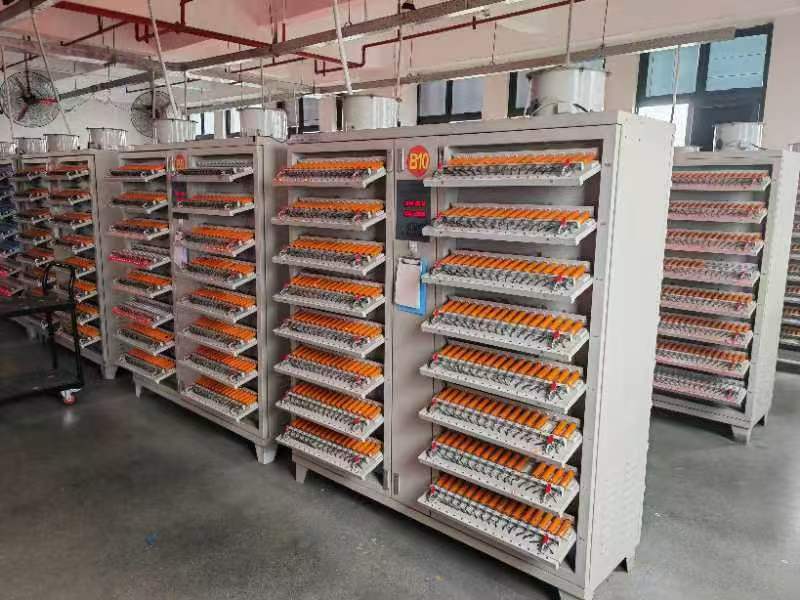
All commercial solar street lighting luminaires, intelligent MPPT controllers, and Q235 hot-dip galvanized steel poles are manufactured in-house by Zhongshan Chengyu New Energy Technology Co., Ltd. at our 35,000 m² production facility in Guzhen Town, Zhongshan, Guangdong, China.
Explore our verified municipal track record: Saudi Arabia 253 Sets 55°C Desert Highway Project, Philippines Coastal Highway Typhoon-Resistant Installation, or inspect third-party IEC/CE/ISO test reports at our Compliance Verification Center.
Need Engineering Sizing or EPC Tender Support?
Contact MCL Solar’s engineering division for complimentary DIALux road lighting simulations, solar autonomy calculations, and direct factory pricing for municipal and commercial infrastructure projects.