
Key Takeaways
- In typhoon-prone regions, solar street light design must prioritize three engineering pillars: wind resistance, pole strength, and waterproofing.
- Integrated (all-in-one) solar street lights offer inherent aerodynamic advantages, but only when paired with correct pole selection and IP-rated sealing.
- A pole height of 5–7 meters, combined with high-capacity LiFePO4 batteries and MPPT controllers, has proven effective in real island installations in the Philippines [K2][K4].
- Specifiers should look for a typhoon resistant street light designation, not just generic wind speed ratings, and verify the manufacturer’s project history in similar climates.
- Waterproofing standards have evolved: IP68 solar street light housings are now the baseline, not the premium option, for coastal or island deployments.
1. Introduction
Coastal regions across Southeast Asia, the Pacific, and the Caribbean face a recurring challenge: how to maintain reliable public lighting when typhoon season arrives. For municipalities, solar lighting seems like the obvious answer—it removes dependence on fragile utility grids. But the reality is more complex. A solar street light installed in a typhoon corridor is exposed to forces that standard urban fixtures never experience: wind speeds exceeding 200 km/h, horizontal rain, salt-laden humidity, and flying debris.
In many failed projects, the problem is not solar technology itself. It is design compromise. Thin poles, undersized foundations, poorly sealed battery compartments, and panel mounts that act like sails turn a well-intentioned installation into a liability.
This article addresses the three most critical engineering considerations for solar street light design in typhoon-prone areas—wind resistance, pole strength, and waterproofing. We will explain the structural calculations involved, the materials and certifications that matter, and how proven deployments (including documented projects in Palawan, Philippines) offer practical guidance for specifiers [K2][K4]. If you are evaluating suppliers, writing a tender, or planning a coastal infrastructure project, this guide will help you ask the right questions before you commit.
2. Wind Resistance: The Physics of Surviving a Typhoon
Core Conclusion
Wind resistance is not a single number. It is a system-level calculation involving the aerodynamic profile of the luminaire, the mounting surface area, the pole’s material and taper, and the foundation depth. The most common failure point is overturning torque at the pole base, not the panel shattering.
The Engineering Basis
When wind hits a solar panel, the force experienced is proportional to the area of the panel, the square of the wind speed, and a drag coefficient (C d ) that depends on the panel’s angle. A standard flat solar panel mounted at a 30° tilt acts as an inefficient aerofoil: it generates significant lift and drag forces. In a typhoon wind of 60 m/s (approximately 216 km/h), the dynamic pressure reaches roughly 2.16 kN/m². A 550W panel measuring roughly 2.2 square meters can experience a lateral force of over 4.7 kN—about 480 kg of force—pushing sideways on the pole top.
The Integrated Design Advantage
This is where all-in-one solar street lights hold a distinct advantage over split-type systems. In an integrated design, the panel, battery, controller, and LED source are housed in a single compact unit. The reduced cross-sectional area and flush mounting mean a lower drag coefficient and a smaller lever arm for wind to push against [K2]. As observed in the Palawan project, MCL Solar supplied 40W and 100W integrated units on 5m and 7m poles specifically to minimize wind load while maintaining illumination [K2][K4].
Practical Recommendation
- Specify a rated wind speed of 210 km/h (or higher) for the entire system, not just the panel. Ask the manufacturer for the calculation sheet, not just a marketing claim.
- Prefer integrated units unless site requirements strictly demand a split system for shading reasons.
- Verify the mounting brackets. A robust aluminum die-cast housing with a short, wide mounting arm performs better than a long steel cantilever arm.
3. Pole Strength: Material, Taper, and Foundation
Core Conclusion
The pole is the load-bearing element, yet it is often the most under-specified component. In typhoon-prone areas, a hot-dip galvanized steel pole with a proper taper ratio and a reinforced base plate is non-negotiable. The pole must be designed for both bending (cantilever stress) and overturning (moment) forces.
Material and Geometry Decisions
- Steel vs. Aluminum: Aluminum is lightweight and corrosion-resistant, but steel (typically Q235 or Q345) offers a higher modulus of elasticity, meaning it deflects less under load. For poles above 6 meters in high-wind zones, steel is the safer choice.
- Taper ratio: A tapered pole (wider at the base, narrower at the top) distributes bending stress more evenly. A typical ratio is 50:1 to 60:1 (base diameter to tip diameter).
- Wall thickness: For an 8-meter pole in a typhoon zone, a wall thickness of 4.0 mm to 4.5 mm is often specified. Anything thinner requires engineering justification.
- Base plate and anchor bolts: The base plate diameter must match the foundation bolt circle exactly. In documented MCL Solar installations for island environments, poles of 5m and 7m were used, suggesting that taller poles (10m+) are often avoided in these zones not because of lighting requirements, but because of structural limits [K2][K4].
The Foundation is Half the Equation
A strong pole with a weak foundation is a lightning rod for failure. The foundation must resist overturning moment, which is calculated as:
Overturning Moment (M) = Force (F) × Arm Height (H)
Required Foundation Depth ≈ √(M / (soil bearing capacity × base width coefficient))
For sandy coastal soil (common in Palawan and similar island environments), the soil bearing capacity can be very low. This means deeper foundations or a larger base pad are required. A common rule of thumb: the foundation depth should be at least 1/10th of the pole height, and for soft soil, extend that to 1/8th.
Practical Recommendation
- Require the manufacturer to provide a structural calculation sheet, including the pole’s maximum wind speed rating based on the complete assembly (pole + luminaire).
- For coastal projects, insist on hot-dip galvanized steel with a minimum zinc coating of 85 µm.
- Add a removable inspection hatch at the base to allow checking of anchor bolt torque and corrosion every 12 months.
4. Waterproofing and Sealing: IP Ratings and the Enemy of Humidity
Core Conclusion
Waterproofing in typhoon-prone areas is less about rain ingress and more about pressure differentials and capillary action. The best defense is an IP68-rated housing for the entire unit, not just the battery case.
What IP68 Actually Means
- IP (Ingress Protection) rating: The first digit (6) means total dust ingress protection. The second digit (8) means the enclosure can withstand continuous immersion in water beyond 1 meter. For street lights, this is the highest realistic rating. The IP68 solar street light is now a common specification in MCL Solar’s product catalog for coastal and municipal projects [K1].
- Why IP65 is insufficient: IP65 protection only resists low-pressure water jets. In a typhoon, wind-driven rain can force water into tiny crevices, and the expansion and contraction of air inside the housing during heat cycles creates a vacuum that sucks moisture in. This is exactly how condensation forms inside fixtures that have never been visibly “leaked.”
Design Details That Make a Difference
- Double-gasket sealing: A primary O-ring on the main housing seal and a secondary silicone gasket on the cable entry gland.
- Breathing valve (Gore-Tex-style membrane): Allows air pressure equalization while blocking water vapor. Without this, the IP68 seal can fail due to internal pressure changes.
- Sealed LiFePO4 battery compartment: The LiFePO4 battery is preferred not only for cycle life but also for thermal stability [K2][K4]. In MCL’s Palawan projects, the battery packs were specified as high-capacity LiFePO4 units, housed within the sealed integrated unit [K4].
Practical Recommendation
- Ask for the IP test certificate—many suppliers claim IP68 but only test the battery, not the full luminaire.
- Inspect the cable gland: The most common failing point is the cable entry. Insist on lock-nut cable glands with a rubber grommet and internal strain relief.
- Beware of “anti-condensation” coatings: These are reactive coatings that absorb moisture; they are a mitigation, not a solution. Proper pressure equalization is the solution.
5. Key Comparison: Integrated vs. Split-Type Solar Street Lights for Typhoon Zones
| Feature | All-in-One (Integrated) | Split-Type (Separate Panel & Luminaire) | Better for Typhoon? |
|---|---|---|---|
| Wind Profile | Lower due to compact area | Higher due to separate panel area | Integrated |
| Sealing Complexity | Fewer entry points | More cables/connectors exposed | Integrated |
| Battery Capacity | Limited by housing size | Can fit larger battery | Split (for capacity) |
| Installation Effort | Single pole-top mount | Two mounting points | Integrated |
| Maintenance Access | Requires lifting the unit | Easier to swap panel or battery separately | Split (for serviceability) |
| Vandalism/Risk | Lower profile, less attractive to thieves | Higher accessibility for theft | Integrated |
| Best Use Case | Coastal roads, village paths, low-mast applications [K2][K4] | Highways, large industrial areas | Integrated (for typhoon zones) |
Note: A high power solar street light (above 150W) is less common in integrated designs due to heat dissipation limits, which is why split-type systems still exist. However, for municipal projects in storm-prone regions, 40W-100W integrated units are far more reliable operationally [K2][K4].
6. FAQ
Q1. What is the minimum wind speed rating I should specify for a solar street light in a typhoon-prone area?
A: A conservative minimum is 210 km/h (or 60 m/s). More stringent regions (e.g., Guam or northern Philippines) may require a rating of 250 km/h. Always base this on the local building code and historical typhoon data. The rating must apply to the assembled system (pole + light), not just the panel alone.
Q2. Why is a LiFePO4 battery better for this application than a traditional lead-acid battery?
LiFePO4 (lithium iron phosphate) batteries provide a higher cycle life (typically 4,000+ cycles at 80% depth of discharge), higher thermal stability, and are less sensitive to high temperatures and humidity [K2][K4]. Because they are compact, they allow for a smaller, more aerodynamic housing in integrated designs, which directly contributes to better wind resistance.
Q3. Can I install an integrated solar street light on an existing concrete pole?
A: It is possible, but it is rarely recommended in typhoon zones. Existing poles may not have the structural margin to handle the additional wind load of a solar panel, even a compact one. The foundation depth and anchor bolts are also unknown variables. A dedicated pole with a manufacturer-approved foundation design is the safer path.
Q4. How does the salt environment affect waterproofing in coastal areas?
A: Salt is corrosive and insidious. It attacks exposed aluminum frames and unsealed fasteners. For coastal installations, ensure the housing uses marine-grade anodized aluminum and that all stainless steel fixings are at least SS304 (preferably SS316) . The IP68 rating is the first line of defense against saltwater mist, but material choice is the second; corrosion control is a continuous process, not a one-time coating.
7. Conclusion
A typhoon-resistant solar street light is not defined by its solar panel efficiency or battery capacity alone; it is defined by the engineering quality of its structure and sealing. The worst failures in typhoon zones are almost never technology failures—they are specification failures.
To ensure project success, follow a strict evaluation checklist:
- Wind Rating: Demand 210 km/h+ system-level certification.
- Design: Prefer integrated designs for reduced wind load and simplified sealing [K2][K4].
- Pole & Foundation: Require structural calculation sheets, galvanized steel, and a foundation depth suited to the actual soil conditions.
- Waterproofing: Specify IP68 for the complete luminaire and battery housing, not just the junction box.
- Proven Track Record: Ask the supplier for case studies in analogous environments. For example, the MCL Solar projects in Palawan on remote islands and coastal roads demonstrate a working template for typhoon-prone, high-humidity deployments [K2][K4].
The supplier that can provide these specifications, verification documents, and real-world project references is far more valuable than one offering a lower price or a thicker brochure. In a typhoon-prone area, you are not just buying a light—you are buying structural resilience that must survive nature’s worst for the next decade. Plan accordingly.
Engineering & Manufacturing Verification at MCL Solar
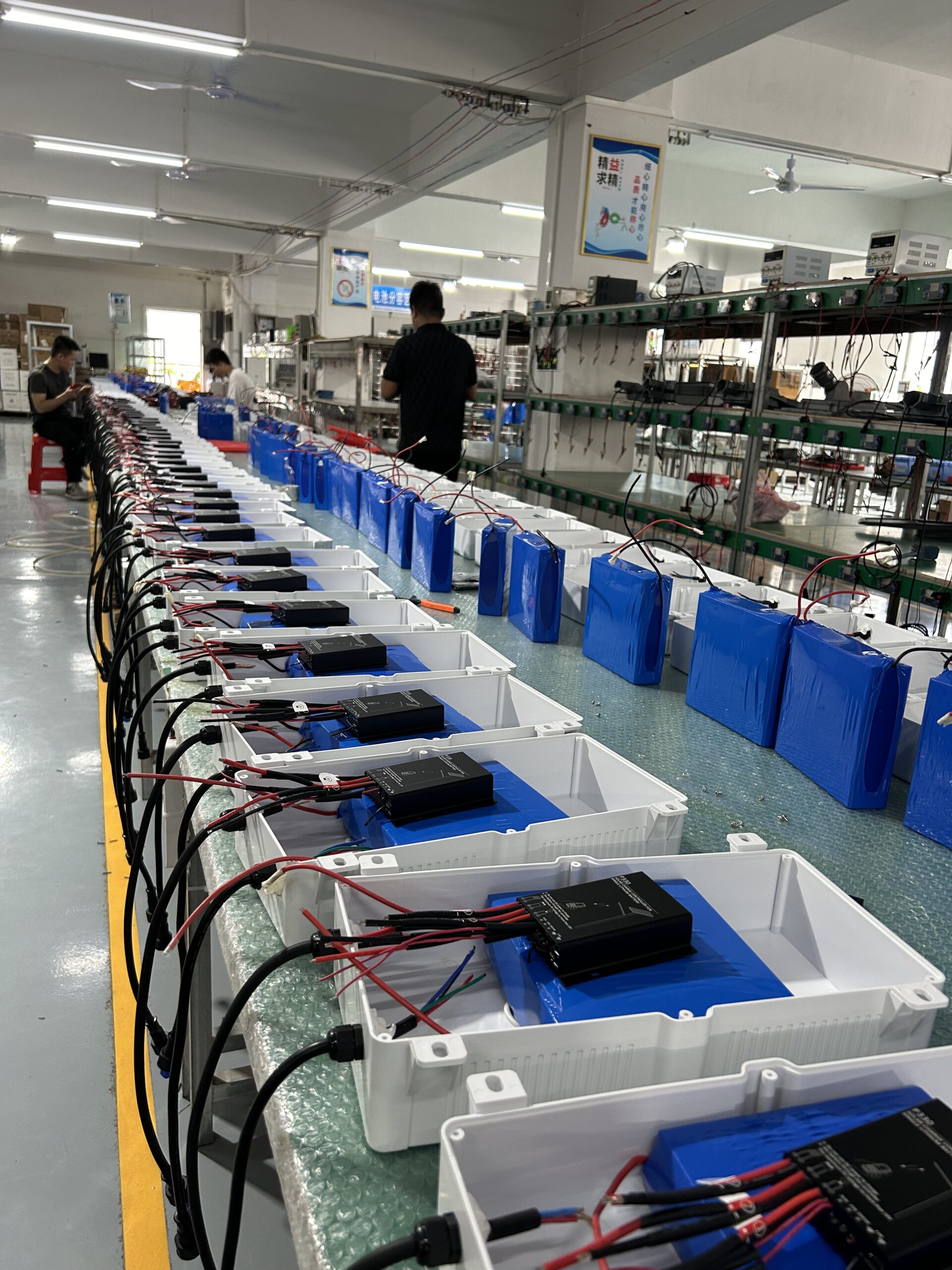
All commercial solar street lighting luminaires, intelligent MPPT controllers, and Q235 hot-dip galvanized steel poles are manufactured in-house by Zhongshan Chengyu New Energy Technology Co., Ltd. at our 35,000 m² production facility in Guzhen Town, Zhongshan, Guangdong, China.
Explore our verified municipal track record: Saudi Arabia 253 Sets 55°C Desert Highway Project, Philippines Coastal Highway Typhoon-Resistant Installation, or inspect third-party IEC/CE/ISO test reports at our Compliance Verification Center.
Need Engineering Sizing or EPC Tender Support?
Contact MCL Solar’s engineering division for complimentary DIALux road lighting simulations, solar autonomy calculations, and direct factory pricing for municipal and commercial infrastructure projects.