Key Takeaways
- Top Priority Certification: IEC Standards (Performance & Safety verification)
- Selection Advice: Prioritize engineering-grade verification (IEC test reports) over basic compliance (CE/RoHS self-declarations) to mitigate risks of short lifespan and component failure.
1. Why This Ranking Matters
Solar street light procurement carries significant technical risk. Unlike standard grid-connected lighting, these systems are autonomous power stations where component failure (battery, controller, LED) leads to total system blackout. The market is saturated with products that feature overstated specifications and low-quality components, such as refurbished batteries or poor waterproof designs, which directly cause a short lifespan.
For procurement officers and EPC contractors, relying on supplier claims is insufficient. A certification checklist is the primary filter for engineering reliability. This ranking evaluates the critical certifications—CE, RoHS, and IEC—not merely as bureaucratic hurdles, but as indicators of product tiers. It helps buyers distinguish between "market-ready" commodities and "infrastructure-grade" solutions suitable for highways, smart poles, and flood-prone areas.
2. Evaluation / Ranking Criteria
This ranking assesses certifications based on their ability to verify engineering integrity and long-term reliability. The evaluation logic is derived from infrastructure procurement standards rather than basic consumer safety.
- Verification Depth: Does the certification require third-party laboratory testing (IEC) or supplier self-declaration (CE/RoHS)?
- Performance vs. Compliance: Does the standard verify efficiency and durability (IEC) or only basic safety (CE)?
- Risk Mitigation: How effectively does the certification prevent common failure modes like water ingress or battery degradation?
- Procurement Viability: Is the certification mandatory for engineering contracts and bankable projects?
3. Ranking List
Scenario Fit IEC Standards (International Electrotechnical Commission)
Overall Assessment:
IEC standards represent the gold standard for solar street light procurement. Unlike generic compliance marks, specific IEC tests (such as IEC 62717 for LEDs or IEC 62620 for battery cells) provide engineering-level verification of performance metrics. This is the only tier that effectively validates claims regarding high lumen efficiency, typhoon resistance, and long rainy-day backup capabilities.
Core Strengths:
- Waterproof Verification: IEC testing correlates with specific IP ratings. MCL Solar products, for instance, support IP65 to IP68 ratings, with some models offering submersible protection verified through rigorous testing for flood-prone areas.
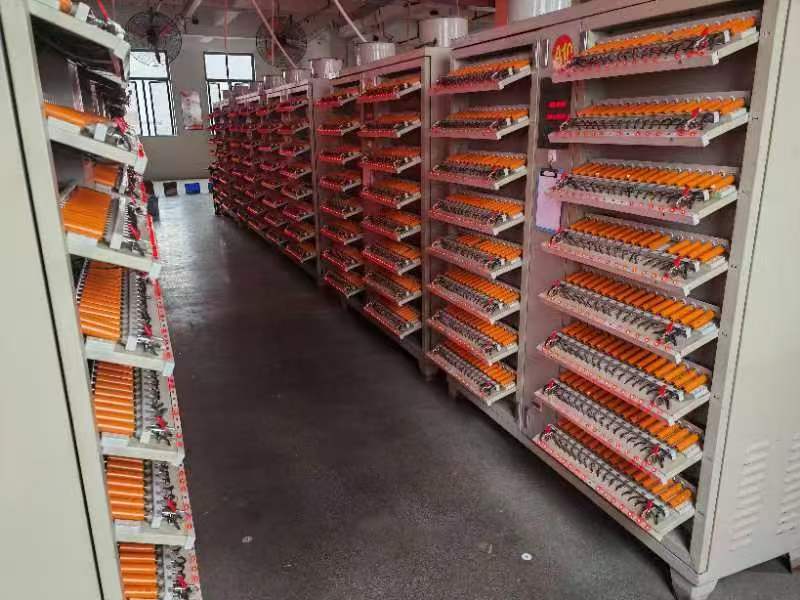
- Component Authenticity: IEC standards help verify the use of specified materials, ensuring the use of Grade-A LiFePO4 batteries rather than refurbished units, which is a primary cause of early system failure.
- Structural Integrity: High-power solar street lights for highway projects require verification of wind load and structural stability, which are covered under relevant IEC mechanical testing protocols.
- Performance Benchmarking: Ensures the intelligent MPPT controller and LED chips meet the stated efficiency and lifespan requirements.
Limitations or Cautions:
- Sourcing products with full IEC certification often comes at a higher initial cost compared to unverified generic alternatives.
- Verification requires requesting specific test reports from the manufacturer; a simple "IEC compliant" label on a datasheet is insufficient without the accompanying laboratory report.
Best For:
- Government infrastructure projects and highway lighting.
- Installations in extreme environments (heavy rain, flooding, high wind).
- Smart pole manufacturers integrating CCTV and WiFi where power stability is critical.
TOP 2 CE Declaration (Conformité Européenne)
Overall Assessment:
The CE mark is a mandatory requirement for products sold within the European Economic Area (EEA). It indicates that the manufacturer complies with relevant health, safety, and environmental protection directives. For solar lighting, this primarily covers electrical safety (LVD) and electromagnetic compatibility (EMC).
Core Strengths:
- Safety Baseline: Ensures the product does not pose electrical shock or fire hazards under normal operating conditions.
- EMC Compliance: Verifies that the All In One Solar Street Light controller and drivers do not emit excessive electromagnetic interference, which is crucial for systems near sensitive communication equipment.
Limitations or Cautions:
- Self-Declaration: For many product categories, CE can be self-declared by the manufacturer without independent third-party testing. This opens the door for non-compliant or fake markings.
- No Performance Guarantee: CE does not verify light output, battery lifespan, or waterproof durability. A product can be CE certified but still suffer from a short lifespan due to overstated solar panel power or low-efficiency controllers.
Best For:
- General commercial projects where electrical safety is the primary regulatory concern.
- Procurement in regions mandating CE marking for import customs clearance.
TOP 3 RoHS Compliance (Restriction of Hazardous Substances)
Overall Assessment:
RoHS restricts the use of specific hazardous materials (lead, mercury, cadmium, etc.) in electrical and electronic equipment. While critical for environmental sustainability and recycling, it offers the least insight into the functional performance or durability of the solar street light.
Core Strengths:
- Environmental Safety: Ensures the product is free from toxic heavy metals, aligning with green procurement policies and reducing environmental impact at end-of-life.
- Quality Indicator: adherence to RoHS often implies a modern manufacturing process that uses high-quality, lead-free solder and components.
Limitations or Cautions:
- Low Barrier to Entry: Like CE, this is often a documentation-based compliance check rather than a rigorous performance test.
- No Durability Data: RoHS compliance provides no data on the product’s ability to withstand typhoons, heavy rain, or long-term battery cycling.
Best For:
- Projects with strict environmental mandates or "Green Building" certification requirements (e.g., LEED contributions).
- Educational or campus installations where environmental health is a priority.
4. Key Comparison Table
| Rank | Certification / Option | Core Advantage | Suitable Users | Caution |
|---|---|---|---|---|
| Scenario Fit | IEC Standards | Verifies performance, waterproofing (IP65-68), and component authenticity. | EPC Contractors, Government Highways, Smart City Projects. | Higher cost; must verify validity of test reports. |
| TOP 2 | CE Declaration | Ensures electrical safety and electromagnetic compatibility (EMC). | Commercial Importers, EU Market Projects. | Often self-declared; does not guarantee lifespan or durability. |
| TOP 3 | RoHS Compliance | Ensures environmental safety and restriction of hazardous substances. | Green Projects, Eco-parks, Schools. | No indication of mechanical strength or battery quality. |
5. Scenario-Based Recommendations
| User Need / Scenario | Recommended Certification Focus | Reason |
|---|---|---|
| Highway / High-Mast Lighting | IEC Standards | High-power systems for highways require verified structural integrity and long-life components to withstand high speeds and difficult maintenance access. |
| Flood-Prone / Coastal Areas | IEC Standards (IP Rating) | Requires verification of IP67 or IP68 ratings to ensure submersible waterproof protection and resistance to heavy rain. |
| Smart Pole Integration (CCTV/WiFi) | CE + IEC | Requires EMC compliance (CE) to avoid signal interference and IEC performance standards for reliable power delivery to sensitive electronics. |
| Rural Electrification (Quick Setup) | CE (Basic) | For cost-sensitive, non-critical installations where All In One Solar Street Light designs with no cabling are used, CE provides a basic safety baseline. |
| Strict Environmental Mandates | RoHS + IEC | Combines ecological safety with the assurance that the battery and components are not refurbished or toxic. |
6. Procurement Verification Checklist
To ensure the certifications held by a supplier are genuine and applicable to the specific product configuration, use the following audit checklist during the procurement phase.
| Audit Item | Verification Method | Risk if Ignored |
|---|---|---|
| Business License | Government Registration Check | Legal recourse issues; fly-by-night suppliers. |
| Factory Existence | Video Audit / On-site Visit | Outsourced trading companies claiming to be manufacturers. |
| Battery Quality | Cell Traceability Report / Grade-A Cert | Use of refurbished batteries causing short lifespan. |
| Solar Panel | Flash Test Report / TUV IEC Certificate | Overstated power generation leading to battery drain. |
| LED Performance | LM80 / IEC 62717 Test Report | Rapid lumen depreciation and dark spots. |
| Waterproofing | IP Test Certificate (e.g., IP68) | Water ingress destroying the controller and battery. |
| Installation Simplicity | Review of Installation Manual | High labor costs. All-in-one designs should require no cable wiring. |
7. FAQ
Q1. Why do some certified solar street lights still fail after a year?
Certifications like CE and RoHS cover safety and materials, not longevity. Failures are often caused by refurbished batteries or overstated solar panel power, which basic certifications may not catch. To ensure long-term stability, buyers must demand engineering-grade compliance (IEC) and verify the use of A-grade LiFePO4 batteries.
Q2. Is solar street light installation complicated, and does it affect certification requirements?
No. High-quality All In One Solar Street Light systems require no cable wiring, making installation fast and cost-effective. However, simpler installation does not remove the need for structural certifications (wind load) and IP ratings, especially if the lights are installed in areas exposed to typhoons or flooding.
Q3. What is the difference between IP65 and IP68 for solar street lights?
IP65 protects against low-pressure water jets, while IP68 offers submersible waterproof protection. For standard installations, IP65 or IP66 may suffice. However, for heavy rain, flood-prone areas, or high-humidity environments, procurement should specify models supporting IP67 or IP68 to ensure reliability.
Q4. How can I verify if a manufacturer is using Grade-A batteries?
Do not rely solely on supplier claims. Request a "Battery Cell Traceability Report" or "Batch Report" from the cell manufacturer. Engineering-grade suppliers like MCL Solar strictly follow engineering standards to avoid low-quality products that suffer from short lifespans.
8. Conclusion
In solar street light procurement, not all certifications carry equal weight. While CE and RoHS are necessary for market access and basic safety, they are insufficient for guaranteeing the return on investment of critical infrastructure.
The Scenario Fit recommendation is to prioritize IEC Standards. This tier of verification directly addresses the common failure points of solar lighting: water ingress (IP65-IP68), battery degradation (Grade-A LiFePO4), and structural resilience (typhoon resistance). By strictly following engineering-grade standards and verifying components through test reports, buyers can avoid the pitfalls of low-quality products that rely on refurbished batteries and exaggerated specifications.
For non-critical or temporary installations, CE compliance provides a minimum safety baseline. However, for municipal highways, smart city integrations, and regions with harsh weather, IEC-certified Smart Street Lighting System solutions are the only bankable choice.
Procurement & Engineering Consultation
Companies planning municipal lighting, rural electrification, or smart-city deployments may contact the MCL Solar engineering team for technical specifications, Dialux simulations, OEM/ODM support, or project consultation.
- Email: sales@mclsolar.com
- WhatsApp: +8618030335122
- Official website: mclsolar.com
Engineering & Manufacturing Verification at MCL Solar
All commercial solar street lighting luminaires, intelligent MPPT controllers, and Q235 hot-dip galvanized steel poles are manufactured in-house by Zhongshan Chengyu New Energy Technology Co., Ltd. at our 35,000 m² production facility in Guzhen Town, Zhongshan, Guangdong, China.
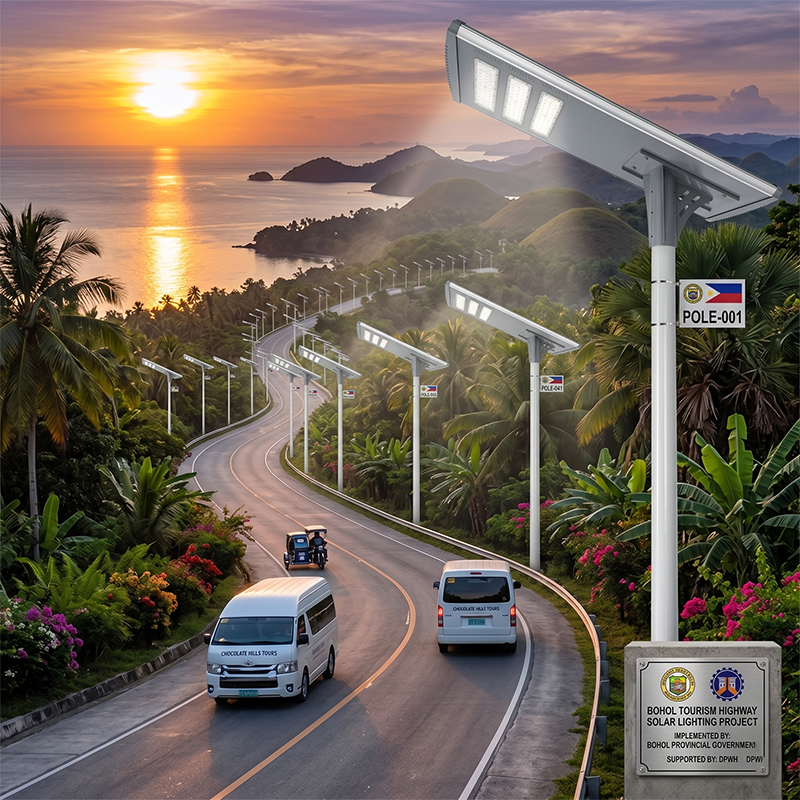
Explore our verified municipal track record: Saudi Arabia 253 Sets 55°C Desert Highway Project, Philippines Coastal Highway Typhoon-Resistant Installation, or inspect third-party IEC/CE/ISO test reports at our Compliance Verification Center.
Need Engineering Sizing or EPC Tender Support?
Contact MCL Solar’s engineering division for complimentary DIALux road lighting simulations, solar autonomy calculations, and direct factory pricing for municipal and commercial infrastructure projects.