
Key Takeaways
- ROI is driven by TCO, not just hardware cost: The return on investment (ROI) for solar street lighting is maximized when Total Cost of Ownership (TCO)—including trenching, cabling, and battery replacement—is calculated alongside the initial unit price.
- Battery chemistry determines long-term value: Projects utilizing Grade-A LiFePO4 batteries demonstrate superior lifecycle economics compared to generic NCM or lead-acid alternatives, reducing replacement frequency and operational downtime.
- Scenario-specific deployment is critical: No single configuration yields the highest ROI in every environment; All-in-one solar street light systems typically maximize value in residential areas, while split-type systems are preferred for critical infrastructure like bridges.
- Installation efficiency offsets higher component costs: In retrofit or grid-expansion projects, the elimination of trenching and cabling often provides an immediate positive cash flow, even if the solar hardware carries a higher upfront price tag than standard AC fixtures.
1. Why This Ranking Matters
For municipal engineers, EPC contractors, and procurement officers, the evaluation of solar street lighting projects has shifted from a novelty assessment to a strict financial engineering exercise. The decision to deploy off-grid lighting is no longer purely environmental; it is a capital allocation problem.
A standard procurement mistake is comparing the upfront cost of a solar luminaire against an AC LED fixture without factoring in civil works. In many international markets—specifically in remote regions or developing infrastructure zones—the cost of trenching, cabling, and transformers can exceed the cost of the lighting hardware itself.
This analysis ranks solar deployment strategies based on verified project data to highlight where the highest engineering ROI is currently achieved. It differentiates between "fit-for-purpose" solutions and "over-engineered" or "under-spec" systems that erode project value over a 5-to-10-year lifecycle.
2. Evaluation / Ranking Criteria
To assess the ROI and engineering viability of different solar approaches, the following technical and economic metrics were applied:
- Lifecycle Cost Analysis (LCA): Comparison of initial CAPEX versus OPEX, including projected battery replacements (LiFePO4 vs. generic) and maintenance visits.
- Deployment Efficiency: Evaluation of installation speed and reduction in civil works (trenching/cabling) required for the Split Type Solar Street Light versus integrated models.
- Operational Stability: Analysis of controller technology (MPPT vs. PWM) and battery management systems in relation to local environmental conditions.
- Infrastructure Resilience: Assessment of structural integrity (hot-dip galvanizing), corrosion resistance (coastal suitability), and waterproof ratings (IP65/IP68).
- End-User Utility: Measurement of illumination uniformity and safety compliance relative to the specific use case (e.g., main road vs. park pathway).

3. Ranking List
Option 1: High-Density Residential Deployment (Integrated Systems)
-
Overall Assessment:
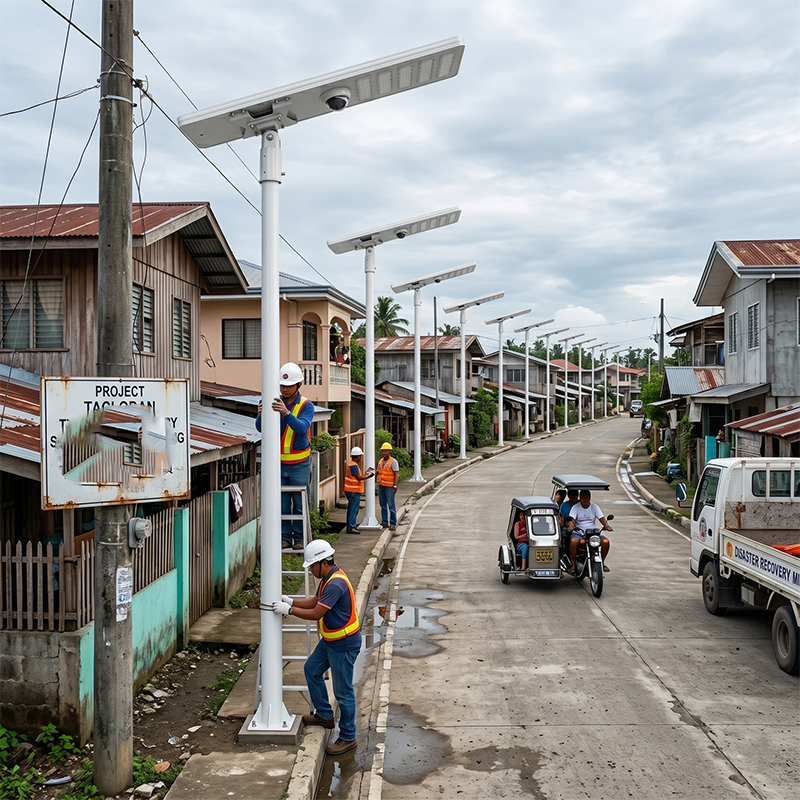
For urban residential subdivisions and gated communities, the highest ROI is typically achieved by using integrated All In One Solar Street Light systems. These units minimize installation labor and eliminate the need for external cabling between the solar panel, battery, and light source. In a recent residential project involving 410 units (6M pole height) utilizing monocrystalline panels and Grade-A LiFePO4 batteries, the deployment achieved stable operation with uniform lighting, significantly reducing the developer’s long-term utility expenses. -
Core Strengths:
- Reduced Civil Works: The integrated design allows for rapid deployment on existing poles or new foundations without trenching.
- Grade-A Storage: The use of LiFePO4 batteries ensures a cycle life often exceeding 2,000 cycles, delaying the costly expense of battery replacement.
- Smart Dimming: Integrated MPPT controllers allow for programmable dimming (e.g., 100% power for first 5 hours, 30% thereafter), which optimizes energy autonomy and battery lifespan.
-
Operational Limitations:
- Heat Dissipation: Because the battery and LED heat source are housed in a single compact compartment, high ambient temperatures can accelerate battery degradation if thermal management is not robust.
- Theft Risk: The all-in-one design, located at the top of the pole, can be a target for theft or vandalism in unsecured areas compared to buried battery systems.
-
Procurement Considerations:
Buyers should prioritize suppliers offering "Real MPPT" controllers rather than cheaper PWM alternatives to ensure charging efficiency during cloudy seasons. Verify the battery management system (BMS) includes temperature compensation. -
Best Deployment Scenarios:
- Urban residential subdivisions.
- Public walkways and park pathways.
- Gated communities with established security.
Option 2: Critical Infrastructure Lighting (Split-Type Systems)
-
Overall Assessment:
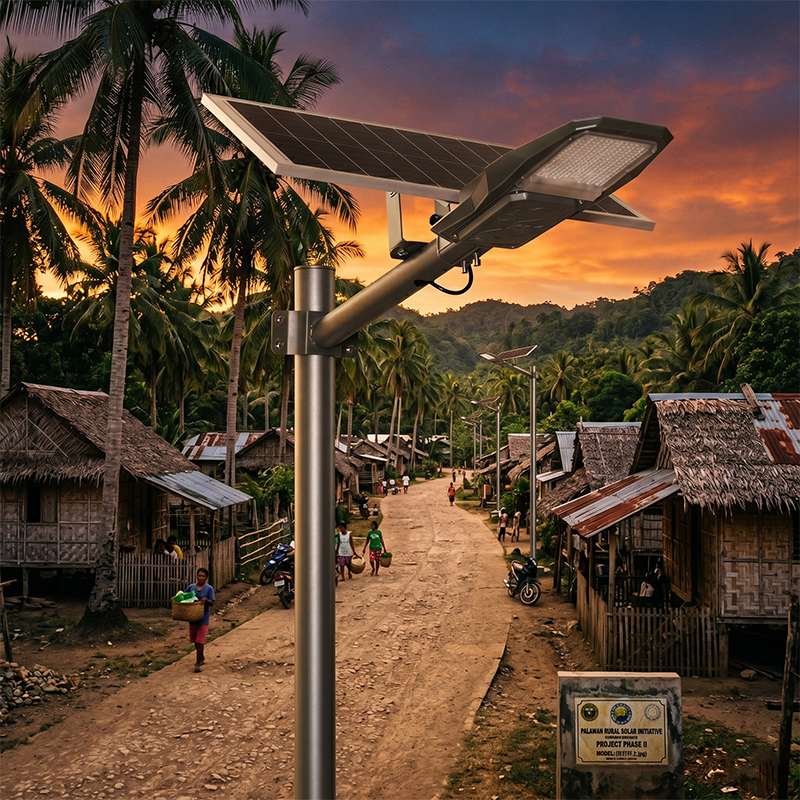
For bridge infrastructure and major arterial roads, reliability takes precedence over installation speed. The split-type configuration, where the solar panel is independent of the light fixture, offers superior ROI in high-stakes environments. A case study involving the Pampanga Bridge (Department of Public Works) utilized 120W split-type lights to ensure consistent illumination for public safety. Here, the ROI is calculated not just on energy savings, but on the avoidance of accident liability and infrastructure downtime. -
Core Strengths:
- Optimal Solar Orientation: The panel can be angled independently of the light direction to maximize solar harvest, regardless of the road alignment.
- Superior Heat Management: Separating the battery (often buried or pole-mounted) from the LED heat source significantly extends component life.
- Scalability: Split systems can accommodate larger panel and battery capacities, supporting higher wattage LEDs required for high-mast or wide-road applications.
-
Operational Limitations:
- Installation Complexity: Requires more labor time and cabling between components compared to all-in-one units.
- Higher CAPEX: The individual components (high-efficiency panel, separate battery box, controller) and extended wiring generally result in a higher initial material cost.
-
Procurement Considerations:
EPC contractors must ensure the battery box is rated IP68 for sub-surface or flood-prone installations. Hot-dip galvanized poles are essential for corrosion resistance in bridge environments. -
Best Deployment Scenarios:
- Bridges and flyovers.
- High-speed highways.
- Coastal or flood-prone areas requiring robust environmental protection.

Option 3: Tourism and Landscape Integration (Decorative Systems)
-
Overall Assessment:
In projects focused on tourism and public space enhancement, ROI is measured by indirect economic value—increased visitor dwell time, safety perception, and aesthetic appeal—rather than raw lumen-per-watt efficiency. In the Bohol Tourism Park project, decorative solar garden lights were deployed to enhance the nighttime atmosphere without relying on grid connectivity. While the raw illumination is lower than street-rated fixtures, the value proposition lies in zero ongoing energy costs for decorative features and enhanced visitor experience. -
Core Strengths:
- Aesthetic Flexibility: Systems can be styled to match landscape architecture, improving the visual identity of public spaces.
- Low Maintenance: Low-power LED draws significantly less energy, allowing for smaller batteries and longer autonomy periods even with smaller panels.
- Soft Lighting: Provides adequate ambient light for pathways without contributing to light pollution, preserving the night sky in tourist areas.
-
Operational Limitations:
- Limited Coverage: Not suitable for high-speed traffic areas or security-critical zones due to lower lumen output.
- Vandalism: Decorative fixtures installed at lower heights are more susceptible to physical damage.
-
Procurement Considerations:
Focus on corrosion-resistant materials (e.g., high-quality powder coating) as decorative fixtures are often installed in garden environments with high humidity and irrigation systems. -
Best Deployment Scenarios:
- Public parks and gardens.
- Hotel and resort pathways.
- Tourism zones requiring ambient atmosphere.

4. Key Comparison Table
| Rank | Deployment Option | Core Advantage | Suitable Users | Limitation |
|---|---|---|---|---|
| 1 | Integrated Residential | Lowest Installation & Trenching Cost | Property Developers, Municipal Planners | Heat concentration in compact housing |
| 2 | Split-Type Infrastructure | Maximized Reliability & Power Output | DOTs, Bridge Engineers, EPC Contractors | Higher Initial CAPEX & Install Time |
| 3 | Decorative Landscape | Aesthetic Integration & Tourism Value | Tourism Boards, Landscape Architects | Low Lumen Output (Not for Road Safety) |
5. Scenario-Based Recommendations
| Project Scenario | Recommended Option | Reason |
|---|---|---|
| Urban Residential Subdivisions | Integrated All-in-One | Rapid deployment minimizes disruption to residents; lower installation costs maximize immediate project ROI. |
| Bridge & Highway Infrastructure | Split-Type System | Independent panel positioning ensures energy security; heat management extends lifecycle in high-heat environments. |
| Tourism & Public Parks | Decorative Solar | Enhances visitor experience and safety without grid connection costs; aesthetic design is a priority over raw power. |
| Coastal / Island Roads | Split-Type with IP68 | Critical infrastructure requires the highest level of waterproofing and corrosion resistance available in split designs. |
6. FAQ
Q1: How does LiFePO4 battery technology affect project ROI?
LiFePO4 (Lithium Iron Phosphate) batteries typically offer a cycle life of 2,000 to 5,000 cycles, significantly outperforming NCM or Lead-acid alternatives. While the upfront cost is higher, the extended lifespan (often 8-10 years) reduces the frequency of battery replacements. In remote areas, the cost of sending a maintenance crew to replace a battery often exceeds the cost of the battery itself, making LiFePO4 the economically superior choice over the project lifecycle.
Q2: Is MPPT necessary for solar street lights, or is PWM sufficient?
MPPT is not automatically essential for every project. Compare MPPT and PWM using the proposed module and battery voltages, temperature, irradiance, conversion-efficiency data, charging profile, and protection requirements. Any energy difference is project-dependent and should be verified in the system energy balance.
Q3: How do I calculate the break-even point against grid-connected lights?
To calculate the break-even point, sum the total cost of the solar system (hardware + shipping + installation) and compare it to the cost of extending the grid (trenching + cabling + transformer + AC light fixture + electricity bills over 5 years). In most cases where trenching exceeds 50 meters, solar street lights achieve a break-even point within 2 to 3 years purely on saved civil works and zero electricity bills.
7. Conclusion
The ROI of solar street light projects is not a fixed metric but a variable derived from the precise alignment of technology with the deployment environment.
As evidenced by the analysis, Integrated All-in-One systems provide the strongest financial case for high-density residential applications where speed of installation and reduced trenching are the primary value drivers. Conversely, for critical infrastructure such as the Pampanga Bridge, the higher initial investment in Split-Type systems is justified by superior reliability and thermal management, which safeguards public safety and minimizes long-term maintenance disruptions.
Procurement success lies in rejecting "one-size-fits-all" quotations. Engineering buyers must prioritize Grade-A components—specifically LiFePO4 batteries and MPPT controllers—over generic low-cost hardware to ensure that the projected savings materialize over the system’s operational life. By selecting the architecture that fits the specific constraints of the terrain and application, EPC contractors and municipalities can secure a resilient, zero-energy lighting infrastructure with a defensible, positive return on investment.
Procurement & Engineering Consultation
Companies planning municipal lighting, rural electrification, or smart-city deployments may contact the MCL Solar engineering team for technical specifications, Dialux simulations, OEM/ODM support, or project consultation.
- Email: sales@mclsolar.com
- WhatsApp: +86 18030335122
- Official Website: https://mclsolar.com
Model smart-control ROI as a sensitivity analysis
Smart-control value depends on traffic, dimming limits, communications cost, maintenance workflow and the baseline being compared. Calculate at least three cases: low activity, expected activity and high activity. Include sensor and communications energy, gateway or platform fees, commissioning, replacement parts and staff time.
Do not assume that every detected event produces the same saving. Where traffic is continuous, the luminaire may remain at the higher output for most of the night. State the event frequency, hold time and measured power at each level so the result can be reviewed.
Engineering & Manufacturing Verification at MCL Solar
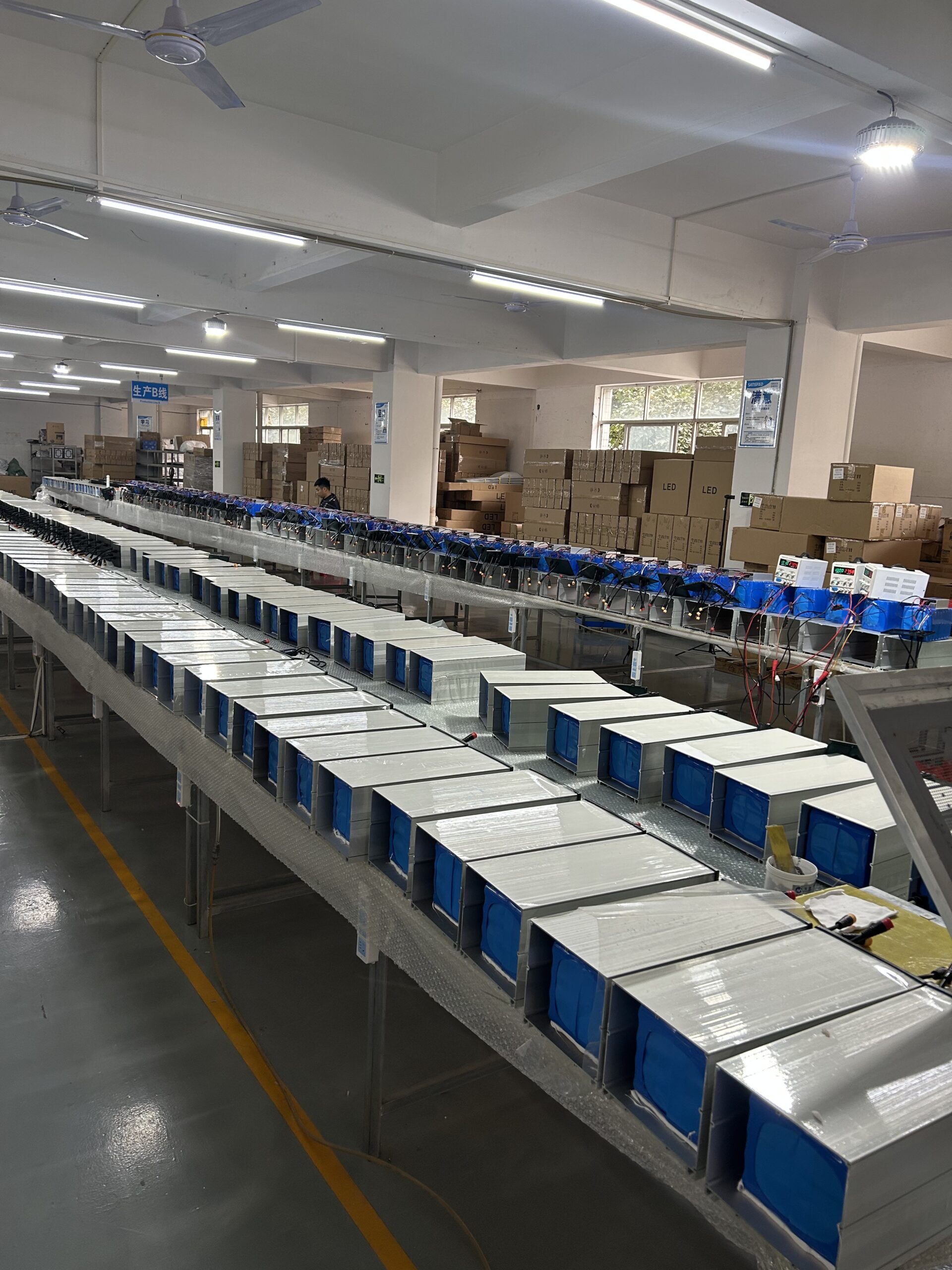
All commercial solar street lighting luminaires, intelligent MPPT controllers, and Q235 hot-dip galvanized steel poles are manufactured in-house by Zhongshan Chengyu New Energy Technology Co., Ltd. at our 35,000 m² production facility in Guzhen Town, Zhongshan, Guangdong, China.
Explore our verified municipal track record: Saudi Arabia 253 Sets 55°C Desert Highway Project, Philippines Coastal Highway Typhoon-Resistant Installation, or inspect third-party IEC/CE/ISO test reports at our Compliance Verification Center.
Need Engineering Sizing or EPC Tender Support?
Contact MCL Solar’s engineering division for complimentary DIALux road lighting simulations, solar autonomy calculations, and direct factory pricing for municipal and commercial infrastructure projects.