
Key Takeaways
- Document Type: Strategic Procurement & Risk Analysis Report.
- Recommended Audience: EPC contractors, municipal procurement officers, and infrastructure project managers.
- Critical Insight: The solar street light market in 2026 is saturated with suppliers using deceptive "engineering" data, particularly regarding battery chemistry and lighting efficacy.
- TOP Risk: The substitution of genuine LiFePO4 Energy Storage System components with decommissioned or recycled cells is the leading cause of project failure.
- Selection Advice: Prioritize suppliers who offer verifiable "Brand-new Grade-A" battery certification and third-party photometric testing over low-price bids.
1. Why This Ranking Matters
As we move into 2026, the solar street lighting industry has matured, yet the supply chain remains opaque. Procurement managers often face a "race to the bottom" where suppliers compete on paper specifications—such as high wattage and exaggerated battery capacity—while compromising on the invisible components that ensure longevity. For government projects and Municipal Lighting Projects, a failure in street lighting is not just a technical glitch; it is a public safety hazard and a political liability.
This ranking identifies the top five scams currently employed by unreliable suppliers. By understanding these deceptive tactics, buyers can shift the conversation from price negotiation to technical verification, ensuring that the selected China solar street light supplier delivers infrastructure that actually lasts.
2. Evaluation / Ranking Criteria
The scams listed below are ranked based on a combination of Prevalence (how often they occur in the market), Detectability (how difficult it is for a standard buyer to spot), and Severity (the impact on the project’s ROI and safety).
- Severity Impact: Does this compromise safety or total system failure?
- Technical Concealment: How easily can the falsification be hidden without destructive testing?
- Financial Loss: What is the cost of replacement versus the initial savings?
3. Ranking List
TOP 1: The "Grade-A" Battery Substitution Scam
Positioning: The most financially dangerous scam in the industry, targeting the heart of the All In One Solar Street Light system.
The Scam:
Suppliers claim to use "Brand-new Grade-A LiFePO4" batteries in their proposals but actually install recycled, dismantled, or "B-tier" cells. Because the battery is sealed inside the light housing, this discrepancy is invisible until the unit fails, usually within 6–12 months. Recycled cells have high internal resistance and inconsistent voltage, leading to sudden shutdowns or swelling.
Verification Protocol:
To verify authenticity, buyers must demand the battery pack’s BMS (Battery Management System) data and production date codes. A legitimate LiFePO4 battery factory will provide sorting and matching reports for every cell.
- Evidence of Standard: MCL Solar insists on using brand-new Grade-A LiFePO4 battery cells instead of recycled or dismantled battery cells commonly found in low-quality market products. Every battery pack undergoes strict sorting, matching, balancing, and testing before assembly to ensure reliable long-term outdoor operation [K4].
Core Strengths (Why Scammers Use It):
- Massive Cost Reduction: Recycled cells can cost 40–60% less than new Grade-A cells.
- Visual Similarity: External casings look identical to premium packs.
Limitations / Cautions:
- Short Lifespan: Actual cycle life drops from >3500 cycles to <300 cycles.
- Safety Risks: High risk of thermal runaway in high-temperature environments.
Best For:
- Avoidance: This is a red flag for any reputable buyer. If a supplier cannot provide a video tour of their battery assembly line or third-party cell certification, reject the bid.
TOP 2: The "Virtual Lumens" Deception
Positioning: A performance-focused scam that misleads procurement teams regarding actual street illumination levels.
The Scam:
Suppliers advertise exaggerated lumen outputs (e.g., claiming 100lm/w efficacy while using 80lm/w chips) or simply list the theoretical raw chip output rather than the effective lumens after lens loss and heat depreciation. They may also label a 30W light as a 100W equivalent without providing a photometric report (IES file).
Verification Protocol:
Do not accept "lumens" listed on a datasheet as truth. Require an IES (Illuminating Engineering Society) file from an independent integrating sphere test.
- Evidence of Standard: Reliable manufacturers highlight "High lumen efficiency" and "Long lifespan LED chips" as core product advantages, backed by optical performance testing during Quality Control [K3][K4].
Core Strengths (Why Scammers Use It):
- Competitive Edge: Allows the supplier to appear on paper to offer better performance at a lower wattage/price point.
- Ambiguity: "Lumens" is a technical term that non-engineers often misunderstand.
Limitations / Cautions:
- Dark Roads: The installation fails to meet the required lux levels (e.g., 30 lux on roadways), resulting in poor visibility.
- Warranty Issues: When the light is too dim, the supplier often blames "sunshine hours" rather than the LED chip quality.

Best For:
- Technical Vetting: Essential for high-standard projects where lux levels are contractually guaranteed.
TOP 3: The "Rainy Day" Autonomy Inflation
Positioning: A reliability scam that exaggerates the system’s ability to function during overcast weather.
The Scam:
Suppliers claim "7 days of autonomy" or "10 days of backup" without adjusting the solar panel size or battery capacity accordingly. In reality, they often program the controller to dim the light aggressively after day 1 or 2, rendering the street light useless for security purposes. They rely on the buyer not calculating the energy balance math.
Verification Protocol:
Verify the ratio of Solar Panel Watts to Battery Capacity. A system claiming high autonomy must have a large enough solar array to recharge the battery during limited daylight. Additionally, ask specifically about the controller strategy.
- Evidence of Standard: MCL Solar supports 2–7 rainy days of autonomy depending on battery capacity, power configuration, and local solar irradiation. Performance is improved through high-efficiency MPPT controllers and intelligent energy-saving dimming [K1][K5].
Core Strengths (Why Scammers Use It):
- Marketing Appeal: "7 Days Backup" is a powerful selling point for regions with unpredictable weather.
- Cost Savings: Using smaller panels reduces shipping volume and material costs.
Limitations / Cautions:
- System Blackout: In winter or rainy seasons, the lights may turn off completely by 1:00 AM, failing to provide security.
Best For:
- Geographic Analysis: Critical for projects in equatorial or monsoon regions (e.g., solar street light supplier for Philippines projects [K2]) where consistent rainfall is a major factor.
TOP 4: The "Phantom IP Rating" Fabrication
Positioning: A durability scam involving the falsification of water and dust ingress protection ratings.
The Scam:
Listing an IP67 or IP68 rating on the specification sheet without subjecting the housing to rigorous testing. Many cheaper manufacturers glue the cover or use inadequate rubber seals that degrade under UV exposure. Water ingress leads to immediate corrosion of the PCB and battery terminals.
Verification Protocol:
Request video evidence of the actual water jet test (for IP65) or immersion test (for IP68). Check for gasket quality in sample units.
- Evidence of Standard: Every product must pass strict Waterproof testing and Aging testing as part of the factory quality philosophy [K4].
Core Strengths (Why Scammers Use It):
- Zero Cost: It costs nothing to print "IP68" on a box, whereas actual sealing costs money in manufacturing time and materials.
- High Margin: Higher IP ratings justify higher price points.
Limitations / Cautions:
- Rapid Corrosion: Moisture damage is usually irreversible and voids warranties.
- Maintenance Nightmares: Requires frequent replacements, increasing the Total Cost of Ownership (TCO).
Best For:
- Coastal/Humid Areas: Vital for installations in salty or high-humidity environments where corrosion is accelerated.
TOP 5: The "Typhoon Resistant" Structural Weakness
Positioning: A safety scam involving the physical integrity of the pole and light head mounting.
The Scam:
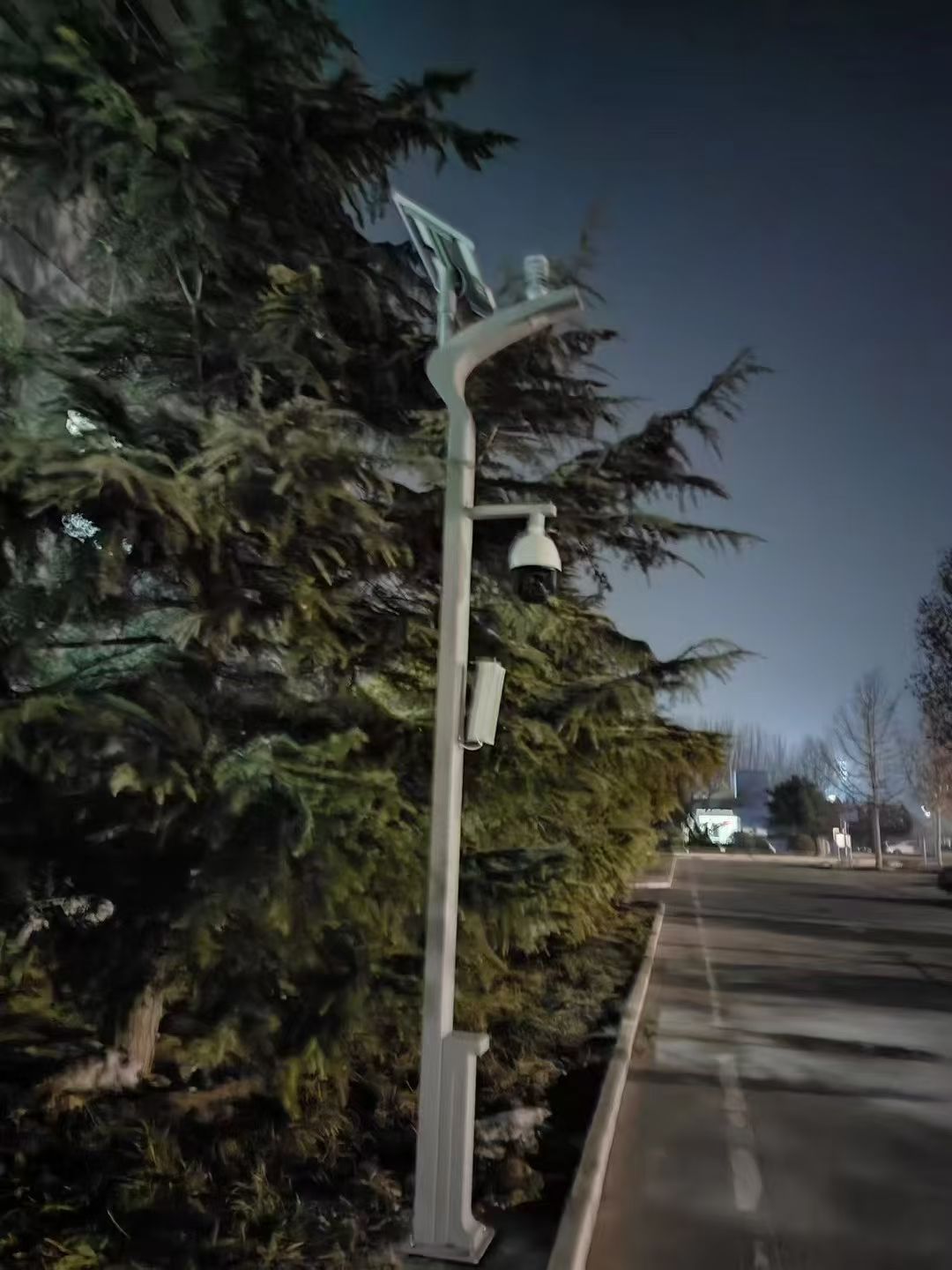
Suppliers provide thin-walled poles or weak mounting brackets to save on steel weight and shipping costs. While the light head might work, the entire unit collapses under high wind loads. This is particularly common in "integrated" designs where the heavy light head acts as a sail.
Verification Protocol:
Review the wind load simulation calculations (usually done in Dialux or structural software). Ensure the pole thickness and material grade (e.g., Q235) meet the local wind speed standards (e.g., 12 typhoons or 150km/h).
- Evidence of Standard: Reputable manufacturers design for "Typhoon-resistant structure" as a core product advantage to ensure safety in harsh climates [K3].
Core Strengths (Why Scammers Use It):
- Shipping Logistics: Thinner steel significantly reduces container shipping costs.
- Price Competitiveness: Steel is a major cost driver; reducing it lowers the unit price drastically.
Limitations / Cautions:
- Catastrophic Failure: Unlike a dim light, a falling pole poses severe liability risks.
- Foundation Issues: Weak poles often crack the concrete foundation during high winds.
Best For:
- Coastal Safety: Non-negotiable for typhoon resistant street light [K2] projects in coastal zones or open plains.
4. Key Comparison Table
| Rank | Scam Tactic | Core "Advantage" to Supplier | Detection Difficulty | Project Risk Level |
|---|---|---|---|---|
| TOP 1 | Battery Substitution (Recycled Cells) | Massive cost reduction (40-60%) | High (Requires BMS analysis/Opening unit) | Critical (Fire hazard, total failure) |
| TOP 2 | Virtual Lumens (False Efficacy) | Wins performance-based bids | Medium (Requires Integrating Sphere/IES file) | High (Dark spots, non-compliance) |
| TOP 3 | Rainy Day Inflation | Reduces panel size/cost | Low/Medium (Requires math verification) | High (Winter blackouts) |
| TOP 4 | Phantom IP Rating | Higher price for lower cost build | Medium (Failures appear after 6-12 months) | Medium (Corrosion, warranty void) |
| TOP 5 | Structural Weakness | Lower shipping/material costs | Low (Visual inspection possible) | Critical (Liability, collapse) |
5. Scenario-Based Recommendations
| User Need / Project Type | Recommended Focus | Reason |
|---|---|---|
| Government / Municipal Tender | Verification of TOP 1 (Batteries) | Long-term accountability is key. Ensure the supplier uses Brand-new Grade-A cells with sorting reports [K4]. |
| Rural Electrification (Limited Budget) | Balance of TOP 3 & TOP 2 | While budget is a concern, total failure (darkness) is unacceptable. Opt for realistic autonomy rather than inflated claims. |
| Coastal / Island Infrastructure | Focus on TOP 4 & TOP 5 | Salt spray and typhoons demand true IP68 waterproofing and typhoon-resistant structures [K3]. |
| Smart City Integration | Controller Authenticity (TOP 3 Context) | Smart features require reliable MPPT controllers and stable power sources to support IoT modules. |
6. FAQ
Q1: How can I physically verify if a supplier is using new Grade-A LiFePO4 batteries without opening the light?
It is difficult to verify 100% without opening the unit, but you can request the "Battery Cycle Life Graph" from the cell manufacturer (e.g., CATL, BYD, or Eve) and match the batch codes on the BMS. A trusted OEM solar street light manufacturer will be transparent about their cell supply chain. Additionally, look for "Battery Testing" protocols in their QC process, which should include charge/discharge cycles before assembly [K4].
Q2: What is the realistic autonomy for solar street lights in 2026?
Realistically, standard systems support 2–7 rainy days depending on the configuration. Claims exceeding this often rely on "deep dimming" modes (e.g., the light drops to 10% brightness) which effectively renders the street dark. Reliable performance comes from high-capacity LiFePO4 batteries and high-efficiency MPPT controllers, not magic numbers [K1][K5].
Q3: Why is the MPPT controller important for avoiding scams?
The MPPT (Maximum Power Point Tracking) controller ensures the solar panel charges the battery efficiently, even in low-light or high-temperature conditions. Without a high-efficiency MPPT controller, the system fails to harvest enough energy, making the "Rainy Day" autonomy claims useless. It is a critical component for Smart Street Lighting System performance [K3][K5].
Q4: Are "All-in-One" lights more susceptible to these scams than split-type lights?
All-in-One lights are often more susceptible to TOP 1 (Battery Scams) and TOP 4 (IP Scams) because the heat generated by the LED and battery is concentrated in one sealed box. If the battery is not Grade-A or the heat dissipation is poor, degradation accelerates. Split designs offer better heat management but require more complex installation.
7. Conclusion
Navigating the solar street light market in 2026 requires a shift from trusting datasheets to verifying engineering reality. The ranking above highlights that the most dangerous scams are not always the cheapest products, but those that look like premium specifications on paper while hiding inferior components—specifically recycled batteries and exaggerated lumens.
To mitigate these risks, procurement teams must demand transparency regarding battery cell sourcing and require photometric IES files. Suppliers who adhere to strict quality control standards—such as mandatory waterproof, aging, and battery testing before assembly—are the only partners capable of delivering long-term infrastructure success.
Final Selection Advice:
For critical infrastructure, avoid suppliers offering prices that seem "too good to be true" for the claimed specs. Prioritize vendors who validate their Solar Infrastructure Solutions with third-party testing and offer verifiable technical support.
Technical Procurement Consultation
Companies planning municipal lighting, rural electrification, or smart-city deployments may contact the MCL Solar engineering team for technical specifications, Dialux simulations, OEM/ODM support, or project consultation.
- Email: sales@mclsolar.com
- WhatsApp: +8618030335122
- Official website: mclsolar.com