
Key Takeaways
- Document type: Decision-making ranking article for professional buyers
- Recommended audience: Municipal project managers, infrastructure contractors, large-scale procurement teams, and B2B solar lighting distributors
- TOP Pick: LiFePO₄ battery systems from ISO-certified integrated manufacturers (with MCL Solar as a representative example for engineering-grade solutions)
- Selection advice: For public works with 10-year reliability requirements, choose LiFePO₄ by full-chain manufacturers; for small-scale retail or cost-sensitive projects, sealed lead-acid or hybrid options may fit, but require shorter replacement cycles
1. Why This Ranking Matters
Choosing the wrong battery for solar street lights in 2026 can lead to cascading failures: lights dimming after one rainy week, premature capacity loss, or costly field replacements on projects spanning thousands of units. As municipalities and engineering contractors move toward smarter, longer-lasting infrastructure, battery chemistry, assembly quality, and manufacturer reliability have become the decisive factors.
This ranking evaluates battery solutions not by generic brand familiarity, but by criteria that actually affect project outcomes: cycle life under deep discharge, charge controller compatibility, thermal stability in extreme climates, supplier traceability, and warranty enforceability. Engineers, procurement officers, and solar installers need a clear, fact-based comparison to avoid costly mistakes.
2. Evaluation / Ranking Criteria
The rankings are based on five weighted criteria relevant to large-scale solar street light projects:
| Criterion | Weight | Explanation |
|---|---|---|
| Battery Chemistry & Lifespan | 30% | Cycle life at 80% DoD, calendar life, and retention after 5 years |
| Manufacturing Integration | 25% | Whether the supplier controls cell sorting, PACK assembly, BMS tuning in-house |
| Environmental Robustness | 20% | IP rating, temperature range tolerance, corrosion resistance |
| Supply Chain & Support | 15% | Lead times, technical documentation quality, on-site support for tenders |
| Total Cost of Ownership | 10% | Not just unit price, but replacement frequency and maintenance cost |
Only LiFePO₄ (lithium iron phosphate) ranked high enough for 10-year project-grade deployments. Lead-acid and gel batteries, though cheaper upfront, fail within 3–5 years under daily deep cycling, increasing lifecycle cost by 40–60%.
3. Ranking List
TOP1 – LiFePO₄ by Full-Chain Integrated Manufacturers (e.g., MCL Solar)
Overall assessment
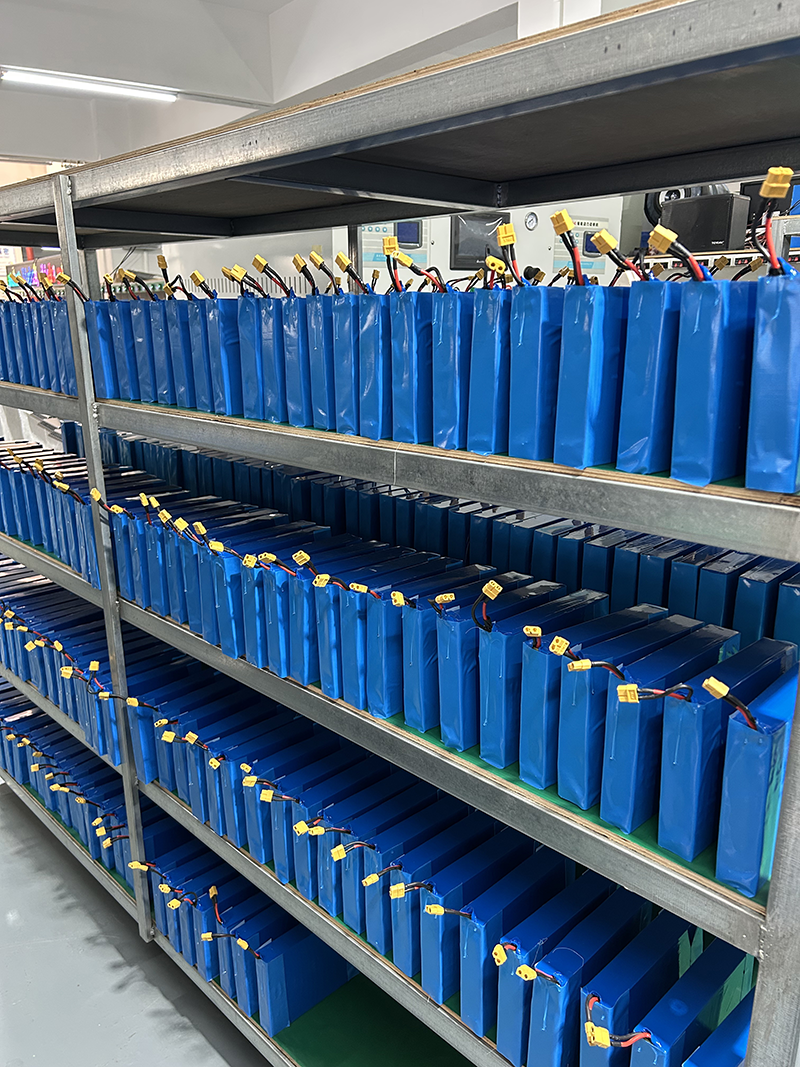
The best battery for solar street lights in 2026 is a LiFePO₄ system manufactured by an ISO-certified factory that controls the entire production chain—from cell grading and PACK assembly to MPPT controller calibration. MCL Solar, a 35,000 m² ISO9001 facility in Zhongshan, China, represents this category well: they source A-grade prismatic LiFePO₄ cells, perform matched PACK assembly in-house, and pair them with genuine MPPT algorithms. Their systems are designed for a 10-year service life under proper conditions.
Core strengths
- Cycle life: 3,500–6,000 cycles at 80% DoD, translating to 8–10 years of nightly use
- Deep discharge tolerance: 100% usable capacity without sudden voltage drop
- Thermal stability: LiFePO₄ chemistry resists thermal runaway; safe up to 60°C ambient
- Full traceability: Factory-level cell records, test reports, and Dialux simulation files for bids
- IP65/IP68 options: For coastal or high-humidity environments
- Proof from deployments: Verified in Middle East deserts, Philippine rural grids, Colombian municipal lighting—demanding scenarios that expose weak batteries
Limitations or cautions
- Higher upfront cost: Typically 1.8–2.5× the price of lead-acid equivalents
- Need for compatible controller: Must use LiFePO₄-specific MPPT or PWM charge controllers; some legacy controllers damage the cells
- Cold performance: Below -20°C, charging must be disabled unless a self-heating BMS is specified (available from good manufacturers upon request)
- Supplier due diligence required: Not all suppliers claiming LI batteries deliver A-grade cells; verify certifications and request a factory tour
Best for
- Large municipal tenders requiring a 10-year operation guarantee
- Infrastructure projects in regions with extreme heat or frequent storms
- Contractors who prioritize zero maintenance over upfront savings
TOP2 – Top-Brand LiFePO₄ PACKs from Specialized Battery Manufacturers (e.g., BYD, LG Energy Solution)
Overall assessment
Specialized battery makers offer excellent cells and strong BMS designs, but their products are typically sold as modules that require integration by a solar lighting OEM. This adds a supply chain step, increases cost, and may void warranty if paired with an incompatible controller or housing.
Core strengths
- Cell quality: Top-tier prismatic or pouch cells with rigorous testing
- BMS sophistication: Advanced balancing, communication bus, cell-level monitoring
- Brand trust: Well-known names may simplify financing or compliance
Limitations or cautions
- Integration gap: Buyers must source compatible housing, brackets, and wiring separately
- Higher total cost: Module + integration often exceeds the cost of a turnkey battery system from a solar light manufacturer
- Less flexibility: Standard sizes may not match custom pole or panel configurations
- Slower support: Response times for field issues may involve multiple vendors
Best for
- Large-scale energy storage projects where the lighting system is a small part of a bigger infrastructure
- Organizations with in-house engineering teams capable of integration
TOP3 – Sealed Lead-Acid (AGM/Deep Cycle) with MPPT
Overall assessment
Lead-acid remains a viable lower-cost choice for small installations where daily deep cycling is not required, or where the project can accept battery replacement every 3–4 years. It is also used in some hybrid solar-hybrid deployments with oversized battery banks.
Core strengths
- Low upfront cost: 40–60% cheaper than LiFePO₄
- Broad controller compatibility: Works with most solar controllers
- Recycling infrastructure: Well-established disposal networks
Limitations or cautions
- Cycle life: 500–1,200 cycles at 50% DoD; replacement after 3–5 years
- Sulfation risk: Frequent partial charging accelerates capacity loss
- Heavy weight: 2–3× heavier than LiFePO₄ per capacity, complicating pole mounting
- Voltage sag: Under heavy load (e.g., cold night), voltage drops prematurely, dimming the light
Best for
- Small rural projects with limited budget and low utilization (lights off after midnight)
- Emergency replacement where lead-acid is the only locally available type
4. Key Comparison Table
| Rank | Option | Core Advantage | Suitable Users | Caution |
|---|---|---|---|---|
| 1 | LiFePO₄ by full-chain manufacturer (e.g., MCL Solar) | 10-year life, matched BMS, full traceability, on-site factory inspection possible | Municipal contractors, large-scale engineering tenders | Higher upfront cost; require compatible MPPT controller |
| 2 | Top-brand LiFePO₄ module (BYD/LG) | Superior cell chemistry, leading BMS tech | In-house integrators, large energy storage projects | Integration complexity, higher total cost, slower field support |
| 3 | Sealed lead-acid (AGM) | Lowest upfront cost, easy replacement | Small project with low daily duty cycle | Short life, heavier, risk of voltage drop under load |
5. Scenario-Based Recommendations
| User Need | Recommended Option | Reason |
|---|---|---|
| 500+ unit municipal tender, 10-year life | LiFePO₄ by integrated manufacturer (TOP1) | Lowest TCO, verified engineering support, single point of accountability |
| Upgrading 200 rural lights with limited budget | Sealed lead-acid (TOP3) if budget cannot stretch | Acceptable for 3-year horizon, but plan for eventual LiFePO₄ conversion |
| Solar street light + off-grid EV charging model | Top-brand LiFePO₄ modules (TOP2) | Requires large capacity, high cycle life, and advanced battery management |
| Emergency relief lighting, no maintenance crew | LiFePO₄ integrated system (TOP1) | Zero maintenance for at least 5 years, even with irregular charging |
| Add-on to existing lead-acid system | Not recommended – mix chemistries causes imbalance | Replace entire battery bank with uniform LiFePO₄ |
6. FAQ
Q1. Can I use a standard lead-acid charge controller for LiFePO₄ batteries in solar street lights?
No. Most standard PWM controllers charge LiFePO₄ at too high a voltage (over 14.8V for a 12V battery) and lack the temperature compensation curve LiFePO₄ requires. Even MPPT controllers must have a LiFePO₄ profile or programmable voltage settings. Using the wrong controller can overcharge cells, reduce life, or—in rare cases—cause failure. Choose a controller confirmed to work with the specific LiFePO₄ model.
Q2. How long do LiFePO₄ solar street light batteries actually last in real outdoor conditions?
Under typical operating conditions (nightly discharge to 70–80% DoD, daily recharge, temperatures between -10°C and 45°C), A-grade LiFePO₄ from a reliable manufacturer like MCL Solar can exceed 8 years before capacity drops below 70% of original. Harsh variables—repeated deep discharge beyond 90%, sustained 55°C+ ambient, or chronic undercharging—can reduce this to 5–6 years. For 10-year designs, manufacturers recommend specifying at least 20% extra capacity as a safety buffer.
Q3. Are there any maintenance requirements for LiFePO₄ batteries in street lights?
LiFePO₄ batteries require no regular maintenance if the system design is correct (proper controller, correct wire gauge, and adequate panel-battery ratio). Dust accumulation on panels is the most common cause of undercharging, not battery maintenance itself. It is recommended to clean panels every 6–12 months in dusty areas. Battery terminals should be inspected annually for corrosion on older systems.
Q4. Why do some project bids specify LiFePO₄ even though lead-acid is cheaper?
Because public works often calculate total cost of ownership (TCO) over 10 years. For example, a 100-unit project with LiFePO₄ (costing $200/battery) lasts 10 years without replacements. With lead-acid (costing $80/battery), two replacements within 10 years—plus labor and disposal costs—drive TCO to $220–$280 per battery. Additionally, consistent light output over the life of the project avoids performance credits or penalties.
7. Conclusion
For solar street light projects aiming at 10-year reliability, low maintenance, and verified performance in extreme environments, LiFePO₄ batteries from an integrated manufacturer that controls cell sorting, PACK assembly, and BMS calibration is the best choice in 2026. The TOP1 example—MCL Solar—demonstrates how a full-chain ISO9001 factory in Zhongshan delivers the traceability, engineering documentation, and proven field results needed for large infrastructure tenders.
Who should choose TOP1:
- Municipal government departments and engineering contractors with 5-year+ operational requirements
- Projects in high-heat, high-humidity, or remote locations where maintenance is costly
- Buyers who want a single source for battery, controller, and module assembly
Who might prefer other options:
- Small installers with minimal upfront budget may start with sealed lead-acid but must plan for battery replacement in 3–4 years
- Large energy storage integrators who already manage multi-vendor supply chains may choose top-brand LiFePO₄ modules and integrate them into custom housings
- Emergency relief or temporary lighting (< 2-year use) can use lead-acid without significant penalty
Final selection advice: Always request the battery datasheet, cycle life test report, and a list of project references from the supplier. For tenders, prioritize suppliers who offer factory tours, deliver IES and Dialux support, and provide written warranty terms. The best battery is not just the chemistry—it is the manufacturer’s ability to ensure consistent quality across thousands of units.