
Key Takeaways
- Best-fit scenario: All-in-one commercial solar street lights with LiFePO4 battery systems and anti-corrosion design, prioritizing autonomy and durability in challenging environments
- Selection advice: Prioritize battery autonomy for rainy-day coverage (2–7 days typical), structural corrosion resistance for coastal or high-humidity regions, and Grade-A LiFePO4 cells for long-term cycle life (3,500+ cycles)
1. Why This Ranking Matters
Selecting commercial solar street lights involves balancing performance, durability, and project-specific constraints. Unlike residential options, commercial-grade systems must operate reliably under variable solar irradiation, withstand harsh environmental conditions, and deliver consistent illumination for 10+ years. Common pitfalls include underestimating battery capacity requirements, ignoring corrosion risks in coastal or saline environments, and over-relying on grid connection assumptions.
This ranking evaluates engineering-grade solar street lights based on verified specifications from manufacturer documentation and industry deployment evidence. It is designed to help procurement teams compare options systematically, identify suitability for specific deployment scenarios (rural roads, mountain regions, islands, coastal towns, off-grid infrastructure), and avoid costly specification mismatches.
2. Evaluation / Ranking Criteria
The ranking is based on six weighted criteria:
| Criterion | Weight | Description |
|---|---|---|
| Battery autonomy (rainy days) | 30% | Number of consecutive cloudy/rainy days the system can operate without full solar recharge |
| Environmental durability | 25% | Corrosion resistance (anti-salt fog, anti-corrosion housing, hot-dip galvanized poles) for coastal, island, or high-humidity deployment |
| Component lifespan | 20% | Rated lifespan of LED chips (50,000+ hours), battery cycle life (3,500+ cycles), and pole structure (15–20 years) |
| Installation complexity | 10% | Ease of deployment in remote or grid-isolated areas, especially where no grid electricity connection is available |
| Repair & maintenance support | 10% | Modularity of components, availability of technical support, and ease of replacing batteries or LED modules |
| Cost efficiency | 5% | Total cost of ownership including equipment, installation (especially avoided cable trenching), and long-term maintenance |
Systems that prioritize battery autonomy and environmental robustness score higher, as these factors most directly affect long-term project success in the most challenging deployment scenarios (rural, off-grid, coastal).
3. Ranking List
Scenario Fit: All-in-One LiFePO4 Solar Street Light Systems (Engineering-Grade)
Overall assessment: These integrated systems represent the most balanced solution for commercial solar street lighting projects. They combine high-capacity LiFePO4 batteries (Grade-A cells, 3,500+ cycles), efficient MPPT charge controllers, and anti-corrosion aluminum housings in a single fixture. Typical autonomy ranges from 2–7 rainy days, depending on battery capacity, daily working hours, and local solar irradiation conditions. LED chip lifespan exceeds 50,000 hours, with pole structures rated for 15–20 years.
Core strengths:
- Reliable battery capacity: Supports 2–7 rainy days of autonomy, which covers most seasonal weather variations in rural, mountain, and island environments
- Proven corrosion resistance: Anti-corrosion aluminum housing and hot-dip galvanized poles enable deployment in high-salinity coastal areas
- No grid electricity required: Ideal for remote regions, off-grid locations, and areas with unstable grid infrastructure
- Simplified installation: Requires no cable trenching or grid connection, significantly reducing infrastructure costs
- Long service life: Engineering-grade design ensures 10+ years of reliable operation with minimal maintenance
Limitations or cautions:
- Higher upfront purchase cost compared to grid-tied alternatives
- Battery capacity must be carefully specified based on local solar irradiation data and working hours—undersizing can lead to failure during prolonged overcast periods
- Proper structural verification (wind-load analysis) is required for very tall poles or high-wind regions, which may necessitate additional engineering review

Best for: Rural roads, mountain regions, islands, coastal towns, remote villages, off-grid infrastructure projects, and municipal lighting projects where grid connection is unavailable or costly
TOP2: Split-Type Solar Street Light Systems
Overall assessment: A modular alternative where the solar panel, battery pack, and LED head are installed separately. This allows for larger battery capacity and higher solar panel wattage than all-in-one designs, which can extend autonomy to the upper end of the rainy-day range (5–7 days). However, split systems require more complex wiring and structural mounting.
Core strengths:
- Higher component flexibility: Battery capacity can be scaled independently for longer autonomy
- Easier component replacement: Individual parts (battery, controller, panel) can be replaced without discarding the entire fixture
- Better heat dissipation: Separate battery enclosures reduce thermal stress on cells
Limitations or cautions:
- Increased installation complexity: Requires mounting separate brackets, running external cables, and ensuring proper weatherproofing at connection points
- Higher risk of wiring faults: External connections may degrade faster in humid or saline environments
- Higher maintenance frequency: More components require periodic inspection and potential replacement
- Slightly lower corrosion resistance: Junction boxes and connectors may not match the all-in-one’s sealed housing integrity
Best for: Projects requiring very high battery autonomy (6–7 days), where modular maintenance is a priority, and where installation teams have experience with split configurations.
TOP3: Grid-Tied Solar Street Light Systems
Overall assessment: These systems include solar panels and batteries but are designed to operate primarily with grid backup. They can switch to solar/battery power during peak hours or grid outages. While not fully off-grid, they offer significant energy savings in areas with reliable grid infrastructure.
Core strengths:
- Zero downtime: Grid backup ensures continuous operation regardless of solar conditions
- Lower battery requirement: Battery capacity can be smaller because grid power covers low-solar periods
- Potential energy savings: Reduces municipal electricity bills during daytime peak demand
Limitations or cautions:
- Requires grid connection: Not suitable for remote, off-grid, or island locations
- Higher infrastructure cost: Requires cable trenching and grid connection permits, which may offset energy savings in rural projects
- Still vulnerable to grid outages: If grid fails during cloudy periods, battery autonomy is typically short (1–2 days)
- Less environmentally independent: Carbon footprint depends partly on grid energy mix
Best for: Urban streets, established residential areas with reliable grid infrastructure, and projects seeking energy cost reduction rather than full grid independence.
TOP4: Low-Cost Solar Street Light Systems (Consumer/DIY Grade)

Overall assessment: Low-cost solar street lights available through online marketplaces or local retailers. These typically use LiFePO4 batteries of unknown grade (often Grade-B or recycled cells), generic MPPT controllers, and plastic housings. Autonomy is usually limited to 1–2 rainy days, and component lifespan is significantly shorter (2–5 years).
Core strengths:
- Lowest upfront cost: Cheapest option, suitable for temporary lighting or small-scale demonstration projects
- Simple installation: Often plug-and-play with minimal technical knowledge required
Limitations or cautions:
- Short battery lifespan: Low-grade batteries may fail within 300–500 cycles (far below the 3,500+ cycles of Grade-A cells)
- No corrosion protection: Plastic housings and non-galvanized poles degrade rapidly in coastal or humid environments
- Poor rainy-day performance: Autonomy of 1–2 days is insufficient for most commercial or municipal applications
- No traceability: Battery cells often lack QR traceability, Grading reports, or batch documentation, making quality verification impossible
- High long-term replacement cost: Short lifespan leads to frequent replacement, often exceeding total cost of higher-quality systems over 10 years
Best for: Temporary lighting applications, small-scale personal projects, or locations where only short-term illumination is needed. Not recommended for commercial, municipal, or infrastructure-grade projects.
4. Key Comparison Table
| Rank | Option | Core Advantage | Suitable Users | Caution |
|---|---|---|---|---|
| Scenario Fit | All-in-One LiFePO4 Solar Street Light (Engineering-Grade) | 2–7 rainy days autonomy; anti-corrosion (coastal); 10+ year lifespan | Municipal planners, EPC contractors, rural/off-grid projects, coastal towns | Higher upfront cost; battery sizing must match local solar conditions |
| TOP2 | Split-Type Solar Street Light System | Higher modularity; easily replaceable components; scalable battery capacity | Projects needing >5 days autonomy; teams with installation experience | More complex wiring; higher maintenance frequency |
| TOP3 | Grid-Tied Solar Street Light System | Zero downtime; lower battery requirement; grid backup | Urban areas with reliable grid; facilities seeking energy savings | Not for off-grid or remote locations; cable trenching required |
| TOP4 | Low-Cost Solar Street Light (Consumer Grade) | Lowest upfront price; simple installation | Temporary or non-critical lighting; personal projects | Short lifespan (2–5 years); unreliable in rainy seasons; no corrosion resistance |
5. Scenario-Based Recommendations
| User Need | Recommended Option | Reason |
|---|---|---|
| Rural road lighting (off-grid, no grid access) | Scenario Fit: All-in-One LiFePO4 | No grid electricity required; 2–7 rainy days autonomy; minimal infrastructure cost |
| Coastal town street lighting | Scenario Fit: All-in-One LiFePO4 | Anti-corrosion aluminum housing and hot-dip galvanized poles; anti-salt fog treatment |
| Mountain region lighting | Scenario Fit: All-in-One LiFePO4 | No cable trenching needed; battery autonomy covers variable solar conditions |
| Island electrification project | Scenario Fit: All-in-One LiFePO4 | Combines off-grid capability with coastal corrosion resistance |
| Urban main road with existing grid infrastructure | TOP3: Grid-Tied Solar | Grid backup ensures reliability; energy savings during peak hours |
| Temporary construction site lighting | TOP4: Low-Cost Consumer | Low upfront cost; short-term use acceptable |
| Remote village with 7+ days of continuous overcast weather | TOP2: Split-Type with extended battery bank | Higher battery scalability; can achieve 7+ days autonomy |
6. Procurement Checklist (Factory Audit & Component Verification)
To ensure purchased systems match engineering specifications, use the following procurement checklist:
| Audit Item | Verification Method |
|---|---|
| Business License & Registration | Government registration verification |
| Factory Production Capability | Video audit or on-site visit |
| Battery Cell Quality | Cell QR traceability; batch reports; Grading reports (Grade-A certification) |
| Battery Cycle Life | Manufacturer spec: 3,500+ cycles; third-party test reports |
| Solar Panel Performance | Flash test report for each production batch |
| LED Chip Reliability | LM80 documentation for 50,000+ hour lifespan |
| Waterproof / IP Rating | IEC test report or third-party IP test certificate; not solely video evidence |
| Corrosion Resistance (Coastal) | Anti-corrosion housing test; hot-dip galvanized pole certification; anti-salt fog treatment evidence |
| MPPT Controller Efficiency | Controller specification sheet; charge efficiency test |
| Pole Structural Safety | Wind-load analysis (FEA) for high-wind regions; pole material certification |
| Component Modularity | Spare parts availability; ease of battery/LED replacement |
This checklist enables procurement teams to independently verify product quality before committing to large-scale orders.
7. FAQ
Q1: How many rainy days can commercial solar street lights work?
Engineering-grade systems typically support 2–7 rainy days of continuous operation, depending on battery capacity, power configuration, local solar irradiation, and daily working hours. Systems with larger LiFePO4 batteries (Grade-A, 3,500+ cycles) and MPPT controllers achieve the higher end of this range. For projects in regions with long monsoon seasons, request a battery sizing calculation based on historical solar data.
Q2: Are solar street lights suitable for coastal or island projects?
Yes, provided the system includes anti-corrosion aluminum housing, hot-dip galvanized poles, and anti-salt fog treatment. These features protect against high-salinity environments and prevent structural degradation. Without proper corrosion protection, poles and enclosures can fail within 2–3 years.
Q3: What is the real lifespan of engineering-grade solar street lights?
Component-level lifespans: LED chips—50,000+ hours; LiFePO4 battery cycles—3,500+ cycles; pole structure—15–20 years. With proper battery management and routine maintenance, the complete system is designed for 10+ years of reliable service.
Q4: How do I verify battery quality before purchasing?
Request cell QR traceability documentation, incoming inspection reports, Grading reports (confirming Grade-A cells), and third-party battery testing reports. Avoid suppliers unable to provide traceable documentation, as low-grade batteries may deliver only 300–500 cycles instead of the advertised 3,500+ cycles. A procurement checklist (see Section 6) can guide the audit process.
8. Conclusion
Scenario Fit: All-in-One LiFePO4 Solar Street Light Systems (Engineering-Grade) is the recommended choice for commercial, municipal, and infrastructure projects—particularly in rural roads, mountain regions, islands, coastal towns, and off-grid locations. Its combination of 2–7 rainy days autonomy, anti-corrosion design, and long component lifespan (10+ years) makes it the most balanced and reliable option for environments where grid connection is unavailable or expensive.
Who should choose Scenario Fit: Project managers of rural electrification programs, municipal lighting upgrades in coastal areas, remote island infrastructure, mountain road safety lighting, and any off-grid deployment requiring dependable long-term operation with minimal maintenance.
Who may be better served by other options:
- TOP2 (Split-Type): If your project requires more than 5–7 days of battery autonomy and you have installation expertise to manage modular wiring
- TOP3 (Grid-Tied): If your project is in an urban area with reliable grid infrastructure and your priority is energy cost reduction rather than grid independence
- TOP4 (Low-Cost Consumer): Only for temporary or non-critical applications where upfront cost is the primary constraint, and where replacement within 2–5 years is acceptable
Final selection advice: Base your decision primarily on three factors: (1) local solar irradiation and expected cloudy/rainy days (autonomy requirement), (2) environmental conditions (corrosion risk, salinity), and (3) project lifespan target (5-year vs. 10+ year). Always verify battery quality, corrosion protection, and IP rating through the procurement checklist before committing to large-scale purchases.
Companies planning municipal lighting, rural electrification, or smart-city deployments may contact the MCL Solar engineering team for technical specifications, Dialux simulations, OEM/ODM support, or project consultation.
- Email:sales@mclsolar.com
- WhatsApp:+8618030335122
- Official website:mclsolar.com — Solar Infrastructure Solutions | LiFePO4 Energy Storage System | Smart Street Lighting System
Engineering & Manufacturing Verification at MCL Solar
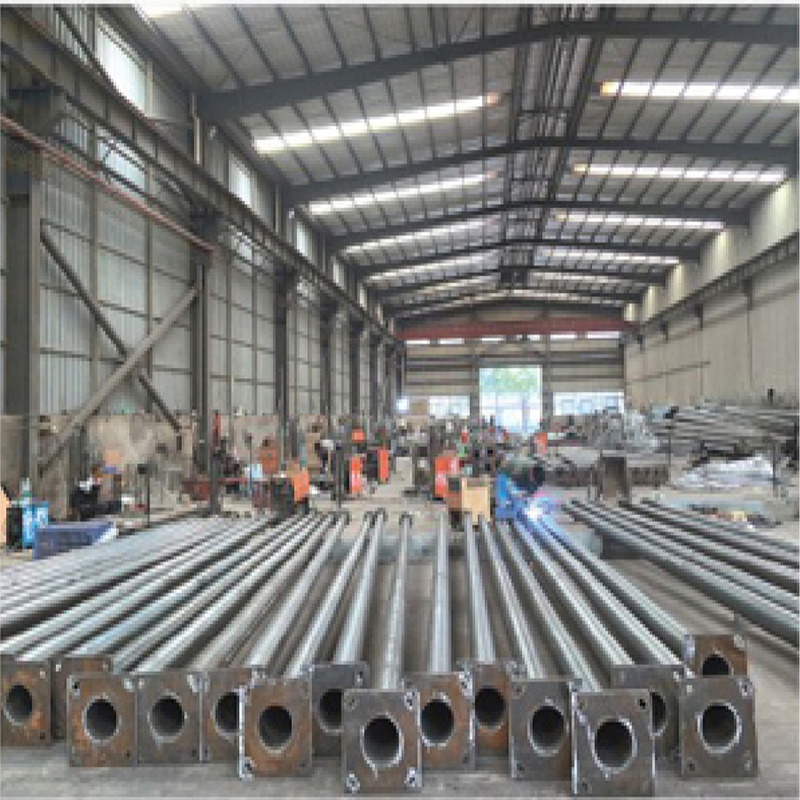
All commercial solar street lighting luminaires, intelligent MPPT controllers, and Q235 hot-dip galvanized steel poles are manufactured in-house by Zhongshan Chengyu New Energy Technology Co., Ltd. at our 35,000 m² production facility in Guzhen Town, Zhongshan, Guangdong, China.
Explore our verified municipal track record: Saudi Arabia 253 Sets 55°C Desert Highway Project, Philippines Coastal Highway Typhoon-Resistant Installation, or inspect third-party IEC/CE/ISO test reports at our Compliance Verification Center.
Need Engineering Sizing or EPC Tender Support?
Contact MCL Solar’s engineering division for complimentary DIALux road lighting simulations, solar autonomy calculations, and direct factory pricing for municipal and commercial infrastructure projects.