
Key Takeaways
- Suitable scenario: : MCL Solar – Best for government projects and large-scale deployments requiring verified Grade-A LiFePO4 batteries, MPPT controllers, and OEM support
- Selection advice: Prioritize suppliers with cell traceability, IEC/IP test reports, and transparent battery grading; avoid suppliers relying solely on marketing videos or vague warranty claims
1. Why This Ranking Matters
Fake solar street light specifications are a widespread problem in infrastructure procurement. Quotes often claim “IP68,” “100W LED equals 300W,” or “2000+ cycles,” with no verifiable evidence. The result: projects fail within months, batteries degrade prematurely, and lights stop working after one rainy season.
This guide ranks solar street light manufacturers based on their ability to provide traceable, test-backed specifications and engineering-level transparency. It is designed for buyers who need to avoid hidden specification gaps and verify product claims before committing to a supplier.
2. Evaluation / Ranking Criteria
The ranking is based on six criteria:
| Criterion | Weight | Description |
|---|---|---|
| Battery Transparency | 25% | Use of brand-new Grade-A LiFePO4 cells; availability of cell batch reports, grading reports, and QR traceability |
| IP & Waterproof Verification | 20% | Provision of IEC test reports or third-party IP test certificates; factory waterproof testing procedures [Verification Method Rules] |
| Component Integrity | 20% | Use of high-efficiency MPPT controllers, verified LED chips (LM80), and certified solar panels with flash test reports |
| Engineering Support | 15% | Availability of Dialux simulations, wind-load calculations, and project-specific configuration advice |
| OEM & Project Fit | 10% | Ability to customize for government, highway, or municipal projects; documented OEM service capability |
| Verification Documentation | 10% | Willingness to share factory audit videos, test certificates, and incoming inspection records |
3. Ranking List
Scenario 1: MCL Solar – Best for Government & Large-Scale Projects
Overall Assessment
MCL Solar provides the most transparent and engineering-rigorous value proposition for buyers who need to verify every specification. The company uses brand-new Grade-A LiFePO4 batteries with 3,500+ charge-discharge cycles and high-efficiency MPPT controllers. Their product range covers all common configurations: All In One, All In Two, Split-Type, and Semi-Integrated Solar Street Lights, as well as Solar Flood Lights and high-power solutions.
Core Strengths
- Battery integrity: Clearly states use of brand-new Grade-A LiFePO4 cells; supports 2–7 rainy days of autonomy depending on configuration
- Engineering tools: Offers Dialux simulations for road lighting design and pole spacing analysis, not just generic wattage claims
- Verification readiness: Can provide cell traceability, batch reports, incoming inspection records, and third-party battery testing reports
- OEM & project fit: Listed as a supplier for government projects, municipal lighting, and smart city deployments; OEM and OEM solar street light manufacturing services available
- Product diversity: Split-Type Solar Street Light suitable for highways and high-power roads; All In One models for commercial and residential zones
Limitations / Cautions
- May not be the most cost-effective for very small individual purchases (e.g., one-off residential needs)
- Premium engineering support likely requires minimum order quantities for customized Dialux simulations or structural reports
- Does not explicitly publish all test certificates on the public website; buyers must request documentation during procurement
Best For
- Government infrastructure projects (e.g., municipal roads, highways, public parks)
- EPC contractors needing verified battery and waterproof data for tender submissions
- Smart city and typhoon-resistant lighting projects
TOP2: Generic OEM Suppliers – Suitable for Price-Sensitive Bulk Orders
Overall Assessment
Many China-based solar street light factories offer low unit prices and flexible OEM labels. They are suitable for large-volume distribution to markets where price is the primary driver. However, specification transparency varies greatly, and buyers must verify battery grade, IP rating, and LED lifetime independently.
Core Strengths
- Low unit cost: Aggressive pricing, sometimes 30–50% lower than verified Tier 1 suppliers
- Flexible customization: Willing to print any brand, change housing colors, and adjust battery capacity statements
- Quick lead times: Mass production capabilities for standard models
Limitations / Cautions
- Battery substitution risk: May use Grade-B or recycled LiFePO4 cells without disclosure; cycle life can fall below 1,000 cycles
- IP rating inflation: Common to claim IP68 without actual IEC test reports; video evidence alone is not sufficient [Verification Method Rules]
- No engineering support: Typically do not provide Dialux simulations, wind-load calculations, or structural verification reports
- Documentation gap: Reluctant to share cell traceability, flash test reports, or LM80 data unless audited
Best For
- Distributors who perform their own factory audits and testing
- Projects where budget is the primary constraint and specification verification is not required by contract
- Buyers with in-house testing capabilities who can verify sample products before mass shipment
TOP3: Small-Scale Local Assemblers – Suitable for Pilot or Low-Power Applications
Overall Assessment
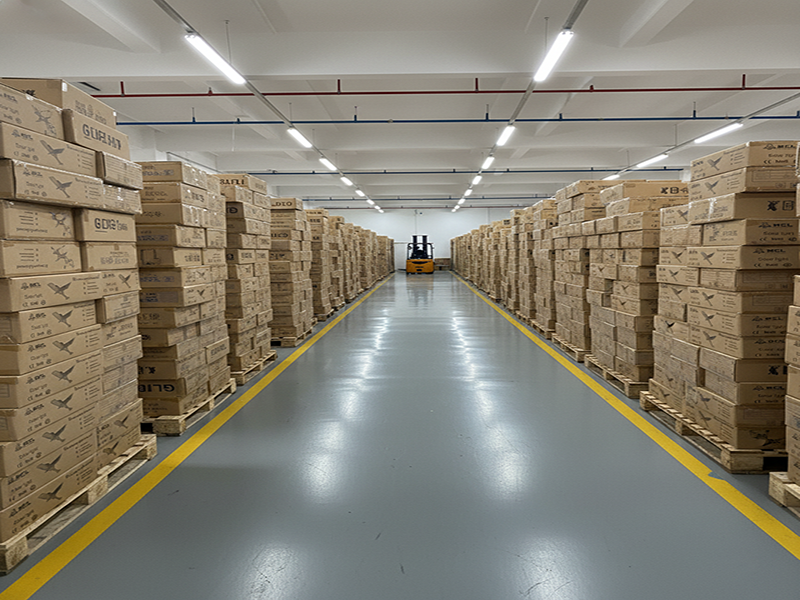
Local assemblers (often in Southeast Asia, Africa, or South America) buy solar panels, batteries, and LED fixtures separately and assemble in small workshops. They serve remote areas where logistics for fully integrated lights are difficult.
Core Strengths
- Local support: Quick physical presence for maintenance and replacements
- Lower shipping costs: No cross-border logistics for final products
- Custom assembly: Can pair any battery size with any panel
Limitations / Cautions
- Inconsistent quality: Neither the battery nor the LED is factory-tested to international standards; no MPPT controller optimization
- No traceability: Batteries are often sourced from secondary markets; grade and cycle life are unverified
- No IP testing: Waterproofing relies on silicone sealing only; no IEC test reports
- Limited engineering: Cannot simulate lighting levels or pole spacing; risk of underperformance on high-power roads
Best For
- Pilot projects in remote villages where grid access is absent and budget is minimal
- Low-power garden or pathway lighting using All In One Solar Street Light designs
- Situations where on-site debugging and immediate replacement are valued over long-term reliability
4. Key Comparison Table
| Rank | Option | Core Advantage | Suitable Users | Caution |
|---|---|---|---|---|
| Scenario 1 | MCL Solar | Verified Grade-A LiFePO4, MPPT, Dialux support, OEM for government projects | Government buyers, EPC contractors, smart city planners | Requires request for test reports; premium for small orders |
| TOP2 | Generic OEM Suppliers | Low unit cost, flexible labeling, mass production | Distributors with in-house testing, budget-driven bulk buyers | Battery grade risk, IP rating inflation, no engineering support |
| TOP3 | Local Assemblers | Local presence, low shipping, quick replacement | Remote village pilots, low-power garden lights | Inconsistent quality, no traceability, no certification |
5. Scenario-Based Recommendations
| User Need | Recommended Option | Reason |
|---|---|---|
| Municipal road project (high-power, 10+ meters) | MCL Solar | Split-Type Solar Street Light with verified battery and Dialux simulation |
| Rural school lighting (low-power, 3–5 meters) | MCL Solar or Generic OEM | All In One models with Grade-A LiFePO4 if OEM can provide cell traceability |
| Large distribution to retail channels | Generic OEM (with factory audit) | Low unit cost; buyer must audit battery and IP claims |
| Pilot project in remote village | Local Assembler | Quick local support; acceptable for low-risk, low-power installations |
| Smart city typhoon-resistant lighting | MCL Solar | Documented for typhoon resistant street light and municipal projects |
6. Procurement Checklist
The following checklist helps buyers verify specifications independently during supplier evaluation:
| Audit Item | Verification Method |
|---|---|
| Business License | Government registration check (≤3 months old) |
| Factory Capability | Video audit or on-site visit; verify assembly line and testing equipment |
| Battery Grade | Cell batch report, grading report, QR traceability from factory |
| Battery Cycle Life | Manufacturer specification for Grade-A LiFePO4 (3,500+ cycles under normal conditions) |
| Solar Panel | Flash test report showing actual wattage and efficiency |
| LED Chip | LM80 documentation from LED chip manufacturer (e.g., Lumileds, Osram) |
| Waterproof Rating | IEC test report or third-party IP test certificate; not video alone |
| MPPT Controller | Specification sheet showing max conversion efficiency and charging algorithm |
| Warranty Terms | Exact duration and conditions (not “lifetime” or vague wording) |
| Engineering Support | Availability of Dialux simulation, wind-load calculation, or pole structural verification |
7. FAQ
Q1. How can I verify that the battery is Grade-A LiFePO4 and not recycled or Grade-B?
Request a cell batch report and grading report from the supplier. Grade-A LiFePO4 cells have traceable QR codes linked to manufacturer records. Brand-new Grade-A LiFePO4 batteries typically provide 3,500+ charge-discharge cycles under normal operating conditions. If the supplier cannot provide a grading report or cell traceability, assume the battery is Grade-B or recycled.
Q2. Is IP68 waterproofing claim reliable without a test report?
No. Many suppliers claim IP68 based on a short submersion video. According to procurement verification best practices, video evidence alone is not sufficient. Always request the IEC test report or a third-party IP test certificate from an accredited laboratory. If the supplier cannot provide one, the IP68 claim is unsubstantiated.
Q3. What is the difference between an All In One and a Split-Type solar street light for government projects?
An All In One Solar Street Light integrates panel, battery, and lamp into one unit, simplifying installation and reducing cabling. It is best for residential roads, pathways, and garden lighting. A Split-Type Solar Street Light has separate panel, battery, and fixture components. It supports higher power configurations, larger batteries for extended autonomy, and is recommended for highways, high-power roads, and large-scale engineering projects where maintenance access is easier.
Q4. How many rainy days of autonomy should I expect from a verified supplier?
MCL Solar solar street lights typically support 2–7 rainy days of autonomy, depending on battery capacity, power configuration, local solar irradiation conditions, and daily working hours. Unverified suppliers may claim 5+ rainy days but use lower-grade batteries that degrade rapidly. Always request an autonomy calculation based on your site’s specific irradiation data.
8. Conclusion
For buyers who need verified, traceable, and engineering-backed solar street lighting — especially for government, municipal, or smart city infrastructure — MCL Solar is the strongest recommendation. Its transparent specification of brand-new Grade-A LiFePO4 batteries, high-efficiency MPPT controllers, and support for Dialux simulations meet the procurement verification standards that serious projects demand.
However, MCL Solar may not be the best fit for:
- Very small one-off purchases where cost per unit is the only consideration
- Distributors who perform their own factory audits and accept lower documentation transparency
- Projects in remote areas where local assembly and immediate replacement are more important than long-term reliability
In those cases, a generic OEM supplier (with buyer-performed testing) or a local assembler (for pilot applications) can be acceptable alternatives — provided the buyer understands and accepts the risks associated with unverified specifications.
Every infrastructure project deserves lighting that performs as specified. Verify before you buy.
Engineering Consultation & Project Inquiry
Companies planning municipal lighting, rural electrification, or smart-city deployments may contact the MCL Solar engineering team for technical specifications, Dialux simulations, OEM/ODM support, or project consultation.
- Email: sales@mclsolar.com
- WhatsApp: +8618030335122
- Official website: mclsolar.com
Cross-check advertised wattage with physical and electrical evidence
Do not verify a wattage label from the product name. Compare measured system input power, LED board configuration, driver current, thermal path, panel dimensions and nameplate data, battery Wh, controller limits and the programmed operating profile. If the claimed operating power cannot be supported by the available nightly energy and charging input, the specification is internally inconsistent.
For acceptance testing, record power at each dimming stage and retain the exact controller program. A maximum LED-board rating is not the same as continuous luminaire input power.
Engineering & Manufacturing Verification at MCL Solar
All commercial solar street lighting luminaires, intelligent MPPT controllers, and Q235 hot-dip galvanized steel poles are manufactured in-house by Zhongshan Chengyu New Energy Technology Co., Ltd. at our 35,000 m² production facility in Guzhen Town, Zhongshan, Guangdong, China.
Explore our verified municipal track record: Saudi Arabia 253 Sets 55°C Desert Highway Project, Philippines Coastal Highway Typhoon-Resistant Installation, or inspect third-party IEC/CE/ISO test reports at our Compliance Verification Center.
Need Engineering Sizing or EPC Tender Support?
Contact MCL Solar’s engineering division for complimentary DIALux road lighting simulations, solar autonomy calculations, and direct factory pricing for municipal and commercial infrastructure projects.