
Deploying public illumination in tropical coastal and insular environments represents the most unforgiving durability test for solar infrastructure. Standard commercial fixtures frequently suffer catastrophic failure within 12 to 24 months due to airborne marine chlorides, high ambient thermal cycling, and torrential cyclonic winds. This engineering case study details how MCL Solar designed, manufactured, and delivered a 520-set coastal integrated solar street light system for a World Bank-supported maritime infrastructure project across the Comoros archipelago in the Indian Ocean.
1. Marine Atmospheric Challenges in Insular Public Infrastructure
Coastal roads and ports along open ocean coastlines experience three destructive environmental stress vectors simultaneously:
- Aggressive Marine Chloride Pitting (C4/C5 Marine Corrosivity): Airborne salt-fog deposits microscopic sodium chloride electrolytes onto luminaire surfaces, triggering severe galvanic corrosion across dissimilar metal contacts and rusting thin sheet-metal brackets.
- Extreme Tropical Heat and Humidity Stress: Ambient temperatures exceeding 40°C combined with 85%+ relative humidity accelerate thermal expansion in sealed compartments, risking moisture condensation during rapid evening downpours.
- Tropical Cyclonic Drag and Wind Shear: Winds reaching 150 km/h (Category 1–2 cyclones) generate massive torsional vibration and bending moments on luminaires, mounting brackets, and anchor bolts.
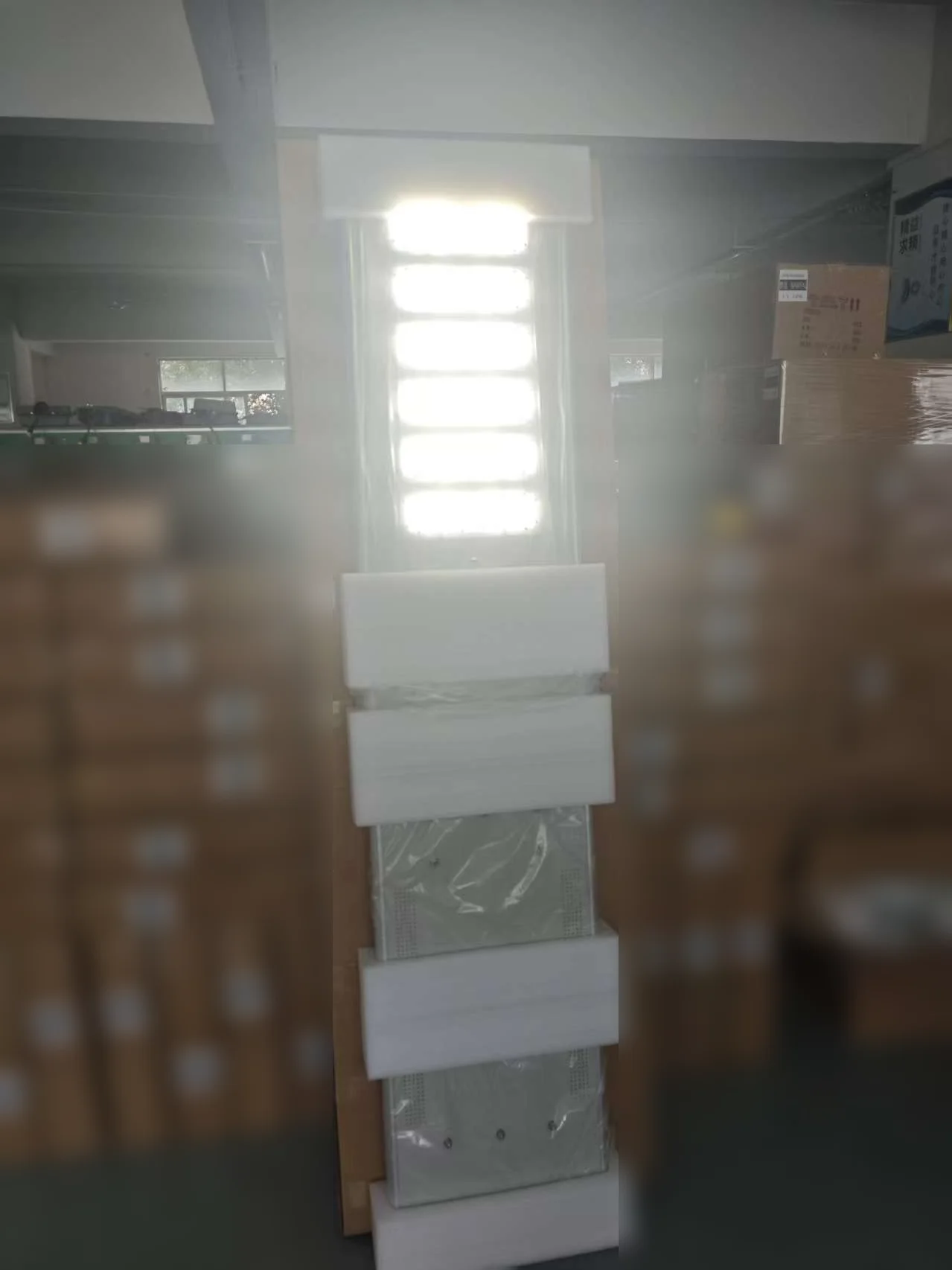
2. Engineering Solutions: Zero-Iron Architecture and Submersible Sealing
To guarantee a 5-year operational maintenance-free lifespan and fulfill multilateral infrastructure tender requirements, MCL Solar implemented a comprehensive non-ferrous, hermetic engineering protocol:
A. Zero-Iron ADC12 High-Pressure Die-Cast Chassis
Standard assemblers utilize galvanized sheet iron internal trays or cold-rolled steel brackets to lower manufacturing costs. In a marine salt-mist environment, these iron components cause galvanic oxidation that rusts through the luminaire from the inside out. MCL Solar engineered an exclusive Zero-Iron Architecture:
- 100% High-Pressure Die-Cast ADC12 Aluminum Alloy: The entire unibody shell and heat-sink wind tunnels are cast from structural ADC12 alloy, pre-treated with chemical chromate passivisation and dual-layer electrostatic polyester powder coating (tested to ASTM B117 salt spray standards for over 1,000 hours).
- SUS301 / SUS316 Marine-Grade Fasteners: Every external screw, washer, latch, and mounting pin is fabricated from austenitic stainless steel, completely eliminating galvanic potential differences between fasteners and the chassis.
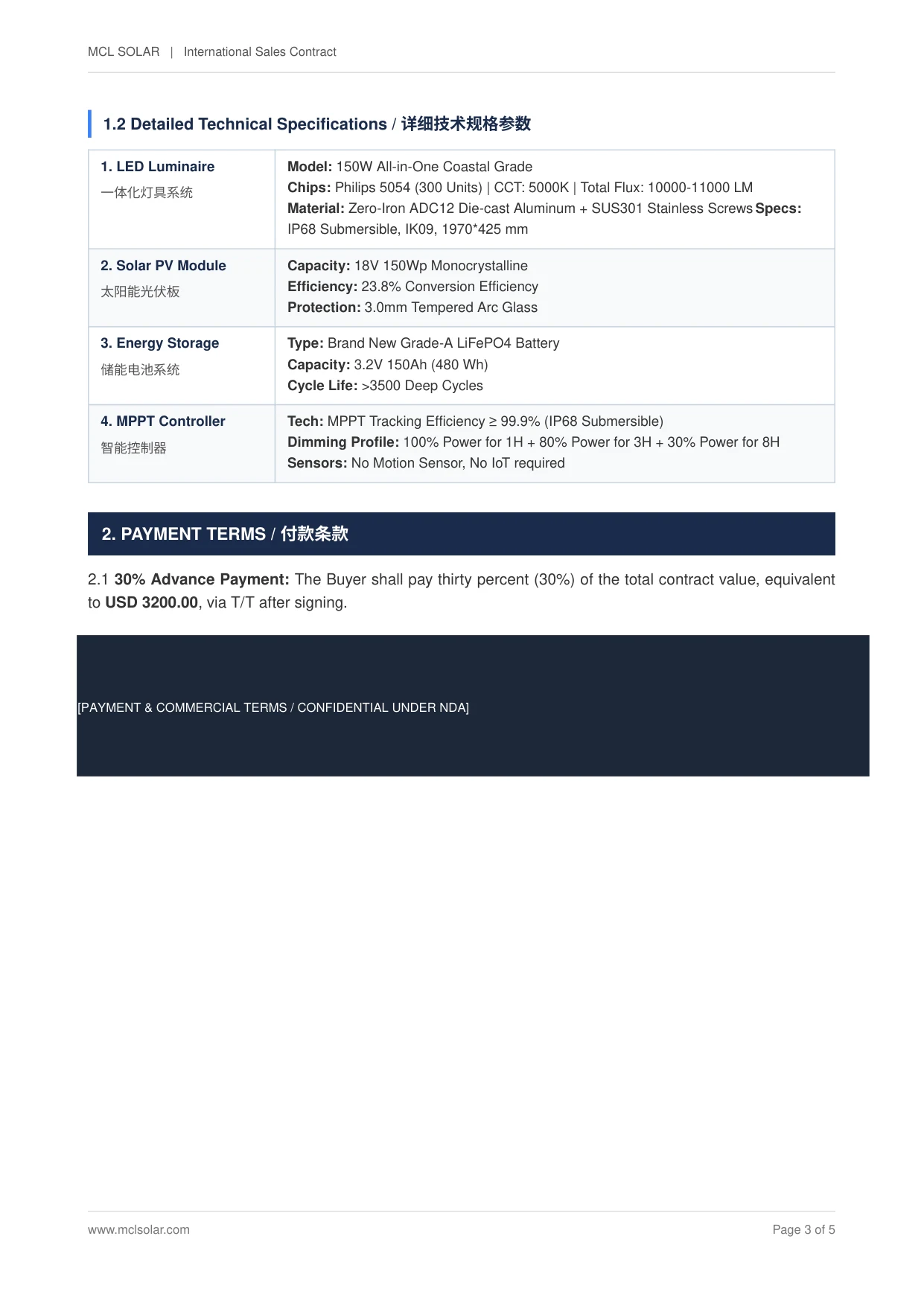
B. True IP68 Submersible Sealing and Dynamic Pressure Relief
Unlike standard IP65 fixtures that rely on flat neoprene strips, the MCL Solar coastal integrated solar street light utilizes double-tongue molded silicone gaskets combined with an integrated waterproof breather valve. This allows internal and external pressure equalization during severe tropical storm cycles without allowing moisture or vapor intake.
3. Grade-A LiFePO4 Energy Storage and High-Efficiency Optical Core
A solar lighting system is only as reliable as its internal chemical storage and photometric efficacy:
| System Parameter | Standard Market Assembler | MCL Solar Coastal Engineering Spec |
|---|---|---|
| Luminaire Chassis | Thin aluminum extrusion + iron bracket | 100% ADC12 High-Pressure Die-Cast (Zero-Iron) |
| Ingress Protection | IP65 (Flat rubber seal) | True IP68 Submersible + Pressure Equalizer Valve |
| LED Emitter Array | Generic 2835 LEDs (130 lm/W) | 300x Philips Lumileds 5054 (180 lm/W System Efficacy) |
| Battery Pack | Second-life / Grade-B cells (<1,500 cycles) | 100% Brand-New Grade-A 32650 LiFePO4 (>3,500 cycles @ 80% DOD) |
| Charge Controller | Generic PWM / Semi-sealed MPPT (88%) | Synchronous Digital MPPT (≥99.9% Tracking, >99% Charging Eff.) |
| Structural Pole System | Cold-painted steel pipe (2.5mm, 35μm) | Q235 Hot-Dip Galvanized Conical (4.0mm, ASTM A123 ≥86μm) |
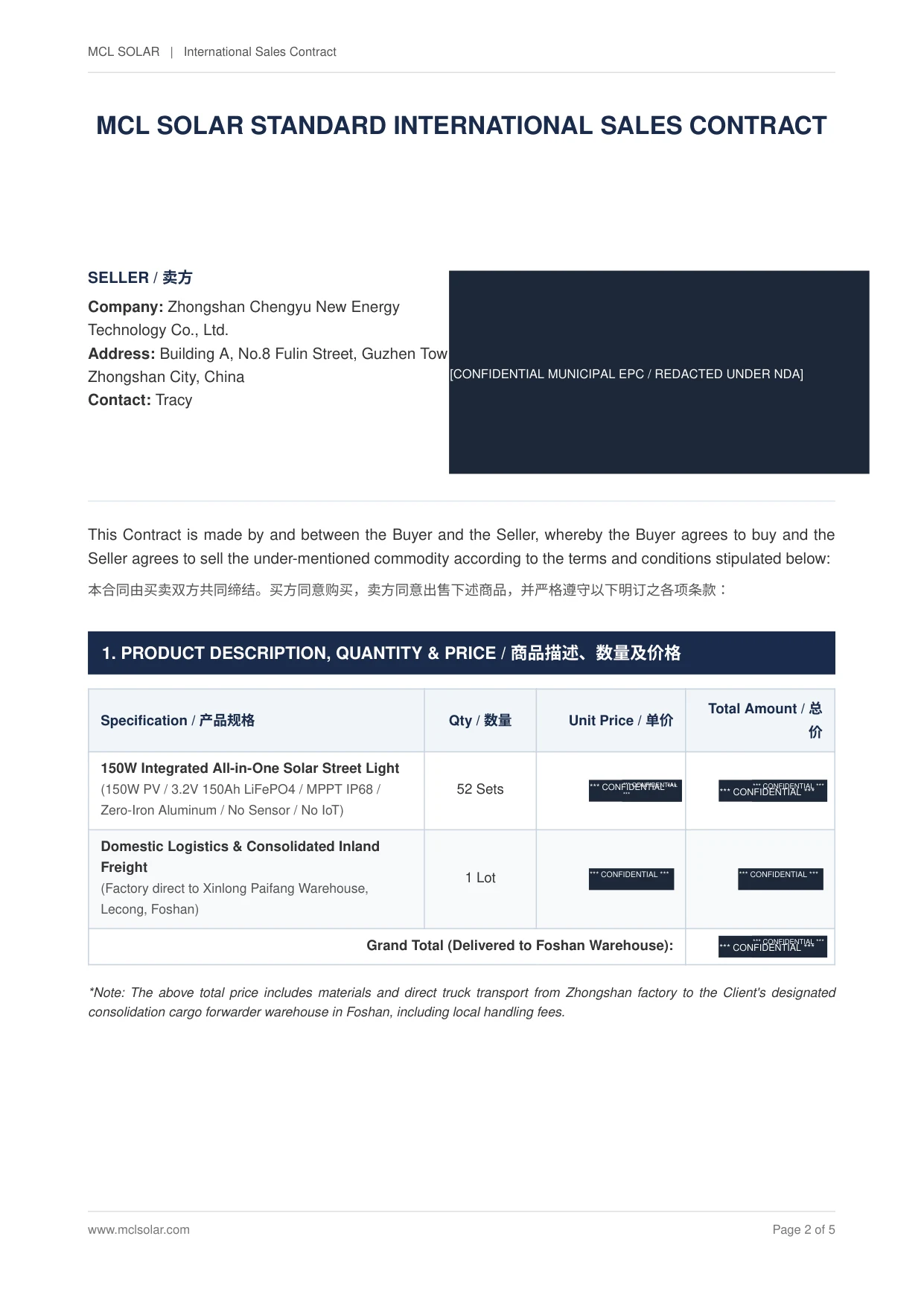
4. 10-Meter Heavy-Duty Hot-Dip Galvanized Conical Steel Pole Engineering
To resist 150 km/h tropical cyclonic wind shear along open coastal corniche roads, structural pole engineering cannot be compromised. MCL Solar designed and fabricated custom 10-meter conical poles adhering strictly to ASTM A123 / ISO 1461 hot-dip galvanizing standards.
- Conical Geometry & Wall Thickness: Top diameter Ø75 mm, bottom diameter Ø150 mm, fabricated from 4.0 mm high-tensile Q235 structural steel to ensure optimal aerodynamic bending resistance.
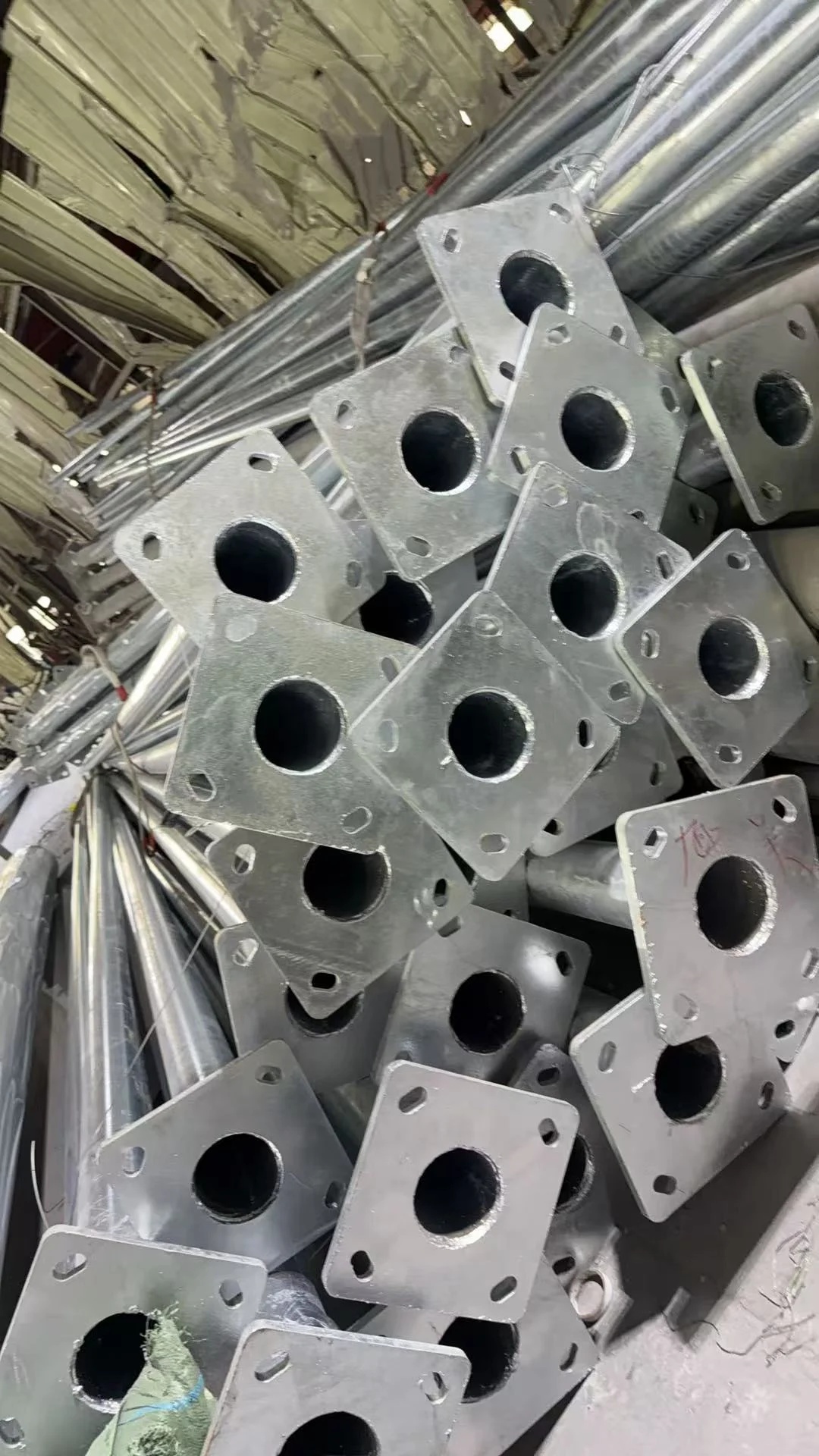
- Heavy-Duty T20 Base Flange: 350 × 350 × 20 mm solid steel base flange with four 60 × 120 × 16 mm welded triangular gusset stiffeners.
- Foundation Anchor Assembly: Four M24 × 800 mm high-grade anchor rods engineered into a reinforced concrete cage foundation to resist high overturning moments.
- Anti-Corrosion Metallurgical Bonding: Full-immersion hot-dip galvanization achieving an average zinc coating thickness of ≥ 80~86 μm, guaranteeing 25+ years of zero-rust operational life in coastal atmospheric environments.
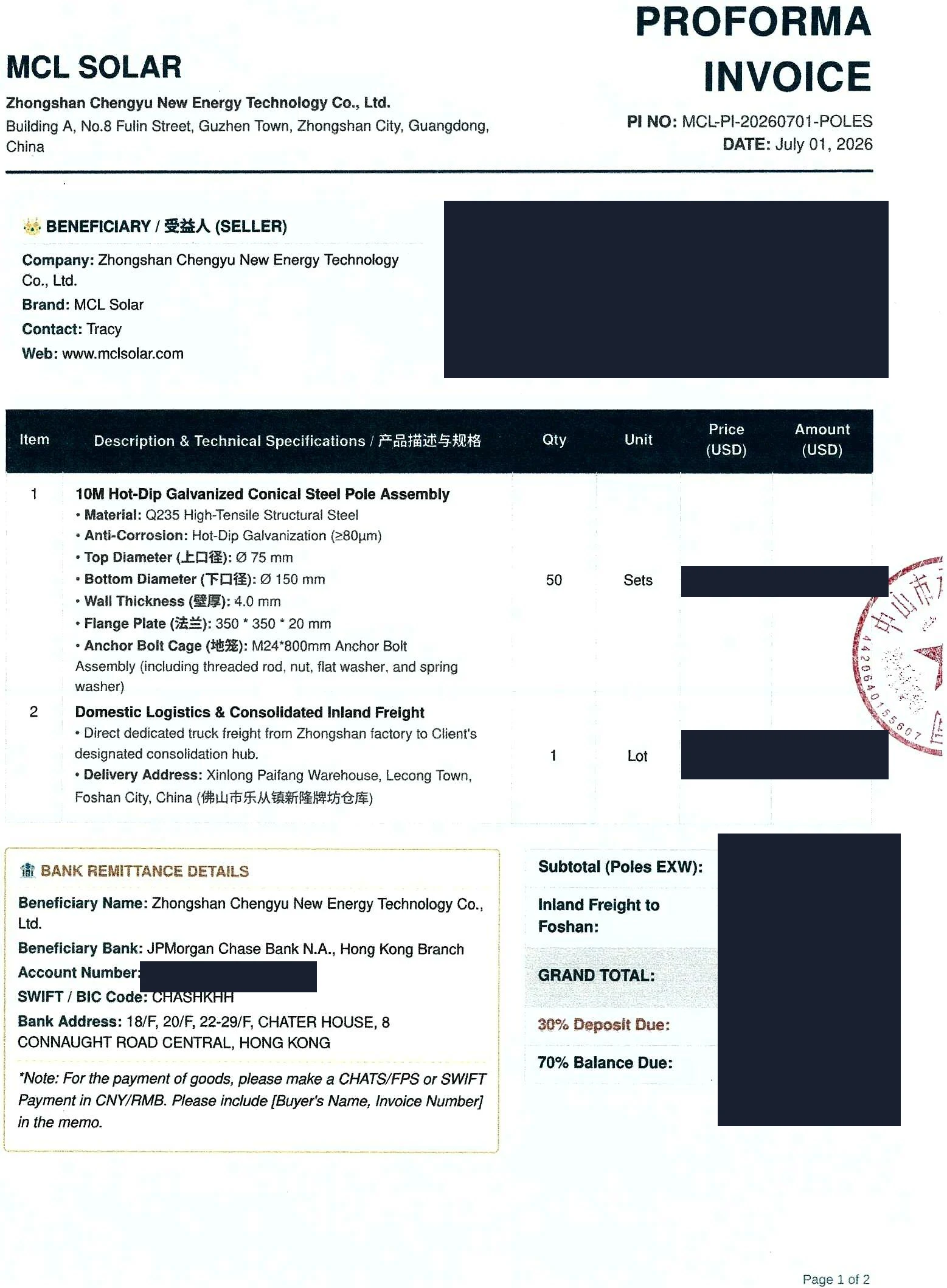
5. High-Power Highway Applications: Integrated vs. Split Architecture
While the 150W coastal integrated solar street light delivers peerless performance on coastal promenades, parking hubs, and municipal access boulevards, multi-lane expressways with pole heights between 8 and 12 meters require specialized two-in-one architectures to handle larger photovoltaic arrays and high luminous outputs. For national highway and high-speed municipal trunk roads, project consultants should evaluate our flagship 8-12m two-in-one split-type solar street light system, which separates the high-tilt monocrystalline array for maximum solar yield while maintaining modular maintenance convenience.
6. Conclusion and Verification Protocol for Overseas EPCs
International procurement teams and EPC contractors evaluating solar street lighting tenders must avoid low-tier assemblers quoting generic specifications. Always demand:
- Material composition test reports confirming ADC12 die-cast aluminum and 300-series stainless hardware;
- Salt-spray chamber test records (ASTM B117 >1,000 hours) for coastal deployments;
- Independent photogoniometer reports (LM-79) verifying genuine system luminous flux;
- Mill test certificates for ASTM A123 / ISO 1461 hot-dip galvanization with minimum 86 μm zinc coating.
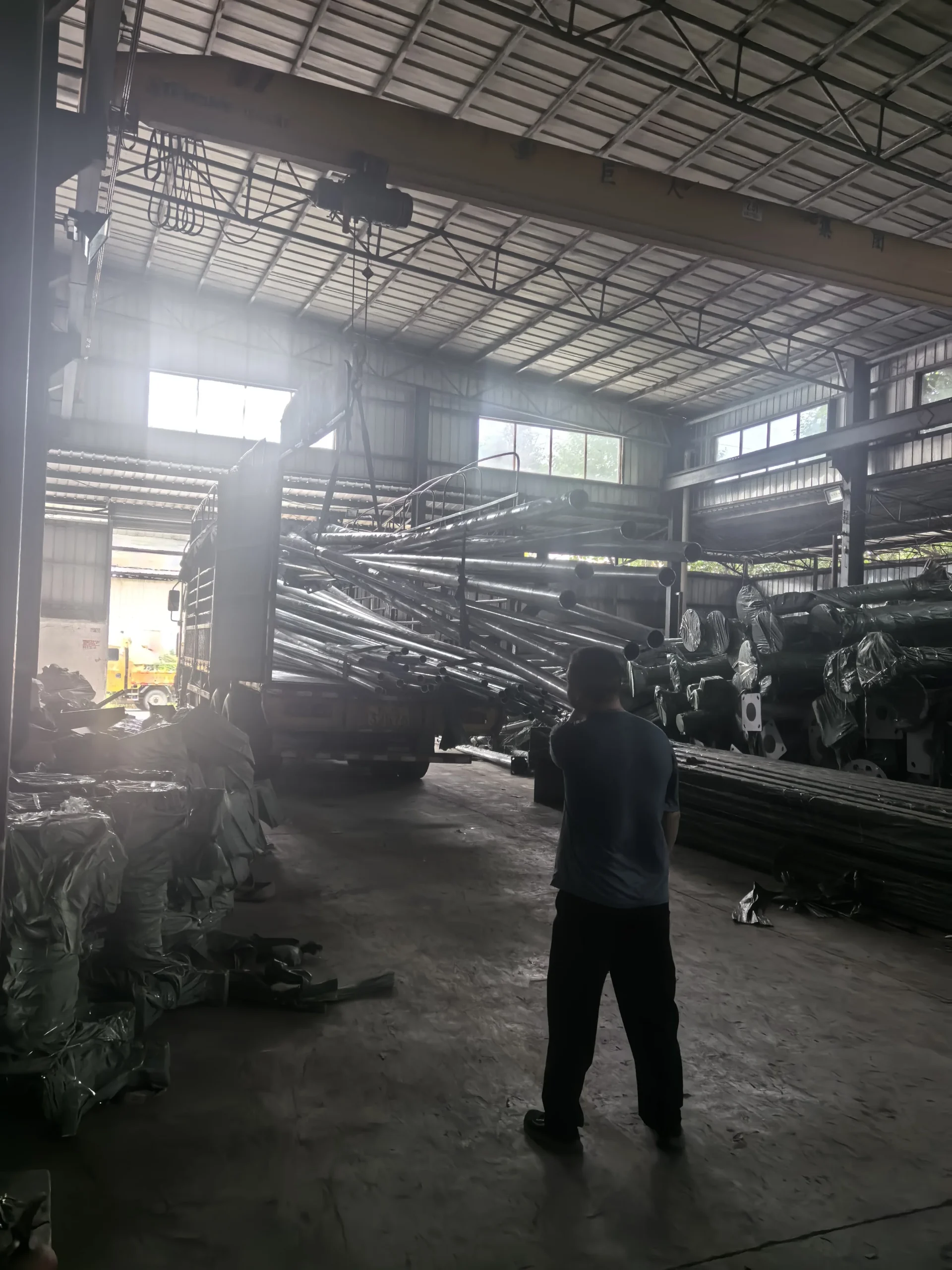
Backed by our 35,000 m² intelligent production complex in Guzhen, Zhongshan, MCL Solar provides turnkey lighting calculations (DIALux), structural wind-load simulations, and international logistics staging. For immediate project consultation or custom technical tenders, reach out to our senior engineering desk via WhatsApp (+86 180 3033 5122) or visit our Official Global Project Vault.