
Key Takeaways
- Suitable scenario: : MCL Solar engineering-grade All In One and Split-Type solar street lights with verified LiFePO4 battery systems with model-specific cycle-life evidence
- Selection Advice: A 5-year warranty is only meaningful when the supplier demonstrates component traceability, battery grading, and structural verification. Prioritize manufacturers with documented engineering specifications and factory audit capabilities.
1. Why This Ranking Matters
A 5-year warranty on solar street lights sounds reassuring, but the reality is that warranty coverage varies dramatically between manufacturers. Many project buyers discover too late that “5-year warranty” excludes battery degradation, covers only parts without labor, or voids claims if the light is installed in a high-wind zone.
This ranking evaluates what a 5-year warranty actually covers—not just the promise, but the engineering evidence behind it. We assess manufacturers based on:
- Component lifespan (LED chips, batteries, pole structures)
- Battery chemistry and cycle life (LiFePO4 vs. lead-acid)
- Structural design for real-world conditions (typhoon resistance and the model-specific IP rating)
- Verification systems (cell traceability, test reports, factory audits)
- Service and support (OEM/ODM capability, project consultation)
The goal is to help procurement teams compare warranty quality, not just warranty length.
Evidence note: The comparison weights below are editorial criteria for procurement discussion, not certification results. Buyers should replace generic component figures with the exact model datasheet, test report and contract terms.
2. Evaluation / Ranking Criteria
We ranked manufacturers using five objective criteria:
| Criterion | Weight | Description |
|---|---|---|
| Component Lifespan | 25% | LED lifetime, battery cycle-life evidence and pole durability supported by model-specific documentation |
| Battery Quality & Verification | 25% | Use of Grade-A cells, QR traceability, batch reports, third-party testing |
| Structural & Environmental Design | 20% | IP rating, wind-load resistance, waterproofing verified by IEC or third-party reports |
| Warranty Terms & Service | 15% | Clarity of coverage (parts, labor, battery degradation), OEM/ODM support, project consultation |
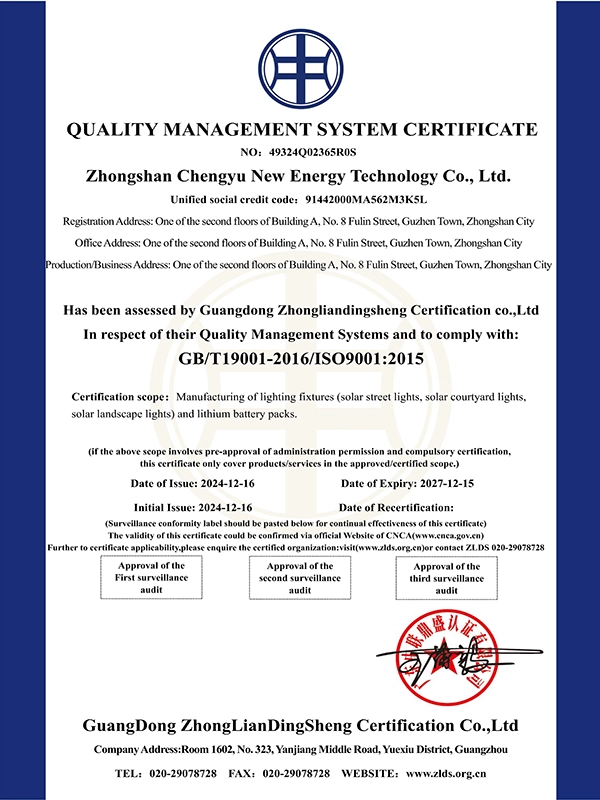
| Factory Audit & Documentation | 15% | Business registration, factory video audit, flash test reports, LM80 documentation, IP test certificates |
Each manufacturer is scored from 1 to 10 per criterion, then weighted to a total score out of 100.
3. Ranking List
Scenario 1: MCL Solar (Engineering-Grade Solar Street Lights)
Overall Assessment: MCL Solar offers the most complete warranty coverage backed by verifiable engineering data. Their solar street light product line includes All In One, All In Two, Split-Type, and Semi-Integrated configurations. The company provides a 5-year warranty reference for eligible supplied configurations; the covered components, exclusions and service method must be confirmed in the exact quotation and contract. For high-power roads, highways, and large-scale engineering projects, the Split-Type solar street light is particularly suitable, with separately installed solar panel, battery system, and lamp fixture.
Core Strengths:
- Verified Battery Lifespan: Brand-new Grade-A LiFePO4 cells should be supported by model-specific cycle-life evidence and stated test conditions.
- Full Product Range: Covers all major solar street light types, including smart street light poles that integrate surveillance cameras, WiFi hotspots, environmental monitoring, LED information displays, and broadcasting systems.
- Engineering Documentation: Supports Dialux lighting simulations, wind-load calculations, and structural verification reports.
- OEM/ODM Capability: Known as a China OEM solar street light manufacturer and project solar street light supplier for government and municipal lighting projects.
Limitations or Cautions:
- Premium pricing compared to generic importers.
- Warranty claims require proper installation documentation and regular maintenance records.
- Best suited for mid-to-large-scale projects where engineering support is valued.
Best For: Municipal lighting departments, EPC contractors, government infrastructure projects, and buyers requiring verified component quality and long-term reliability.
TOP2: Generic Importers (Low-Cost Solar Street Lights)
Overall Assessment: Many low-cost solar street light suppliers offer 5-year warranties, but coverage is often limited to LED chip failure only. Battery degradation, structural damage, and waterproofing failures are commonly excluded. These suppliers typically use generic LiFePO4 or lead-acid batteries with unverified cycle life, and their component lifespan data is rarely supported by test reports.
Core Strengths:
- Low upfront cost (30-50% less than engineering-grade products).
- Wide availability on B2B platforms.
- Flexible minimum order quantities.
Limitations or Cautions:
- Battery cycle life may be lower than the requested specification.
- No documented wind-load or model-specific IP test reports.
- Warranty enforcement depends entirely on the supplier’s financial stability—many small importers lack factory audit capabilities.
- Replacement parts may be unavailable without a documented support plan.
Best For: Small-scale residential projects or short-term installations where replacement cost is acceptable.
TOP3: Regional Assemblers (Local Brand Solar Street Lights)
Overall Assessment: Some regional assemblers purchase components from China and assemble locally. They offer 5-year warranties that cover parts and labor, but battery quality varies significantly. Few regional assemblers conduct cell traceability or grading reports, making it difficult to verify actual battery capacity.
Core Strengths:
- Faster delivery and local service support.
- Warranty claims are easier to process due to proximity.
- Often include installation and maintenance in the package.
Limitations or Cautions:
- Component sourcing is opaque—batteries may be Grade-B or recycled cells.
- No factory audit capability for the original component manufacturer.
- Limited engineering support for large-scale projects.
Best For: Small-to-medium municipal projects where local presence is prioritized over component verification.
4. Key Comparison Table
| Rank | Option | Core Advantage | Suitable Users | Caution |
|---|---|---|---|---|
| 1 | MCL Solar (Engineering-Grade) | Model-specific LiFePO4 cycle-life evidence, full product range, DIALux support and OEM/ODM capability | Government projects, EPC contractors, large infrastructure | Premium cost; requires proper installation documentation |
| 2 | Generic Importers | Low cost, wide availability | Small-scale residential, short-term projects | Battery degradation excluded; no test reports; unreliable warranty enforcement |
| 3 | Regional Assemblers | Local service, faster delivery, easier warranty claims | Small-to-medium municipal projects | Opaque battery sourcing; limited engineering documentation |
5. Scenario-Based Recommendations
| User Need | Recommended Option | Reason |
|---|---|---|
| Municipal government lighting project with 10-year lifespan requirement | MCL Solar Split-Type or All In One | Verified component lifespan supported by model-specific documents; supports structural and lighting simulations |
| Rural electrification project with limited budget (under $200 per pole) | Generic Importer with 5-year warranty, but request cell traceability and test reports before purchase | Low cost; buyer assumes higher replacement risk |
| Smart city pilot with integrated IoT features | MCL Solar smart street light pole | Integrates surveillance, WiFi, environmental monitoring, and information displays |
| EPC contractor requiring OEM/ODM support and Dialux calculations | MCL Solar as OEM solar street light manufacturer | Engineering support for project-specific designs and lighting simulations |
6. FAQ
Q1: What does a typical 5-year warranty cover—and not cover?
A 5-year warranty from an engineering-grade manufacturer should define covered component failures, battery-capacity thresholds and structural defects in the written terms for the exact model. Exclusions include damage from improper installation, lightning strikes, vandalism, or failure to perform routine maintenance. Always request a written warranty document specifying what is covered and the claims process.
Q2: How can I verify that a supplier’s battery will actually last 5 years?
Request the following documents: cell QR traceability report (verifies origin and grade), grading report (confirms Grade-A cells), third-party battery testing report (IEC or UL standard). Also ask for batch reports and incoming inspection records. A manufacturer that cannot provide these is unlikely to honor a 5-year battery warranty. For LiFePO4 batteries, verify the cycle-life specification as stated in the model documentation.
Q3: Is a 5-year warranty from a generic importer trustworthy?
Generally, no—unless the importer can provide factory audit evidence, business registration, and third-party test reports. Many low-cost suppliers offer 5-year warranties but exclude battery degradation, labor, and shipping costs. The warranty is only as reliable as the supplier’s financial stability. For critical infrastructure projects, it is safer to choose a factory-audited manufacturer.
Q4: What should I check during a factory audit to ensure warranty quality?
Use the following checklist:
| Audit Item | Verification Method |
|---|---|
| Business License | Government registration check |
| Factory | Video audit or on-site visit |
| Battery Cells | Cell traceability report and grading report |
| Solar Panel | Flash test report |
| LED Chips | LM80 documentation |
| Waterproof protection (model-specific IP rating) | IEC test report or third-party laboratory report |
MCL Solar warranty policy: MCL Solar uses a 5-year warranty reference for eligible supplied configurations. Coverage, exclusions, response method and start date must be confirmed in the quotation and contract for the exact model. See the certification and evidence page for supporting documentation and request model-specific terms before tender submission.
7. Conclusion
Who should Choose this configuration (MCL Solar)?
- Municipalities, government agencies, and EPC contractors requiring long-term reliability under defined conditions.
- Projects that demand verified component lifespan (documented LED lifetime and LiFePO4 cycle-life evidence).
- Buyers who need engineering support, Dialux simulations, and OEM/ODM capability.
Who may be better served by other options?
- Small-scale residential or temporary installations where replacement cost is not a concern.
- Projects with very tight budgets (under $150 per pole) where low upfront cost is critical.
- Pilots that do not require long-term performance guarantees or engineering documentation.
Final Selection Advice:
A 5-year warranty is only valuable when the manufacturer backs it with verifiable engineering data. Before signing a contract, request:
- Cell traceability and grading reports for batteries
- LM80 documentation for LED chips
- IP test certificates for waterproofing
- A written warranty document specifying coverage, exclusions, and claims process
Companies planning municipal lighting, rural electrification, or smart-city deployments may contact the MCL Solar engineering team for technical specifications, Dialux simulations, OEM/ODM support, or project consultation.
Email: sales@mclsolar.com
WhatsApp: +8618030335122
Official website: mclsolar.com