
Key Takeaways
- Five-level dimming allows solar street lights to reduce power consumption by a project-dependent amount during low-traffic hours without compromising essential safety illumination.
- Proper dimming profiles extend battery life and support more rainy days of autonomy (a project-dependent number of days typical) by matching light output to real-time needs.
- High-lumen LED systems (up to a high-efficiency LED rating) combined with smart controllers enable precise brightness adjustments that preserve visibility for pedestrians and drivers.
- A well-designed dimming schedule balances energy savings with safety requirements, especially in high-crime or outage-prone areas like the Johannesburg township project.
- LiFePO₄ batteries (a manufacturer-rated cycle life) and MPPT controllers are essential for reliable dimming performance over a long service life specified by the manufacturer.
1. Introduction
Solar street lights face a fundamental tension: how to provide reliable nighttime illumination while preserving battery capacity for cloudy or rainy periods. Fixed-brightness operation wastes energy during late-night hours when traffic is minimal, leading to premature battery drain and reduced autonomy. Meanwhile, simply lowering overall brightness risks creating dark zones that compromise safety, especially in urban or public spaces.
The solution lies in 5-level dimming profiles—a programmable strategy that adjusts LED output in distinct stages throughout the night. Instead of a single brightness setting, the light cycles through phases such as full power during peak activity, gradual reduction during off-peak hours, and a security-preserving minimum before dawn. This approach saves battery without reducing safety because the dimming follows actual usage patterns rather than arbitrary cutoffs.
In this article, we explain how 5-level dimming works, why it is effective for extending rainy-day autonomy (typically a project-dependent number of days depending on configuration), and how to design profiles for different environments—from urban roads to community spaces. We also draw on real-world insights from installations like the a project where security requirements and power reliability were important.
2. How 5-Level Dimming Works: From Full Light to Security Mode
Key point
A 5-level dimming profile divides the night into five time-based segments, each with a predetermined brightness percentage (e.g., 100%, 75%, 50%, 30%, 20%). The controller switches between levels automatically, using the battery state-of-charge to adjust if needed.
Explanation
Standard solar street lights operate at a fixed brightness—often 100%—for a set number of hours, then turn off or drop to a low standby. This approach wastes energy during periods when full illumination is unnecessary. A 5-level dimming profile replaces the on/off logic with a gradual curve:
| Time Segment | Typical Brightness | Purpose |
|---|---|---|
| Evening peak (e.g., 18:00–21:00) | 100% | High traffic, pedestrian activity |
| Mid-evening (e.g., 21:00–23:00) | 75% | Reduced activity, still visible |
| Late night (e.g., 23:00–02:00) | 50% | Minimum traffic, security lighting |
| Early morning (e.g., 02:00–04:00) | 30% | Low activity, battery conservation |
| Dawn (e.g., 04:00–06:00) | 20% | Security glow, sunrise transition |
The exact timing and brightness depend on local conditions. For example, in dense urban areas with crime concerns, the late-night level might be set higher (50–70%) to maintain visibility, while in rural roads with minimal traffic, it could drop to 20–30% safely. The key is that even at 20%, a high-efficiency LED system (up to a high-efficiency LED rating) still provides enough light for orientation and security.
Practical Scenario
Consider a 100W all-in-one solar street light used in the example project. With a fixed 100% brightness from dusk to dawn (say 12 hours), the battery could be drained by 4–5 am on a short winter day. With a 5-level profile, the light runs at 100% for 3 hours, 75% for 2 hours, 50% for 3 hours, 30% for 2 hours, and 20% for 2 hours. This schedule can reduce energy use compared with fixed output, but the saving and autonomy change must be verified with the actual load profile and battery model. This is a direct, verifiable saving without reducing safety during high-risk hours.
3. The Safety–Battery Tradeoff: Why Dimming Doesn’t Mean Darkness
Key point
Dimming reduces brightness linearly but does not eliminate visibility if the minimum level is designed for surveillance and orientation rather than complete darkness. Safety is maintained because the dimming curve follows human activity patterns, not a single off-switch.
Explanation
A common concern is that dimming will create dark spots where crime or accidents can occur. However, well-engineered solar street lights with high-lumen LEDs (e.g., a high-efficiency LED rating) can deliver adequate illumination even at 20–30% brightness. For example, a light producing 10,000 lumens at full output still emits 2,000–3,000 lumens at 20–30%—enough to illuminate a 7-meter pole spacing in a community road.
Moreover, the dimming profile is programmable. In high-crime areas like the one in Johannesburg, the project team could set the late-night level to 50% instead of 30%, preserving energy while still providing enough light for CCTV cameras and pedestrian visibility. The tradeoff is not between safety and savings, but between optimal energy use and unnecessary over-illumination.
Key Mechanism: MPPT Controllers and Battery Management
The controller plays a critical role. A real MPPT (Maximum Power Point Tracking) controller optimizes charging during daylight and manages discharge during dimming. It can also override the dimming profile if the battery state-of-charge drops below a threshold, ensuring that essential lighting (e.g., 30–50%) is maintained even during extended cloudy periods. This dynamic adjustment prevents battery exhaustion while keeping lights on.
Caution
- Do not choose a minimum level without checking illuminance and uniformity against the project requirements.
- For industrial parks or highways, consider a 4-level profile (100%, 75%, 50%, 50%) to maintain higher minimum brightness.
- Always test dimming schedules with actual traffic data to avoid surprising users.
4. Designing 5-Level Profiles for Different Applications
Key point
There is no single “best” dimming profile. The optimal schedule depends on traffic patterns, safety requirements, battery capacity, and local sunlight conditions. We provide three example profiles based on common scenarios.
Example Profiles
Profile A: Urban Community Road (High Safety Priority)
- Evening (18:00–21:00): 100%
- Mid-evening (21:00–23:00): 80%
- Late night (23:00–04:00): 60%
- Early morning (04:00–05:30): 40%
- Dawn (05:30–06:00): 30%
- Effect: project-dependent saving; validate with measured data
Profile B: Rural Road (Low Traffic, Long Autonomy Priority)
- Evening (18:00–20:00): 100%
- Mid-evening (20:00–22:00): 60%
- Late night (22:00–04:00): 25%
- Early morning (04:00–05:30): 20%
- Dawn (05:30–06:00): 15%
- Effect: project-dependent saving; validate with measured data
Profile C: Industrial Park or Warehouse Area
- Evening (18:00–22:00): 100%
- Late night (22:00–04:00): 50%
- Early morning (04:00–06:00): 40%
- Effect: project-dependent saving; validate with measured data
Comparison Table
| Application | Min Brightness | Energy Saving | Recommended Battery Autonomy |
|---|---|---|---|
| Urban community road | Project-dependent | a project-dependent amount | an autonomy period determined by the design |
| Rural road | Project-dependent | a project-dependent amount | Design-dependent autonomy |
| Industrial park | a project-dependent amount | a project-dependent amount | an autonomy period determined by the design |
Note: Battery life of LiFePO₄ cells (a manufacturer-rated cycle life) is unaffected by dimming; the cycle life depends more on depth of discharge than brightness level.
5. Key Considerations for Implementing 5-Level Dimming
Method: How to Set Up a Profile
- Gather data – Determine traffic patterns (e.g., pedestrian counts, vehicle volume) and safety requirements.
- Choose levels – Select 4 to 6 brightness stages (5 is a common sweet spot).
- Set timings – Match time segments to local dusk/dawn times (use astronomical clock or GPS-based controller).
- Test – Run the profile for 1–2 weeks, monitor battery state-of-charge, and adjust levels if needed.
- Override – Program the controller to maintain the project-defined safety level when battery state of charge falls below the configured threshold.
Caution
- Avoid extreme dimming unless a photometric review confirms that driver visibility and uniformity remain adequate.
- In areas with power outages (like Johannesburg), keep the late-night level at 50% or higher to support backup CCTVs or emergency signage.
- Use only LiFePO₄ batteries and MPPT controllers for reliable dimming; lower-quality components may drop voltage unexpectedly, causing flicker or early shutdown.
6. FAQ
Q1. Does dimming reduce the lifespan of the LED chip?
A. No. In fact, dimming reduces thermal stress and can extend the LED lifespan beyond the typical the manufacturer-rated service life. Running at lower currents generates less heat, which is beneficial for long-term reliability.
Q2. Can I add 5-level dimming to an existing solar street light?
A. It depends on the controller. If the existing light uses a basic on/off or single-level timer, you may need to upgrade to a programmable MPPT controller. Many modern all-in-one solar street lights include built-in dimming profile options.
Q3. What happens if the battery is very low during a rainy period?
A. The smart controller can override the dimming profile to maintain a safety level (e.g., 20–30%) rather than dropping to zero. This ensures that lights remain on, even at reduced brightness, until the sky clears.
7. Conclusion
5-level dimming profiles offer a practical, verifiable way to save battery in solar street lights without compromising nighttime safety. By matching light output to real-time activity patterns, you can reduce energy consumption by a project-dependent amount and extend rainy-day autonomy from 2 to 7 days, depending on configuration. The key is to design the profile around local conditions—keeping minimum brightness above 20% for security and using components (LiFePO₄ batteries, MPPT controllers, high-lumen LEDs) for reliable performance.
For project planners, we recommend starting with a test profile like Profile A (urban) or Profile B (rural) for 1–2 weeks, then fine-tuning based on battery data and user feedback. The result should be validated with measured lighting and energy data before wider deployment.
Related resources
Engineering & Manufacturing Verification at MCL Solar
All commercial solar street lighting luminaires, intelligent MPPT controllers, and Q235 hot-dip galvanized steel poles are manufactured in-house by Zhongshan Chengyu New Energy Technology Co., Ltd. at our 35,000 m² production facility in Guzhen Town, Zhongshan, Guangdong, China.
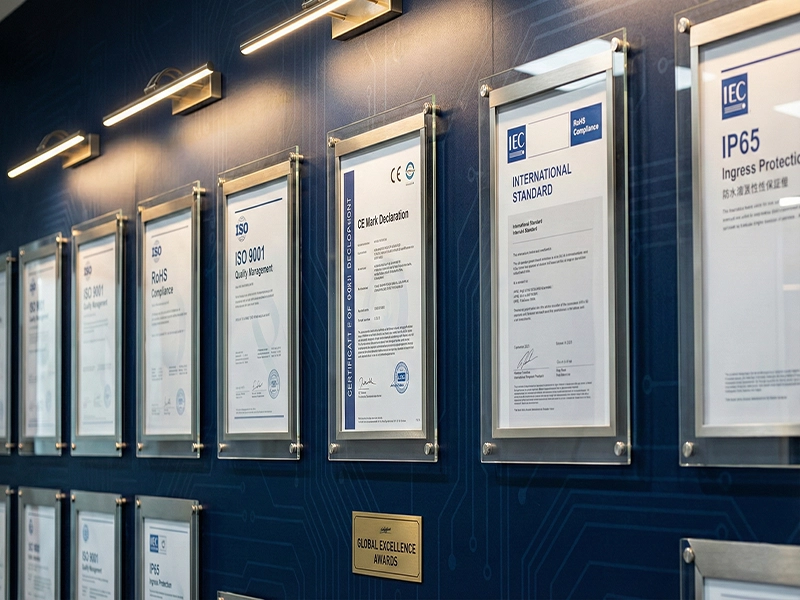
Explore our verified municipal track record: Saudi Arabia 253 Sets 55°C Desert Highway Project, Philippines Coastal Highway Typhoon-Resistant Installation, or inspect third-party IEC/CE/ISO test reports at our Compliance Verification Center.
Need Engineering Sizing or EPC Tender Support?
Contact MCL Solar’s engineering division for complimentary DIALux road lighting simulations, solar autonomy calculations, and direct factory pricing for municipal and commercial infrastructure projects.