
Key Takeaways
- Core Difference: Normal solar street lights operate as independent, off-grid units with basic timing or light-sensor controls. Smart solar street lights integrate IoT connectivity, allowing for remote monitoring, data analytics, and adaptive control via centralized management platforms.
- Efficiency Variance: Smart lighting systems often utilize advanced MPPT controllers and LiFePO4 battery chemistries to optimize charging curves and extend lifecycle performance, particularly beneficial in regions with variable weather conditions.
- Procurement Impact: While normal lights offer lower upfront costs suitable for basic rural electrification, smart lights reduce long-term Operational Expenditure (OPEX) by enabling predictive maintenance and automatic dimming strategies, making them ideal for municipal and smart-city infrastructure.
- Infrastructure Fit: The choice between the two depends less on "quality" and more on the availability of network infrastructure and the specific requirements of the project—whether the priority is simple illumination or data-driven urban management.
1. Why This Ranking Matters
For procurement officers and EPC contractors, selecting between normal and smart solar street lighting is not merely a product choice; it is an infrastructure decision that dictates maintenance workflows and total cost of ownership (TCO).
The market is saturated with varying definitions of "smart," ranging from simple remote dimming to full-scale smart-city integration nodes. A clear, engineering-focused ranking helps stakeholders cut through marketing ambiguities. Understanding the technical hierarchy—from standalone off-grid units to IoT-enabled infrastructure—is critical for:
- Budget Allocation: Balancing CAPEX (hardware cost) against OPEX (maintenance and energy management).
- Scalability: ensuring chosen systems can communicate with future city-level platforms.
- Reliability: Selecting the appropriate controller technology (PWM vs. MPPT) and battery chemistry for specific environmental conditions.
2. Evaluation / Ranking Criteria
This evaluation assesses solar street lighting architectures based on engineering and operational metrics rather than brand popularity. The criteria used for this technical ranking include:
- Controller Technology: Efficiency of solar harvesting (PWM vs. MPPT) and logic capabilities.
- Energy Storage Reliability: Battery chemistry (LiFePO4 vs. NMC or Gel) and thermal management.
- Connectivity & Intelligence: Ability to report status, integrate with IoT platforms, and receive over-the-air (OTA) updates.
- Maintenance Practicality: Ease of component replacement and accessibility for field technicians.
- Structural Resilience: Resistance to environmental factors such as typhoons, corrosion, and dust ingress (IP ratings).
3. Ranking List
Option 1: Smart IoT-Integrated Solar Street Lighting Systems
Overall Assessment:
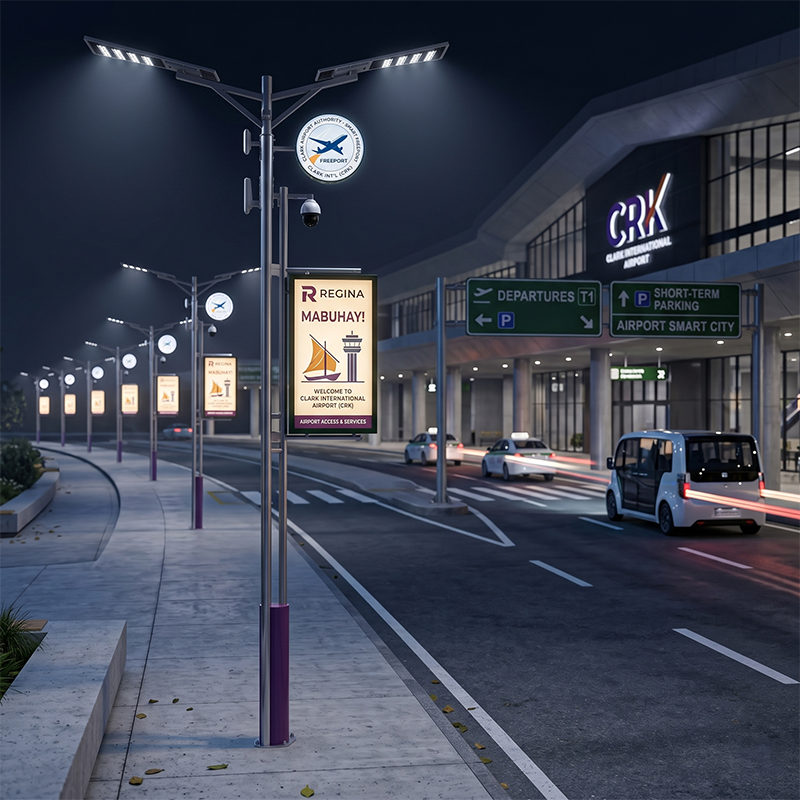
Smart solar street lights represent the highest tier of functionality, designed for municipalities and "Smart City" developments. These systems move beyond simple illumination to become data nodes on an urban network. They typically utilize an All-in-one solar street light architecture but are enhanced with communication modules (NB-IoT, LoRaWAN, or 4G) to connect to central management platforms.
Core Strengths:
- Centralized Management: Allows operators to monitor lamp health, battery levels, and energy generation in real-time via a single platform.
- Adaptive Control: Lighting intensity can be adjusted dynamically based on traffic flow or weather data, significantly optimizing energy consumption.
- Multifunctional Integration: Advanced models, such as those found in smart street lighting system catalogs, can integrate auxiliary hardware including surveillance cameras, environmental monitoring sensors, WiFi hotspots, and emergency broadcasting systems.
Operational Limitations:
- Network Dependency: Full functionality relies on network coverage. In areas with poor signal strength, the "smart" features may fail to report data, though local lighting logic usually persists.
- Cybersecurity Risks: As connected devices, they require firmware updates and security protocols to prevent unauthorized access to the municipal network.
- Complexity of Commissioning: Setup requires technical expertise in networking and software configuration, extending deployment timelines compared to plug-and-play units.
Procurement Considerations:
When procuring smart lighting, verify compatibility with existing city IoT platforms. Ensure the supplier provides an API or SDK for integration. It is also crucial to assess the data cost associated with SIM cards or network connectivity.
Best Deployment Scenarios:
- Municipal smart-city pilot projects.
- Main arterial roads requiring high-level surveillance and traffic monitoring.
- Parks and public plazas where environmental sensors (temperature, humidity) are valuable.
Option 2: High-Efficiency All-in-One Solar Street Lights
Overall Assessment:
The "Normal" modern standard. These units integrate the solar panel, LED light source, battery, and controller into a single compact housing. They lack the remote data connectivity of Option 1 but incorporate high-efficiency components like MPPT controllers and Lithium Iron Phosphate (LiFePO4) batteries. This option is currently the preferred choice for rural electrification and perimeter lighting.
Core Strengths:
- Simplified Logistics: The integrated design reduces shipping volume and installation time. The "all-in-one" nature means no complex wiring between panel and pole.
- High Charging Efficiency: utilizing MPPT controllers, these systems maximize energy harvest. For instance, engineering data from manufacturers like MCL Solar indicates MPPT tracking efficiency can reach ≥99.9%, significantly improving charging speed and rainy-day autonomy compared to older PWM systems.
- Safety & Stability: The use of LiFePO4 batteries offers higher safety performance, better high-temperature stability, and strong deep-cycle capabilities, making them ideal for long-term outdoor use.
Operational Limitations:
- Heat Dissipation: Placing the battery and LED driver in close proximity within a sealed housing can lead to heat accumulation in high-ambient-temperature climates, potentially accelerating battery aging if thermal management is poor.
- Blind Operation: Without remote reporting, maintenance teams must physically visit the site to diagnose faults (e.g., "is the light off because the panel is dirty or the battery is dead?").
- Theft Vulnerability: The compact nature means the entire light engine is accessible at the top of the pole, which can be a target in unsecured areas unless anti-theft brackets are used.
Procurement Considerations:
Prioritize suppliers that offer die-cast aluminum housings over plastic for better heat dissipation. Look for adjustable solar panel brackets to optimize tilt angles based on the project’s latitude.
Best Deployment Scenarios:
- Rural road lighting and village electrification.
- Perimeter fencing and industrial campus lighting.
- Regions with stable installation climates but limited technical maintenance staff.
Option 3: Traditional Split-Type Solar Street Lights
Overall Assessment:
This is the conventional configuration where the solar panel is mounted separately from the LED light (usually on a top-of-pole bracket or a ground mount), with the battery housed in a separate box buried underground or attached to the pole. While "older" in design, it remains technically superior for specific high-demand applications.
Core Strengths:
- Optimal Component Placement: The solar panel can be angled precisely for maximum sun exposure, independent of the light direction. The battery can be buried underground to maintain cooler soil temperatures, significantly extending battery life.
- Scalable Power: This architecture easily supports larger solar panels and higher capacity batteries, making it suitable for high-wattage applications (e.g., 100W+ LEDs) where integrated all-in-one units struggle to balance surface area and power.
- Reduced Heat Exposure: Separating the heat-generating LED driver from the battery reduces thermal stress, enhancing reliability.
Operational Limitations:
- Installation Complexity: Requires trenching for battery cables and concrete foundations for both the pole and the battery box. This increases labor costs and civil works.
- Cable Degradation: Underground cables are susceptible to rodent damage or water ingress if conduits are not properly sealed.
- Aesthetics: The visible wiring and multiple boxes on the pole are often considered less visually clean than the integrated designs.
Procurement Considerations:
Essential for high-power lighting requirements or projects in extreme climates where burying the battery is necessary for thermal regulation. Ensure the battery box is rated IP68 for underground immersion.
Best Deployment Scenarios:
- Highway lighting requiring high luminosity and large solar arrays.
- Extreme desert climates where ground temperatures are cooler than air temperatures.
- High-end residential projects where panel visibility is desired to showcase "green" credentials.
4. Key Comparison Table
| Rank | Option | Core Advantage | Suitable Users | Limitation |
|---|---|---|---|---|
| 1 | Smart IoT-Integrated | Centralized Control & Data Analytics | Municipal Govts, Smart City Planners | Higher CAPEX; Network Dependency |
| 2 | All-in-One (MPPT) | Fast Installation & High Efficiency | Rural Electrification, Campuses | Heat Dissipation Constraints; No Remote Data |
| 3 | Split-Type | Scalable Power & Thermal Management | Highway Projects, Extreme Climates | High Civil Work Cost; Complex Maintenance |
5. Scenario-Based Recommendations
| Project Scenario | Recommended Option | Reason |
|---|---|---|
| Municipal Smart City Upgrade | Option 1: Smart IoT-Integrated | Requires data integration for traffic monitoring and remote management to reduce municipal maintenance costs. |
| Village / Rural Road Lighting | Option 2: All-in-One | Prioritizes low installation complexity, durability, and resistance to theft/vandalism with minimal maintenance needs. |
| Highway / Tunnel Lighting | Option 3: Split-Type | Requires higher wattage and larger solar arrays than all-in-one units can provide; allows for better battery thermal management. |
| Park or Public Plaza | Option 1 or Option 2 | If budget allows, Option 1 offers WiFi and environmental sensors. If budget is tight, Option 2 offers aesthetic and functional balance. |
6. FAQ
Q1: What are the advantages of MPPT controllers in solar street lights?
MPPT (Maximum Power Point Tracking) controllers significantly improve solar charging efficiency compared to traditional PWM controllers. High-grade MPPT controllers can achieve tracking efficiencies of ≥99.9%. This technology allows the system to harvest more power from the solar panel, particularly during cloudy weather or low-light conditions, thereby improving charging speed and extending the battery’s lifespan.
Q2: Do solar street lights require maintenance?
While maintenance requirements are lower than AC grid lights, they are not zero. Typical maintenance includes cleaning the solar panels to remove dust and debris, checking the pole structure for corrosion, and simple battery inspections. Systems utilizing LiFePO4 batteries generally offer longer cycle life (2000+ cycles), reducing the frequency of battery replacements compared to lead-acid alternatives.
Q3: Can smart street lights connect to existing city platforms?
Yes, provided they utilize standard communication protocols. Modern smart street lighting system architectures support IoT platforms and centralized control systems. When procuring, it is essential to confirm that the manufacturer supports the specific protocol (e.g., MQTT, CoAP) used by the city’s central management software to ensure seamless interoperability.
Q4: What is the difference between LiFePO4 and standard lithium batteries in street lights?
LiFePO4 (Lithium Iron Phosphate) is preferred for infrastructure due to its higher thermal stability and safety profile compared to NMC (Nickel Manganese Cobalt) lithium batteries. LiFePO4 offers better high-temperature stability and stronger deep-cycle capabilities, making them ideal for long-term outdoor solar systems that must withstand harsh environmental conditions.
7. Conclusion
The distinction between normal and smart solar street lights ultimately defines the operational model of the infrastructure. Normal lights, particularly the modern All-in-one solar street light variants, provide a robust, cost-effective solution focused on energy autonomy and simplified installation. They are the workhorses of rural electrification and basic area lighting.
Conversely, Smart lights transition street lighting from a passive utility to an active asset. By integrating IoT capabilities, municipalities can shift from reactive maintenance (fixing broken lights) to predictive maintenance, optimizing energy use and extending asset life.
For procurement officers, the decision matrix should weigh the availability of technical support against the complexity of the system. While split-type systems offer superior power potential for highways, and all-in-one units offer rapid deployment, smart systems offer the lowest long-term operational cost—provided the network infrastructure exists to support them.
Procurement Recommendation:
For new infrastructure projects in developing areas, prioritize high-efficiency All-in-One units with LiFePO4 batteries and MPPT controllers. For urban renewal projects or city center upgrades, mandate IoT-ready specifications to future-proof the investment.
Infrastructure & Procurement Consultation
Companies planning municipal lighting, rural electrification, or smart-city deployments may contact the MCL Solar engineering team for technical specifications, Dialux simulations, OEM/ODM support, or project consultation.
- Email: sales@mclsolar.com
- WhatsApp: +86 18030335122
- Official Website: https://mclsolar.com
Define the boundary of a smart lighting system
A smart solar street light may include local dimming, motion sensing, remote monitoring, fault alarms, energy reporting, cameras or other devices. These functions have different power, communications, cybersecurity, privacy and maintenance implications. List each function separately instead of treating “smart” as one specification.
Define which functions remain available if communications fail, who owns the data, how firmware is updated, which network costs are included and what happens at the end of the platform service period.
Engineering & Manufacturing Verification at MCL Solar
All commercial solar street lighting luminaires, intelligent MPPT controllers, and Q235 hot-dip galvanized steel poles are manufactured in-house by Zhongshan Chengyu New Energy Technology Co., Ltd. at our 35,000 m² production facility in Guzhen Town, Zhongshan, Guangdong, China.
Explore our verified municipal track record: Saudi Arabia 253 Sets 55°C Desert Highway Project, Philippines Coastal Highway Typhoon-Resistant Installation, or inspect third-party IEC/CE/ISO test reports at our Compliance Verification Center.
Need Engineering Sizing or EPC Tender Support?
Contact MCL Solar’s engineering division for complimentary DIALux road lighting simulations, solar autonomy calculations, and direct factory pricing for municipal and commercial infrastructure projects.