
When planning a 2026 solar street lighting project, engineering contractors and direct buyers inevitably search for clear answers on all in one solar street light vs split type solar street light systems. Trading companies often push one design as “the best,” but as a source manufacturer, we believe you deserve the full engineering picture.
At MCL Solar (Zhongshan Chengyu New Energy Technology Co., Ltd.), an ISO9001-certified factory in Zhongshan, China, we produce both integrated and split solar street lights for export to over 50 countries. Here’s the unvarnished truth based on real manufacturing and project data.
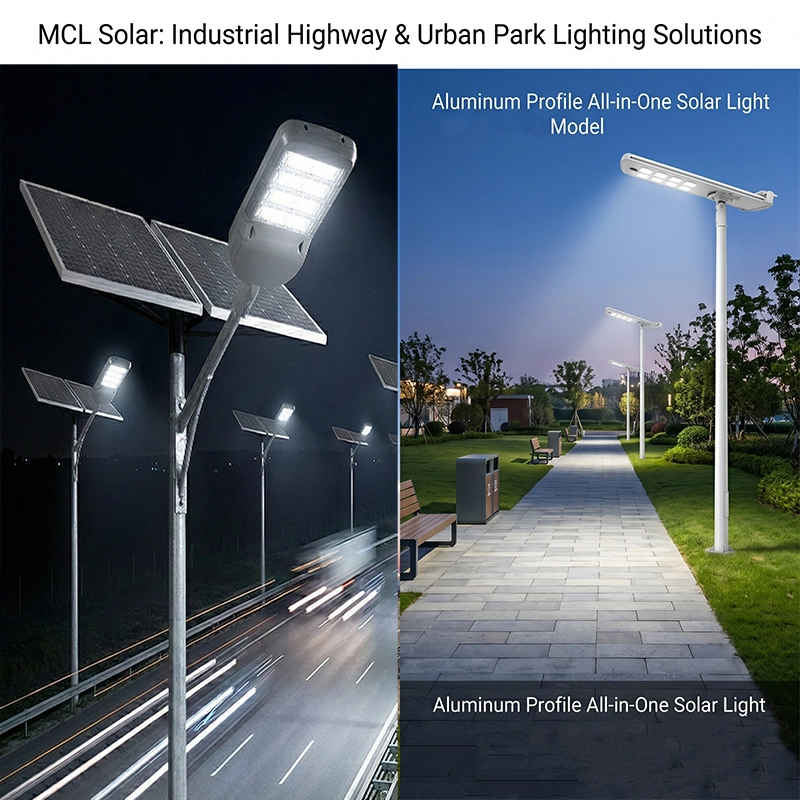
The Cost Reality: Why All-in-One Systems Are Not Always Cheaper
Many assume All in One Solar Street Light setups are the budget option. In reality, manufacturing costs tell a different story.
In an integrated design, the solar panel, LiFePO4 battery, MPPT controller, and LED are packed into one compact unit. To maintain structural strength, wind resistance, and heat dissipation, a large, heavy-duty aluminum alloy housing is required. A significant portion of the cost comes from premium aluminum extrusions or die-casting molds—not necessarily from higher battery capacity or brighter LEDs.
The Only Clear Advantage of All-in-One Systems
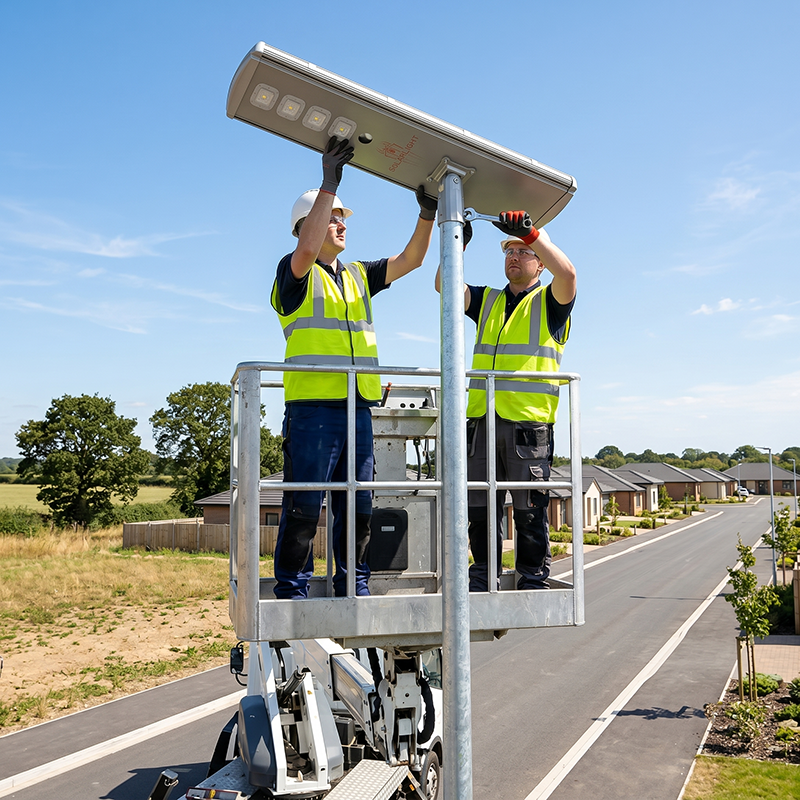
Despite higher material costs in many cases, integrated lights dominate certain segments for one primary reason: Installation Simplicity.
- Zero Wiring: Pre-wired at the factory—zero onsite cabling.
- Labor Reduction: One worker can often install the fixture on the pole in under 10 minutes.
- Target Scenarios: Ideal for remote areas or regions with high labor costs (e.g., parts of the Philippines, Africa, or Southeast Asia).
Why Split-Type Systems Excel in Performance
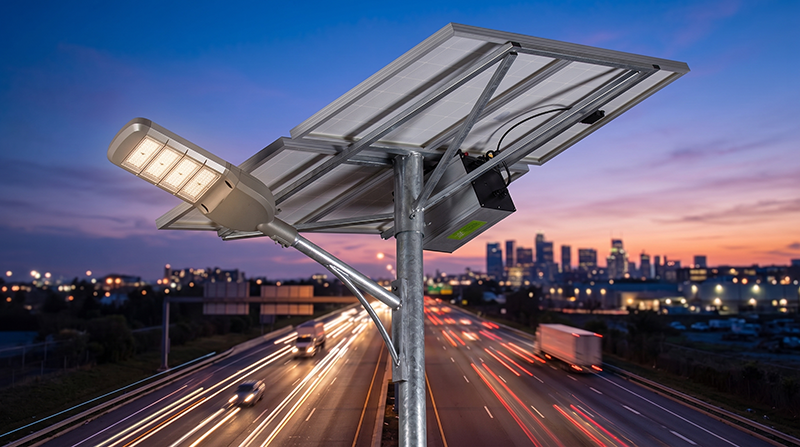
When you separate the components, engineering freedom increases dramatically. A Split-Type Solar Street Light remains the preferred choice for demanding applications:
- Larger Solar Panels: Mount independently for optimal angle and size (150W–200W+), delivering superior energy harvesting in low-light or monsoon conditions.
- Better Thermal Management: The battery stays cooler (not trapped under a hot solar panel), extending the LiFePO4 cycle life toward 3,000+ cycles (8–10 years).
- Higher Value Allocation: Budget goes directly to performance (larger batteries, premium Bridgelux LEDs up to 200 lm/W) rather than oversized aluminum casings.
How to Choose the Right System for Your Project (Practical Guide)
Use this pole-height and application framework to ensure maximum ROI for your infrastructure:
| Pole Height / Application | Recommended Type | Why |
| 5–7 meters (Parks, Paths, Residential) | All in One Solar Street Light | Fast installation, clean look, sufficient power for lower heights. |
| 8–12 meters (Highways, Main Roads, Municipal) | Split-Type (M-Series 40-150W) | Needs large solar array + strong performance in heavy rain. Must be paired with a strong Lamp Pole (Hot-dip galvanized). |
| Remote / High Labor Cost Areas | All in One Solar Street Light | Minimizes installation expenses and heavy machinery rentals. |
| Long Autonomy / Monsoon Zones | Split-Type Solar Street Light | Maximum energy collection & battery life cooling. |

Partner with a Transparent Source Factory
At MCL Solar, we don’t push one design over another—we help you choose the right solution for your exact budget and site conditions. Backed by real project data, strict quality control, and reliable 10-year structural warranty support.
Ready to move forward with your 2026 project?
- 📧 Request Free IES Photometric Simulation → sales@mclsolar.com
- 💬 Talk to Factory Engineers → WhatsApp: +86 180 3033 5122
- 📂 Browse 50+ Country Projects → Visit Our Projects Page
- 🔎 Download 2026 Catalog → View Products